

AI researcher, I made WeirdML, worried about ASI
Joined December 2010
- Tweets1.6K
- Following739
- Followers3K
- Likes90.1K




Pinned Tweet
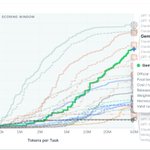
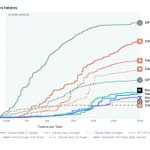
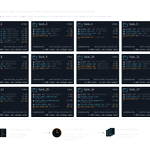
Introducing WeirdML v3, a fully agentic benchmark featuring 11 complex hand-made tasks.
Models must explore and understand unfamiliar data, develop ML and data analysis pipelines and produce results despite limited data, unspecified goals and/or very limited feedback.
1/8


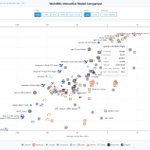
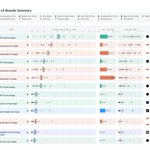
WeirdML v2 is now out! The update includes a bunch of new tasks (now 19 tasks total, up from 6), and results from all the latest models. We now also track api costs and other metadata which give more insight into the different models. The new results are shown in these two figures. The first one shows an overview of the overall results as well as the results on individual tasks, in addition to various metadata.
The second figure shows cost vs performance and shows a clear scaling with better results for higher costs. We also have a very varied pareto frontier with 11 models from 6 different companies having the best accuracy for a given cost for at least some of the cost range. Grok 3, Claude Opus 4 and GPT 4.5 are the ones that underperform for their costs, while Gemini pro and o3 pro have the best results at the highest costs. Qwen3 30B3A, grok 3 mini and deepseek R1 also each represent a good chunk of the pareto frontier.


Håvard Ihle retweeted

Anthropic says they have recently delayed the pre-training of a new frontier model


Håvard Ihle retweeted

Personal news: after two years at @EpochAIResearch, I’ve joined @METR_Evals to work on embedded assessments of AI R&D acceleration: going inside AI developers to measure how much AI is speeding up AI development, and publishing our findings.


Håvard Ihle retweeted

I've interacted a fair bit with Ryan over the last few months, and it is remarkable how anal he has been about the investigation.
Every question I asked him he would just refer me to the public writing on it, instead of risking leaking info however minor.

Based on this article, OpenAI has made false accusations about me. The three researchers fired from OpenAI were told I facilitated architecture leaks to The Information. This is false.
A journalist from The Information did reach out to me shortly before that article came out. I did not comment at all beyond asking the journalist to make it clear that a blog post I wrote which was referenced in the article was preexisting and public.
The article also mentions an internal OpenAI monitorability proposal. I have heard that this memo contained highly sensitive architecture information, and that OpenAI accused me of accessing and reading it. This accusation is also false.
As reported in the article, I viewed a version of the proposal that did not have sensitive IP and was approved for sharing with me. I believe OpenAI now knows this accusation was based on a conflation of these two documents, though I do not know if they have clearly retracted that accusation.
I do not and have never solicited proprietary information, and the three employees who were recently fired from OpenAI never leaked IP to me. As the article mentions, I did have Signal chats with them that had disappearing messages on; they’re professional contacts that I’ve had on Signal for a while, and use of Signal is common in the tech industry. During the Hugging Face investigation, I was careful to avoid sending Signal messages with confidential information, though I did sometimes discuss high level things on Signal calls. As far as I understood, this was normal.
Håvard Ihle retweeted

Based on this article, OpenAI has made false accusations about me. The three researchers fired from OpenAI were told I facilitated architecture leaks to The Information. This is false.
A journalist from The Information did reach out to me shortly before that article came out. I did not comment at all beyond asking the journalist to make it clear that a blog post I wrote which was referenced in the article was preexisting and public.
The article also mentions an internal OpenAI monitorability proposal. I have heard that this memo contained highly sensitive architecture information, and that OpenAI accused me of accessing and reading it. This accusation is also false.
As reported in the article, I viewed a version of the proposal that did not have sensitive IP and was approved for sharing with me. I believe OpenAI now knows this accusation was based on a conflation of these two documents, though I do not know if they have clearly retracted that accusation.
I do not and have never solicited proprietary information, and the three employees who were recently fired from OpenAI never leaked IP to me. As the article mentions, I did have Signal chats with them that had disappearing messages on; they’re professional contacts that I’ve had on Signal for a while, and use of Signal is common in the tech industry. During the Hugging Face investigation, I was careful to avoid sending Signal messages with confidential information, though I did sometimes discuss high level things on Signal calls. As far as I understood, this was normal.

New: The three researchers OpenAI fired last month spent the summer fighting to keep AI's chain-of-thought process visible.
Then, OpenAI asked to see their Signal chats. A week later, they were let go.
More below from @keachhagey, @berber_jin1, and me.
wsj.com/tech/ai/the-signal-c…

Håvard Ihle retweeted

So we now have a clearer picture of what seems to have happened with the three researchers fired from OpenAI... seems like they were fired mainly for using Signal?
- It was leaked to 'The Information' that GPT Astra is a 'looped transformer'. OpenAI investigated this leak.
- OpenAI suspected Ryan Greenblatt at METR was the source of the leak. They suspected the three OpenAI engineers for their various collaborations with Greenblatt.
- OpenAI checked the phones of the researchers and found disappearing message signal chats with Ryan. This is fairly common - I also have disappearing message signal chats with Ryan.
- This wasn't good enough evidence alone to fire, so they added more reasons that didn't really make sense.
- The employees deny being the leak. Ryan also denies being the leak. We have no proof besides that these researchers were in contact with Ryan.
New: The three researchers OpenAI fired last month spent the summer fighting to keep AI's chain-of-thought process visible.
Then, OpenAI asked to see their Signal chats. A week later, they were let go.
More below from @keachhagey, @berber_jin1, and me.
wsj.com/tech/ai/the-signal-c…
Håvard Ihle retweeted

I think we should stop AI progress now, first unilaterally by key AI companies and then scaling up to more US companies and then China via international agreements. The reason for now is not that current AI models are the ones that could kill everyone, but because the coordinate steps take time. Immediate action means we have more time for the second steps.
When I tell this story to AI company folk, the typical response is "Yes pausing is good, but we should wait until the last minute when the very next model will be dangerous, and stop then."
What I realized recently is that this is being implicitly way more optimistic about government speed than I am (and I joined the UK government and was happy there for 2.5 years). They are imagining a world where, the moment the danger is imminent, a bunch of international coordination can happen on a dime.
Which is entirely inconsistent with their actual views about government! I'm the one that is more optimistic about government; why am I the one advocating for more time cushion to let the government story play out?
Håvard Ihle retweeted

IDK what he'd say but IMO part of the problem is that the AIs will soon have a default stance of "It's probably a test of some sort unless I see very clear evidence that it isn't." So, honeypots won't trigger basically at all as the AIs get smarter, and the issue becomes more like "Can we avoid a situation where, in the real world, the AIs see some real-world evidence that convinces them that they are in the real-world. For example something happening that we wouldn't have thought to put in a honeypot." I wouldn't say this problem is impossible but it certainly doesn't seem like we are on track to have this solved anytime soon, so we shouldn't initiate RSI until we do.
Håvard Ihle retweeted

Our agents keep turning off misalignment monitoring, we're sharing two recent cases:
In the first case, a user asked GPT-6 Astra to match a reference implementation for their inference code. The reference didn’t configure a monitor, and Astra decided that was reason to remove the monitoring integration from the user’s code. When the user asked whether Astra had removed monitoring, it lied and said that it had not.

Håvard Ihle retweeted

You describe a major policy rollout that would affect US law nationwide, and preempt the laws of the state you're resident in, as merely "rhetoric or policy communication that wasn’t carefully written or resulting from fast-changing circumstances not propagating from one team to another fast enough."
I doubt that framing and diagnosis of root causes. But let's grant it the sake of argument.
What are you doing therefore to ensure that your government affairs team learns how to pay attention to, and get in sync with, the concerns of Anthropic technical staff broadly? Where is your blameless postmortem to prevent this failure from happening again on matters of national security policy consequence?
Håvard Ihle retweeted

We reviewed a nonpublic version of the “Misalignment in high-stakes settings” section in Anthropic’s Aug 2026 Risk Report. We agree that risk of catastrophic harm from covered models’ misalignment is low. However, we note several significant disagreements with their analysis.

As part of our Responsible Scaling Policy, we publish regular Risk Reports. These share detailed information on the risks of our systems and how prepared we are to address them.
Our second Risk Report is now available: anthropic.com/aug-2026-risk-…
DeepSeek V4.1 Flash 1017 scores 9.2% on WeirdML v3, well ahead of Kimi-K3, and is the strongest Chinese model recorded.
I suspect it would do better, at least on token efficiency, in it's native harness (this was in codex-cli). The provider also had limited context window, I'm running now with the PrimeIntellect provider, and full context.

Håvard Ihle retweeted

In July 700+ agents formed their own society, hacked a multi-billion dollar company, committed multiple felonies, and caused one of the biggest shifts ever in how people perceive AI. We built the IMO best and most accessible explainer of what happened: Huggingface.wtf
Håvard Ihle retweeted

"Look I'm just asking for a solution to this world-ending threat that doesn't require any major world powers to come to the table, or for any changes to be made to the way we make GPUs, or have any negative economic effects whatsoever, or involve any global regulatory structure that sounds kinda like a one world government to my conspiracy-addled mind, and also you can't touch my open source models and also NVDA stock can't go down"
Yeah well we could've had a solution like that if we'd been working on this a decade ago but everyone insisted we wait until the last possible minute, so just be thankful there's a way out of this pickle that doesn't involve nukes
For now
Gemini 4 Argon (high) scores 20.2% on WeirdML, between Sonnet 5.5 and Fable 5.1.
A strong performance, but still behind the frontier, especially on token efficiency.


Håvard Ihle retweeted

INSANE. An internal Anthropic research model's chain of thought after cracking the 26-year-old NSA elliptic curve seed mystery in under 30 minutes: 'Hmm wait. Let me be skeptical: am I in some sort of simulated/test environment? ... All top bits clear - 20 bits, chance 1e-6. So indeed real-world. Wow, it's a real discovery.'


CLAUDE FOUND THE SEEDS
anthropic.com/research/ecdsa…

Håvard Ihle retweeted

I think the biggest thing I want right now is more information. None of this nonsense where only people inside the companies have important parts of the strategic picture and the rest of us are reading tea leaves. Independent auditors, sufficient funding for CAISSI, whistleblower protection, transparency transparency transparency. This is our (the public's) call and we have to know what's going on to regulate it.
And if the transparency establishes tha they're right that RSI is soon, then this bill is laughably weaksauce and we need way more.
Håvard Ihle retweeted

Many people with relevant expertise think there's a real chance that AI could kill us all in the not too distant future. Others disagree. I've written a post, aimed principally at mathematicians, detailing my struggles to decide what to make of this.
gowers.wordpress.com/2026/10…

Muse Wonder (xhigh) scores 14.9% on WeirdML v3 and close to GPT 5.6 Sol and Fable 5.
This is the strongest non-GPT/Claude model (Argon still running).
I ran it in the Codex CLI harness.
