Founder https://teapawt.net/t.co/YVDJMjLJiV Turning systems of record into systems of action | 3x founder @ycombinator
Joined June 2017
- Tweets6
- Following383
- Followers33
- Likes828





Hussein Fawzi retweeted

Whether it’s existing consulting firms, new ones that emerge, FDEs from agent vendors, or new internal agent engineering roles, the amount of work that is going to be created to implement agents in enterprises will exceed anything we imagine today.
The complexity of implementing agents in any existing organizations is very real. When I talk to large enterprises, as you move from a chat paradigm to agents that participate in meaningful workflows, there are a number of things they need to do.
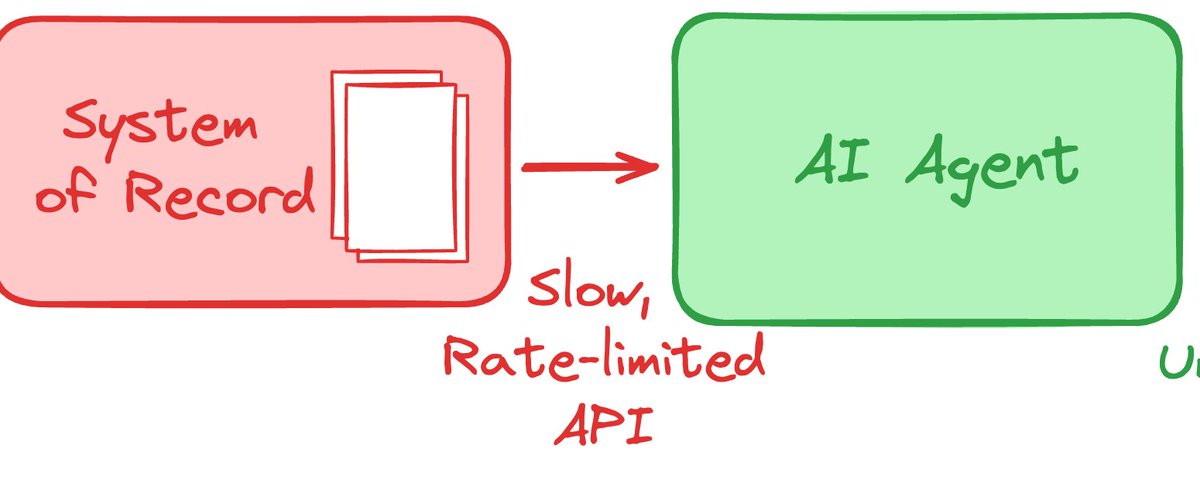
First, you have to get agents to be able to talk to your data securely across your systems. In many cases, enterprises have decades of legacy infrastructure that contain the valuable context for AI agents. That’s going to take a ton of work to go modernize and move to systems that work well with agents.
Then, you need to ensure that you’ve implemented agents with the right access controls and entitlements, the right scopes to be safely used, and have ways of monitoring, logging, and securing the work that they do.
Next, you need to actually document the processes in the organization in a way that agents can utilize for doing the work. You also need to figure out what the new workflow looks like when agents and people are working together on a process, and who steps in where. Just replicating the old workflow will mute the gains. Oh and you likely need to create evals for your top new end-state processes.
Finally, you have to keep up with a rapidly changing set of best practices and architectural shifts happening in the agent space. While it’s fun for people to change their personal productivity tools on a dime, it’s 100X harder to do this in a business process. The speed of change is a blessing and a curse right now for anyone trying to keep a stable system design.
All of this means that individuals and companies that develop expertise on the above set of components (and more) are going to be needed to help organizations actually implement agents at scale. This is also the rationale for vertical AI agents right now that can go in deep on a business domain and help bring automation to it.
This is a huge opportunity right now whether you’re doing this internally or as an external business provider.
Hussein Fawzi retweeted

Starting to REALLY see how reaching potential customers is becoming a massive pain point for software startups - esp w AI!
I get so much more messages about software that founders built rapidly that they think will solve some important problem (usually eg AI+context/trust/security).
But how will anyone know about it?
It was fast to build, but getting the world to know about it / care about it is increasingly hard/expensive/time-consuming.
And the irony is: the "easier" it is to build, the more the only differentiation is marketing/advertising! (Because the easier it is to build, the more teams build something similar in parallel, and racing to win the market becomes key!)
Hussein Fawzi retweeted
Good post on how to think about FDEs. The key is that FDEs are real and not going away for AI any time soon.
The reason this is happening now at a scale that has never been seen before is because AI is fundamentally about adding a non-deterministic, rapidly changing system to workflows that largely have never been automated before. This looks very little like implementing traditional software.
“If you're building an AI agent for accounting in 2026, there is no established workflow, because literally nobody has ever used one of these. Nobody knows what the user journey looks like — not you, and importantly, not your customer either. They can't tell you what they want, because the thing they'd want doesn't have a shape yet.”
Software has largely always been deterministic and once implemented effectively worked the same for customers. This meant the upfront implementation work was *relatively* uniform across similar customers, and the system wasn’t regularly being upgraded in fundamental ways.
AI agents are entirely different on nearly every dimension. The customer’s business process has to change to work with agents, there is heavy -necessary- customization to get agents to work in the customers end-state process, evals need to be run constantly, the AI models are constantly changing and updates need to keep getting incorporated, the underlying harness and broader system are often changing due to customer feedback, and much more.
This is real work for the customer, systems integrators, and the applied AI vendors. Even as AI capabilities improve dramatically, this work remains (or even gets more complicated) given enterprises will just throw increasingly more complex processes at agents. Great time to be an FDE.