

Helping companies implement Super Intelligence that increases human capability at Ad Astra Connect. Lifelong car guy, futurist, Tesla + SpaceX.
Toronto
Joined June 2011
- Tweets3.3K
- Following548
- Followers984
- Likes12.2K


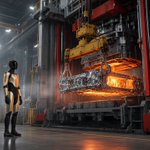



Sometimes people tell me that they’re not sure the car can see everything.
I often tell them to think about using their modern phone in a dark bathroom to take a picture, where their eyes can’t see anything, but the camera produces a visible image.
This is an even better example to show them.
Photons in, control out.
🦾

2
62
Ian N retweeted

Let's be honest about the damage Elon Musk is doing to the world.
A paralyzed man is moving a cursor with his thoughts and playing chess again. People who have been blind their whole lives may soon be able to see. Terrible. Think of all the pity we'll be forced to give up.
Starlink keeps hospitals, rescue teams and entire towns online when floods, wars and hurricanes knock everything else out. Unacceptable. Disasters used to come with a proper blackout.
Tesla builds cars that keep watching the road when a tired driver doesn't. Fewer crashes, fewer funerals. Where's the drama in that?
SpaceX lands its rockets and flies them again, cutting the cost of reaching space for everyone. A tragedy for every government program that spent billions to throw them away.
And on top of all that, he keeps doing what experts said was impossible. Rude.
Someone really should stop this man.


These people are absurd.
WTF are we living in?


Texas Rep. Gene Wu says Elon Musk should be prosecuted for “crimes,” then gets his bluff called when Katie Pavlich asks him to name a single one.
Pavlich gave him three chances. He had nothing.
PAVLICH: “Can you give us some of the examples of [...] what you think that those things may be? It’s a pretty, pretty extreme charge.”
WU: “All I do is read the news and watch the news. And what I have seen on the news is that Elon may have committed crimes against the United States by his actions in Ukraine. [...] I don’t know. I just read what I read.”
PAVLICH: “So, what specific laws do you think that he’s broken that you feel should be charged to prosecute?”
WU: “If Elon Musk has committed crimes in the state of Texas, it is upon our duty to investigate and to see if those crimes are real and that they are provable.”
PAVLICH: “Fair enough, but you keep saying IF he’s done, IF this happened. [...] Sounds a lot like you’re fishing around for a crime that you can pin him with. [...] Can you give me an example?”
Still nothing, so Wu drags Gov. Abbott into it.
WU: “I am not in charge. [...] I’m sure Governor Abbott has been hiding the evidence, right? Just like he’s been hiding his secret little emails back and forth with Elon, that it took a federal court to force him to release those documents.”
PAVLICH: “And were there any crimes in those documents?”
WU: “I don’t know. I’m not in charge. The Republicans have been—”
PAVLICH: “Yeah, you don’t know. And yet you’re still accusing Elon Musk of maybe committing crimes, and you haven’t given me a single example of what he may have committed.”
This comes after Scott Galloway called Musk “a traitor to the West” and invoked the Rosenbergs, who were EXECUTED for spying.
Wu is a former felony prosecutor. You’d think naming a crime would be easy for him.
He wants Musk prosecuted. He just doesn’t know for what.
This is a big deal.
Congrats Tesla team!

If you ever wondered, what we would be doing at Giga Berlin with all the land that we have…
We are expanding! Cybercab production is coming to Giga Berlin!
Today we announced a first investment of around € 3b in a new manufacturing building with an anticpated start of production in 2029! It will have the most advanced technology of any Tesla factory!
And we are hiring 👉 tesla.com/careers/search/?si…

50
Ian N retweeted

Neuralink's new PRIME2 clinical trial is open to stroke patients.
Stroke appears in 155 registered BCI US studies, more than paralysis (84) and ALS (43) combined.
Stroke is a leading cause of long-term disability, and many survivors lose the use of an arm or their speech.
Neuralink has focused on paralysis first, but now the same kind of implant will soon help stroke survivors move and talk again.
I'm excited for this and all the future conditions they hope to address.


Thank you for this excellent explainer.
🚀🎉❤️
Go @SpaceX ❤️❤️❤️

Have you ever wondered why catching Starship is so much harder than catching Super Heavy, even though they both return to the same launch tower? 🔥
💡 The answer comes down to four major engineering challenges that make Starship’s recovery fundamentally different 👇
⚡ The first problem is shedding an enormous amount of energy
At hot staging, Super Heavy was traveling at roughly 5,800 km/h (3,600 mph). Starship, meanwhile, had to return from orbital speeds of roughly 27,500 km/h (17,100 mph).
That’s nearly five times faster. Because kinetic energy increases with the square of velocity, each kilogram of Starship at orbital speed carries roughly 22 times the kinetic energy of a kilogram of Super Heavy at separation.
That works out to nearly 30 million joules per kilogram.
Almost all of that energy has to be dissipated before Starship can safely reach the tower.
One option would be to use rocket propulsion to cancel out its orbital velocity. However, scrubbing off roughly 7.7 km/s of speed using Raptor engines alone would require a massive amount of propellant.
The rocket equation makes this approach especially punishing. Every extra kilogram of landing propellant has to be hauled into orbit first, dramatically increasing the fuel needed at liftoff.
Instead, SpaceX uses Earth’s atmosphere to bleed off almost all of Starship’s orbital velocity.
That saves an extraordinary amount of propellant, though it introduces another major hurdle.
🔥 Surviving extreme atmospheric heating comes next
As Starship plunges into the atmosphere at hypersonic speeds, powerful shock waves compress and heat the surrounding air to blistering temperatures.
Thousands of ceramic heat-shield tiles protect its stainless-steel structure from the intense heat.
Simply keeping those tiles attached isn’t enough, though. Superheated gas can seep into the gaps between them, risking damage to the underlying structure.
For Flight 15, SpaceX carried forward upgrades from Flight 14, including extra tile-retention hardware in vulnerable areas and redesigned curved tiles that reduce heating between adjacent tiles.
Because Super Heavy never reaches orbital velocity, its return doesn’t expose it to anything close to the same thermal stress.
And there’s another complication.
A heat shield that survives one reentry isn’t necessarily ready to fly again. Starship’s thermal protection system must eventually withstand repeated missions without major repairs or refurbishment.
That’s critical, since rapid reusability is one of the core reasons SpaceX designed Starship to be caught rather than discarded.
Yet surviving reentry still isn’t enough. Starship also has to arrive at the exact right spot.
🎯 Hitting a precise target from orbit raises the stakes even further
About 56 minutes before the catch, a single Raptor engine fired for just 10 seconds to initiate Starship’s return.
That brief deorbit burn wasn’t meant to eliminate orbital velocity. Instead, it nudged the spacecraft’s trajectory so atmospheric drag could take over the much larger job of slowing it down.
Starship then entered the upper atmosphere thousands of kilometers away over the Pacific Ocean.
From there, its four aerodynamic flaps controlled its orientation and fine-tuned the forces acting on the vehicle.
Super Heavy uses grid fins to steer during its return, but Starship’s flaps have to handle a far wider range of flight conditions.
As Starship decelerates from hypersonic through supersonic and down to subsonic speeds, its guidance system continuously adjusts its attitude and flight path.
The challenge is maintaining the right balance of altitude, speed, and trajectory while aerodynamic forces shift dramatically throughout reentry.
For Flight 15, the return corridor crossed sparsely populated parts of northern Mexico and South Texas.
Starship maneuvered around major population centers in the Rio Grande Valley, passed north of South Padre Island, headed offshore over the Gulf of Mexico, and made its final turn toward Pad 2 at Starbase.
Think about the guidance precision required.
A spacecraft returning from orbit must dissipate nearly all of its immense kinetic energy while threading a carefully controlled trajectory straight back to a single launch tower.
It also has to arrive at a low enough speed, in the proper orientation, and with enough propellant remaining to pull off the final maneuver.
That brings us to the most visually spectacular part of the entire recovery.
🚀 Executing the landing flip with pinpoint precision is the final test
Super Heavy approaches the launch tower already vertical, using its grid fins and Raptor engines to guide its final descent.
Starship comes in belly-first.
It has to rapidly swing its massive frame upright, stabilize its attitude, and align itself precisely between the tower’s mechanical arms.
SpaceX’s official Flight 15 timeline allotted just 18 seconds between the start of Starship’s landing burn and the catch.
During those 18 seconds, three sea-level Raptor engines ignite to kick off the maneuver.
The spacecraft rotates upright while its flight computers constantly regulate engine thrust and vehicle attitude.
The engines then step down from three to two, giving the vehicle finer control as it nears the chopsticks.
Finally, it transitions to a single engine for the last moments of descent before shutting down as the tower takes its weight.
Consider the coordination involved.
The guidance system must balance translation, rotation, thrust, and descent rate while positioning a massive spacecraft within a narrow capture envelope.
Unlike a conventional vertical rocket landing, Starship must first transition from an aerodynamically controlled, belly-first glide to an engine-powered vertical approach.
All of this unfolds within seconds, right after the vehicle has completed one of the most punishing atmospheric reentries ever attempted by a reusable spacecraft.
🧠 What makes SpaceX’s approach so ingenious is how seamlessly the entire recovery system works together
Trying to solve every phase of the return with rocket propulsion would carry a crushing propellant penalty.
Instead, SpaceX delegates the toughest parts of the recovery to systems purpose-built to handle them.
The atmosphere dissipates most of the orbital kinetic energy without consuming onboard propellant.
The heat shield protects Starship from the intense thermal loads of that deceleration.
The four aerodynamic flaps provide the control authority needed to manage its attitude, energy, and trajectory throughout atmospheric flight.
And the Raptor engines take over once aerodynamic control alone can no longer deliver the precision needed for the final catch.
That division of labor allows SpaceX to recover an orbital spacecraft without carrying enough fuel for an all-propulsive return.
Yet the engineering trade-off goes deeper than saving propellant.
SpaceX is shifting much of the cost of returning from orbit away from expendable propellant and toward reusable hardware built to endure extreme thermal and mechanical stress.
The potential economic payoff is enormous.
Cutting back on the propellant reserved for recovery frees up more of Starship’s mass capacity for useful payload. However, that advantage only becomes truly meaningful if the heat shield, flaps, engines, and other systems can survive repeated flights without extensive refurbishment.
That’s why catching Ship 42 is such a landmark milestone.
SpaceX has proven that its thermal protection, aerodynamic controls, propulsion, and guidance systems can work in concert to recover an orbital upper stage right at the launch site.
The next engineering hurdle is proving that the same spacecraft can do it repeatedly.
If SpaceX can bring Starship home, inspect it, refuel it, and launch it again without rebuilding major systems, the economics of getting payload to orbit could change dramatically.
That first catch proves the recovery architecture works. Repeated reflights will determine just how much of its economic potential SpaceX can unlock.
1
1
91

Ian N retweeted

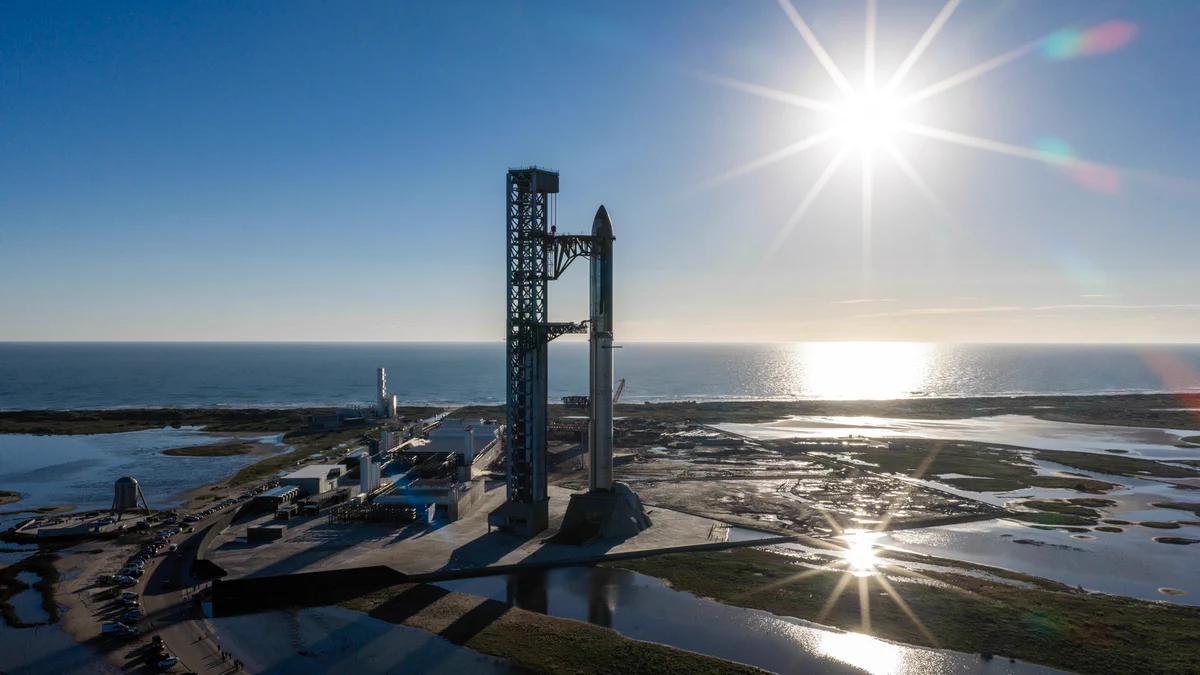
Live webcast of Starship's 15th flight test starts now → teapawt.net/i/broadcasts/2brajgZlO…
Ian N retweeted

Neuralink has registered PRIME2!
A newly registered early feasibility study on ClinicalTrials.gov under NCT07929792 (N1-EFS-300) shows Neuralink will start its first trial to include patients with chronic ischemic stroke, paralysis from a blocked-blood-vessel stroke.
Its open enrollment is for 10 people and will use the N1 implant and the R1 surgical robot. The only site listed so far is the University of Miami in Miami, Florida, with Dr. Jonathan Jagid, professor of clinical neurological surgery at the University of Miami Miller School of Medicine, as principal investigator.
Primary results are expected around November 2027, while the full study runs through about November 2031.


This is bigger than it looks.
If Waymo can test on Toronto streets, the door is open.
Once that happens, it gets a lot harder to say no to Cybercab without it being obvious politics.
I already let FSD drive me around downtown every day.
Bring it on 🦾 ❤️


Needs mo’ LIDAR! @Waymo spotted on the streets of Toronto today! Could Tesla Cybercabs be coming here soon? 🤖⚡️✨🤓🤩

1
5
204
May you Rest in Peace, Sir Patrick Stewart.
I’ll never forget that there are four lights.
You will be missed and your excellence will live on forever.
❤️
TNG

1
4
97
✨❤️

As I sit and think about the passing of Sir Patrick Stewart (to me, always Jean-Luc), I know and understand that this man and this show are enormously responsible for my hope for humanity.
Despite the shit in the world that we are constantly bombarded with, this show gave me hope that we can be better than our base evils.
The mission to save humanity via putting our eggs in another basket is the main reason I support @elonmusk - I know he’s not perfect, and I don’t always agree with him. But I do believe he is genuine in his efforts to save us all. I believe he really cares.
Why do I believe this? Because I’ve spent the better part of a decade listening to him directly - then matching that with his actions and output.
If you don’t believe that, and you speak negatively about him and his companies - you are succumbing to the base evil that we should be rising above.
If you think Elon doesn’t care, you have been paying attention to the wrong people. Those who seek to destroy us.
Be better. Be like Jean-Luc.
26
As I sit and think about the passing of Sir Patrick Stewart (to me, always Jean-Luc), I know and understand that this man and this show are enormously responsible for my hope for humanity.
Despite the shit in the world that we are constantly bombarded with, this show gave me hope that we can be better than our base evils.
The mission to save humanity via putting our eggs in another basket is the main reason I support @elonmusk - I know he’s not perfect, and I don’t always agree with him. But I do believe he is genuine in his efforts to save us all. I believe he really cares.
Why do I believe this? Because I’ve spent the better part of a decade listening to him directly - then matching that with his actions and output.
If you don’t believe that, and you speak negatively about him and his companies - you are succumbing to the base evil that we should be rising above.
If you think Elon doesn’t care, you have been paying attention to the wrong people. Those who seek to destroy us.
Be better. Be like Jean-Luc.

If you speak negatively about Elon, Tesla, and/or SpaceX, you are actively working against humanity on a grand scale.
The lies and negativity that cost lives in the name of your false virtue bear responsibility.
You will be on the wrong side of history, here.
I know you think you’re righteous, but you and your shallow empathy are the cause of the decline of our civilization.
This will fall on deaf ears, but you don’t care about anything or anyone but yourself.
Those that are sensitive to their peer group are doomed.
You are the problem.
There are those of us that see the bigger picture and will prevail, despite your weakness.
I almost feel bad for you.
Almost.

Glad to see a creator as good and popular as @CleoAbram take on Neuralink.
But if you want the real depth, @RyanTanaka is far more thorough and informed. @NeuraPod is the best Neuralink coverage out there.
Cleo has massive reach though, and more people need to know this tech exists.
It's already changing lives. ❤️🦾🚀
@neuralink 🧠 ❤️
youtu.be/Vna0hkq7U1g?si=RiPi…
