

“Faster, Faster, until the thrill of speed overcomes the fear of death.”
SF, CA
Joined April 2009
- Tweets879
- Following629
- Followers23.1K
- Likes60.2K





Ian Brooke retweeted

Imagine if you will a world where a panopticon conglomerate owns two brands of hot sauce


People of twitter, actual trade offer inbound.
I have 13 MW of 13.9kv 60 hz electricity coming off a test turbogenerator we'll be running starting in January.
It seems absolutely absurd to dump the energy into an air-cooled load bank, so I'm offering free power to anyone that wants to co-locate a load with our powerplant. Maybe someone has some GPU racks to power up.
Power supply will be intermittent as we tinker about and optimize the hardware early on, but the load banks will be particularly needed once we go to sustained high power output
Worst case we boil 18 tons of water per hour and open a spa, I suppose.

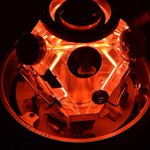
fun fact, we use these (ring laser gyros) to keep airplanes perfectly level. they’re solid state (aesthetically pleasing) and have a drift of 1/100th of a degree per hour. they’re the most reliable and precise component out there for inertial navigation.
they work by splitting a beam of light in opposite directions, when they meet again their coherent waves interfere and recombine, and the change in phase reflects the change in angular velocity
and really, they just look so cool.


principles are well explained here

Interferometry
What is it?
1. You make a monochromatic beam of light where all the wavelengths are exactly the same (a laser).
2. You make the beam coherent so that all of the waves are in phase (peaks align and troughs align).
3. Polarisation (optional), you polarise the beam to make the orthogonal oscillations of the beam aligned, this is for measuring rotation.
4. You split this beam in two and produce two beams that are monochromatic and coherent.
5. The first beam is the reference beam, the second beam is the target beam.
6. You bounce the target beam off a target and when it returns you compare it to the reference beam and the delta tells you information about spacetime.
7. Because light is fast you can collect an enormous volume of data with a very high sample rate. You can know exactly how far away the target is, how fast it is traveling, how it is vibrating, you can see all of its resonant frequencies and harmonics, right down to molecular lattice level. You can predict what the target is and how it is behaving, you can see its temperature from the Brownian motion of its surface. Because light is so fast you can really inspect it, because the wavelength is so short and precise you can inspect extreme resolution.
This is the most powerful sensor family in science.
As someone who once built an interferometer tech I find this is very cool, this is a whole domain of science and engineering that is very under discussed.
The Fermilab Holometer was completed in 2014 it is a Michelson interferometer that was built to prove the universe was a hologram and that we live in a pixelated simulation.
It did the opposite.
After 145 hours of data, their specific model of correlated holographic shear noise was excluded at 4.6σ. No evidence of the predicted Planck-scale jitter was seen.
As they collected more data they excluded a broader class of quantum-geometrical shear-noise models. The measured correlations were consistent with ordinary classical spacetime.
Finally, the interferometers were reconfigured to be sensitive to rotational (twisting) fluctuations instead of shear. Again those models were also constrained; the data again matched a classical spacetime model.
Lots of people still believe simulation theory, and that’s OK. People should believe whatever makes them happy.
The same dataset also produced the strongest limits known on a stochastic gravitational-wave background in the megahertz band and on nearby primordial black-hole binaries, science that is independent of the quantum-geometry hypothesis.
Interferometers in the hands of smart people unlock secrets.
You can multiply the sensitivity (sensor power) of your interferometer by using Fabry Perot Cavities and bouncing your laser between two mirrors.
This can give you many kilometres of beam length in a device that fits on your desk.
Fabry Perot cavities are what LIGO uses (Laser Interferometry Gravitational Observatory), LIGO was built to measure intergalactic gravitational waves from distal black holes and supernova events and works incredibly well.
LIGO can detect vanishingly small disturbances in spacetime that are from events that happened billions of years ago before our Sun even formed.
We can actually measure and observe past events in extreme detail and understand what happened.
We can observe things not just from the other side of the Milky Way, but from entirely distant galaxies that exist on completely different superclusters.
We have been able to build phenomenal instruments for a while, we also have phenomenal DAQ, more recently we have the technology to train on this empirical data.
There is stuff to find there.
The 20th Century was dominated by theorists, I expect the 21st Century is an empirical age, build-test-build. We can ask the questions and the universe will just tell us.

Ian Brooke retweeted

Last week the hydrogen electrolyzer team @terraformindies pulled off yet another first, the sustained production of >99.9% pure H2 from our vertically integrated, California-manufactured electrolyzer stack while it was coupled directly to a solar array at our Muroc desert test site.
WTAF?
Most commercial electrolyzers need carefully conditioned power from expensive battery-meditated backup systems. Ours runs directly off the sun. Clouds pass, the day turns to night, and we maintain purity from a stack whose Bill of Materials cost is well below $100/kW.
Terraform's single-minded focus on capex reduction has allowed us to convert sunlight to hydrogen in an unprecedented demo at a cost below $2/kg. If that wasn't enough, we have a crystal clear plan of steady execution to push that cost below $1/kg in the coming years.
Rather than linger on this point in response to experts-with-spreadsheets who said this was not only beyond my team, it was forbidden by known laws of physics, let me tell you a bit about how we actually pulled this off.
We started building this test site in March. Once the panels and electrics were in place the CO2 team were the first to demonstrate production on site. Close behind them the electrolyzer team planned the logistics necessary to project substantial operational ability into a hostile test site in the middle of nowhere. It's no good to find you're missing a wrench half way through the day!
Much of the test prep was completed before dawn, when the panels go live. The sun came up and the stack immediately started splitting water into hydrogen and oxygen. The team carefully monitored purity and flammability as the sun climbed through the sky. As designed, the stack warmed up and conducted even more power, maintaining solid production until late afternoon when the setting sun shaded the panels.
Terraform's synthetic fuel system is uniquely designed to follow the sun and extract the maximum possible value from cheap solar panels.
Hydrogen is a pernicious molecule. It leaks through and embrittles metals, burns almost invisibly at a wide range of mixtures in air, burns hot and fast and can easily undergo detonation transition, and has about half a dozen other spookily dangerous properties. My advice is to never work with it unless you absolutely have to. The Terraformer produces and consumes H2 in one compact discrete area with a minimum of complexity and fuss, and as expected this demo was completed in accordance with our rigorous safety standards and no unscheduled excitement!
This successful demonstration was also a profound milestone for the team after a testing anomaly last December compelled us to finally rip off the bandaid and move decisively towards the "future design" with half the parts but considerable complexity in assembly. No-one else makes electrolyzers this way and we, more than anyone, know exactly why. And also how to do it anyway, translating directly into a unique cost advantage.
A huge congratulation to Ken, Sherman, @ckalitin, Nikhil, Abdullah, and Aaron for their successful test campaign.
Terraform's hydrogen and CO2 are the chemical precursors for synthetic methane and methanol, which we make in our own synthetic fuel reactor.
Combined, we make oil and gas out of sunlight and air. We are breaking the geological and geographical monopolies on oil production.
In the limit, Terraform will deploy these electrolyzers by the millions and they will all be plug-and-play with solar PV arrays.
The Muroc smoke test campaign is far from over.
We will win!


many are saying

The F-15E Global Strike Eagle:
media.defense.gov/2023/Jan/1…
A three-stage solid rocket booster mounted on the back of an F-15E, launched at Mach 1.7, could place a microsatellite into orbit or deliver a small hypersonic gliding warhead with intercontinental range.


a lot of people tend to forget that @DavidSHolz was at NASA Langley and founded a spatial hardware device company well ahead of the curve (i was a happy customer a decade ago!).
his work here speaks for itself and is a return to those roots


Something I love about truly great design work is that it’s equally relevant to both fiction and reality.


Ian Brooke retweeted

It's been 2+ years since S3 last featured @AstroMechanica — they've been quietly building a new vision of supersonic passenger travel.
By building electric adaptive engines (efficient at every stage of flight) to reimagining airline economics itself, @ianbrooke and team's next step... is taking flight.
Ian Brooke retweeted

the incredible @AshleyAPelzel is hiring an EA at @AstroMechanica — if you are a world-class operator who can own calendar, communications & logistics for our exec team, DM me 👇


Ian Brooke retweeted

I have material nonpublic information, trust me you want to join this team.

as always, we’re hiring for propulsion and test at @AstroMechanica. if you like big flames and things that go fast, DM me 👇
Ian Brooke retweeted
as always, we’re hiring for propulsion and test at @AstroMechanica. if you like big flames and things that go fast, DM me 👇


