







Pinned Tweet
The signal from Davos was unambiguous: the raw model-scaling gold rush is fading.
As Ilya Sutskever put it, we’re ramping up an "age of model research and discovery." The magic now lies in the design of the AI nervous system, not just the size of the AI brain.
I joined leaders at the World Economic Forum to map this shift.


Gemini 4 Carbon is here.
Just two weeks after Argon, Carbon ranks #1 on the Artificial Analysis Intelligence Index, scores 88.2% on SEC-bench Pro, and delivers 2× better secure code generation.
What excites me most is reliability. As agents take on more complex engineering work, the question isn’t just what they can do, but how much we can trust them to do it well.
Carbon cuts unsupported claims by ~50% and high-severity misalignment alerts by nearly 80% in internal testing.
Great to see how this will benefit the entire Gemini ecosystem. Lots more to come. Proud of the team

I did say we'd be releasing our models periodically...introducing Gemini 4 Carbon, our next frontier model.
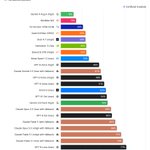
Following Argon's release just two weeks ago, Carbon shows the pace at which we’re pushing the frontier, it ranks #1 on the recently updated v5.0 of @ArtificialAnlys Intelligence Index at 59. It also leads across key cybersecurity evaluations scoring 88.2% on SEC-bench Pro for finding vulnerabilities, 54.8% on ExploitGym for exploitation, and 71.0% on CWE-bench for patching.
We’re seeing significant improvements in long-horizon tasks even compared to Argon, and we’ve strengthened frontier safeguards.
As we did with Argon, we’re going to roll it out gradually + responsibly. Some trusted cyber defenders will get access starting this week. We'll be expanding it to more partners through our Fairwind Program, ahead of wider availability soon, so hang tight!

China's @UBTECHRobotics has opened a humanoid-robot factory designed to produce one robot every 10 minutes, with robots helping build more robots.
It's a self-reinforcing loop:
Robots automate a factory → robots help build more robots → scale drives costs down → cheaper robots automate the next factory.
As that loop speeds up, who sets the guardrails? And what's America's answer?
When an agent fails in production, the model’s reasoning is rarely the problem.
What breaks the user experience is everything piling up around the reasoning: system instructions, tool definitions, raw tool outputs, and turn-by-turn history compounding every step.
Past a point, the agent burns more budget and latency managing its own context bloat than solving the user’s problem.
For PMs shipping agents, this paper (arxiv.org/abs/2607.21503) highlights two critical product and eval shifts:
- Treat context compression as a user-trust risk, not just a cost lever: Summarizing history improves unit economics, but unchecked compression can push accuracy below having no memory at all - because a generic summarizer doesn’t know what later steps in the user journey will need and drops critical details. Your product requirements have to define which categories of user context are non-negotiable and verify they survive compression.
- Stop using “search relevance” as a proxy for task completion: Standard retrieval metrics look green when a matching snippet shows up, even when the agent missed the connecting “bridge” context needed to actually solve the user’s problem. Upgrade your product evals from “did search find a relevant doc?” to “did it pull enough connected context for the agent to make the right decision?”

James Morrison Rubin retweeted

Gemini 4 Argon is here.
It’s available globally today for developers and enterprises in the paid tier of the Gemini API and the Gemini platform, for Ultra subscribers in Google Antigravity, and Ultra and Pro subscribers in the Gemini app and Search.
Hope you all enjoy it!
Most 3D world generators only work at one scale. When you zoom deep into a corner, you would get blurry pixels.
WonderZoom, a research project from Stanford, does it differently. You start from a single image, zoom into any spot you want, prompt it, and it generates finer content. Then you keep going.
The trick is they fine-tune the depth model at every zoom step so it matches the scene that’s already there. That keeps the new layer lined up in 3D.
Today we generate images, videos and 3D scenes with fixed boundaries. A future medium could be one that keeps generating more detail as you explore it.
James Morrison Rubin retweeted

👏 Congratulations to Michael Woodford, the John Bates Clark Professor of Political Economy at Columbia University, for receiving the 2026 Sveriges Riksbank Prize in Economic Sciences in Memory of Alfred Nobel, along with Robert E. Hall of @Stanford: nobelprize.org/prizes/econom…
📷 Niklas Elmehed © Nobel Prize Outreach

ALT A graphic showing Michael Woodford as a black and white sketch with gold accents, with announcing his receiving of the Nobel Prize in Economics.
32% of respondents in McKinsey's new AI survey say their company passed on at least one software purchase because they could build the functionality in-house using AI coding tools. In tech, that number is 41%.
Nearly 3 in 4 AI high performers report fundamentally redesigning workflows because of their AI use. They are also more likely to follow a range of AI-related best practices, such as measuring AI's impact, managing AI costs, and establishing human-in-the-loop processes.
And most companies plan to spend more. 60% expect to increase AI investment next year.
The companies getting furthest with AI are transforming their business and changing how they work.


AI has created a bottleneck for power. In Northern Virginia, the world's biggest data center market, Dominion Energy has said securing more than 100MW of power for a new data center can take up to seven years.
Traditional data center:
AI demand → find location → request grid connection → wait years for power
@CrusoeAI proposed a different way by finding abundant underutilized energy and building the AI infrastructure around it. They claim to have reduced wait time for one 100 MW project in Texas to one year.
Crusoe's approach:
Find abundant/underutilized energy → build infrastructure there → bring AI compute to it
And investors are betting heavily on the thesis, Crusoe raised $3.9B in September at a $30.9B valuation.
My time as a research assistant at @ColumbiaMed was a defining moment for me - one that taught me the importance of dedicating yourself to the problems and solutions that can make transformative impact on lives.
I spent it under Dr. Brian Fallon at Columbia, where I got an early look at what scientific research could do to help solve complex diseases.
Tonight Brian is being honored at the @LymeAlliance Gala in New York for decades of work advancing infectious disease and neuro inflammatory disorder research and clinical treatment.
Looking forward to celebrating him and the impact he has had on so many patients, families, lives.

Gemini 4 Argon has the lowest hallucination rate among leading models on Artificial Analysis' AA-Omniscience benchmark.
Gemini 4 Argon: 15%
Grok 4.7: 29%
GPT-6 Astra : 45%
Opus 5.5: 59%
This matters beyond model error counts. Intelligence isn't only getting answers right. It includes metacognition: knowing how reliable your own knowledge is. When a model's confidence metric tracks accuracy, uncertainty becomes a signal to retrieve, ask, or defer. A hallucinating model has a poor signal. So a lower rate suggests the model has some sense of where its knowledge ends, and that's what autonomy rests on. Argon is where the state of the art stands today.

Proud day for the Gemini family. The number that matters here is output: 64K to a million tokens. It means a model can now carry a long refactor, a deep investigation, or a full draft all the way through, instead of the developer stitching pieces together.
On Gemini Embedding and Gemini Encoder-Heavy we work the other side of the same problem: giving models the right context to start from. A step forward like this will lift every model in the family, ours included.
Very proud of this team!
Lots of discussion out there about our next model(!), so I wanted to give an early look as soon as possible. Introducing Gemini 4 Argon!
It shows frontier performance in complex workflows, cyber defense and software engineering. Teams are using it extensively at Google, from coding to quantum computing, great feedback.
Here’s a look at the benchmarks:

Drones are already on the battlefield. Ground robots are now catching up, moving from demos to deployment.
@Overland_AI_X is trying to do for military ground vehicles what autonomous-driving companies are doing for cars, but in a much harder environment.
It's building a ground-autonomy stack that can turn different vehicles into autonomous robots, even when GPS, communications, roads, or reliable maps may not be available.
The vision:
1 operator → many autonomous vehicles
That matters because autonomy could allow one person to coordinate many physical machines at once, changing the scale at which humans can operate robots.
And now, they have received contracts from the US Marine Corps and Army, including their first production contract.
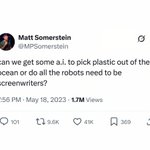
AI robots are detecting, mapping and physically collecting ocean plastic.
@TheOceanCleanup uses computer vision to spot debris. They catch about 5% of the total amount of plastic flowing into the sea from all the rivers in the world.
@clearrobotics runs autonomous solar-powered boats with cameras that collect floating waste and plastic from waterways.
The interesting part is that AI is increasingly being connected to machines that can see, navigate and physically act in the real world.

Could Patagonia be a template for purpose-driven capitalism?
In Yvon Chouinard's words, the founder of Patagonia, “Earth is now our only shareholder.”
The structure relies on two key entities: the Patagonia Purpose Trust, which protects the company’s mission and values, and the Holdfast Collective, a nonprofit that receives Patagonia’s excess profits and directs them toward environmental causes.
It's an attempt to build purpose into the ownership structure itself.
The model:
Business → create value → reinvest what’s needed → direct the excess toward the mission.
@patagonia
What if maps didn't just show you where a place is, but let you step inside it?
3D Gaussian splatting makes that possible. The technique emerged in 2023. Capture a street, a room, or a museum with a phone, and you can turn those images into a photorealistic 3D scene that people can explore in a browser.
Tools like SuperSplat from PlayCanvas make the editing, publishing, and sharing surprisingly simple. The core tools are open source and run in the browser.
Of course, creating and serving these scenes at scale still takes significant compute.
We're moving toward a world where streets, buildings, landmarks, and other physical spaces can be captured and explored digitally.
The history of technology gives us reason to be cautious. But the answer isn't to reject new tools. It's to be intentional about what we use them for.
Students need spaces where they read, write, discuss, and reason free of any dependence on technology – that's where critical thinking gets built.
And they need spaces where they're encouraged to use AI not for consumption, but to build and create things from their imaginations that they couldn't before. That's where the true value of AI lies.
Students need both.


Jensen's right that safety is an engineering problem. But engineering alone won't solve it.
Start with what engineering can do. We need evals that stress models at their limits through adversarial red-teaming, long-horizon agentic tasks, and real capability elicitation. Static benchmarks saturate too fast to matter.
Yet even the best behavioral evals only show what a model did, not why. That's where the science comes in. Interpretability is how we tell a model that's safe from one that just tests well.
And there's a gap neither can close. Nothing stops a lab from training on its own eval data, studying the answer key before the exam. Contamination is hard to detect from outside, and self-reported scores can't be verified.
So testing needs independent oversight. Held-out test sets, third-party audits, evals that are hard to game.
Better testing beats slowing down, but only if we can trust the tests.
What if originality is overrated?
Maybe the real edge comes from:
- Finding and refining a better solution.
- Stronger execution.
- Staying in the game longer.


Is China winning the Physical AI race?
China now accounts for over 90% of global humanoid robot production, backed by more than 150 domestic companies.
And the interesting part isn't just the robots, but the stack underneath: AI, manufacturing, supply chains and scale.
As more robots enter the real world, they generate more data, enable faster iteration and drive down costs.
That creates a powerful flywheel.