







Isghur ◢ ◤ retweeted
Wuxia Novel MC dilemma :
If you being mercy to your enemy, your enemy will ask his master or elder to revenge for him.
If you kill your enemy, someone will inform your enemy master or elder and he/she going to revenge for his student.
So... what the f*ck 😑😑😑
I'm supporting Lombard to build the onchain Bitcoin Capital Markets through its Community Sale on Buidlpad Now! @Lombard_Finance @buidlpad




Isghur ◢ ◤ retweeted

🇨🇳THE QUANTUM TURN IN AI, AND WHY IT WON’T STAY SMALL
It started with DeepSeek: China’s low-cost, high-performance challenger in the AI race.
Then came ManusAI.
Now, Beijing has pushed further, using a real quantum computer: Origin Wukong, to train a billion-parameter AI model
A world first.
The immediate effect? Faster training, fewer errors, and less power consumption.
China is opening Wukong’s cloud access to the world, including U.S. researchers, and quietly building Wukong 2 behind the scenes.
This was never just about a faster chip.
It’s about rewriting the future of intelligence; and who gets there first.
Source: Science & Technology Daily, USTC


🚨 QUANTUM COMPUTING: THE NEXT TECH GOLD RUSH
Quantum computing (QC) is about to blow up the tech world. Think of it as AI on steroids—but here’s the kicker: the entire U.S. quantum sector is worth less than Dogecoin. Imagine buying Bitcoin at $500. That’s where QC is today.
Regular computers process in 1s and 0s. QCs use qubits, which can be 1, 0, or both at the same time (superposition).
Translation? They solve ridiculously complex problems insanely fast.
Google recently ran a calculation on its quantum chip in 5 minutes that would take the world’s fastest supercomputer 10 septillion years to complete.
Yes, that’s older than the universe.
Why it matters:
QC isn’t just a cool science project—it’s a game-changer:
Medicine: Design drugs in weeks, not years.
Finance: Smarter investments, faster decisions.
AI: Supercharges AI, making today’s breakthroughs look tiny.
McKinsey predicts QC will add trillions to the economy in the next decade. Entire industries will be rewritten.
We are closer than most people think. Quantum startups are already hitting 10 qubits, aiming for 100 in 2 years and thousands in 5 years.
QC is already solving real problems in medicine, defense, and finance, and platforms like AWS and Google let you rent quantum power right now.
Here’s the wild part: the entire U.S. quantum sector is trading for less than a meme coin.
Meanwhile, China is outspending the U.S. 5 to 1 in quantum development.
Legislation like the Quantum Leadership Act is injecting billions into R&D, but QC’s “ChatGPT moment”—where its potential becomes undeniable—is just 2-3 years away.
The upside here is massive. QC isn’t just going to change industries—it’s going to flip them on their heads. When its moment comes, the repricing will be fast and brutal. The clock is ticking.
Source: @caprioleio



Isghur ◢ ◤ retweeted
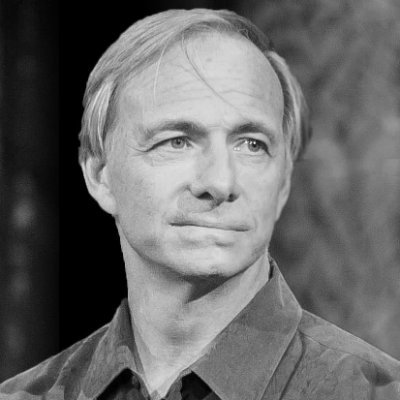
In order to understand the full picture of how the world order is changing, I would urge you to watch this five-minute clip, or the complete 40-minute animated video called "Principles for Dealing with Changing World Order." And if you want an even more complete explanation, you can check out my book of the same title.
#principles #politics #economics


Isghur ◢ ◤ retweeted

This is Thomas Seyfried.
He’s a professor of biology, who’s studied cancer for 30+ years.
His message? Cancer isn’t bad genes or bad luck—it’s damaged mitochondria.
This flips everything you’ve been told about how to treat & prevent cancer: 🧵


Isghur ◢ ◤ retweeted

What is Future Money?
In collaboration with @humafinance
Hear from the @deBridgeFinance Team
on Stablecoin Bridges and the Future of Interoperability
Date: Thurs, 3 April 2025 Time: 11-11.30am ET

Isghur ◢ ◤ retweeted

BREAKING: A FULL LIST OF PRESIDENT TRUMP'S "RECIPROCAL TARIFFS" HAS BEEN ANNOUNCED:
1. Cambodia - 49%
2. Laos - 48%
3. Madagascar - 47%
4. Vietnam - 46%
5. Myanmar (Burma) - 44%
6. Sri Lanka - 44%
7. Bangladesh - 37%
8. Serbia - 37%
9. Botswana - 37%
10. Thailand - 36%
11. China - 34%
12. Taiwan - 32%
13. Indonesia - 32%
14. Switzerland - 31%
15. South Africa - 30%
16. Pakistan - 29%
17. Tunisia - 28%
18. Kazakhstan - 27%
19. India - 26%
20. South Korea - 25%
21. Japan - 24%
22. Malaysia - 24%
23. Côte d'Ivoire - 21%
24. European Union - 20%
25. Jordan - 20%
26. Nicaragua - 18%
27. Philippines - 17%
28. Israel - 17%
29. Norway - 15%
30. Turkey - 10%
31. Peru - 10%
32. Costa Rica - 10%
33. Dominican Republic - 10%
34. United Arab Emirates - 10%
35. New Zealand - 10%
36. Argentina - 10%
37. Ecuador - 10%
38. Guatemala - 10%
39. Honduras - 10%
40. Egypt - 10%
41. Saudi Arabia - 10%
42. El Salvador - 10%
43. Morocco - 10%
44. Trinidad and Tobago - 10%
45. Brazil - 10%
46. Singapore - 10%
47. Chile - 10%
48. Australia - 10%
49. Colombia - 10%
50. United Kingdom - 10%

Praying for the earthquake victims in Myanmar and Thailand. Wishing strength and healing to all affected. 🇹🇭🇲🇲🙏#Earthquake #Myanmar #Thailand

Isghur ◢ ◤ retweeted

Paying people to dig holes and fill them back up increases GDP, as it is currently measured, even though that activity has no value.
Similarly, hiring an extreme number of regulators to vex entrepreneurs nominally increases GDP in the short term, even though it reduces output in the long term.
The flaw of Keynesianism is to see all government spending as “stimulus” even when it’s value destroying.

A more accurate measure of GDP would exclude government spending.
Otherwise, you can scale GDP artificially high by spending money on things that don’t make people’s lives better.
For example, you could shift everyone who is building cars to working at the DMV. That would result in no cars and a much worse standard of living, but GDP would appear to be the same!
Readers added context they thought people might want to know
The United States already reports a measure of GDP excluding government spending, called "Value Added by Private Industries (VAPI)". It currently accounts for 88.7% of US GDP and has steadily risen as a share of GDP since 2009, under both Obama and Biden as well as Trump:
fred.stlouisfed.org/series/VAPI
fred.stlouisfed.org/series/VAPGDPPI