





Jac retweeted
Cricket batting legend @BrianLara used to practice in the garage at home. He would place his mum’s flower pots down as fielders, throw a ball against the wall and score by hitting the ball in the gaps
#play #learning
Jac retweeted
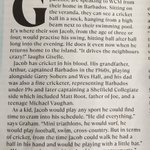
England batting star Jacob Bethell grew up in a culture of informal play and backyard cricket in Barbados.
“Rather than enduring the stultifying coaching approach used with some children”, he was “encouraged him to problem solve himself”
“His appetite for practice was insatiable”
Jac retweeted

Iraola and Bournemouth are bringing back a key idea:
Creative plays come from trust and freedom, not structure and direction.
Jac retweeted

Coaching and teaching is not about prescribing and dictating. It's about creating situations where the athlete is challenged to figure it out. You nudge them along, but if you always give them the answer, you aren't actually teaching. And they aren't learning.
Jac retweeted

Bringing back the fun factor: why play needs a bigger role in sport | Cath Bishop dlvr.it/T8WwJr

Jac retweeted

My daughter, who died unexpectedly last week introduced hundreds of kids to sport and inspired many to live and play beautifully. We’ve set up a project in her name. Please re-post and support if you feel you can. gofund.me/b6adf2fc
Jac retweeted
“The (constraints-led) approach leaves performers to do more learning on their own.
“Coaches coming from a traditional approach could find this shift of method challenging.”
NZ study on using on CLA to coach the power clean 👇
#coaching
sprinz.aut.ac.nz/__data/asse…
Jac retweeted
Using an ecological dynamics approach v cognitive “subjects were more stimulated to come up with innovative & increasingly effective solutions to achieve the performance objectives” which led to significant improvement in free-arm countermovement jumping
ncbi.nlm.nih.gov/pmc/article…


Jac retweeted

Children do not need technique training...
I repeat, children do not need technique training...
They don't need sprint technique...
They don't need agility technique...
They don't need sports specific training...
How do you teach technique to an athlete who's still developing the physical intelligence to learn?
Furthermore, because of growth, a 6 year old moves differently than a 9 year old who moves differently than a 12 year old.
Children need variety and diversity of movement.
Do lots of movement? In a variety of different ways. The same but different.
Do you want to develop a sprinter? Expose them to a variety of different ways to sprint.
Children need to first learn to problem solve before they can fix a technique problem!
#LTAD
Jac retweeted

If you aren't applying the Constraints Led Approach to your coaching yet, it's time to make a change. Watch this #TCSLive presentation from @usahockey's Ken Martel to learn how to maximize player development. 🎥 - hubs.la/Q02kxpSw0

Jac retweeted

There is no direct, linear progression of athletes from participation to elite level. That's a total myth.
Success is not a straight line.
The kids who win everything at 7, 8, 9, 10, 11, 12 years of age - rarely - and I mean RARELY - make it to the top.
I believe most #coaches know this.
So why do we persist with this blind commitment to following "#thepathway" model for all athletes in all sports all over the world?


Jac retweeted

Modern education is creating people who are smart enough to accurately repeat what they are told and follow the orders. And dumb enough to think this makes them smarter than everyone else.


Jac retweeted

🕹️coaching
Let the kids be creative &free o/t pitch so that they can make their own decisions, face desirable challenges & allow them to make mistakes.
Stop controlling &moving them where you should think they should go. It’s not a video game.
It’s their time to play & learn!
