

Technology optimist and environmentalist with a passion for technological solutions to the World´s challenges.
Norway
Joined September 2009
- Tweets4K
- Following964
- Followers662
- Likes9.1K







Det later til å være vanvittig Kina hysteri i Dagens Næringsliv.

This has got to be the most moronic story of the month. It's genuinely so stupid it frankly boggles the mind.
It was broken by Norwegian daily "Dagens Næringsliv" (DN) under the title "Chinese-owned rental cars filmed secret exercise: Saved video of soldiers and codes" (dn.no/forsvar-og-sikkerhet/k…).
BUT when you look into the story what actually happened is that, for an exercise, the Norwegian army was short on cars so it rented some from Hertz.
Those rental cars had dashcams - as cars do - that the soldiers mistakenly kept on. At one point, some soldiers found out about that: they were clicking through the car menus out of boredom and stumbled on the footage, including clips of themselves typing gate codes in front of the camera. They deleted the footage. There is zero evidence the footage left the car.
THAT'S IT, that's the whole story.
China hysteria being what it is in Europe these days, this somehow got transformed into a "China spying" story because Hertz Norway is owned by Volvo, itself owned by Geely (a Chinese company), and 2 of the cars were from a Chinese brand, Deepal.
The narrative apparently being that Geely, through Volvo, through Hertz, deliberately left standard dashcams on in rental cars in the hope that the Norwegian military would one day rent them and forget to turn the dashcams off 🤦
And now, as is always the case, it's being spread globally by accounts like Clash Report 👇, which even found a way to make the story dumber: their version has the cars as "Chinese-owned Volvos", when they weren’t Volvos at all.
Such is the contemporary media ecosystem: one outlet invents the hysteria, the next one strips away the last remaining nuance and we all end up dumber for it.


Angelo has a good point here. Large dams can mitigate flooding.

Nepal Floods: The NGOs Never Built the Dams
Look at the photo. Houses sitting in mud. People leaving the camps because the government still has not given them a real place to live. The headline makes it sound like one more delay.
That is only the surface.
For years the NGOs talking about “survivors” and “civil society” were not mainly trying to make life better in a practical way. They were taking over the space between the government and ordinary people. They used the language of rights, nature, and participation.
Then they used that language to stop the projects that could have reduced the next flood.
Big storage dams. Barrages.
Reservoirs that hold water instead of letting ice, rock and mud race down the valley.
Larger hydropower that is more than a plant sitting in the path of a flood. Those projects were treated as a crime against nature. Arun III was pushed back. West Seti and other reservoir plans met the same pressure: green campaigns, court cases, donor rules, endless meetings.
The money did not go into concrete that can control a river. It went into salaries, trips abroad, “training,” media work, and a group that answers more to foreign funders than to families in Rasuwa or Nuwakot.
That is not help. That is capture.
When a glacier collapses and a surge comes down the Bhote Koshi and Trishuli, the missing dams are not just bad luck. They are the result of years of successful blocking. The same networks that stopped the big water and energy projects now show up in the relief pictures and the seminars. Same people. New statement.
In this version, “civil society” is not a check on power. It is a second government. It makes big infrastructure look dirty.
Then it blames the state when the river does what Himalayan rivers do. Democracy becomes a funded talk. Real control of the country becomes a workshop topic.
Nepalis did not vote to stay this exposed. They were organised into staying this exposed.
Follow the money, not the slogan.
The slogan is always “people first.” The result is camps people walk out of, and rivers with no dam that was ever allowed to stand.
Roads, power and water control are not the enemy of poor people.
Taking over civic life in their name

Vi må forholde oss til hvordan russerne oppfatter sin egen situasjon. Selv om vi kanskje mener at de har en helt forskrudd virkelighetsforståelse, så er det nødvendig å sette seg inn i hva de mener for å ha et håp om å unngå katastrofale konsekvenser.
De fleste russere er faktisk av den oppfatning at de kjemper en selvforsvarskrig mot en aggressiv NATO ekspansjon. En demokratisk valgt russiskvennlig leder, Janukovitsj, ble avsatt i et vestlig støttet kupp og erstattet med vestlig orientert ledelse. Den veslige ekspansjonen er, etter russisk oppfatning, en eksistensiell trussel mot deres land.
Med denne virkelighetsoppfatningen vil russerne ikke gi seg. De som tror at de kjemper for sin egen overlevelse tar alle midler i bruk. Dersom de taper den konvensjonelle krigen vil bruk av atomarsenalet være neste skritt.
Vi kan imidlertid stanse galskapen med fredsforhandlinger, der en deling av Ukraina etter dagens frontlinjer må være mulighet som legges frem. Befolkningen i de østlige fylkene består hovedsaklig av russere og de vil sannsynligvis ikke være mye imot en slik løsning.
Invasjonen i 2022 skal vi selvsagt fordømme på det sterkeste, men det er faktisk ikke en tilstrekkelig god grunn til at vi burde ofre våre liv og sivilisasjon for den saken.
Med dagens stadig eskalerende konflikt beveger vi oss stadig nærmere en tredje verdenskrig.
Most Russians think that Russia is fighting in self defense, defending itself against NATO/Western expansion in Ukraine.
We in the west may consider this as a ridiculous statement, however, we have to take their opinion seriously if we want to avoid sleepwalking into a WW3.
We should start serious peace negotiations now.
Russias invasion in Ukraine should be strongly condemned, but it is not worth more killings in a war that can easily get even worse than it already is.
I am Norwegian and my wife and I have four kids. We dont want them to be commanded out to kill Russian soldiers or be killed by Russian soliders.
Russia is not my enemy.
Det sier noe om hvor massiv krigspropagandaen er når man blir spurt om «hva som feiler deg» dersom man ønsker fred.

Good summary of the Greenland agreement by Arnaud
Ok, we now have the actual text of the Greenland deal (whitehouse.gov/briefings-sta…), so we can say how it compares to the existing 1951 arrangement and who, between Trump and Denmark, lied the most in their framing of it.
Long story short - which may surprise some - the Danes lied the most: Trump is pretty much correct in saying that this new deal grants the US control of Greenland.
Let's look into what changed compared to the 1951 deal.
1) This is now a permanent arrangement: whereas the existing 1951 deal only lasted as long as NATO existed, this one "does not have an end date and may only be amended by mutual consent."
It even survives a hypothetical future independence of Greenland: in that event, Denmark and Greenland must ensure that the independent Greenlandic state "affirmatively assume[s] all of the rights and obligations of the Kingdom of Denmark specified in this Agreement."
2) In the 1951 agreement, the US could set up bases only where both governments agreed, and only on the basis of NATO planning. The new deal locks in three bases: the US can "modernize and expand its activities" at Pituffik, its only base in Greenland until now, and "shall be allowed to establish an additional Defense Area at Narsarsuaq and Mestersvig." Further bases beyond these 3 can be justified by the defense of "the American continent," a US interest rather than a NATO one.
Also, quite subtle but this is interesting: Article IV(iii) says that "the United States may establish additional defense areas in Greenland" and that consultations are then held "to decide implementation details based on mutual agreement." What this means is that the principle of a new base is automatically granted and only the implementation details require agreement.
Article VII also gives the US "the right to raise concerns regarding construction, or change of use" of any building near a US base, after which the parties decide together what to do. Which means that the US has a say over civilian planning around its bases.
3) On US military movement across Greenland, the wording change between the 1951 agreement and this new one is quite funny.
The 1951 text said (Art. V(3)): the US "may enjoy... the right of free access to and movement between the defense areas through Greenland, including territorial waters, by land, air and sea," but only "in accordance with general rules mutually agreed upon and issued by the appropriate Danish authority in Greenland."
The new one says: "the United States of America shall enjoy... the right of free access to and movement between the Defense Areas through Greenland, including the Territorial Waters, by land, air and sea."
That's it: "May" becomes "shall," and the US military movement no longer has to follow rules "issued by the appropriate Danish authority in Greenland." The US also gets something new on top: "undersea access to and movement within the Territorial Waters," i.e. submarines.
4) Non-NATO exclusion: non-NATO states are barred from military installations or a persistent presence in Greenland unless all three parties approve, giving the US an effective permanent veto. The 1951 deal had no equivalent clause.
5) Investment screening: this is entirely new. "States or investors from a state that is not a member of NATO, a NATO partner, or an EU member state" (i.e. Russia, China, India, the Gulf States, etc.), "shall not be allowed to have (i) control, (ii) significant influence, or (iii) access to non-public information...within Particularly Sensitive Sectors or Activities in the territory of Greenland (including the Territorial Waters), unless agreed between the Parties."
Again, it basically means that the US has a permanent veto over who can invest in strategic sectors in Greenland, as far as non-NATO or EU states are concerned.
6) Lastly, in stark contrast with the 1951 deal, the framing of the deal changes significantly: this new deal is largely framed around the US.
The 1951 agreement existed only "for the benefit of the North Atlantic Treaty Organization." The new one lists the defense of "the American continent" as an objective, celebrates "the irreplaceable role" of the United States military as well as "the United States' indispensable historical and ongoing contributions to the security and defense of Greenland," and names the establishment of Trump's "Golden Dome" missile defense system as a key goal.
So, to sum up:
- The US secured a permanent military foothold that even an independent Greenland would inherit whether it likes it or not
- The US now has veto power over any non-NATO military presence in Greenland, and over who can invest in its strategic infrastructure and resources (beyond NATO and the EU)
- Denmark signed away its say over the principle of new US bases, with only the right to discuss the "implementation details"
- Danish authorities no longer set the rules for US military movement across the island
- And all of it is now justified by the defense of "the American continent"
I don't know in which universe this even remotely "recognizes the sovereignty and territorial integrity of the Kingdom and the Greenlandic people's right to self-determination," as Danish PM Mette Frederiksen put it (stm.dk/en/press/press-releas…).
Yes, the preamble of the text cynically "reaffirms" Danish sovereignty but, in my book, when you let a foreign country put bases on your soil, move its troops without following your rules and veto who else can come in, in perpetuity, after it spent two years threatening to take you by force, the word for that is anything but "recognized sovereignty" 🤷

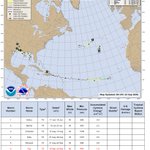
Ingen atlantiske orkaner så langt i år noe som er svært uvanlig.
Det er mye vi fremdeles ikke vet om klimaet, selv om vi selvsagt erkjenner at global oppvarming er en realitet.

Trump fikk Grønland likevel, et tegn på at Europa går inn i « century of humililiation» slik kineserne gjorde i 1842.
At Danmark på papiret fremdeles har suverenitet betyr lite når USA har vetorett på hvem som kan få tilgang til ressursene.
USA får i følge Chatgpt permanent:
« A say over strategic foreign military presence and sensitive investments: non-NATO military bases would be excluded, and investments by countries such as China and Russia would face restrictions.»

Maybe environmental purists are to blame for the Nepal disaster?
Western NGOs didn’t just block Nepal’s dams. They built the political class that still can’t protect the country—and the last “revolution” was their handiwork.
Today’s flash flood catastrophe on the Nepal-China border—dozens dead, hundreds missing, villages and infrastructure erased—exposes the same pattern.
For decades Western NGOs and their funders (USAID, NED and the usual network of “civil society” outfits) systematically blocked major barrages and storage projects. Environmental purity tests and “indigenous rights” campaigns killed Arun III, stalled West Seti and others. Nepal was left with run-of-river schemes that generate power when the weather cooperates but offer almost no flood regulation when an upstream avalanche or glacial surge hits. Sovereignty over infrastructure was surrendered to foreign vetoes.
See the record:
• International Rivers and allied groups helped force the World Bank withdrawal from Arun III and later targeted West Seti: riverresourcehub.org/resourc…
• Civil society coalitions including International Rivers urged the World Bank to abandon Upper Arun and other mega-dams: transrivers.org/2024/3983/
• US lobbying, driven by NGO pressure and legislation, instructed international lenders to avoid large reservoir projects in Nepal: nepalenergyforum.com/america…
That same foreign NGO ecosystem runs the political system. USAID and related Western money poured hundreds of millions into “governance,” “civil society,” media, youth empowerment and “democracy promotion.” Local NGOs became parallel power structures, more responsive to Washington and European donors than to Nepali voters. Ministers, activists, media figures and “independent” experts rotate through these funded networks. The result is a political class trained in the language of Western grants rather than in building real national capacity.
Foreign NGOs effectively set the limits of what Nepal is allowed to do.
Look at the last so-called revolution. The September 2025 “Gen Z” uprising that toppled KP Sharma Oli was sold as a spontaneous youth revolt against corruption and a social media ban. In reality it followed the classic color-revolution script: digital coordination through Discord channels linked to NGOs like Hami Nepal, rapid escalation, selective violence, and an interim government staffed with figures drawn from USAID- and NED-linked organizations.
An online “vote” produced Sushila Karki as interim prime minister.
Half the early interim cabinet had direct ties to Western-funded fronts. The process cleared the old parties and installed a new configuration more amenable to the same external networks. Elections in March 2026 then delivered Balen Shah and the Rastriya Swatantra Party—another product of the post-uprising landscape shaped by those same influences.
This is not organic national renewal.
It is managed regime change that keeps Nepal dependent, unable to pursue large-scale infrastructure without Western approval, and geopolitically pliable between India and China.
The empire’s NGOs first prevented the dams that could have mitigated today’s disaster. Then they engineered the political upheaval that installed leadership still operating inside the same donor-dependent framework.
Nepal’s rivers remain unmanaged for extreme events because the people who decide policy were selected and funded by the same external actors who oppose real sovereign development.
Sovereignty is not a slogan for Discord polls or grant applications.
It means the right to build the infrastructure that keeps your people alive—and the right to reject foreign NGOs that treat your country as a laboratory for their ideology and strategic games. Until Nepal breaks that dependency, catastrophes like the one unfolding today will keep repeating.

Økningen i tilfeller av autisme ser ut til å helt og holdent skyldes endret diagnostikk. Det er ikke flere autister enn før.


Flott at vår statsminister kan reise med tog.
Flere burde velge dette alternativet både av med hensyn til miljø og økonomi.

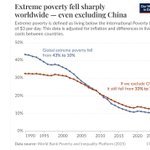
Erik has an excellent take on China’s poverty alleviation program. Starts 90 seconds into the video.

How did China bring every citizen out of extreme poverty?
Not long ago nearly all Chinese were poor.
In a dedicated push of a scale and speed unmatched in human history, China brought prosperity to even the most hard to reach areas.
How could it happen?
I went to remote Guizhou province in the inner of China to find out:

