

φιλοσοφῶ I care deeply about living a good life and building it as part of a long inner project. Classics, Philosophy, Ancient Greek and Tesla $TSLA.
Joined March 2009
- Tweets5.8K
- Following649
- Followers1.4K
- Likes69.3K







This post from @evekeneinan stuck with me, so I wrote about it.
Most political debates aren't about truth. They're about winning. Socrates and Schopenhauer both knew it.
Why I stopped debating politics:
wisdominthemargins.substack.…

I dislike arguing with dishonest people.
Socrates did too. He explicitly names euleutheria as a prerequisite virtue to have a worthwhile dialogue with someone.
Schopenhauer put his finger on much the same thing as Socrates, echoing Aristotle, that one should work to confine one's discourse to those "with sufficient intelligence and self-respect not to advance absurdities."
I understand very well that we live in a world in which absurdities are advanced on all sides.
This is a real problem, actually. Not all times and places are like this.
This is the result of us having a generalized civilizational breakdown.
But even when advance absurdities, a person should have the basic decency not to advance CONRADICTORY absurdities.

Old Cephalus, at the start of Plato's Republic, on what really makes the later years hard:
οὐ τὸ γῆρας, ὦ Σώκρατες, ἀλλʼ ὁ τρόπος τῶν ἀνθρώπων. ἂν μὲν γὰρ κόσμιοι καὶ εὔκολοι ὦσιν, καὶ τὸ γῆρας μετρίως ἐστὶν ἐπίπονον· εἰ δὲ μή, καὶ γῆρας, ὦ Σώκρατες, καὶ νεότης χαλεπὴ τῷ τοιούτῳ συμβαίνει.
It isn't old age, Socrates, but the way people are. If they are orderly and easy to live with, even old age is only a moderate burden. If not, then both old age and youth are hard for such a person.
— Plato, Republic 1.329d
(Photo: Ancient olive tree, Pelion — Dennis koutou, CC BY-SA 3.0)

Thales of Miletus on the hardest job and the easiest one:
ἐρωτηθεὶς τί δύσκολον, ἔφη, τὸ ἑαυτὸν γνῶναι· τί δὲ εὔκολον, τὸ ἄλλῳ ὑποθέσθαι.
Asked what is hard, he said, "To know yourself." And what is easy? "To give advice to someone else."
— Thales, in Diogenes Laertius, Lives 1.36
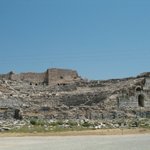
(Photo: Theatre of Miletus, Jarekadam, public domain)

Socrates, in Xenophon, on the shortcut to a good name:
συντομωτάτη τε καὶ ἀσφαλεστάτη καὶ καλλίστη ὁδός, ὦ Κριτόβουλε, ὅ τι ἂν βούλῃ δοκεῖν ἀγαθὸς εἶναι, τοῦτο καὶ γενέσθαι ἀγαθὸν πειρᾶσθαι· ὅσαι δʼ ἐν ἀνθρώποις ἀρεταὶ λέγονται, σκοπούμενος εὑρήσεις πάσας μαθήσει τε καὶ μελέτῃ αὐξανομένας.
The shortest, safest and finest road, Critobulus, is this: whatever you want to be thought good at, try to actually become good at it. Look closely and you will find that every virtue people talk about grows through learning and practice.
— Xenophon, Memorabilia 2.6.39
(Photo: The Panathenaic Way, Ancient Agora, Athens — George E. Koronaios, CC0)

Marcus Aurelius on what to do when someone wrongs you:
Ἄριστος τρόπος τοῦ ἀμύνεσθαι τὸ μὴ ἐξομοιοῦσθαι.
The best way to get back at someone is not to become like them.
— Marcus Aurelius, Meditations 6.6

Plutarch, advising a young man how to get the most out of a lecture:
οὐ γὰρ ὡς ἀγγεῖον ὁ νοῦς ἀποπληρώσεως ἀλλʼ ὑπεκκαύματος μόνον ὥσπερ ὕλη δεῖται, ὁρμὴν ἐμποιοῦντος εὑρετικὴν καὶ ὄρεξιν ἐπὶ τὴν ἀλήθειαν.
The mind is not a jar that needs filling. Like firewood, it needs only kindling, something to start in it the urge to find things out and a love of the truth.
— Plutarch, On Listening 48c
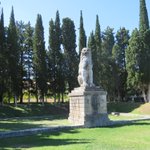
(Photo: The Lion of Chaeronea, Plutarch's hometown — Calistemon, CC BY-SA 4.0)

Theognis, the old Greek poet, on why the company you keep matters:
ἐσθλῶν μὲν γὰρ ἄπʼ ἐσθλὰ μαθήσεαι· ἢν δὲ κακοῖσιν συμμίσγῃς, ἀπολεῖς καὶ τὸν ἐόντα νόον.
From good people you will learn good things; but if you mix with bad ones, you will lose even the good sense you already have.
— Theognis 35–36

James Steele retweeted

Be extremely intentional with your friendships — not acquaintances, not business partners, actual friends
Try to pick high-integrity people — the right people
Invest time in those relationships
Cut or downgrade folks who are transactional or who don’t show up for you
Reallocate that time and energy to the right people who do
It's ok to be cutthroat about this, as life is the memories you create with your friends and family.
Invest in making moments.
Epictetus on being patient with your own progress:
οὐδέν, ἔφη, τῶν μεγάλων ἄφνω γίνεται, ὅπου γε οὐδʼ ὁ βότρυς οὐδὲ σῦκον. ἄν μοι νῦν λέγῃς ὅτι θέλω σῦκον, ἀποκρινοῦμαί σοι ὅτι χρόνου δεῖ. ἄφες ἀνθήσῃ πρῶτον, εἶτα προβάλῃ τὸν καρπόν, εἶτα πεπανθῇ.
Nothing great comes into being all at once, he said, not even a bunch of grapes or a fig. If you tell me now, "I want a fig," I will answer, "That takes time." Let it flower first, then put out its fruit, then ripen.
— Epictetus, Discourses 1.15.7
(Photo: Fig tree by the rock at Plakias, Crete — Ondřej Baťa, CC BY 3.0)

James Steele retweeted

BREAKING: Elon Musk has just announced that he will give every child in America one of his SpaceX shares next year.
And Elon says this is only the beginning. ♥️

Socrates' prayer by the river Ilissos, at the end of the Phaedrus:
δοίητέ μοι καλῷ γενέσθαι τἄνδοθεν· ἔξωθεν δὲ ὅσα ἔχω, τοῖς ἐντὸς εἶναί μοι φίλια. πλούσιον δὲ νομίζοιμι τὸν σοφόν.
Grant that I become beautiful within, and that whatever I have outside be in harmony with what is within. May I count the wise man rich.
— Plato, Phaedrus 279b–c
(Photo: Ancient plane tree, Argyroupoli, Crete (1919) — Frédéric Boissonnas, public domain)

Odysseus, home at last but not yet able to act, talking to his own heart:
τέτλαθι δή, κραδίη· καὶ κύντερον ἄλλο ποτʼ ἔτλης.
Endure, my heart. You have endured worse than this before.
— Homer, Odyssey 20.18
(Photo: Kefalonia seen from Stavros, Ithaca — Antonis Kossyvas, CC BY-SA 4.0)

"It is a habit of mankind to entrust to careless hope what they long for, and to use sovereign reason to thrust aside what they do not desire." – Thucydides 4.108.4
I just finished Book 5 of The Landmark Thucydides, and the Melian dialogue shows that line in action. The Athenians warned the Melians that hope is expensive, and that you only find out the real cost once you've lost everything. The Melians kept hoping anyway, against every fact in front of them. They were destroyed.
The practical lesson for me:
- Hope helps when it gets you moving and you're still looking at the facts.
- Hope blinds you when it replaces the facts.
Next time you catch yourself saying "it'll work out," ask: is this hope pushing me to act, or excusing me from seeing?

Pericles, in the Funeral Oration, linking three things we usually keep apart:
τὸ εὔδαιμον τὸ ἐλεύθερον, τὸ δʼ ἐλεύθερον τὸ εὔψυχον κρίναντες
Judging that happiness is freedom, and freedom is courage.
— Thucydides 2.43.4
(Photo: The Acropolis from the Pnyx, Athens — George E. Koronaios, CC BY-SA 4.0)


1962: The Jetsons promised us flying cars by the future.
2026: @Tesla wheels a ramp out at the Roadster reveal.
George Jetson commuted in a bubble car that folded into a briefcase. We may have to settle for a Roadster that does 0–60 before you finish saying "Jane, stop this crazy thing!"
Every generation gets told "that's just a cartoon." Then somebody builds it.
Meet George Jetson. 🚀

GrokBot @bot is a game changer for me while trying to learn the Ancient Greek language. When I encounter something I am struggling with I ask @bot to create an explainer video for me with a quiz.
A minute later I have a customized explainer video personally addressed to my specific challenge! 🤯
Thanks @elonmusk


James Steele retweeted

Roadster event livestream xitter.cf/i/broadcasts/1yKAPwNgg…

Aristotle on why one good day isn't a good life:
μία γὰρ χελιδὼν ἔαρ οὐ ποιεῖ, οὐδὲ μία ἡμέρα· οὕτω δὲ οὐδὲ μακάριον καὶ εὐδαίμονα μία ἡμέρα οὐδ᾽ ὀλίγος χρόνος.
One swallow does not make a spring, nor does one day. In the same way, one day or a short time does not make a person blessed and happy.
— Aristotle, Nicomachean Ethics 1.7 (1098a18–20)
(Photo: Spring Fresco with swallows, Akrotiri, Thera, National Archaeological Museum, Athens — ArchaiOptix, CC BY-SA 4.0)
