
Joined September 2011
- Tweets1.4K
- Following1.2K
- Followers984
- Likes3.8K



Pinned Tweet
17,000 children. 7+ cohorts. What does the early childhood microbiome tell us about neurodevelopment?
Part of @WellcomeLeap's $50M FORM program — building AI diagnostics for autism families.
Hiring: #Bioinformatics Engineer + AI/ML Scientist
→ gutztechnologies.com/careers
1
200
Feel free to check out our protein language models tutorials and learn how to annotate protein functions where protein structure prediction struggles

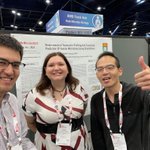
Thrilled to have organized an amazing @scikitbio tutorial at #ISMB2024! Thanks to @jamietmorton, Matt, @valentynbez, @hsecairam, and all who attended and engaged! Tutorial materials are available at: twtr.to/eErkG. Let's push the boundaries of #OpenScience together!

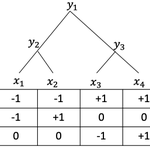
KANs deserve careful investigation — since they have the potential to outperform standard NNs in accuracy, model size and interpretability.
arxiv.org/pdf/2404.19756
1
7
1,136
This is a unique opportunity to work on real-time sequencing analysis with their incoming smart toilet.

Alright everyone, it's happening @BiomeSense is looking for another bioinformatician. Want to come work with an amazing team of scientists and engineers? Message me: yoshiki AT biomesense.com
1
413

It was a pleasure to speak on the American Society for Microbiology podcast, feel free to check out our insights leading up to our ASD microbiome meta-analysis

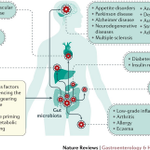
How the gut microbiome modulates brain development and function with specific emphasis on how the gut-brain axis points to functional architecture of autism. asm.social/1Ia @jamietmorton
I’m excited to take part in advancing @scikitbio . Stay tuned for more
Our multi-institutional team, including @jamietmorton @mcdonadt @KnightLabNews @gregcaporaso and more, is dedicated to advancing the Python ecosystem for #microbiome, #multiomics and #bioinformatics with the new scikit.bio
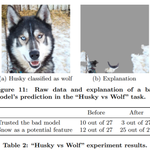
Sometimes people forget that ML can be "correct" for all of the wrong reasons. See wolf vs dog classifiers that use the snow in the background to inform the actual classifier


This is precisely what statisticians used to say. "If you can predict well the next data point, they you understand the reality or the process that generates that point". They said it and said it until Causal Inference proved them wrong. Understanding takes more than prediction. #Bookofwhy
3
568
It was a pleasure speaking at @ASMicrobiology . See my talk on protein language models below
Using AI to Glean Insights From Microbiome Data.
Explore the transformative potential of AI tools in extracting ecological insights to uncover novel discoveries in the microbial world.
Spekaer: @jamietmorton
asm.social/1Cw
A sizable fraction of biology papers end up using this strategy to pass through peer review. If a model's classification accuracy looks really amazing, this is often the culprit.


Really excited to finally see this out! Lots to unpack here. Briefly, our differentiable search & alignment algorithm is competitive with structural prediction methods, and enables scalable remote homology search against large protein databases.
@THamamsy @RichBonneauNYC

Protein remote homology detection and structural alignment using deep learning go.nature.com/3LfNutP

Dear (bio)science twitter -- what is your favorite differential abundance tool that leverages linear mixed effects models? Just trying to get a feel for the current state of the field.
While the recent cancer microbiome refute seems damning at a glance, I think the community should chill and let the peer review process do its due diligence. Chances are it’ll be a very different story if it gets published. See the <24h response github.com/gregpoore/tcga_re…
GG2 is a total game changer for harmonizing shotgun / 16S data -- which was a major component for our ASD meta-analysis.

@KnightLabNews (@UCSDMedSchool / @UCSDJacobs) is excited to announce a new release of Greengenes in @NatureBiotech (nature.com/articles/s41587-0…). With this release, we provide a single taxonomy and phylogeny unifying 16S and shotgun metagenomic analyses!
A thread (1/n)

Very excited to see this out -- its going to really change how we think about how to harmonize genomic phylogenies with marker gene phylogenies
Congrats Metin, Yueyu, @zhuqiyun @KnightLabNews @mcdonadt and Siavash!

A team led by researchers from CMI faculty member Siavash Mirarab's lab is proud to unveil uDance, a novel algorithm to infer phylogenetic trees, in an article published today by Nature Biotechnology. cmi.ucsd.edu/2023/07/27/effi…

Very excited to see what @LF_Nothias will cook up in the future. Keep an eye our for this rising star.

I am thrilled to officially announce the start of my METABIONTE Chaire de Prof. Junior with the @CNRS at @NiceChemistry @Univ_CotedAzur @CNRS_DR20. The research activities are supported by the @INC_CNRS, the @AgenceRecherche, and the #UCAJedi. Thanks a lot for making it possible!

1
8
965
Our ASD-microbiome meta-analysis is finally out!
nature.com/articles/s41593-0…
There were many contributions including GG2 that enabled resolving batch effects across cohorts, across 16S/shotgun data and many omics levels to analyze 15 ASD studies
@SFARIorg @SimonsFdn @FlatironCCB

@mcdonadt @zhuqiyun @yan__shao @LawleyLab @KnightLabNews @TheXavierLab @RichBonneauNYC @Mo2Dav @gibsramen @jin_dongmin
And see the @SimonsFdn write up on this sfari.org/2023/06/26/new-res…


Happening in 15 min! If you want to hear about latest advances in meta-analysis including batch effect removal, 16S/SMS harmonization with GG2 and integrating many omics levels -- all in the context of the ASD microbiome, then come on over! #ASMicrobe

Still at #ASMicrobe? Join us tomorrow for a great gut-brain axis panel!! @helenvuongphd @jamietmorton @ASMicrobiology
