

AI/semis buyside investor | All views my own, not financial advice
NY
Joined April 2024
- Tweets1.4K
- Following77
- Followers10.2K
- Likes1.1K






🔔 The Daily Semi-Cap — November 5, 2026
📊 SMH: $447.73 (-11.21% vs prior trading close)
• Google committed $17B to its first Wyoming data center, partnering with AEP, Tallgrass, Black Hills and Related Digital. The power plan includes 702MW of Bloom Energy fuel cells with carbon capture; the campus will be air-cooled. Infrastructure spending is continuing, but power procurement and community acceptance increasingly determine where.
• Applied Optoelectronics posted $269.9M Q3 revenue, up 128%, and $0.17 adjusted EPS. Q4 revenue guidance is $385–420M. A new multiyear Tier 1 hyperscaler agreement improves visibility, but electrical-power and construction delays are slowing U.S. manufacturing expansion. The year-end equipment-capacity target is now above 500,000 monthly 800G/1.6T units versus 650,000 previously.
• IREN’s fiscal Q1 revenue rose 66% sequentially to $228M; AI Cloud revenue jumped 182% to $200M with an 86% segment gross margin. Backlog reached $20.3B, roughly two-thirds with investment-grade counterparties. Its $4B-plus ARR target is fully contracted and funded; converting that contracted opportunity into operating revenue remains the execution test.
• OpenAI introduced a National Community Compact for future campuses it owns and operates: full energy and infrastructure cost coverage, financial assurances before major spending, site-level water/electricity disclosure and tight NDA limits. Its policy blueprint also supports interruptible grid connections. Community protections are becoming a development requirement, not just public relations.
• Micron reportedly paused construction of its up-to-$4.5B Taoyuan fab amid an unresolved labor dispute over profit-sharing. The company says existing Taiwan operations continue normally and customer supply remains protected. This is a future-capacity timing issue—not evidence that current DRAM or HBM production has stopped. Further union talks are scheduled tomorrow.
• Moonshot reportedly sought European neocloud access to clusters of at least 8,000 Nvidia Blackwell GPUs, primarily for inference, with training also discussed. One proposed arrangement required 30–50% more upfront payment than non-Chinese customers. Offshore compute demand remains real, but remote-access restrictions could materially alter customer economics and financing risk.
🔔 The Daily Semi-Cap — November 4, 2026
📊 SMH: $504.27 (-2.75% vs prior trading close)
• Data-center opponents prevailed on 40 of 41 local ballot measures across 10 states. Ohio alone had 21 measures, while its governor-elect supports a conditional moratorium. The investment risk is increasingly permission to build—not just demand for compute. Already-powered sites and projects awaiting approvals deserve very different valuations.
• Coherent delivered $2.37B fiscal Q1 revenue, up 56% on a pro forma basis, and $2.09 adjusted EPS. Q2 revenue guidance reaches $2.55–2.75B; full-year pro forma growth should exceed 60%. Management now targets its first $4B quarter in FY28. Optical connectivity demand is accelerating despite the infrastructure stocks’ bruising session.
• TeraWulf secured Google credit support for anticipated debt financing backing approximately $19B of Anthropic lease commitments in Kentucky. A definitive Fluor construction agreement covers three buildings, with phased completion expected from late 2027 through Q2 2028. This improves financing and execution visibility; it is not $19B of new revenue today.
• Arm reported $1.443B fiscal Q2 revenue, up 27%, and $0.52 adjusted EPS. Licensing grew 50%, but royalties rose just 8%, despite data-center royalties doubling. Q3 revenue guidance is $1.54B, plus or minus $50M. Its own AGI CPU deliveries remain on track for January–March 2027, adding silicon exposure beyond IP licensing.
• Qualcomm posted $10.44B adjusted quarterly revenue and $2.17 adjusted EPS. Handset sales fell 26%, while automotive jumped 89% to $1.99B. Management reiterated a $5B FY27 data-center revenue target and announced a multigenerational Amazon collaboration. Diversification is becoming tangible, but the new businesses still have a sizable smartphone hole to fill.
• GlobalFoundries generated $1.899B Q3 revenue, up 13%, and $0.53 adjusted EPS. Adjusted gross margin hit a record 31.4%, up 540 basis points, as higher-value AI applications improved mix. Adjusted free cash flow was $136M. The AI opportunity extends beyond leading-edge GPUs into differentiated foundry processes serving connectivity and power.
🔔 The Daily Semi-Cap — November 3, 2026
📊 SMH: $518.52 (+2.01% vs prior trading close)
• AMD printed $13.38B Q3 revenue, up 45% YoY, and $2.09 adjusted EPS. Data-center sales nearly doubled to $8.5B. Q4 guidance jumps to $17B, up 27% sequentially, as Helios and Venice production scales. The accelerator ramp is landing alongside stronger server CPUs—not waiting for consumer demand to recover.
• Arista delivered $3.66B Q3 revenue, up 58.5% YoY, its fastest growth since going public. Adjusted EPS reached $1.20 with a 49.1% operating margin. Q4 revenue guidance is $3.9–4.0B. Networking demand is converting into exceptional profitability, reinforcing that AI spending extends well beyond the GPUs themselves.
• Astera Labs revenue surged 154% YoY to $584.9M, with $1.32 adjusted EPS. Scorpio became its largest product family as X-Series switches reached volume production. Q4 revenue guidance of $730–750M implies another roughly 27% sequential jump: rack-scale connectivity is becoming a much bigger silicon opportunity per accelerator.
• Eaton’s Q3 revenue rose 28% to $8.95B, including 19% organic growth; adjusted EPS reached $3.68. Electrical backlog expanded 46%, while rolling organic orders climbed 39% in Electrical Americas and 51% globally. Full-year organic growth guidance rises to 13–15%. Power equipment demand is still outrunning shipments despite capacity expansion.
• Nvidia reportedly told data-center customers to limit Chinese business to 49% under new and future contracts worldwide, with existing agreements excluded. This is broader than an Asia-only restriction. For neoclouds, customer composition becomes another deployment constraint; offshore GPU access may tighten even where the hardware itself is already permitted.
• Drax, Brookfield and Radiant agreed to develop a UK AI campus, initially targeting 100MW from Q1 2028 and another 500MW through 2031. Potential investment, including chips, exceeds £20B. But tenants, approvals and final investment decisions remain outstanding: a large infrastructure pipeline, not £20B of committed near-term equipment orders.
🔔 The Daily Semi-Cap — November 2, 2026
📊 SMH: $508.31 (-2.71% vs prior trading close)
• Marvell is buying Lumentum in a $115B all-stock deal: 4.5 MRVL shares per LITE share, with closing targeted for H1 2028. Combining custom silicon, switching and lasers is a huge bet on optical integration; management targets over $1B in annual cost synergies.
• Oracle filed to raise $20B, split equally between common stock and senior notes, putting last week’s financing plan into motion. Shares fell 8.8%. The AI infrastructure trade’s constraint isn’t just securing GPUs and power anymore—it’s funding the buildout without crushing shareholder returns.
• Lumentum’s standalone numbers were equally loud: fiscal Q1 revenue reached $1.263B, up 136.5% YoY, with $4.57 adjusted EPS. Q2 revenue guidance is $1.575–1.625B. A second major near-/co-packaged optics win carries over $5B in purchase commitments, underscoring the stakes behind Marvell’s bid.
• Fabrinet printed fiscal Q1 revenue of $1.475B, up 51% YoY, and $4.34 adjusted EPS. Next quarter’s guide: $1.60–1.65B revenue and $4.77–4.92 adjusted EPS. Broad program demand and new-product ramps are translating the optical connectivity boom into real manufacturing growth, not just bigger deal valuations.
• Aehr’s fiscal Q1 revenue tripled to $33M; $46.7M bookings delivered roughly 1.4x book-to-bill. FY27 revenue guidance moved to $150M from $130–150M. A major accelerator/CPU/networking supplier will buy a FOX-XP cell for Taiwan production evaluation—promising, but not yet a volume-production win.
• Lattice reported $291M Q3 revenue, up 118%, including newly acquired AMI, and $0.72 adjusted EPS. FPGA revenue itself grew roughly 90%, with approximately $335M total revenue expected next quarter. AI demand is lifting control silicon and firmware alongside the headline accelerator suppliers.
• Onsemi’s Q3 revenue rose 11% to $1.722B, with $0.90 adjusted EPS; AI data-center revenue jumped 175%. Its Ferric acquisition agreement lifts the 2030 AI data-center revenue target by $500M to over $3B, expanding its position in power delivery around increasingly power-hungry processors.
• OpenAI launched Grid Protectors to make future campuses reduce demand during grid stress, using on-site generation, storage and power controls where appropriate. Its planned Georgia campus offers up to 1GW of flexible demand response. Grid flexibility is becoming part of the AI deployment playbook.
🔔 The Daily Semi-Cap — November 1, 2026
📊 SMH: $522.49 at the October 30 close (-6.98% vs October 29, the preceding trading close). Markets closed today.
• Aramco closed its acquisition of 49% of HUMAIN, with PIF retaining 51%. The transaction includes approximately $2.6B in 2026 cash contributions plus AI and computing assets. HUMAIN targets 3 GW of AI datacenter capacity by 2030: meaningful financial backing for Saudi compute expansion, but that capacity is a deployment goal, not operating supply.
• Nvidia’s new AgentX submission puts Rubin NVL72 at 20.9x GB300 NVL72’s performance per total cost of ownership at 325 tokens per second per user, and 9.11x at 200. These are workload- and latency-specific benchmark economics, not a blanket fleet-wide uplift. Faster inference increasingly depends on software and memory orchestration, not just more GPUs.
• Energy North has dropped Project Ares’ indicative June 2028 first-power date. The proposed 1 GW gas-and-solar datacenter in Australia’s Northern Territory now awaits environmental assessment terms before a replacement timeline. Even remote sites face water, land and permitting constraints; announced megawatts cannot be treated as scheduled equipment demand when the commissioning date disappears.
• Korea Investment Holdings and SBI Holdings are discussing a 10 trillion won joint fund to build large-scale AI datacenters in Japan. This remains a proposed financing vehicle rather than capital already deployed. The opportunity extends beyond accelerators into electrical equipment, cooling and construction, but the conversion from fundraising plans to powered projects is what matters.
• GO Telecom awarded 3T a SAR 185.91M contract, roughly $49.6M excluding VAT, for cloud-AI datacenter infrastructure built around Dell systems and Nvidia GPUs. Implementation is planned over 12 months. The award adds a concrete regional hardware project alongside the larger sovereign ambitions; financial impact still depends on completing contract-signing requirements.
🔔 The Daily Semi-Cap — October 31, 2026
📊 SMH: $522.49 at the October 30 close (-6.98% vs October 29, the preceding trading close). Markets closed today.
• OpenAI is now seeking up to $20B in its latest funding round, down from a $30B target, with a reported $1.25T post-money valuation. The round remains open; this is not cash already raised. For chipmakers and compute landlords, the financing available to their largest customers matters as much as headline demand.
• Elon Musk set a year-end target of approximately 1.2 million Blackwell GPUs at Colossus 2. That is a deployment target, not a statement that those GPUs are already operating. The scale is significant for Nvidia and the surrounding infrastructure stack, but power availability and commissioning will determine how quickly hardware becomes productive compute.
• Samsung hosted Sam Altman and roughly 50 affiliate presidents in Yongin today to discuss AI strategy. Its existing Stargate memory relationship remains important context, but the meeting did not announce a new supply contract or additional chip volumes. For memory investors, strategic access and binding orders remain very different catalysts.
• A late-Friday federal ruling kept the NAACP’s Clean Air Act lawsuit against xAI and MZX Tech moving forward. The court rejected the argument that their gas turbines qualified for a mobile-source permitting exemption. This was not a final liability judgment or shutdown order, but it underscores the permitting risk attached to behind-the-meter datacenter power.
🔔 The Daily Semi-Cap — October 30, 2026
📊 SMH: $522.49 (-6.98% vs prior trading close)
• Chips took a brutal reset: Intel fell 28.6%, AMD 10.9% and Nvidia 4.2%. The divergence between infrastructure demand and equity performance is widening. Investors are demanding more than AI growth; funding costs, execution and cash generation increasingly determine who gets rewarded for the buildout.
• MediaTek expects $2.5B of AI accelerator revenue in Q4 and approximately $16B in 2027, with its second accelerator project targeting Q1 2028 volume production. Q3 revenue rose 18.3% to NT$168.1B; Q4 guidance jumps to NT$210.1B–NT$221.8B. Custom silicon is becoming a much bigger competitive force.
• Nvidia is reportedly discussing credit support for Nscale’s Anthropic infrastructure project. A potential backstop would extend its role beyond supplying accelerators into supporting customer financing. That could unlock additional deployment capacity, but also deepen the connection between chip demand and the creditworthiness of infrastructure buyers.
• Tokyo Electron delivered ¥935B fiscal Q2 revenue, up 48.4%, and ¥295.3B operating income, up 86.4%. Its new full-year outlook calls for ¥3.7T sales and ¥1.169T operating profit. Management sees wafer-fab equipment spending above $210B in 2027: a powerful counterpoint to today’s chip-equity rout.
• Blackstone now expects Anthropic to receive a double-B-range credit rating after its IPO, rather than the previously anticipated investment-grade status. This is an investor expectation, not an assigned agency rating. The distinction matters: speculative-grade financing could make funding the lab’s enormous compute commitments more expensive.
• Exelon posted $0.87 adjusted operating EPS versus $0.86 a year earlier and narrowed full-year guidance to $2.85–$2.91. Higher delivery rates supported utility earnings, while storms, interest and depreciation offset gains. For the grid side of AI infrastructure, investment recovery and financing discipline remain central to shareholder returns.
• Google’s Suncatcher prototype is operating in orbit with four TPUs, but its roughly 1-kW power supply permits only one to run for about 20 minutes at a time. The milestone enables real radiation and thermal testing; it is not yet an alternative to terrestrial datacenter capacity.
My interpretation of the $MRVL $LITE deal which I haven’t seen anyone else get right.
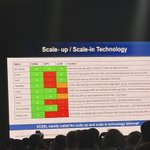
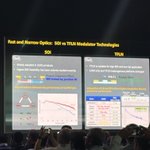
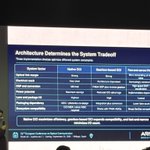
Marvell is competing with $NVDA and $AVGO in accelerators. Nvidia was about to win scale-up CPO because they bought all of Lumentum's capacity and locked everyone else out… so Marvell, THE optical company, found itself unable to provide scale-up optics in its ASIC design program. Furthermore, Marvell has the most advanced SiPho memory pooling solution with Celestial which needs a ton of lasers. Celestial's solution can't become reality without enough supply.
And if you can't buy Lumentum's capacity... you buy Lumentum!
Now they have a real advantage against their larger rivals. With Lumentum, they have a master plan to conquer all of AI accelerators via optics. They have IP, they needed supply, and not only did they get it they are going to starve their competitors for it.
No clue why Lumentum would want to sell though. Maybe Matt did a really good job of pilling $LITE’s management team that they will conquer the world together.

🔔 The Daily Semi-Cap — October 29, 2026
📊 SMH: $561.67 (-1.06% vs prior trading close)
• Amazon’s AWS revenue accelerated 39.3% to $46.0B, with $17.8B in segment operating income. But trailing twelve-month free cash flow swung to negative $42.4B as AI investment surged. Jassy projects AWS growth above 40% in both 2027 and 2028: strong infrastructure demand, increasingly demanding financing economics.
• Intel’s Q3 revenue rose 21% to $16.5B, with $0.52 adjusted EPS. Data Center and AI sales jumped 78% to $7.3B, but Q4 guidance drops to $15B–$16B revenue and $0.25 adjusted EPS. The split matters: server demand is strong while PC weakness and supply constraints limit companywide upside.
• Sandisk delivered $11.03B fiscal Q1 revenue, up 23% sequentially, and $49.51 adjusted EPS. Datacenter sales jumped 61% sequentially to $4.80B, about 44% of revenue. Its $12.2B–$12.6B next-quarter sales outlook extends the acceleration, although the 84.5%–85.5% adjusted gross-margin guide implies roughly stable profitability rather than another step-change.
• Quanta Services posted $12.01B Q3 revenue and $6.06 adjusted EPS, with backlog reaching $63.7B. It raised full-year expectations across all financial metrics and generated $1.2B quarterly free cash flow. Utility, power-generation and technology customers are broadening demand: the buildout is producing cash for infrastructure contractors, not just equipment orders.
• FuriosaAI closed a $620M Series D at a $2.9B valuation, with Cisco Investments among participants. It targets 20,000 RNGD inference cards this year and has secured capacity to more than double output in 2027. Its next-generation chip, under development with Broadcom and other partners, targets 2nm and HBM4/4E.
• Insurance is emerging as another datacenter financing constraint. Aon CEO Greg Case warned that concentrating expensive compute at individual sites can make projects harder to insure—and therefore harder to finance. Potential business-interruption losses measured in millions of dollars per minute make site design and risk coverage economically consequential.
seems like AI accelerating semis development much slower than coding
feedback cycle too long to RL and experts too busy making money working in actual industry to become training data monkies


🔔 The Daily Semi-Cap — October 28, 2026
📊 SMH: $567.67 (+1.74% vs prior trading close)
• Alphabet’s Google Cloud revenue doubled to $30.7B, up 103%, with TPU systems sales contributing meaningfully. But $51.4B of quarterly capex pushed free cash flow to negative $9.1B. Its $195B–$205B annual capex plan is unchanged: AI demand is surging, but financing the buildout remains the pressure point.
• Microsoft’s fiscal Q1 revenue rose 19% to $92.3B, with $4.89 adjusted EPS. Azure grew 48%, Microsoft Cloud reached $63.9B, and commercial remaining performance obligations climbed 73% to $677B. That is substantial contracted demand behind infrastructure expansion.
• SK hynix posted KRW104.6T Q3 revenue and KRW83.3T operating profit, an 80% margin. Long-term agreements now cover more than half of 2027–2028 production capacity. HBM4 should overtake HBM3E in shipments and revenue in Q4, tightening the link between next-generation accelerators and memory economics.
• Vertiv’s Q3 sales jumped 61% to $4.31B, with organic orders growing more than 100%. Adjusted operating margin reached 25.2%, and full-year sales guidance rose $650M. Power and cooling demand is converting into accelerating shipments and operating leverage.
• KLA generated $4.14B fiscal Q1 revenue and $1.22 adjusted EPS. December-quarter guidance calls for $4.7B revenue and $1.44 adjusted EPS at the midpoints. The sequential revenue step-up underscores how leading-edge logic, memory complexity and advanced packaging are expanding process-control intensity across the AI supply chain.
• GE Vernova booked $29B of Q3 orders, up 96% organically, taking backlog to $197B. Separately, its $9B agreement to acquire Trench adds high-voltage grid equipment capacity; closing is expected in late 2027. The electricity bottleneck is driving both equipment demand and supply-chain consolidation.
• Oracle targets $225B revenue in fiscal 2030 while limiting additional fundraising through that period to $20B, split equally between debt and equity. Vendor financing, customer hardware and prepayments underpin the plan. It expects positive free cash flow in fiscal H2 2028.
• Amphenol’s Q3 sales rose 65% to $10.2B, including 37% organic growth, with $12.2B of orders and a 1.19 book-to-bill. Adjusted operating margin reached 29.7%. Its $10.3B–$10.5B Q4 sales outlook shows interconnect demand holding above an already record quarter, with acquisitions amplifying the expansion.

🔔 The Daily Semi-Cap — October 27, 2026
📊 SMH: $557.98 (+3.02% vs prior trading close)
• Google TPUs are coming to Oracle Cloud in 2027, their first availability on another hyperscale cloud. OCI supplies power, cooling and networking, with deployment ramping over multiple years. This widens custom silicon’s distribution beyond Google.
• Nvidia and Oracle announced a multi-gigawatt expansion of Vera Rubin NVL72 superclusters, alongside general availability of Rubin systems and Vera CPUs on OCI. The opportunity extends beyond accelerators: Spectrum-6 switches, BlueField-4 DPUs and independently scaled CPUs support the networking and execution demands of AI agents.
• AMD confirmed initial Helios racks are installed and undergoing testing at Meta ahead of broader deployment. Meta uses Instinct GPUs in production and is a lead customer for sixth-generation EPYC. AMD also committed $1B to Meta’s equity offering, deepening both technical and financial ties.
• Seagate’s fiscal Q1 revenue climbed 61% to $4.23B, with $7.68 adjusted EPS and a 57.8% adjusted gross margin. Q2 guidance calls for $4.8B revenue and $9.20 adjusted EPS at the midpoints. Storage demand is translating into exceptional profitability, with quarterly free cash flow reaching $1.5B.
• Corning’s Q3 Optical Communications sales jumped 44% to $2.38B; Enterprise Networks grew 84%, and generative-AI product sales more than doubled. Companywide core sales reached $5.08B with $0.91 core EPS. Q4 core-sales guidance of $5.2B–$5.3B keeps optical connectivity firmly in the AI spending picture.
• Constellation received a conditional DOE loan commitment of up to $5B for nuclear uprates and modernization targeting nearly 1.1GW of additional generation. Existing reactors offer another route to serve growing electricity demand, but financing remains conditional: this is not funded construction or immediately available power.
• Teradyne’s Q3 revenue rose 70% to $1.306B, with $2.29 adjusted EPS and record Memory and Integrated Systems Test revenue. The near-term growth check: Q4 revenue guidance is $1.25B–$1.35B, essentially flat sequentially at the midpoint despite strong AI-linked demand across its test portfolio.
• NXP reported $3.786B Q3 revenue, up 19%, and $4.20 adjusted EPS. Industrial/IoT grew 39% and communications infrastructure/other rose 54%, extending the recovery beyond automotive. A new $5B buyback accompanies Q4 revenue guidance of $3.75B–$3.95B: recovery continues, but sequential growth slows.
🔔 The Daily Semi-Cap — October 26, 2026
📊 SMH: $541.62 (+2.74% vs prior trading close)
• Celestica delivered $5.83B of Q3 revenue, up 83%, and $3.30 adjusted EPS. Initial 2027 guidance calls for $40B revenue, up 90%, and $21.50 adjusted EPS. Demand is accelerating, but growth consumes cash: 2026 free-cash-flow guidance fell to $460M from $600M.
• Meta plans to raise up to $95B for AI infrastructure: $35B through initial equity offerings, followed by a $60B at-the-market program. Nvidia, AMD and Broadcom expressed interest in buying up to $5B combined. Even hyperscalers are widening their financing toolkit to sustain the buildout.
• Anthropic filed for its IPO, targeting Nasdaq under ANT; share count and pricing remain undetermined. Public equity could support its compute expansion, but filing is not funding: the offering still needs to become effective and price.
• Applied Materials agreed to increase its Besi stake to approximately 20%, doubling down on hybrid bonding and advanced interconnects for AI chips. Delivery remains subject to the antitrust waiting period. Applied says it currently plans neither a larger stake nor board representation.
• Cadence’s Q3 revenue rose 22% to $1.633B, with $2.11 non-GAAP EPS and record $8.2B backlog. Full-year non-GAAP EPS guidance increased to $8.37–$8.43. Design demand remains healthy, although non-GAAP operating margin declined to 44.1% from 47.6% a year earlier.
• Amkor posted $1.99B Q3 sales and $0.76 EPS. Revenue was essentially flat year over year, but gross margin expanded four points to 18.3%; computing reached 26% of sales versus 19%. Q4 guidance is $1.9–$2.0B revenue and $0.65–$0.75 EPS: better mix, not broad-based acceleration.
• Enphase and Infineon announced 900V GaN bidirectional switches for Enphase’s AI-data-center solid-state transformers. Higher voltage enables fewer converters and components, targeting lower losses and smaller systems. Devices have passed testing and entered development builds; production qualification is still ahead, not a completed commercial ramp.
• Intel agreed to acquire quantum-software specialist Classiq, combining automated algorithm synthesis with its silicon spin-qubit technology. Closing is expected in the first half of 2027, subject to approvals. This expands Intel’s full-stack computing ambitions, rather than changing near-term AI accelerator supply.
🔔 The Daily Semi-Cap — October 24, 2026
📊 SMH: $527.20 (last market close: October 23, 2026; +0.74% vs October 22 close)
• Open inference engines are catching DeepSeek’s in-house stack. SGLang’s new DeepSeek-V4.1-Flash benchmarks show up to 1.04× prefill throughput on four B300/GB300 GPUs and up to 7.4% shorter decode steps on 64 GB300s. vLLM also matched DeepInfer’s decode curves. These are specific benchmark configurations, not universal production gains, but faster serving can improve the economics of installed accelerators without waiting for new silicon.
• Datacenter opposition cuts across party lines: 63% of voters oppose an AI facility near home, versus 13% supporting one. Even among MAGA supporters, 40% oppose a facility within 10 miles, against 29% supporting it. The proximity question covered roughly 500 voters. For infrastructure suppliers, this highlights a project-timing risk: enthusiasm for AI does not automatically translate into local permission to build its power-hungry physical footprint.
🔔 The Daily Semi-Cap — October 23, 2026
📊 SMH: $527.20 (+0.74% vs prior trading close)
• Samsung reportedly ordered tools for another 6,000 wafers per month of 2nm capacity at Taylor, Texas. Including earlier installations and its pilot line, Fab 1 would reach its 20,000-wafer monthly design capacity in H2 2027. Tool deliveries start late this year: a concrete equipment-demand signal behind the U.S. foundry buildout.
• SK hynix halted Solidigm’s pre-IPO and IPO review, citing market conditions and share-price trends. The need for additional U.S. manufacturing capacity remains unchanged, with alternative funding still under consideration. The distinction matters: the financing route disappeared, not the investment requirement. Capacity expansion now needs another source of capital.
• SK Telecom’s SK Hyper is seeking partners for an initial 5GW Korean datacenter phase estimated at $350 billion, including equipment. First outside funding is targeted for late 2026 or early 2027. This is a financing ambition, not committed spending; investment will follow demand, with initial facilities targeted for 2029.
• SLB’s Q3 datacenter revenue reached $230 million, up 76% year-over-year and 23% sequentially. New-project ramp costs pressured profitability in its broader All Other segment. AI infrastructure is becoming a measurable growth engine, but still represents only 2.4% of group sales: rapid revenue growth does not automatically deliver margin expansion.
• GlobalFoundries and Purdue expanded their partnership through a master research agreement covering semiconductor technology, AI hardware, silicon photonics and chip security. The framework streamlines collaborative projects and provides access to manufacturing through multi-project wafer runs. This strengthens the development and talent pipeline; it is not an immediate production-capacity addition.
• HKEX launched AI and semiconductor indices covering 40 and 30 Hong Kong-listed companies, respectively, and licensed the AI index to Southern Asset Management for future mainland ETFs. The semiconductor basket spans manufacturing, equipment, components, computing and storage. Another channel for thematic capital is opening, although ETF launch timing remains unannounced.
🔔 The Daily Semi-Cap — October 22, 2026
📊 SMH: $523.35 (-5.99% vs prior trading close)
• Intel’s CTO warned that today’s global tool supply could support roughly 2x Intel’s leading-edge wafer output, not 10x. Equipment orders can take 18 months before fab construction and ramp. The AI capacity ceiling is a supply-chain problem: announcing another giant fab does not conjure the tools to fill it.
• MaxLinear’s Q3 revenue jumped 72% year-over-year to $218.1 million, with infrastructure revenue up 210% as Keystone optical DSPs ramped. Adjusted EPS reached $0.62; Q4 revenue guidance is $240–260 million. The optical opportunity is becoming tangible revenue, while customer activity around 1.6T products supports the next leg of growth.
• Nokia’s AI/cloud sales rose 123%, with orders up 118% to €1.5 billion. Management expects combined Optical and IP Networks growth of 25–30% in 2027. But free-cash-flow conversion guidance fell to 35–55%, partly reflecting another €400 million of working-capital investment. Strong demand still requires cash to secure supply.
• Carrier committed more than $600 million over three years to a Fort Worth manufacturing and engineering center, with operations expected in 2027. The million-plus-square-foot site expands air- and water-cooled chiller production amid record commercial HVAC backlog. Cooling demand is pulling real factory investment forward, not just lifting long-range market forecasts.
• Nexans posted 9% organic Q3 growth, including 14.8% in PWR-Grid and 10.5% in PWR-Connect. It plans roughly €62 million of medium-voltage accessories capacity expansion across Europe and the U.S., targeting datacenter and grid demand. Full-year guidance held: electrical delivery remains a distinct growth pocket beyond GPUs and servers.
• Nvidia launched Minerva, an operations platform linking GPU, networking, storage and workload telemetry to identify failures and improve productive GPU hours. IREN is already using it; IBM, Lambda and Tesla plan deployments. The competitive battleground increasingly includes getting useful work out of installed clusters, not merely selling more accelerators.
🔔 The Daily Semi-Cap — October 21, 2026
📊 SMH: $556.70 (+1.89% vs prior trading close)
• Meta narrowed 2026 capex guidance to $135–145 billion from $130–145 billion after spending $34.91 billion in Q3. Revenue rose 26% to $64.60 billion, but free cash flow turned negative $2.12 billion. AI demand remains funded; cash conversion is the tension.
• Nvidia secured supply-chain expansions targeting 2.5x substrate capacity over three years and more than 300% additional Amkor interposer-wafer capacity by end-2028. A $1.1 billion KYEC advance backs U.S. testing capacity. The bottleneck trade extends well beyond wafers into packaging, substrates and test.
• Lam Research delivered record September-quarter revenue of $8.22 billion, up 22% sequentially, with $2.20 adjusted EPS and 40.2% adjusted operating margin. December guidance centers on $8.60 billion revenue and $2.33 EPS. Equipment demand is accelerating, with systems sales jumping 35% sequentially.
• Google Cloud’s Rubin-based A5X instances reach general availability next month, with expansion into Europe planned. Google intends to scale to as many as 960,000 Rubin GPUs across multiple sites. That is a deployment ambition, not installed capacity, but a substantial merchant-GPU commitment alongside TPUs.
• Nvidia introduced DSX POD: factory-integrated Vera Rubin datacenters targeting early-2027 delivery through partners including Dell, HPE, Schneider and Vertiv. Nvidia says deployment at prepared sites can shrink from six months to 14 days. Power and permitting still have to arrive first.
• Texas Instruments posted Q3 revenue of $6.06 billion, up 28% year-over-year, and $2.62 EPS. Q4 guidance calls for $5.80–6.30 billion revenue and $2.45–2.79 EPS. Growth across industrial, automotive and datacenter markets broadens the chip-cycle recovery beyond flagship AI accelerators.
• Trump urged datacenter operators to pay communities dividends and said new large facilities must generate their own electricity. Implementation details remain unclear. The investment implication: local acceptance and dedicated generation are becoming deployment requirements, not side issues for utilities and infrastructure developers.
• Nvidia’s DSX expansion also targets power constraints: Nscale demonstrated 49% higher inference throughput within the same 264-kW budget across four GB300 racks. Closed-loop cooling designs target near-zero facility cooling-water consumption. These are specific configurations, not blanket efficiency gains across the installed fleet.