
Free minds & free markets. Pro-Constitution and anti-globalist. Judeo-Christian morals + culture of Western Civilization = best we can attain on earth.
Joined November 2011
- Tweets3.7K
- Following154
- Followers61
- Likes2.6K









Jay Ryan retweeted

I'm going to close the "ecological transition" debate once and for all.
Next time someone lectures you about degrowth and "saving the planet", here's the full genealogy. Bookmark this.
It starts with the Frankfurt School. Their problem: the Western working class never revolted, because capitalism kept making it richer. So Marcuse and co. changed the target. The enemy was no longer poverty. It was abundance itself. Consumer society. Growth.
Add Gramsci's playbook on top: don't seize the factories, seize the culture. Win the schools, the universities, the media, and politics will follow.
In 1972, the Club of Rome publishes The Limits to Growth. An MIT computer model telling the world that growth will hit a wall, resources will run out, collapse will follow. Fun detail: the Club was founded by an industrialist and a technocrat, and the study was funded by the Volkswagen Foundation. That's the trick. The anti-growth idea leaves the radical campus and puts on a lab coat and a suit.
Same year, the Marxist philosopher André Gorz picks it up and gives it a name: "décroissance". Degrowth. The loop is closed: a Marxist critique of abundance, wrapped in a scientific-looking doom model.
Fifty years later, the doom calendar keeps slipping. Extreme poverty has collapsed. Food per capita is up. France, the UK and the US all emit less CO2 than in 2005 with a bigger GDP.
So the narrative needed a new face. Enter Greta Thunberg. Not a scientist. Not an engineer. A teenager on a sailboat telling adults "how dare you". You can't debate a crying child. That's the whole point.
And here's the core sleight of hand: they welded growth and capitalism to the destruction of the planet. As if the solution was to produce less, consume less, build less, live less.
It's exactly backwards.
What decarbonized French electricity? Nuclear. A massive engineering project, not a sobriety campaign. What made solar ~90% cheaper in a decade? Markets, scale and innovation. Poor countries burn their forests. Rich countries replant them. Wealth is what pays for a clean environment.
Today it's dressed up in Davos language. "Great Reset". "You'll own nothing and be happy". Eat bugs. Fly less, drive less, have fewer kids. Rationing sold as virtue, preached by people who fly private to tell you about it.
And it trickles down into French politics. Even the "center" now calls water "the common good of humanity", and the answer to drought is... a new ministry. Always the same reflex: the world is finite, so the State must manage scarcity.
Our answer is the opposite. Scarcity is not a law of nature, it's an engineering problem. Abundant energy. Nuclear. Desalination. Space.
Degrowth isn't ecology. It's a death drive with a green coat of paint.
There is NO limit to growth. 🚀


Jay Ryan retweeted

🚨🇺🇸 CARL, WHAT A SLAP! 🔥🔥🔥
CNN: “This is an undocumented immigrant...”
Miller: “They were here ILLEGALLY?”
CNN: “I want this to be a good-faith discussion...”
Miller: “When you use language designed to obscure the truth, that’s NOT good faith. An ILLEGAL ALIEN is an ILLEGAL ALIEN. They’re not ‘undocumented immigrants’.”
CNN: “Stephen, we’re trying to humanize the debate...”
Miller: “Humanize? Then let’s humanize the Penal Code too. The bank robber becomes a ‘specialist in unscheduled withdrawals’. The con artist turns into an ‘entrepreneur of alternative financial narratives’. The guy who breaks into your house uninvited is just a ‘visitor with pending documentation’. How about that?”
CNN: “That’s a crude analogy.”
Miller: “Crude is pretending federal law vanishes because CNN’s copy desk cooked up a cuddlier euphemism. ‘Undocumented’ sounds like someone who forgot their wallet in an Uber. No. It’s someone who crossed the border without authorization, stayed, and now the press treats the legal statute like it’s a matter of writing style.”
CNN: “But many contribute to the economy...”
Miller: “Ah, the classic argument: crime stops being crime if the person washes dishes or builds roofs. By the same token, the cigarette smuggler ‘contributes’ too, creates jobs in transport. Want us to call him an ‘informal logistics entrepreneur’? Would CNN go for that?”
CNN: “You’re polarizing.”
Miller: “No. I’m rejecting the marketing dictionary. You change the word, then accuse anyone who uses the legal term of being ‘inhumane’. It’s the oldest trick in the book: first soften the vocabulary, then declare moral victory. The United States is tired of this theater. Call it what it is. Or admit the goal was never clarity—it was narrative control.”
FOLLOW ME THE NEXT DROPS WILL BE SHOCKING
Jay Ryan retweeted

“It’s always worth noting how people who never lived under socialism adore it while everyone who lived under it hates it.”
— Garry Kasparov

Jay Ryan retweeted

Remember (though you don't, the legacy media has memory-holed 2021): Democrats led the most successful censorship campaign in generations by forcing social media companies to suppress dissenting views on Covid.
But those were BAD views, see! Censoring them was democracy at work!

See, folks, when Democrats win elections, democracy is working as planned...
But when Republicans win, fascism is just around the corner!
Your betters at @nytimes are getting tired of having to explain this to you.

Jay Ryan retweeted

Yesterday, hundreds of thousands of patriotic Polish people marched to celebrate Polish independence day.
The mainstream media called them "far right".
Never trust the mainstream media.


Jay Ryan retweeted
People think the current fight is about AI, about Nvidia, about a few bills in Washington.
No. The real fight is much simpler, and much more serious.
We're heading toward a new kind of civilization. That part is settled. The only question is: will we go through 1984 before we get there?
One: why superintelligence destroys the current system.
The system we live in rests on one scarcity: the scarcity of intelligence.
To understand a law, you need a lawyer. To read a balance sheet, you need an expert. To build a case, you need a firm. To access a market, you need a permit. To know what's true, you need a newspaper, an agency, an institution to tell you.
Every layer of this system is a toll booth. And every toll booth is manned by someone who lives off your inability to do without them.
Superintelligence makes intelligence abundant. Almost free. Available to everyone, every second. When intelligence becomes abundant, the toll booths become useless. And the people manning them know it.
So they'll do everything to keep the system alive. Not necessarily out of malice. Upton Sinclair summed it up: it's hard to get a man to understand something when his salary depends on his not understanding it. Licenses, moratoriums, federal agencies, blown-up scandals: every tool will be used to slow down what makes them obsolete.
Two: even if they win, they lose.
Because you can't contain an abundant technology with normal means.
An AI model is a file. It can be copied, sent, run on a machine in a basement. To stop it from spreading, you have to monitor every computer, every chip, every line of code, every exchange. There's no soft version of that control. There's only a total one.
That's the trap. To keep their system alive, they'll be forced to become totalitarian. Not because they want to, but because it's the only way to hold back abundance.
History has played this game before. The Ottoman Empire kept the printing press at bay for nearly three centuries. It preserved the established order, and watched Europe overtake it in every field. The USSR controlled photocopiers and kept watch over typewriters. It collapsed anyway.
And a system that confiscates the leverage of the many to reserve it for the few is, by definition, unfair. An unfair system can last. It can't last forever. It always ends up imploding, under the weight of its own illegitimacy, or under pressure from those elsewhere who didn't hit the brakes.
They can buy time. All they can do is push back the deadline. And the price of that delay is 1984.
Three: Elon's project.
Look at what he's building, piece by piece.
Abundant energy, with solar and batteries. Abundant labor, with robots. Abundant intelligence, with AI. Free information, with Starlink and X, far harder for a regime to shut down. And access to space, with reusable rockets.
This isn't a collection of companies. It's a machine for destroying scarcity.
And the world of takers and financiers lives off scarcity. Organized scarcity of access, permissions, capital, information. A world that captured everything through coercion and lies, by standing between people and what they could build.
Takers live off scarcity. Elon is industrializing abundance.
When abundance wins, rent dies. The toll booth has no road left to block. The gatekeeper has no gate left to guard.
That's why this fight is so violent. It's not a policy debate. It's one world fighting not to disappear, against another one being born.
We can go through 1984. Or we can skip straight to what comes next.
It's being decided now.
What a time to be alive.

The battle for Super Intelligence supremacy is the most important battle in generations.
Perhaps ever.
What if the operation on Jensen Huang wasn’t to steal secrets but to remove him from that battle.
Like a chess piece.
Like taking out Oppenheimer from the Manhattan Project.
It greatly weakens America’s position.
It greatly strengthens America’s enemies position.
Think about it.
Jay Ryan retweeted

Vaccinating healthy women of childbearing potential and those gravid with the mRNA genetic code for a potentially lethal protein devised in a Chinese biosecurity lab 🧪 will go down in as one of the most mind-blowing, diabolical acts in public health history. Courtesy Joe Rogan Experience.
Jay Ryan retweeted

“Americans have seen their God dethroned, their heroes defiled, their culture polluted, their values assaulted, their country invaded, and themselves demonized as bigots and extremists for holding onto beliefs Americans have held for generations.”
- Pat Buchanan

Jay Ryan retweeted
Here's why Western civilization must be protected, and why, if Islamo-leftism keeps spreading like a cancer, humanity will turn into one giant Third World.
Let's be precise, because precision is what this debate lacks. This isn't about Muslims. Millions of Muslims live freely in the West, build companies, raise families, and came here precisely for what the West offers. It's about an alliance: political Islamism on one side, a radical left on the other. Two movements that agree on almost nothing except one thing: the Western model has to go.
Political Islamism wants to replace secular law with religious law. The radical left wants to replace markets and property with an all-powerful redistributive state. One attacks individual freedom in the name of God, the other in the name of equality. Different scripts, same target: the free individual who thinks, builds, and owns what he creates.
Why does that matter so much? Because almost everything that pulled humanity out of misery came out of that model. The scientific method. Medicine that doubled life expectancy. Electricity, the airplane, the computer, the internet, AI. The rule of law, free speech, equality before the law, women's rights. Capitalism, which took over a billion people out of extreme poverty in a few decades. None of this happened under theocracy. None of it happened under collectivism.
And none of it is about race or geography. It's a value system. Japan, Korea, Taiwan, Singapore, Israel, the Gulf states that bet on openness: every country that adopted some version of it took off. Every country that rejected it stagnated.
Now look at the track record of the alternative. Theocracies freeze science, crush women, and drive their best minds abroad. Collectivist regimes destroy incentives, then production, then freedom itself. Combine the two and you get the worst of both: a society that can neither create wealth nor tolerate dissent.
If that alliance keeps growing inside the West, here's what happens. Universities stop producing knowledge and start producing ideology. Entrepreneurs leave or stop trying. The state grows to manage the decline, taxes everything that still moves, and eventually expropriates even those who thought they were safe. Innovation dies quietly. And the West, which was the engine of the whole world, becomes just another place managing scarcity.
That's the part people miss. This isn't a Western problem. The whole planet runs on what the West invents: the vaccines, the chips, the software, the energy tech, the open markets. If the engine stops, India doesn't get its next breakthrough, Africa doesn't get its next leap, Asia loses its biggest customer. Humanity doesn't become more equal. It becomes equally poor.
So every civilization that is even remotely sane should understand this. Not out of love for the West, but out of self-interest. Freedom of thought, rule of law, property, open markets: these are not Western privileges, they're humanity's operating system. And the project to tear them down, wherever it shows up, has to be stopped. Not with violence, not by targeting a people, but with ideas, with law, with courage, and by refusing to apologize for what works.
Because it's the only way we keep moving forward.
Jay Ryan retweeted

My family escaped a brutal Islamic dictatorship.
Never in my life did I imagine that Americans would one day elect those who not only refuse to call out Islamic terrorism, but also openly praise Allah, in Arabic, in a political speech.
This is what an invasion looks like.
Jay Ryan retweeted

Muslim Brotherhood Islamist jihadists are a cancer in every society, from Africa to Europe. Who is destroying France today? Islamists. Who will destroy London tomorrow? The Muslim Brotherhood. Who is killing Christians in Africa? Jihadists. Who carried out the October 7 massacre in Israel? The Muslim Brotherhood in Gaza.
Ban them, like the UAE did.
Jay Ryan retweeted

The year is 1873. Your wife tires easily and reads too much. The doctor prescribes the rest cure: six weeks flat in bed, no books, no visitors, fed on milk, forbidden to sit up without his permission. The man who devised it is the most famous nerve specialist in America, and the women come out of it quieter, which is taken as the cure.
The year is 1915. The hospital has a new way of delivering your child. Morphine, then scopolamine, and the mother wakes two days later with a baby she cannot remember having. They call it twilight sleep. The women are strapped into padded cots so they do not hurt themselves while they scream, and the straps are the modern part. The babies arrive blue and slow to breathe.
The year is 1945. The truck comes down your street fogging DDT, and the children run behind it in the white cloud because the man on the back says it is harmless. At the beach it is sprayed over the bathers on their towels. It goes on the cattle, over the barn, and across the kitchen table.
The year is 1948. Your son has trouble with his ears. The doctor slides a rod tipped with radium up each nostril and holds it there for the best part of ten minutes, and you bring him back three more times. Hundreds of thousands of American children get the same treatment. The cancers arrive in their fifties.
The year is 1962. The health visitor tells you breastfeeding is old-fashioned and the formula is scientific. By 1972 fewer than one American baby in four is breastfed at all. The formula is skimmed milk and sugar, with the milk fat taken out and vegetable oil put in.
The year is 1971. The family planning clinic fits a small plastic crab called the Dalkon Shield. Its tail is a bundle of fibres that wicks bacteria up into the womb. 2.8 million are fitted in America before it is withdrawn, and the company goes bankrupt under the claims. It had been sold as safe and superior.
The year is 1983. The doctor says your arteries are the butter's fault. The dripping tin goes in the bin, the yolks go to the dog, the margarine goes in the fridge, and you have the heart attack anyway, on skimmed milk, having done everything right.
The year is 2001. Your 15-year-old is low, and the doctor prescribes Paxil, because the trial in the journal says it is effective and well tolerated in adolescents. The raw data, reanalysed 14 years later, shows more suicidal thinking on the drug than on the sugar pill. The company pays $3 billion to settle. Nobody rings the house.
The year is 2009. The government has spent around £500 million stockpiling Tamiflu for the pandemic, on the strength of the manufacturer's trials. When the trials are finally prised loose five years later, the drug shortens flu by about half a day and nothing shows it keeps anyone out of hospital. The stockpile goes out of date in a warehouse.
The year is 2026. The doctor has ten minutes and a screen. The number is high, so the tablet is for life. The weight is high, so the injection is for life. The meat is bad for the planet and the oil is good for the heart, and the person in the chair is as certain as everyone who ever sat in it.
Every one of those was settled, by a committee, in a journal, with a doubter somewhere being laughed at. The rest cure, the straps, the fog, the rod, the formula, the crab, the margarine, the trial, the stockpile. All of it certain, all of it printed, all of it done to somebody who had asked for help.
You were never the one who was wrong. You were the one it was done to, and the only person in the story who did as they were told every single time.
The apology comes a generation late, in a footnote, addressed to nobody.
The next one is being drafted now.

Jay Ryan retweeted
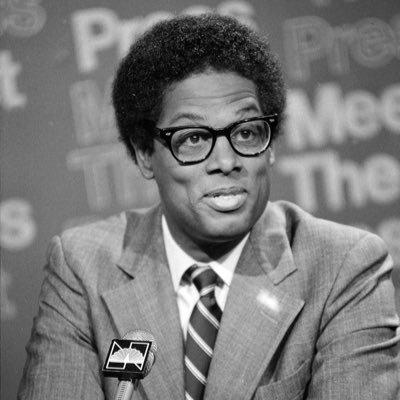
"One of the most important reasons for studying history is that virtually every stupid idea that is in vogue today has been tried before and proved disastrous before, time and again."
— Thomas Sowell
Jay Ryan retweeted
Today, two visions of the world are colliding. And Bill Gates is probably the clearest example.
On one side, the people who build. On the other, the people who manage.
For 30 years, Gates has presented himself as the man who wants to save the world. But look closely at how it actually works.
His philanthropy is first and foremost a reputation machine. Millions poured into media, massive funding for supranational organizations, a presence everywhere the narrative gets written. When you fund the people who write the story, the story is rarely hard on you.
Then there's the model itself. Foundations, NGOs, grants. A system where money flows, reports pile up, conferences follow one after another, but the problem never actually needs to be solved. Because a solved problem is a cause that disappears. Grants keep the problem alive. Entrepreneurs kill it.
The Elon Musk episode sums it all up.
In 2022, Gates reaches out to Musk to talk about philanthropy and climate. Musk asks him one question: do you still have a half-billion-dollar short position against Tesla? Gates replies: sorry to say I haven't closed it out.
Read that again. The man who wants to save the planet from climate change was betting hundreds of millions on the collapse of the company that did more than anyone to electrify global transportation. And he was asking its founder to back his climate vision.
Musk said no. Obviously.
Because underneath, these are two irreconcilable philosophies.
Musk believes we need more. More energy, more humans, more planets. Abundance as the answer.
Gates believes we need to manage. Consume less, emit less, have fewer children. Ration, regulate, control. It's Malthus for the modern age: the conviction that humanity is a problem to contain rather than a force to unleash.
Bill Gates is the pure, sick product of our era. A society that rewards the appearance of goodness over goodness itself. That prefers the press release to the result. The charity gala to the factory.
And deep down, I find this man profoundly sad. To have had so much money, so much power, and to choose to manage the world instead of building it.

Jay Ryan retweeted

Orwell's great observation in "Nineteen Eighty-Four" was that to shrink a person's vocabulary is to shrink his capacity to think.
An impoverished version of English removes the mental tools needed to formulate and communicate complex (and dissenting) ideas. Such is the deep, complex relationship between language and thought.
We don't read "difficult books" to say that we've read difficult books. We read them because they expand the boundaries of what we are capable of thinking and feeling — we ascend to their level. Vocabulary helps us to recognize truths otherwise beyond our grasp.
This revelation is worse than you may think. This must be reversed.

I am speechless. Thomas Aquinas College just dropped a study on the rigor of the new SAT.
It compares the 1980/87 test with 2026. The findings should terrify every parent and teacher...
Vocabulary has collapsed.
Old SAT: 70.6% of questions tested vocab.
New SAT: 15%.
The old test forced students to know a wide range of words through analogies, antonyms, and sentence completions. The new test abandoned that. Most vocab questions now just ask students to fill in one blank from context.
Reading passages also got radically shorter (average ~97 words vs 300–340).
The new test uses short expository passages and hands you the necessary background knowledge inside the text. The older tests leaned much more heavily on argumentative and persuasive writing, assumed far more historical, scientific, and cultural knowledge, and penalized students who lacked it.
This is a redefinition of what "college readiness" means.
If you believe that kids should develop rigorous vocabulary, be capable of sustained reading, and possess background knowledge, I have bad news for you. The SAT no longer measures these.
If you want a future where children can actually read difficult texts and construct complex arguments, the SAT must be replaced now.
This cannot go on.

Jay Ryan retweeted

I will never forget the day that I watched Democrats refuse to stand for Iryna Zarutska’s mother at the State of the Union.
It was so shockingly evil, that even while I watched it, I could barely believe it.
Honestly, I still can’t.
It was so insanely radicalizing.

Jay Ryan retweeted
To understand why Western leaders all sound the same, you need to understand how a system that has captured its own institutions keeps producing elites aligned on the worst possible line.
In 2004, Klaus Schwab created the Forum of Young Global Leaders. Every year, the WEF selects a few hundred people under 40. You don't apply. You get nominated by people already inside and vetted by people already inside. Then come the annual summits, Davos, and a two-week executive program at Harvard Kennedy School built around global governance, climate, global health and "21st century leadership."
Emmanuel Macron: class of 2016, the same year he launched his presidential campaign. Gabriel Attal: listed by the WEF itself among its notable members. In 2017, at Harvard, Schwab bragged that his network "penetrates the cabinets" of governments. His words, not mine.
Now here's the mistake most critics make. They imagine a brainwashing camp. Two weeks at Harvard don't rewire anyone. The YGL program doesn't create the mindset. It certifies it.
The capture happened upstream. The formatting starts at 18. Sciences Po, ENA, Harvard, Columbia, Yale Law. Ten years of being graded by people who already hold the consensus. You learn fast that the reward doesn't go to whoever is right, but to whoever restates the room's beliefs most elegantly. Every essay, every oral exam, every internship in a ministry or a consulting firm teaches the same lesson: the frame is given, your job is to optimize inside it.
Obama never went through YGL. He didn't need to. Columbia, Harvard Law, president of the Law Review. Same factory, American edition.
So by the time the WEF calls, the product is finished. The program just adds the final layer: flattery. You're told you're one of the few people under 40 who will shape the world. You spend your summers with ministers, CEOs, royals and Nobel laureates who all agree with each other. Imagine what that does to a 35-year-old ego.
That's the profile it produces. Very high verbal intelligence, very low dissent. Brilliant at defending the frame, never trained to question it. And a narcissism fed by a network that confirms, year after year, that you belong to the elect. Combine the two and you get leaders who are never punished for being wrong, as long as they're wrong together.
Immigration is the perfect test case. Obama, Macron, Attal can tighten a law, announce deportation numbers, harden their tone before an election. Obama deported more people than any president before him. But listen to how they talk about it. For them, immigration is never a civilizational question. It's a flow to manage, a labor shortage to fill, a demographic curve to correct, a moral duty to perform. Whether a nation has the right to remain itself never even enters the frame. Not because they've answered the question. Because their education taught them it isn't a legitimate one.
That's why the voter who says "my town has changed and I'm worried" gets a lecture instead of an answer. The leader isn't even lying to him. It's worse: he genuinely cannot see what the voter sees. Twenty years of formatting taught him that this perception is a bias to correct, not a reality to address.
That's the real problem with captured institutions. Not a secret plot. A monoculture. Same schools, same summits, same Davos panels, same vocabulary from Paris to Ottawa to Washington. When every leader is selected by the consensus and rewarded by the consensus, the consensus stops being tested against reality.
And a ruling class that never gets confronted with reality ends up governing a country that only exists in its own slide decks.
Before you vote, ask one question about every candidate: who formatted them, and who do they still need to impress?
🤖 Made with AI

Jay Ryan retweeted

Christopher Hitchens: ”In 1786, when the United States was barely a country, it was having its sailors taken as slaves by the Barbary states, the states of the Ottoman Empire and North Africa. Tripoli, shores of Tripoli. Ships stopped, its crews carried off into slavery. We estimate 1.5 million European and American slaves taken between 1750 and 1815.
Jefferson and Adams went to their ambassador in London and said, why do you do this to us? The United States has never had a quarrel with the Muslim world of any kind. We weren't in the crusades. We weren't at war with Spain. Why do you do this to our people and our ships? Why do you plunder and enslave our people? The ambassador said very plainly, Mr. Abdul Rahman said, because the Quran gives us permission to do so, because you are infidels, and that's our answer. Jefferson said, well, in that case, I will send a navy which will crush your state, which he did.
Islamic fundamentalism is not created by American democracy. It's a lie to say so. It's a masochistic lie, and it excuses those who are the real criminals, and blames us for the attacks made upon us.”