

Unleash your greatest impact. Satya Nadella's former head innovation coach. High Performance & Innovation Coach. 25 years of Microsoft changing the world.
Joined April 2008
- Tweets2.5K
- Following262
- Followers18.1K
- Likes791


Pinned Tweet
If you want to change the world, change yourself first.
For 25 years at Microsoft, I've been on a relentless quest to advance human potential through learning, leadership, innovation, and execution.
But the most exciting journey has been mastering myself.
Join me on a quest for the world's best insights and actions to transform both work and life.
Learn proven practices for mind, body, emotions, career, finance, relationships, and fun at SourcesOfInsight.com
#leadership #innovation #highperformance #personaldevelopment #entrepreneurship

AI can make yesterday’s work faster.
But I think the bigger opportunity is redesigning the work so people become capable of more.
The real question isn’t just what AI can do.
It’s what people can do now that they have AI.
One of the easiest ways to waste money on technology is to start with the solution.
I start with the customer.
What pain are we solving? What outcome are we trying to achieve? What business value will it create?
Then I work backward to the technology.
Even in the Age of AI, value should drive the technology, not the other way around.

At some point, growth requires a different game.
The danger of being a high performer is that your strengths keep rewarding you long after they start limiting you.
Output turns you into the bottleneck.
Expertise makes your answers the ceiling.
Drive keeps you carrying what the team should learn to carry.
The strengths that got you here can become the ceiling that keeps you here.

Being strategic is learning to zoom out:
See the system.
Choose where to play.
Choose how to win.
Decide what you’ll do differently.
Strategy is difference.
Great work can take you far.
But careers tend to stall at one of three limits:
Performance. Perception. Platform.
Can you create value?
Do people understand your value?
Can your value travel?
Your career grows when all three grow together.

What if the biggest profit opportunity isn’t cutting costs?
The stronger move is often value creation: remove waste, reinvest where it matters, multiply capability, and help people make better economic decisions.
Profit improves when the whole business gets better at creating value.
AI adoption rises or falls on leadership.
AI-native organizations don’t happen because the technology showed up.
They happen because leaders make AI relevant, safe, expected, useful, and normal at work.

At Microsoft, I learned that the best leaders didn’t just have better answers.
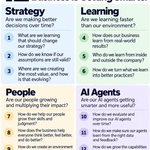
They framed problems better, challenged assumptions, and asked questions that opened up better options.
Questions are scaffolding for the mind.
Use them until they become how you think.

I’ve built a lot of innovation teams at Microsoft.
One thing I learned: great people aren’t enough.
You need the right roles, the right capabilities, the right conditions, and a leader who can connect the whole.

Your current business keeps pulling you toward what already works.
A better question:
What will your future customers pay you for?
That question forces you to rethink your customers, your value, your business model, and where future growth will come from.
Build your future business now.
Stephen Covey’s 8th Habit might be my favorite:
“Find your voice and inspire others to find theirs.”
That’s a powerful way to think about leadership.
Know what you stand for.
Do your best work.
Then help other people become more of who they can be.

Your inner world shows up in your outer results.
Same skills. Same situation. Different results.
Change what’s happening inside, and you change what shows up outside.

I felt behind when I got to Microsoft.
So I studied thinking itself.
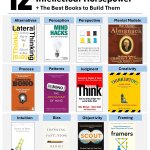
You can build intellectual horsepower.
I did it by studying how to generate alternatives, spot patterns, use intuition, improve judgment, reframe problems, and defend against bias.

Are you getting smarter with AI?
Using AI doesn’t automatically make you smarter.
The same is true for people and businesses.
Without reflection, feedback, and deliberate improvement, you can simply get better at doing what you’ve always done.
Getting smarter has to be designed.

Sometimes your boss is your opposite.
Your greatest career friction may come from someone whose strengths sit directly across from yours.
With a peer, that creates tension.
With a boss, it can become career risk.
You don’t have to become your opposite.
You do need to learn how to reach them.
What you don’t see can hurt you.
The hard part isn’t curiosity. It’s knowing which perspectives are worth exploring, then practicing enough empathy to genuinely think through lenses that aren’t your default.
That’s the idea behind Think360.

You can be better than people realize.
The goal isn’t to become louder.
It’s to make the value you create easier to see, understand, and trust.

10X results don’t come from 10X effort.
A 10% improvement lets you tune the machine.
10X forces you to question the machine.
Start with a dramatically better future, work backward, expose the gap, then run small experiments to learn what works.
Don’t 10X your effort.
10X your thinking.
