

likes his oatmeal lumpy
Ann Arbor, MI
Joined May 2014
- Tweets57.7K
- Following1.9K
- Followers13.1K
- Likes60.8K




Pinned Tweet
“‘The executive power’ granted at the American founding was conceptually, legally, and semantically incapable of conveying a reservoir of royal authority. The real meaning … was something almost embarrassingly simple: the power to execute the law.” theatlantic.com/ideas/archiv…

Just posted "'Westminster Quibbles': The Antimony of Text and Purpose in 18c Anglo-American Legal Culture" at SSRN. The brief essay argues that (1) law had independent force in shaping elite decisionmaking; and (2) today's debates about text vs purpose go back a very long way.
1/

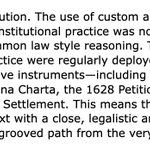
A "central antinomy of 18c legal argument" was the obligation "to respect both the letter and spirit of a law. The latter was both internal to law and also a direct link to the sort of considerations that formalism seeks to exclude from law proper."
3/
papers.ssrn.com/sol3/papers.…
For a brief exploration of another totally standard tool in the 18c lawyer's interpretive toolbelt, see this Balkinization essay on custom & tradition.
4/
balkin.blogspot.com/2025/01/…


“After years of research into an enormous array of colonial, revolutionary, and founding-era sources, I’m here to tell you that—as a historical matter—this president-as-king claim is utterly and totally wrong”

certain faculty speech should be protected because there’s a value proposition to protecting it. Not bc the subset of university community members arbitrarily designated as ”faculty” have a stronger claim on the first amendment than their co-workers
For those who find it an easy question, consider this Sixth Circuit case from 2021. Professor insists on misgendering student in violation of university policy. Protected academic freedom or no? And why? opn.ca6.uscourts.gov/opinion…
i'm 1000000% in favor of aggregation (ALL HAIL @SARAHLAWSKY), but not the private accumulation of information kind
but i'm also curious to know more about what others think on this score. maybe i'm missing an angle i'm not seeing