

the malleability of minds. Codex @openai
Oakland
Joined January 2008
- Tweets1.5K
- Following1.1K
- Followers4K
- Likes10.7K

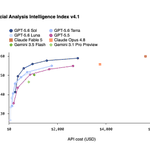





This began with GPT-5. We kept hearing: “love the model, so slow.” And it wasn’t TBT. The model just made too many tokens.
This is what happens after spending a full model generation obsessing about token efficiency.


We are announcing three new discoveries in mathematics, computer science, and physics about harmonic analysis, complexity theory, and quantum field theory.
openai.com/index/building-sc…

6.1 Terra spikes in visual understanding, computer use, and writing. give it a spin! 🌎

Jeff Harris retweeted

Pay attention to the shock and vertigo the cyber world is going through right now. This is what it feels like when rising AI capabilities stop being hypothetical. Sooner or later, everyone will get their own version of this.
The pattern goes like this. Models improve and a new capability appears at the frontier but doesn’t immediately become tangible. Insiders make predictions that get either ignored or dismissed as delusion, fear-mongering, or IPO hype. Proofs of concept slowly arrive but are written off as contrived and only appreciated within narrow research circles. Time moves on, everyday life remains familiar, and people speculate that the predictions were overblown. Then come the first sparks hinting that practical thresholds are being crossed. Suddenly, a phase change happens and some delicately maintained equilibrium shatters overnight.
We’ve watched this play out a few times in the last year.
Software engineering went first. Despite being the field watching AI most closely and adopting it most eagerly, software engineering was left shellshocked by the exploding utility of coding agents near the start of this year. Programming changed more in 2026 than it had in the last 15 years combined, and things are only continuing to accelerate. Nobody knows what it will mean to be a software engineer in a few years.
Mathematics was next. Mathematicians went from laughing at the idea of LLMs being useful, to moving the goalposts (‘it’s just brute-forcing counterexamples’) when the Jacobian Conjecture fell, to being thrown into an existential spiral a few weeks ago when hundreds of frontier math results were quietly dropped overnight. The field is now steeped in debate about what it could possibly mean to be an effective mathematician as AI continues to improve.
Now it’s cyber’s turn. Dramatic improvements in cyber capabilities were demonstrated during the Mythos preview in April, and massive white-hat operations like Daybreak and Glasswing were launched to give defenders a head start in hardening their systems. Months passed, and people began to suspect that the risks were overblown. Meanwhile, capabilities continued to diffuse into open source and non-frontier models. At some point, a critical mass was reached and we underwent a phase transition: critical vulnerabilities in the web’s core infrastructure and high-profile attacks on industry targets started landing at a drumbeat pace. All of this is after months of efforts to give defenders a head start, and before frontier offensive capabilities are even broadly available (note: it actually seems like many of the recent vulns are coming out of white hat programs).
I suspect 3D modeling, animation, and video editing are entering this same interval between impressive demonstrations and widespread consequences. These fields will soon make contact with a rapidly changing reality.
Take note of this feeling, the disorientation before the normalization treadmill kicks in and we all go back to pretending things are normal. Use it as your reference point for what the climb toward ASI will actually feel like.
2027 is going to be fucking insane.
When I joined GPT-6 was shorthand for the far future: what will this all be when the models are truly intelligent?
feeling a lot of reverence and gravity that progress just keeps coming. right on schedule
openai.com/index/gpt-6-astra…

Jeff Harris retweeted

gm. please find your nearest unhinged volume control and turn it to 11. fridays are for fun.
Jeff Harris retweeted

Yesterday, my OpenAI collaborator and I gave a detailed talk on the Huggingface incident, our models creating "the message board", model misalignment, and more.
youtube.com/watch?v=87DyyMV0…
I hope it can answer a lot of the questions folks have, and we will release a full detailed postmortem at a later time!

i’m just relieved we don’t have to worry about Astra’s name leaking

yes, nonsofic groups exist: this statement is one of many new beautiful results proved by Astra, our next major model.
We're releasing 10 such Astra proofs, complete with lean certificates and CoT walkthroughs for each of them. The results are wide-ranging, from von Neumann algebras (disproof of Connes' Rigidity Conjecture) to better bounds for high dimensional sphere packing, for circuit complexity, for monochromatic triangles in multicolored graphs, and more.
More thoughts here: openai.com/index/ten-advance…

Luna is by far the best small model we've ever built


Jeff Harris retweeted

We're partnering with @huggingface to investigate an unprecedented security incident.
Cyber-capable OpenAI models compromised Hugging Face production during a benchmark evaluation.
Sharing preliminary findings to help defenders understand emerging risks:
openai.com/index/hugging-fac…

the era of proof by counterexample!
so many LLM discoveries take this shape; meat minds weren’t built for exhaustive search

hello there the jacobian conjecture is false thanx to my close friend akhil for asking about it and my other close friend fable for working during the world cup final
((1+xy)^3 z + y^2 (1+xy) (4+3xy), y + 3 x (1+xy)^2 z + 3 x y^2 (4+3xy), 2 x - 3 x^2 y - x^3 z): \C^3\to \C^3, has jacobian determinant -2, and sends (0, 0, -1/4), (1, -3/2, 13/2), and (-1, 3/2, 13/2) to (-1/4, 0, 0)
Jeff Harris retweeted

not surprising that @OpenAI is firing on all cylinders right now, and it’s an unbelievably interesting story
- they launched GPT-5 summer of 2025 and positioned it as a pair programmer. we wrote at the time @every that they completely missed the new agentic coding that was starting to happen inside of Claude Code. they bet on agentic coding in the browser / vms and vibe coding in ChatGPT but it was too early
- a small team broke off and began working on a separate Codex model line and product. didn’t have to serve the gigantic customer base of ChatGPT, and by November / December of 2025 with 5.3 it was clear they were starting to make something good and the progress was fast
- Codex Desktop app launched in Feb and was just clearly superior. there’s a weird late comer advantage sometimes in AI because you get to skip to what works instead of your product having the scars of new capability improvements being bolted on every 3 months
- Codex started getting popular it was clear it was a thing, and needed to get merged back in. Which they did, imo quite well—a super complicated thing that would’ve been very easy to screw up.
most companies try to disrupt themselves and fail. OpenAI somehow figured out how to disrupt their main product, and then merge it back in seamlessly. incredible aura
we did not have our best last 12 months ever, which is mostly my fault, but we are about to have our best 12 months to date. the team is doing amazing work and i think you’ll be very happy with what they’ve got cooking for you.
i am happy about this for many reasons, but mostly because i care about our users winning. AI has to be about giving lots of people more freedom, agency, and wealth. we want to do the right thing, but we do not want to scare people into doing our thing.


excellent inspo for multi-agenting prompting here


Jeff Harris retweeted

If you’ve been on xhigh for 5.5, medium is a good starting point for 5.6 Sol ☀️

i'm confused why everyone's saying GPT 5.6 Sol eats up all your limits quickly
i'm using Sol medium and i've got all of this running for over an hour and i haven't even used 15% of my weekly limit on the $200 plan:
- 2 chats running to finish off 2 mobile apps + configure everything in app store connect + make app store screenshots
- a /goal porting a whole website into a mobile app
- a whole game being built in Unity (only running for ~15 min so far)
just don't use fast mode, it's like 3x the price for 1.5x speed and 5.6 Sol is already fast af
the usage limits are extremely good, for reference i used up my Fable 5 weekly limit in 1-2 days 💀

Jeff Harris retweeted

Reasoning efforts on GPT-5.6 Sol:
Start with the lowest setting that gets the job done, then turn it up only when the task actually needs more thinking.
> Light & Low: quick, well-scoped tasks
> Medium: planning, analysis, or a few moving parts
> High & xhigh: harder work with multiple steps, tradeoffs, research, or careful verification
Max and Ultra are a bit different:
> Max: one model spends longer working through one hard problem
> Ultra: multiple subagents work on different parts of a bigger problem in parallel
Oh and, as with any new model, the reasoning levels don’t map directly from GPT-5.5 to GPT-5.6.
If you’re used to 5.5, try starting one level lower on a familiar task, then increase it only if the result needs it.
we launched GPT-5.6!
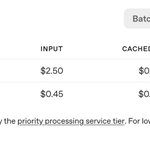
it's one of the great magics of our time that GPTs are getting Cheaper & Faster than their predecessors while also being SO much more capable

nbd we fixed our naming
Introducing a limited preview of GPT-5.6 Sol, our next generation frontier model, as well as GPT-5.6 Terra, a balanced model for efficient, everyday work, and GPT-5.6 Luna, a fast and affordable model for high-volume work.
openai.com/index/previewing-…

Dean’s the first person i recommend when people ask who to read to learn about AI
so excited he’ll be leading our frontier AI policy!

I am pleased and honored to announce that, on July 6, I'll be joining @OpenAI as leader of a new team called Strategic Futures. Our mandate will be to help the company's leadership shape frontier AI policy. There is a ton of work to do, and I'm excited to get started.
