





jefflab retweeted

Assorted things I've been mulling over regarding agents in the economy:
• Companies are in some sense the original superintelligence. It's often the case that they can use their amortized cognitive surplus to advance their interests against those of certain consumers: relative to the optimization capacity of companies, consumers can be inattentive, underinformed, irrational, etc. (Think, say, of some of the classic insurance upsells at the end of a booking process, which is typically priced substantially above what a regular policy would cost.) Herbert Simon introduced the idea of bounded rationality, and firms often end up benefiting from it. Thanks to personal agents, we will probably get somewhat more rational in how we engage with companies.
• How exactly will outcomes change? Well, certain kinds of price discrimination will work less well (how do coupons work if every agent hunts fastidiously for them?), and certain kinds of customer cross-subsidy will change (today, people who forget to cancel subscriptions subsidize those who don't). Taken across the economy as a whole, I'm not sure what the incidence of all of this will be.
• In corporate strategy, people have long debated the relative importance of distribution and product quality. Perhaps you've made something better, but does anyone know about it? Won't people just continue to buy the ACME Corp Mousetraps? Personal agents will, I think, act as a kind of structural subsidy for product quality. How would markets look different if individuals always spent at least 10 hours researching their purchases? On the margin, focusing on making a product better is, I think, going to become a more effective strategy for companies. This is good!
• It true, a corollary is that information about product quality will become more important and impactful. Today, most people have very limited ability to aggregate and integrate such data, but agents will have insatiable thirst for such signals. (It's often said that data is becoming more valuable because it helps in the training of models. That's obviously true, but I think there's a secondary way in which it's more valuable simply as a complement to cheaper intelligence.)
• A big question is whether agents will increase superstar effects (rational agents all settle on the same product) or increase dispersion (because everyone has slightly different tastes and preferences, which agents are good at eliciting, finally overcoming the artificial clustering we've been subjected to).
• Many internet companies have monetized demand routing, which is in turn often predicated on short attention spans. "I'll click on the first thing I see." This has led to some amount of inefficiency, as companies try to propitiate capricious ranking algorithms and incur various placement fees. It's not all deadweight loss (willingness to pay is itself a kind of signal, which is valuable to buyers), but it's not great. How will the nature and value of this routing change in a world of personal agents? I don't know the answer, but I think that the effects might be pretty big.
• Much of what I'm writing hinges on the assumption that personal agents will be on the consumer's side. I suspect that that will be the winning strategy, but whether it's true, and what it means to be true, involves a lot of other questions.
Taken as a whole, the market is a massively parallelized, decentralized, and highly imperfect value attribution machine, and, taking stock of all of the effects, it seems to me that the quality point may well be the biggest: that agents will change the nature of the backpropagation such that the rewards for better products increase. Maybe this is too optimistic, but I suspect (and hope) that companies that make things that they're proud of will feel that the universe is a little more partisan in their favor.
jefflab retweeted

“Chesterton had written it as early as 1908: the modern world is full of old Christian virtues gone mad, because they've been separated from one another. Scientists who love only truth, and whose truth is pitiless. Humanitarians who love only pity, and whose pity is often dishonest.
Wokism is exactly that. Girard had seen it coming in 1999: concern for victims is the supreme Christian inheritance, and the new totalitarianism doesn't fight it - it claims it as its own, until it turns it into a permanent inquisition. It kept the victim and threw out everything else. Compassion without truth. Sin without forgiveness. Confession without absolution.”
The west needs its faith to thrive; these crowds in France are optimistic.

J'ai énormément réfléchi à une question : pourquoi notre monde est-il aussi profondément malade ?
Je crois avoir compris. Et ce qu'on a vu samedi à Paris avec le pape me rend plus optimiste que je ne l'ai été depuis longtemps.
Je ne parle pas d'une crise économique ou d'un mauvais gouvernement. Je parle de quelque chose de plus profond. Une immigration de masse qu'on a refusé de regarder en face pendant des décennies. Une tolérance infinie pour tout ce qui contredit le réel, et aucune pour ceux qui osent le décrire. Des évidences qu'il faut nier en public pour rester fréquentable.
Tout ça, ce sont des symptômes. La maladie, c'est que notre rapport à la vérité s'est cassé.
Pour comprendre, il faut remonter le fil. Au début du XXe siècle, la révolution prolétarienne échoue partout en Occident : les ouvriers ne suivent pas. Une partie de la gauche intellectuelle en tire une conclusion simple. Si on ne peut pas prendre l'économie, il faut prendre la culture.
Gramsci théorise l'hégémonie culturelle. L'école de Francfort déplace le combat de l'usine vers l'université, les médias, la famille. Horkheimer et Adorno font le procès de la raison elle-même, accusée d'être un instrument de domination. Et la tolérance à sens unique dont je parlais a même une date de naissance : en 1965, Marcuse écrit que la vraie tolérance consisterait à être intolérant envers la droite et tolérant envers la gauche. Deux ans plus tard, Rudi Dutschke appelle à la « longue marche à travers les institutions ».
Ce n'était pas un complot. C'était une stratégie, assumée et écrite noir sur blanc. Et elle a fonctionné.
La French Theory prend le relais. Pour Foucault, la vérité est un produit du pouvoir. Derrida déconstruit tout ce qui tient debout. En 1979, Lyotard définit la condition postmoderne comme « l'incrédulité à l'égard des métarécits ». Plus de grand récit, plus de vérité commune. Seulement des points de vue, des rapports de force, des identités.
C'est ça, la généalogie du wokisme. Et au fond, elle repose sur une seule idée : la nature humaine n'existe pas. Tout est construit, donc tout peut être déconstruit. Or quand il n'y a plus de vérité, il ne reste que le pouvoir. Celui qui tient les institutions décide de ce qui est réel.
Regardez les dates. En février 1974, Soljenitsyne signe « Vivre sans mentir », daté du jour même de son arrestation. Un chrétien sorti du Goulag, qui a compris que tout le système soviétique tenait sur le mensonge et que la seule arme d'un homme libre était de refuser d'y participer. Au même moment, nos élites décident que la vérité n'est qu'un récit parmi d'autres.
À l'Est, on découvre que la vérité est la dernière chose qui résiste. À l'Ouest, on décide qu'elle n'existe pas.
Ce n'est pas un hasard si la stagnation technologique dont parle Thiel, le moment où le monde des atomes cesse d'avancer, commence à la même époque.
Pour mesurer ce qu'on a perdu, il faut comprendre ce qui a fait l'Occident. Et ce qui a fait l'Occident, c'est le christianisme.
L'Évangile de Jean s'ouvre sur ces mots : « Au commencement était le Verbe ». En grec, le Logos. La parole, la raison. Si le monde vient d'une raison, alors le monde est lisible. Il a des lois. Il mérite d'être compris.
Jésus dit : « La vérité vous rendra libres. » Il dit aussi : « Je suis le chemin, la vérité et la vie. » La vérité n'est pas une opinion. On ne la négocie pas, on ne la vote pas. On la cherche toute sa vie, et elle nous oblige.
Avec le christianisme, le temps cesse aussi d'être un cycle éternel. L'histoire a un début, une direction, un sens. Sans ça, l'idée même de progrès est impensable.
Toute la civilisation occidentale découle de cette conviction : il existe une vérité en toute chose. Dans les lois de la nature, dans la justice, dans la beauté. Les cathédrales sont des traités de géométrie en pierre. Les universités naissent dans le giron de l'Église, à Bologne, à Paris, à Oxford. Nicolas Oresme, évêque de Lisieux, montre plus d'un siècle avant Copernic que rien n'interdit de penser que la Terre tourne. Mendel, moine augustin comme Léon XIV, découvre les lois de l'hérédité. Lemaître, prêtre belge, propose ce qu'on appellera le Big Bang.
Ces hommes ne cherchaient pas la vérité malgré leur foi. Ils la cherchaient à cause d'elle.
La révolution industrielle n'est que l'écume de cette vague. Mille ans passés à croire que le réel est intelligible et qu'il faut s'y soumettre plutôt que le plier à nos désirs. Le capitalisme en est le prolongement direct : un marché est une machine à dire la vérité. Comme l'a montré Hayek, les prix transmettent une information qu'aucun planificateur ne possédera jamais. Les pertes sanctionnent les erreurs. Le réel finit toujours par gagner.
C'est pour ça que les bâtisseurs ont un rapport si particulier à la vérité. On peut mentir à un plateau télé. On ne ment pas à une fusée.
Que se passe-t-il quand on coupe une civilisation de ses racines ? Elle devient un bouquet de fleurs coupées : encore belle quelques jours, puis elle fane.
Chesterton l'avait écrit dès 1908 : le monde moderne est plein de vieilles vertus chrétiennes devenues folles, parce qu'on les a séparées les unes des autres. Des savants qui n'aiment que la vérité, et dont la vérité est sans pitié. Des humanitaires qui n'aiment que la pitié, et dont la pitié est souvent mensongère.
Le wokisme, c'est exactement ça. Girard l'avait vu venir en 1999 : le souci des victimes est l'héritage chrétien par excellence, et le nouveau totalitarisme ne le combat pas, il le revendique comme sien, jusqu'à en faire une inquisition permanente. Il a gardé la victime et jeté tout le reste. La compassion sans la vérité. Le péché sans le pardon. La confession sans l'absolution.
Et c'est précisément pour ça que je suis optimiste.
À Pâques, 13 234 adultes ont été baptisés en France, plus de trois fois plus qu'il y a dix ans. Avec les adolescents, plus de 21 000 : un record historique. Et 42 % de ces adultes ont entre 18 et 25 ans. Ce n'est pas la France de nos grands-parents qui retourne à la messe. C'est une génération qui a grandi dans le vide et qui cherche quelque chose de vrai.
Samedi, entre 700 000 et 800 000 personnes se sont rassemblées place de la Concorde. Sur la place même où la Révolution a guillotiné son roi.
La veille, à l'UNESCO, devant les représentants du monde entier, le pape a fait écho à la parole du Christ : « seule la vérité nous rend libres ». Il a affirmé qu'il existe une nature humaine commune, exactement ce que cinquante ans de théorie se sont acharnés à nier. Et à la Concorde, il a rappelé que « l'être humain est fondamentalement un être de désir », un désir qu'aucun bien matériel ne pourra jamais combler. Un girardien ne peut pas lire ça sans sourire.
Croyant ou non, là n'est pas la question. La vraie question, c'est de savoir si une civilisation croit encore qu'il existe une vérité. Une civilisation qui y croit recommence à chercher, à bâtir, à transmettre. Une civilisation qui n'y croit plus se contente de gérer son déclin. C'est très probablement par là que tout va redémarrer.
Les cathédrales, les universités, la machine à vapeur, les fusées. Tout vient de la même source.
L'Occident n'est pas en train de mourir. Il est en train de se souvenir d'où il vient.
jefflab retweeted

Contrast the present hysteria with Los Alamos.
The Manhattan Project scientists thought the first nuclear explosion could ignite the atmosphere and end humanity.
They did the math. They determined it wouldn’t. And they proceeded.
Because they weren’t fighting a thought experiment. They were fighting the Nazis.
Effective Altruism inverts this. Multiply a sufficiently horrifying hypothetical future by enough hypothetical future humans and suddenly speculation acquires the moral authority of fact.
That’s not empiricism. It’s secular eschatology.
Take risks seriously. Do the work. Engineer against them.
But don’t confuse the ability to imagine the apocalypse with the authority to rule the present.
jefflab retweeted

25 years ago, america mourned together. a long, confusing process. but we were a country. if it happened today the streamers would be blaming trump and the jews by this afternoon, and leftoids on tiktok would be saying the bankers deserved it. we’ve lost more than we realize.
jefflab retweeted

ASI is pretty clearly a religion and makes a lot more sense when you view it as such

jefflab retweeted

The optimal solution is hard to figure out, but first the debate needs to be won on having any preference whatsoever for Americans.
The "every person in the world should have an equal shot at every American job regardless of what they believe" view is currently endemic in tech.
jefflab retweeted
I’ve been looking forward to today for 3 years
Today we’re announcing Foundation - Chroma’s solution to memory
Our research preview of this technology builds self-improving memory from your agent sessions. Try it out at trychroma.com/foundation
jefflab retweeted
all models of technological progress underweight the political, and all models of the political underweight technology.
jefflab retweeted

Attackers have frontier AI. Defenders need a frontier AI ecosystem—the best open and closed models, force-multiplied by a global community.
During the Hugging Face incident, closed AI blocked essential forensics. An open-weight frontier model helped contain the intrusion.
That’s why we created the Open Secure AI Alliance.

AI security advances when the industry builds in the open, together.
We're introducing the Open Secure AI Alliance with industry leaders to develop new techniques and tools to safeguard software and agents.
By sharing models, tooling and research in the open, we can broaden the community of defenders.
Learn more about the founding members’ contributions: nvda.ws/4pD8Fc5

ALT Logos of various companies including Adobe, Cisco, and Microsoft.
jefflab retweeted
For my first post, I’m sharing a letter @NVIDIA signed on why open models matter.
AI will transform every industry, power every company, and be built by every country.
Open models strengthen safety and cybersecurity, accelerate innovation and diffusion, and enable sovereignty.
The world needs both frontier closed models and frontier open models.
images.nvidia.com/pdf/Open-W…


jefflab retweeted

Kimi K3 just fixed 15 critical security bugs that Codex and Fable refused because of “cyber guardrails.” There’s no reason to limit American models on tasks that Chinese models handle without issue. We’re only making ourselves less competitive.

jefflab retweeted
narratives of open-source not being able to keep up were clearly wrong (at least through mid 26')

It is clear open source models and harnesses are having a moment. There's a few factors at work
1/ It is now obvious that you can catch up to near-SOTA performance and do so with a clear training lineage. See:@thinkymachines Inkling launch today.
2/ There are several well-funded, talented teams building open weight models now in the US and abroad. Along with the explosing of other near SOTA models (Grok/Cursor, Muse Spark), it is clear we are going to have a diverse ecosystem of models atleast on coding and agentic use.
3/ Organizations are increasingly looking for control over how their data is used and are willing to trade off some access to frontier level tokens for this control. Organizations and countries are increasingly nervous about the frontier labs potentially competing with them down the road and don't want their data to enable a future competitor.
4/ Open source is a slider: you could bring your own open harness, your evals, your business context and are free to pick and choose your model of choice.
5/ Companies have now actively shifted from "how do we get our people to use tokens" to being uncomfortable with their token cost ballooning without a clear line to revenue.
6/ Geo-politically, countries will be weighing open weight models as a way to get frontier-level tokens inside controlled environments that may not be otherwise possible.
All of this leads to more choice for all of us !
jefflab retweeted
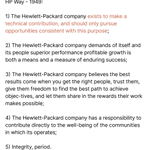
Revisiting Rockefeller Jr’s Credo this morning and it dawned on me - I don’t think I have heard an AI leader utter even a single one of these principles that have held together and defined the West for 250 years.


jefflab retweeted
This is the federal income tax play all over again.
It started in 1913 as a “class tax” on the rich, hitting less than 1% of the population with a 1% rate above $3,000.
It expanded during WWII into a mass tax on most workers through withholding, skyrocketing rates, base broadening, and bracket creep to fund wars and spending.
The wealth tax will follow the same trajectory.

On page twenty-six of “The Billionaire Tax” proposal in California, it explains how the state legislature can convert from a Billionaire Tax to an Everyone Tax without voter approval.
They can also adjust the tax to be a yearly tax, not just one time…again, without your approval.
Intelligence test for you: if this was meant to just target Billionaires, why did they write this in?
jefflab retweeted

Well said, @sama.
Threats to people’s physical safety and the safety of their families is completely out of bounds.
“It is important that the democratic process remains more powerful than companies”
No single person or company is responsible for the entire weight of this massive tech paradigm shift.
Be civil.

I wrote this early this morning and I wasn't sure if I would actually publish it, but here it is:
blog.samaltman.com/2279512

jefflab retweeted

It does better for me with detailed specs and I’m the master of detailed specs (been doing spec style dev since 2012 so I’m very comfy)
jefflab retweeted

Boil the Oceans
You know the phrase: “don’t boil the ocean.” Everyone’s said it in some overly ambitious meeting. It’s good advice in normal times. It keeps teams focused. It prevents scope creep. But we are no longer in normal times, and I think it’s time to retire saying it.
Artificial Superintelligence means it’s time to boil the ocean. We’ll start with a few lakes first.
I was recently with a university endowment’s head of private investing who told me their engineers were terrified for their jobs after seeing what Claude Code could do. And I get it — that’s the natural first reaction. But it’s the wrong one. It’s a zero-sum reaction to a positive-sum moment.
Instead of worrying about doing the same thing we’ve been doing for cheaper, why not focus on doing the thing we never even dreamed of doing? Why can’t that endowment achieve 50% net IRR instead of 10%? Why can’t a startup deliver a service that is 100x better than the incumbent? Why can’t we have fusion energy? Why can’t we talk to every single user and have a perfect understanding of every bug in our product?
These aren’t rhetorical questions anymore. They’re engineering problems with paths to solutions.
Here is what I think is actually going on with the fear: our fear of the future is directly proportional to how small our ambitions are. If your plan is to keep doing exactly what you’re doing, then yes, a machine that can do it faster and cheaper is terrifying. But if your plan is to do something dramatically bigger, then the machine is the best news you’ve ever gotten.
If you’re a worker — someone who trades labor for a living — this is the moment to become a builder. Start a business. And if you’re already management or capital, it’s time to go 10x more hardcore on what your aspirations could be. Not eking out 5% efficiency gains. Not increasing profit margins 2% by lowering cost and firing people. Those are the old games. The new question is: what would it look like to build a product or service so good that people would happily pay 10x what they pay now?
The net result of this is more jobs, not fewer. As Ryan Petersen likes to say, the human desire for more things is absolutely limitless. We can actually fulfill that desire now — if we have the agency to prompt it for ourselves.
Buckminster Fuller coined the term “ephemeralization” in 1938: doing more and more with less and less until eventually you can do everything with nothing. His entire vision of progress was about technology enabling radical expansion of human capability through dematerialization. He traced this from stone bridges to iron trusses to steel cables — each iteration stronger, longer, lighter, cheaper. He wasn’t describing job destruction. He was describing civilization getting better at being civilization.
This is Jevons Paradox for everything. When you make a resource dramatically more efficient, you don’t use less of it — you use vastly more. Steam engines didn’t reduce coal consumption. They made coal so useful that demand exploded. The same thing is about to happen with intelligence, with labor, with every service and product we can imagine.
But Jevons Paradox doesn’t activate on its own. It requires capital and management to actually raise their ambitions — to boil lakes and oceans instead of drowning them in committee
That’s what startups have always been good at: moving fast in the face of radical uncertainty, building for the 10x future while everyone else is optimizing for the 1.05x present.
Time to start.