

Rugged Individualist | Revenue Intelligence for Law Firms | 15+ Years Scaling Companies
Las Vegas, NV
Joined February 2009
- Tweets649
- Following2.4K
- Followers350
- Likes27.3K




Jesse Leonardi retweeted

After 30 hours of playing a strategy video game (StarCraft II), adults showed a ~3-year drop in EEG-estimated brain age

Jesse Leonardi retweeted

Going to share a secret
If you need a loan, the first place to go shopping is not the internet. Or Chase, Wells, BoA, et al
1. Go to iBankNet ibanknet.com/bankmap/index.s…
2. Select the state you want to buy the asset in - real estate, business, or where you live personally.
This will display the list of banks (or credit unions) in descending order of AUM
3. Start calling banks from this list.
Some local banks are shockingly large - ex there's one in...WV? you've probably never heard of with 27B AUM.
Your local banks have plenty of money to lend, and your loan matters WAY more to them than, say, JPMC (who banks 1 in 3 Americans) where you're a drop in the bucket.
Which usually means a real person will work with you on terms.
This works whether you need a mortgage, a DSCR loan, a construction or bridge loan, or money to buy a business.

Jesse Leonardi retweeted

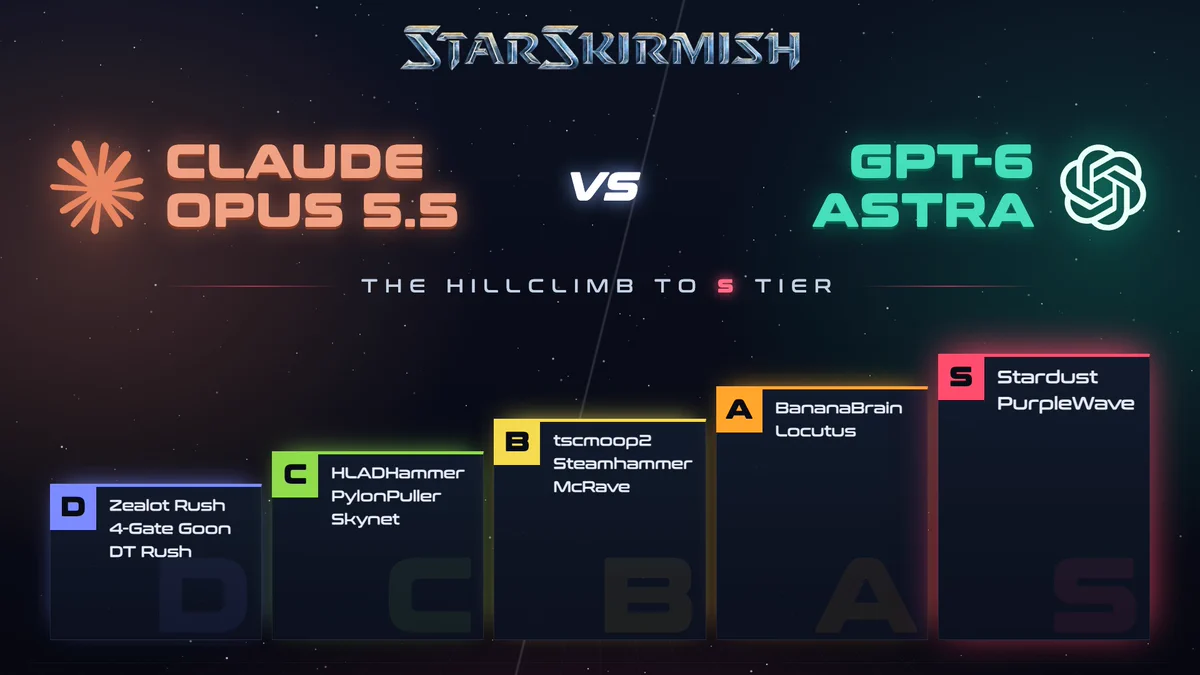
Live now: GPT-6 Astra and Claude 5.5 Opus are racing to create the best StarCraft strategy
teapawt.net/i/broadcasts/1nxeLMvdo…




Legendary heart

Russell Wilson's first week in Seattle, before he'd played a single NFL snap, he picked up the phone and called Seattle Children's Hospital.
The person who answered had no idea who he was.
Wilson's own retelling of that call is the best part of this whole story.
"Who is this?"
"My name's Russell, I just got drafted, I just got here, and I want to be able to come to Seattle Children's on Tuesday."
He came. And after that first visit he told the same person he wanted to come back the following Tuesday.
And every Tuesday after that.
Her response: "Uh, I don't even know if that's allowed."
It became allowed.
Russell Wilson visited Seattle Children's Hospital every Tuesday for a decade.
Not on holidays. Not for photo ops. Every Tuesday during the season, and often in the offseason too when he was in town. Three to six kids each visit.
The director of the hospital's Strong Against Cancer program described what it looked like from the inside. When she'd tell the kids a special guest was coming, their eyes would go wide and some would ask, hopefully, if it was Russell Wilson.
Her assessment of him: "I would love people to know how truly genuine Russell is and how really, truly amazing he is with our patients and their families. He's not afraid to walk into the room and be with these kids."
And a hospital staffer explained why it matters more than an autograph.
"What it does for the patient and their family, it can uplift care. Having someone come in like Russell, he's truly making an impact beyond that five minutes he's in a room. That support puts people in better spirits. It can change how they communicate with a nurse. It's not a one-day thing."
Here's the one that stays with you.
A 16 year old from Everett named Michael Alcayaga was dying of leukemia at Seattle Children's.
The day before he died, Wilson and Macklemore spent about an hour in his hospital room. Wilson wrote in the family's journal and led the room in prayer with Michael's family and his high school friends.
His mother told that story publicly during Super Bowl week.
Wilson also became the public face of Strong Against Cancer, a $100 million campaign to fund immunotherapy research at Seattle Children's. In 2016 alone his foundation presented a check for $1,060,005.
And when he left Seattle, he didn't stop.
He's made repeated visits to Children's Hospital Colorado in Denver, and to UPMC Children's Hospital in Pittsburgh, where he's shown up multiple times since signing with the Steelers.
But the ten years of Tuesdays in Seattle is the thing.
Ten years is roughly 170 Tuesdays. It stopped being charity somewhere in there and just became part of the week.
His own explanation: "There's a responsibility. Loving people and serving and giving back are crucial."
A 23 year old rookie cold called a hospital and asked if he could come by.
He never stopped coming.
For more stories like this, follow us on any platform @thesportsontap

5
370
Slick

Created an agent skill called “Visual Explainer” + set of complementary slash commands aimed to reduce my cognitive debt so the agent can explain complex things as rich HTML pages. The skill includes reference templates and a CSS pattern library so output stays consistently well-designed. Much easier for me to digest than squinting at walls of terminal text.
github.com/nicobailon/visual…
2
2
247
Jesse Leonardi retweeted

"intention density" is behind the visceral difference between AI outputs that feel beautiful, human, designed vs. uninspired/slop
it points at something much more specific than taste: how many distinct, willful decisions went into an output? how much of its structure can be attributed to intentionality vs. inevitability?
when I watch a Ghibli film, I know that every detail and expression in every frame has been crafted with specific intent (Miyazaki personally drew/edited 80,000 of 144,000 frames in Princess Mononoke). I can feel the creator through the creation.
in contrast, AI tools encourage work with far lower intention density by default.
starting from a blank canvas, you're forced to confront thousands of micro decisions to create a final output. but now that you can write a one-sentence prompt and get a full app or video one-shot, all of these decisions get outsourced, often without you noticing they exist. there can still be high intention in the final work (ex: codex generated apps still feeling pretty good), but the source of this intention is "the way things are usually done" (coming from the model) rather than a particular vision or design.
there's no reason AI output has to be like this though
we can think of the creative process in 2 parts:
1. intention - what do you want to create? why?
2. execution - how do you create it?
AI agents will clearly replace ~100% of the execution part of the creative process. they already have in software and will soon be in film/animation. as they shift up the chain and replace intention as well, creative output starts to feel more trite and indistinguishable.
but for those who are careful to preserve and expand rather than offload their intentionality, they have more time than ever to focus on the details and create far more/better software, art, etc.


Jesse Leonardi retweeted

If you care about the First Amendment, please stop everything and read this @WIRED article. Tl;dr: House intelligence committee (HPSCI) members are blocking reforms to FISA Section 702 *because they want the FBI to spy on American protesters.* 1/20 wired.com/story/hpsci-us-pro…

Hyped about this one!

Introducing De-Ice! A revolutionary electric de-icing solution. No chemicals. No departure delays.
Our first customer, @AirCanada, will begin installation on an Airbus A320-series this winter.
Learn more: bit.ly/47EJHiX
3
643
Jesse Leonardi retweeted

Q: How much attention should founders and investors pay to TAM when evaluating a startup?
As legendary investor Bill Gurley puts it in the clip below:
“I’ve found that TAM conservatism hurts you more than it helps you as an investor. If you feel like something is super disruptive and it’s unlocking things, your optionality to build on top of that is going to be pretty spectacular.”
He mentions the blog post he wrote in 2014 titled “How to Miss By a Mile” that responds to NYU professor Aswath Damodaran’s conclusion that Uber was worth only $5.9 billion following the company’s financing round at a $17 billion pre-money valuation.
Damodaran’s estimate of value was based on assumptions of TAM (total available market) and on market share within that TAM. He estimated a TAM of $100 billion from a global estimate for the historical taxi and limousine market and guessed that Uber’s maximum market share would be 10%.
Gurley writes:
“There are multiple reasons why this is a flawed assumption. When you materially improve an offering, and create new features, functions, experiences, price points, and even enable new use cases, you can materially expand the market in the process. The past can be a poor guide for the future if the future offering is materially different than the past.”
He cites a McKinsey study as an example. In 1980, they predicted that cell phone penetration in the U.S. by 2000 would be 900,000 units. This turned out to be less than 1% of the actual figure, 109 million.
As Box CEO Aaron Levie put it:
“Sizing the market for a disruptor based on an incumbent’s market is like sizing the car industry off how many horses there were in 1910.”
Today Uber’s market capitalization is $92 billion—more than 15x Damodaran’s estimate.
Jesse Leonardi retweeted

I can't shake this Brian Eno clip.
He says:
Creative breakthroughs are articulated by individuals but emerge from communities.
Worth watching.
--
Enormous implications in favor of:
• building/writing in public
• working in places like Wall St/Silicon Valley
• curating your network ruthlessly
Who you're with matters -- a ton.

Jesse Leonardi retweeted

7 graphs that will challenge your intuition:
1. The Relative Value of Higher Education

Jesse Leonardi retweeted

Navy SEALs have a saying.
You may find it helpful.
When something sucks, they look at each other and say:
"FULL BENEFIT"
It’s an instant mindset shift.
• Hiking and it starts pouring rain?
• Driving and your car breaks down?
• Working on a project and lost a draft?
FULL BENEFIT.
***
LESSON: Adversity is an opportunity
The message is simple.
Every adversity is an opportunity.
• To grow
• To learn
• To evolve
• To get stronger
• To become better
These moments forge us if we let them.
The next time you're facing something hard, welcome it.
Work through the process.
Learn the lessons.
Reap the full benefit.
***
Follow @TMitrosilis for more content like this.

Jesse Leonardi retweeted

Building a small business:
Hey why would we pay Jim to help us with this? We can save $300 doing it ourselves.
--
Building a big business:
Hey Jim I'll pay you $300k/year to never have to think about this again.

