





José retweeted

los grandes bancos de US bloquean el uso de agentes. pero @belo_app tomó
la decisión contraria. busca convertirse en el 1er agentic bank de LATAM
como es canibalizarse? que es agentic banking?
@mbeaudroit vino a la premiere de @RadariaMedia y nos contó youtu.be/tTxp08hnQhw?si=s8FW…

José retweeted
para los amigos que vienen preguntando cuando sale el show con @mgonto y @DAarambillet
se recontra viene 👇
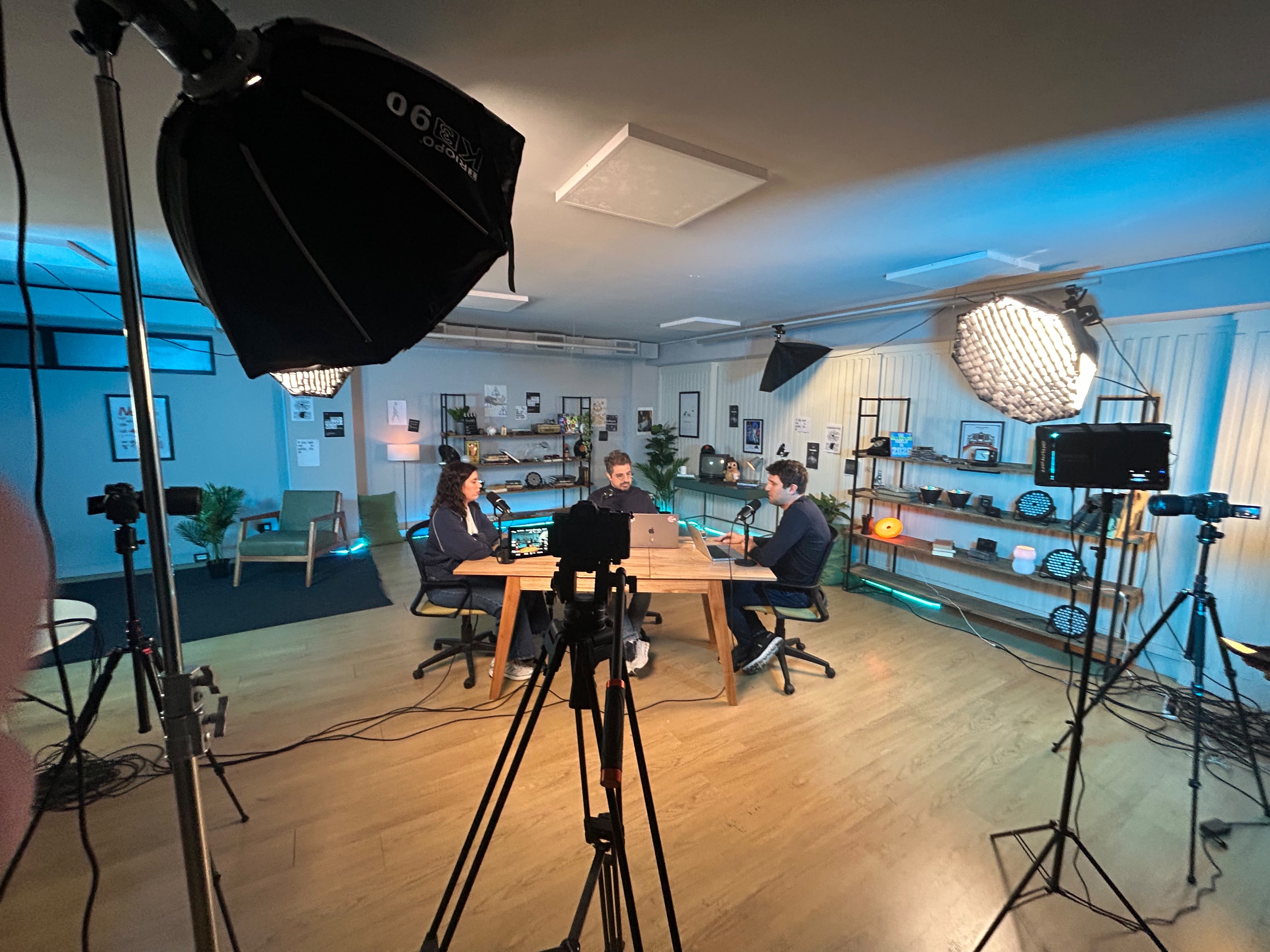

Hay demasiado ruido en internet, pero poca data que realmente sirva.
Así que nos juntamos a armar ALGO NUEVO.
Tu próximo programa favorito sobre Inteligencia Artificial y tendencias tech está en camino. 📡👀
No digas que no te avisamos. #RadarIA

José retweeted

Argentina, ese país donde cada 6 meses se intenta derogar una ley que fija un precio mínimo (vuelos, yerba, ropa, libros, etc) y los que estuvieron robando hasta ese momento con el kiosquito, en vez de decir "bueno, bastante duró este curro", salen sin la más mínima vergüenza a explicarte por qué no podés pagar las cosas más barato.

José retweeted

“Tell him to enter the password he knows is correct. Inform him it is incorrect. Invite him to reset it. Watch as he enters the password he believed it to be all along. Then tell him he cannot use it… because it is his current password.”

José retweeted
Today we joined @tiagosada and @worldnetwork on stage to unveil what we've been working on @okta: Human Principal
Let's dive in 👇
Dev products with free offerings and social media platforms are vulnerable to abuse. AI makes scaled abuse and fraud easier than ever. As agents continue to go mainstream, these problems are expected to exacerbate. Without a way to distinguish the human behind agents, other options can be aggressively rate-limiting or per-product heavyweight KYC processes, both of which add friction, can introduce data privacy risks, and undermine the value of automated agentic workflows.
*Human Principal will allow API builders to verify whether a human stands behind an agent and its actions, and enforce policies accordingly. Humans will be able to verify themselves using a number of verification methods, and obtain device-bound cryptographic proof that carries across products without requiring cumbersome re-verification.
@world_id, slated to become one of the first Human Principal integration partners, is set to provide Human Principal a privacy-preserving, user-friendly, and ubiquitous proof of human verification method. This will enable features like rate limits per human for agent traffic, abuse-protected free tiers, and a cleaner onboarding flow for agents that need to access services on behalf of their human principal.
The waitlist to join the upcoming Human Principal beta is now open at humanprincipal.ai
*Forward-looking statements apply world.org/blog/announcements…


José retweeted

Is Traditional Software Engineering Dead?
“Does this mean that traditional software engineering is dead? Absolutely not. Software engineers—even the ones who are not necessarily tuning or training AI models—these are now among the most leveraged people on earth. Sure, the guys who are training and tuning models are even more leveraged because they’re building the tool set that software engineers are using.
But software engineers still have two massive advantages on you. First, they think in code, so they actually know what’s going on underneath. And all abstractions are leaky. So when you have a computer programming for you—when you have Claude Code or equivalent programming for you—it’s going to make mistakes.
It’s going to have bugs. It’s going to have suboptimal architecture. So it’s not going to be quite right. And someone who understands what’s going on underneath will be able to plug the leaks as they occur.
So if you want to build a well-architected application, if you want to be able to even specify a well-architected application, if you want to be able to make it run at high performance, if you want it to do its best, if you want to catch the bugs early, then you’re going to want to have a software engineering background.
The traditional software engineer is going to be able to use these tools much better. And there are still many kinds of problems in software engineering that are out of scope for these AI programs today. The easiest way to think about those is problems that are outside of their data distribution.
For example, if they need to do a binary sort or reverse a linked list, they’ve seen countless examples of that, so they’re extremely good at it. But when you start getting out of their domain—where you have to write very high-performance code, when you’re running on architectures that are novel or brand new, when you’re actually creating new things or solving new problems, then you still need to get in there and hand code it.
At least until either there are so many of those examples that new models can be trained on them, or until these models can sufficiently reason at even higher levels of abstraction and crack it on their own…
And remember: there is no demand for average. The average app—nobody wants it, at least as long as it’s not filling some niche that is filled by a superior app. The app that is better will win essentially a hundred percent of the market. Maybe there’s some small percentage that will bleed off to the second-best app because it does some little niche feature better than the main app, or it’s cheaper, or something of the sort.
But generally speaking, people only want the best of anything. So the bad news is there’s no point in being number two or number three—like in the famous Glengarry Glen Ross scene where Alec Baldwin says, “First place gets a Cadillac Eldorado, second place gets a set of steak knives, and third place you’re fired.”
That’s absolutely true in these winner-take-all markets. That’s the bad news: You have to be the best at something if you want to win.
However, the set of things you can be best at is infinite. You can always find some niche that is perfect for you, and you can be the best at that thing. This goes back to an old tweet of mine where I said, “Become the best in the world at what you do. Keep redefining what you do until this is true.”
And I think that still applies in this age of AI.”
José retweeted

Então, aparentemente se você conectar todas as bases de dados abertas do Brasil, da para detectar corrupção com base no CPF de políticos
Construí um negócio e não sei o que fazer com isso, não tô querendo ir de vala


José retweeted

New art project.
Train and inference GPT in 243 lines of pure, dependency-free Python. This is the *full* algorithmic content of what is needed. Everything else is just for efficiency. I cannot simplify this any further.
gist.github.com/karpathy/862…

José retweeted

“The market for feeling productive is orders of magnitude larger than the market for being productive.”




José retweeted

on vibecoding at work:
most engineers are in the green or yellow honeymoon stage right now. things start breaking down once we get to red. it's easy to generate code, less so to understand and stay on top of it, especially at the pace that code is being written these days
beware of comprehension debt

José retweeted

This has been said a thousand times before, but allow me to add my own voice: the era of humans writing code is over. Disturbing for those of us who identify as SWEs, but no less true. That's not to say SWEs don't have work to do, but writing syntax directly is not it.


José retweeted

I love the models Anthropic are offering, but I seriously hope it's a mistake that they're blocking alternative harness providers, like @opencode, from working with their subscriptions. Seems very customer hostile. github.com/anomalyco/opencod…

José retweeted

And then there are architects: people who love building systems. Architects care about elegance too, just not at the line level—at the system level. They love AI tools too, but they don’t use them like vibe coders. Because their code is load-bearing, they care about the product and the underling quality. They don’t treat code as disposable output. They treat is as the bones of the product they’re building.

There are two types of developers: those who love the code and those who love the product.
For the "code artist," AI is a struggle because it skips the craft and the elegance. For the "builder," AI is a godsend, it’s just a faster way to ship something that works.
One seeks the perfect line; the other seeks the final result.
