

Venture Capital Fellow @_RicebergVC_ || Bioengineering PhD Student at UC Berkeley-UCSF || Artist, Engineer, Science x ML enthusiast
Bay Area
Joined January 2021
- Tweets53
- Following329
- Followers38
- Likes33



I recommend applying for anyone interested!

We're looking for new PhD and postdoctoral fellows across the globe to join @Ricebergventure fellowship.
Fellows get hands-on experience with investing, due diligence, and developing and enacting investment theses, while learning about new deals and technologies in their areas of interest.
We evaluate deep tech broadly across medical devices, quantum, robotics, cybersecurity, therapeutics, spacetech, and climatetech. Our founding partners were previously at startups before angel investing and managing the premier fund, and fellows learn directly from both an operator and investor experience.
Apply here:
docs.google.com/forms/d/e/1F…
Joyce Mo retweeted

People often ask me: How do you identify a potential breakthrough at pre-seed, when there is only an idea and a deck?
At Riceberg Ventures, we use a four-pillar framework. We are happy to share it.
1. Value chain optimization
We ask what problem the founder is solving. Then we go a step further: how is that problem solved today?
If the answer is “nobody solves it,” we usually push back. A genuine need often has an existing solution or workaround, even if it is expensive, slow, unsafe, or ineffective.
Fusion may be a new way to produce electricity. But the need for electricity already exists, and current ways of meeting it can be mapped and priced.
We ask founders to draw that end-to-end value chain.
Then we compare two worlds: one where their technology exists, and one where it does not.
How much better does the overall solution become?
Cheaper? Faster? Safer? More effective?
In life sciences, a more expensive solution can still make sense if efficacy improves enough.
We look for an overall improvement of roughly 4–5x over the status quo. The relevant measure depends on the problem.
2. Market size
Once we understand that improvement, we can work toward a plausible price and estimate how many customers need it.
That gives us a bottom-up market view.
For the venture opportunities we pursue, we look for markets measured in tens of billions, rather than a few hundred million.
3. Defensibility
If the team cracks the technology, what stops someone else from immediately copying it?
A patent may be the right protection. A trade secret may be better. The choice has to fit the business.
We do not expect technical defensibility to last forever. We do want a meaningful early barrier that gives the company time to build its advantage.
4. The team's right to win
The first three pillars help us decide whether this is a problem and an approach worth backing.
They do not automatically tell us to invest in the first startup that brings it to us.
We still have to ask: why this team?
What is their particular edge, the “secret sauce” that gives them the right to win?
That assessment varies by sector, industry, and stage. It deserves a separate post.
For us, identifying a potential breakthrough and choosing the team to back are connected decisions. Both need to stand up to scrutiny.
How would you test whether a team's advantage is real at pre-seed? Maybe that's something for another post. 😉
#BackingTheBreakthrough
This week in AI x bio has been wild. Like the LLM race, model advantages erode quickly (RFD3, RFD4 within a week, Pinal, etc.) But biology has another bottleneck: wet-lab validation. Durable moats may come from new platforms designs, like SPARK-seq

🧬 Design proteins faster and send fewer, better candidates to the lab.
Introducing RFD4-Proteina, a new NVIDIA BioNeMo open model co-developed with @UWproteindesign.
▫️Fast: 13× faster generation than RFdiffusion3 at 200 residues
▫️ Smart: state-of-the-art across 12+ protein design tasks
▫️ Programmable: set your design inputs and use test-time compute on harder problems
Start with our binder-design tutorial nvda.ws/3VK9Uvr
SPARK-seq enables scalable mapping of aptamer specificity in cells by combining CRISPR perturbations with single-cell sequencing. Could similar approaches help screen AI-designed protein binders for specificity against off-targets?
science.org/doi/10.1126/scie…

Launched my personal site! Inside:
🚀 Space propulsion work (and our new Elsevier book)
🎨 Personal art
✍️ Writing & podcasts
joyce-mo.github.io/
Joyce Mo retweeted
SF → NY → Singapore → back to SF. One round of the Earth later, here we are at SF Tech Week. 🌎
Didn’t have the energy to organise another formal event talking about big things in the world. So this time, we’re opening up our home rooftop to wind down.
No pitches. Just music and good company.
We have a piano, Siggi travelling all the way from Iceland to play it, my dear friend @ericwassonburns bringing his violins, and me dabbling on the cajón. Hopefully the weather joins the band. 🎹🎻🥁
Got a rooftop-friendly talent? Juggling? Something we haven’t thought of? Mention it in your registration—we’re already at capacity, but we’ll review requests from people bringing something to the evening.
It’s our home, so please be mindful of our community and neighbours.
Bring good vibes. Let’s have some fun. Connections will happen when they happen.
partiful.com/e/v4p7pFib6ijU6…

This was something drilled into me in my undergrad lab! It surprised me to see how infrequently controls are applied in AI (e.g., some results I’ve tried to replicate do not always hold up when compared to shuffled nulls or other controls…)

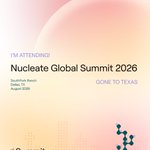
Super excited to go to Texas soon! Hoping to see some horses and meet other cool people in biotech :) 🐎

The work I get excited about also innovates on the physical loop: lab operations, hardware, rapid in vivo testing. Faster ways to filter and validate binder designs. Quantum sensors to read neuronal activity or for nanoscale NMR.
What actually compounds: distribution + data. Hospital and clinic partnerships that lock up data others can't get are real, as is taking a lead on real sales and revenue.
But data alone is getting crowded too.
Most frontier models are open source. Checkpoints are a free download. And often times, models are some variant of off-the-shelf models (ViT, BERT, etc).
Software you can clone isn't defensible IP, patent or not.
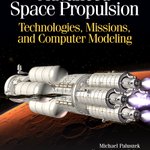
The book I worked on over the past year is finally available to preorder!!
One of my fave sections is on the bussard ramjet, a theoretical design that "scoops up" protons for fusion. The book also dives into the details of nuclear propulsion concepts.
shop.elsevier.com/books/adva…

AI drug discovery still requires in vivo and in vitro testing for validation. One general bottleneck for AI in biology is data. EVO2, for instance, requires more data to become more accurate (9/10)