


let’s explore how settlement works in utexo’s architecture and what role bitcoin plays in this process.
-in utexo’s architecture, bitcoin serves as the primary security and final settlement layer.
>however, this doesn’t mean that every payment is recorded on the bitcoin blockchain.
-@utexocom uses the @RGB_Bitcoin protocol to enable asset transfers and ownership management, while bitcoin acts as the underlying security infrastructure and the reference layer for recording cryptographic commitments.
1. core settlement architecture
in this architecture, the rgb protocol is responsible for asset management and ownership transfers.
-each rgb transfer is anchored to the bitcoin blockchain through a standard bitcoin transaction containing a cryptographic commitment.
-importantly, the full transaction details and asset transfer information are not publicly disclosed on the blockchain. instead, wallets validate ownership proofs locally.
this allows rgb to provide privacy and asset ownership management, while bitcoin serves as the layer for recording commitments and securing the process.
2. swap settlement mechanism
in addition to asset transfers, utexo uses a combination of taproot (p2tr), htlcs, and the bip-174 psbt standard to facilitate swaps on bitcoin, without requiring smart contracts on the bitcoin network.
in this process, htlcs provide three paths for managing assets:
-resolver withdraw:
allows the resolver to withdraw funds by revealing a cryptographic secret.
-timelock refund:
if the swap is not completed within the specified time, the depositor can reclaim their funds.
-cooperative fast refund:
allows faster refunds through joint signatures from the protocol and the resolver.
additionally, each deposit includes an op_return output that identifies the swap intent.
>this mechanism allows swaps and refunds to be managed through cryptographic conditions without requiring smart contracts on bitcoin.
-overall, utexo’s settlement architecture is built around different technologies with distinct responsibilities.
-rgb handles asset management and ownership transfers, taproot and htlcs provide the mechanisms for executing swaps and managing refunds, while bitcoin serves as the security layer and the reference point for recording cryptographic commitments.
-the ultimate goal of this architecture is to combine bitcoin’s security, rgb’s privacy, and the ability to execute stablecoin payments within a single infrastructure.

4
15
263
another day of european national team matches!
germany will play against serbia tonight, and the netherlands will also face greece.
i’ve got a new story for germany’s match.
i think we’ll see at least 2 goals from germany. based on serbia’s previous performances, they have conceded 2 goals in every match in this group. so we can expect them to concede 2 goals in this match as well.
i also think germany could win this match because they want to move up the table and make sure they qualify from the group.
serbia haven’t earned any points yet, so i don’t think they have much of a chance of winning.
if you’re wondering how to get in on this, here’s the link → app.xo.market/?r=jupiterbaz
@AliHabbabeh

i’ve provided the top 10 xStocks with the highest DeFi TVL,
which are $STRCx with $59m TVL,
$SPYx ($15m), $MSTRx ($11.2m),
$NVDAx ($7m), $QQQx ($6.95m),
$TSLAx ($5.95m), $GOOGLx ($4.82m),
$CRCLx ($4.69m), $SPCXc ($1.73m),
and $HOODx with $1.52m TVL in 10th place.
>so let’s take a look at what kind of DeFi opportunities are available for each of them.
>let’s start with $STRCx, which has the highest DeFi TVL.
there are 3 ways to get into DeFi:
1- pendle (buying YT, PT, or LP). this is the riskiest option (make sure to follow the instructions before opening a position). this current position will be expired on nov 26
2- kamino (lending, borrowing, looping).
3- raydium (adding liquidity). ( STRCx-USDC.)
>the second token is $SPYx.
there are 2 ways to earn yield in DeFi.
1- kamino (lending, borrowing, looping). there are two markets that provide lending services: xStocks market and Sentora market.
And for looping, you gotta go to the Multiply section.
2- raydium and orca (adding liquidity).
>the next ones are $MSTRx, $NVDAx, $QQQx, $TSLAx, $GOOGLx, $CRCLx, and $HOODx.
they offer the same opportunities as SPYx. you can use kamino to lend or borrow, and also use raydium and orca.
>we also have $SPCXc.
there are 3 ways to get into DeFi.
1- aave (lending, borrowing). make sure to use the pro version before trying it.
2- vaults made by superform.
3- adding liquidity on beefy and aerodrome.
so if you still have issue with it , go ask me below


5
26
495
Amir retweeted

Let’s talk about MUTUAL!
MUTUAL is a sports betting platform on Solana with an approach that differs from the traditional model.
It’s not the house against the player. Odds are dynamically determined by community activity, and the platform does not profit from users’ losses.
There’s a layer of ownership through limited NFTs (5,092 in total). NFT holders receive 1/3 of the platform’s fees, plus point multipliers and access to monthly rewards (giveaways + league competitions).
Pre-registration is now open. When you connect your wallet, you create your referral link and get a head start in the points system.
Link: mutualmarkets.app
X: @mutual_sol
Sports. Community. Rewards.
Amir retweeted

Introducing the OnRe Yield Plus Vault, curated by @AllezLabs.
Built on @ExponentFinance, the vault combines reinsurance-backed yield with fixed-rate markets and onchain leverage through a single deposit.


let’s take a look at the @mutual_sol ambassador program!
if you don’t know about it, here is an introduction:
teapawt.net/mutual_sol/status/2117…
to get amb, we gotta invite 20 active referrals.
(to register, check this out → mutualmarkets.app)
and also try to promote mutual on X or telegram.
and based on the dc announcement,
ambassadors are gonna get:
-exclusive points multiplier
-benefits regarding the future
distribution of community rewards
-a voice in the project’s development
-special discord role
-access to a private ambassadors channel
>i think it’s an early opportunity to get in, so make sure not to miss it.
final note: if you complete 20 referrals, don’t forget to open a ticket or message a team member with your referral link + X acc.


4
17
439
let’s take a look at what’s happened with @xStocksFi recently.
they’ve crossed $1.126b in aum, up 3.61% over the past 24 hours.
-it was $1.04b just 7 days ago, which means it has increased by $86m since last week.
-but we don’t know whether this is due to an increase in the value of assets or an increase in minting compared to redemptions.
>so let’s take a look at mints and redemptions.
total mints since nov 2 amount to $307m, while redemptions account for 202m.
>that means $105m has flowed into the ecosystem.
so, based on the $85m increase in aum, we can conclude that the higher amount of minting compared to redemptions has been the main driver of aum growth.
-that’s good thing for us, guyz!
-and then we also see that defi tvl has increased by 3.61% over the past 24 hours. it’s at $117m now, with a utilization rate of 10.4%.
-another factor that might interest you is the total inflows over the past 30 days, which stand at $330m, while outflows are just 93.69m.
>anyway, the ecosystem is getting bigger and bigger every day, and we just need to keep following the metrics to find out what’s going on here.
>i think we’ll see more exciting things in the ecosystem, and it will happen very soon.
all data grabbed from @tokenterminal and @DefiLlama @defillama_res


5
34
864

Amir retweeted

DeFi got boring.
Wrappers on wrappers. Ponzis that look, smell and sound like ponzis.
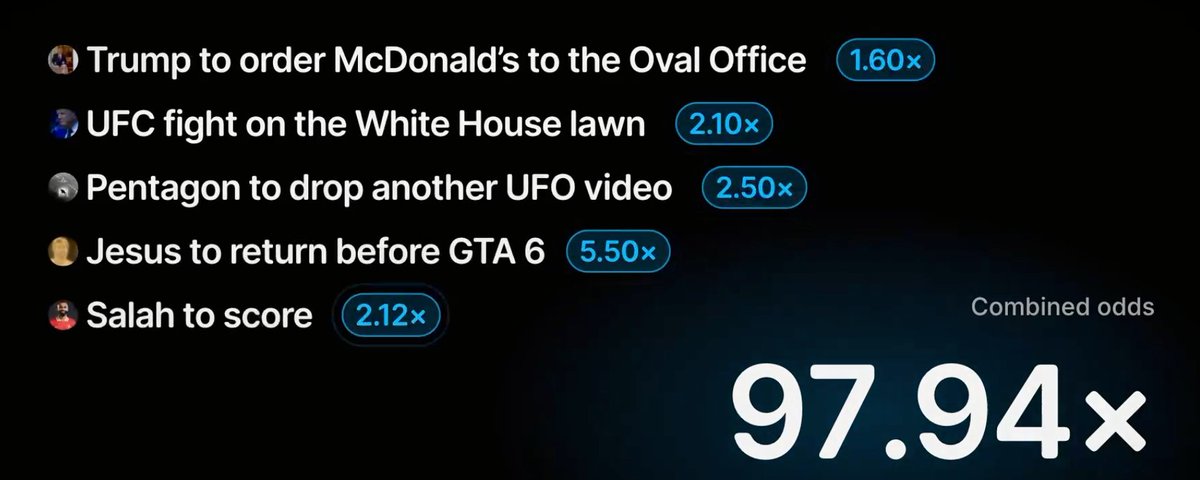
So we built a new primitive: AI agents that price any prediction, and a vault where anyone can be the house.
Every story has a price 👇
another match football day!
inter will face como in a few hours, and barca will also be up against atletico madrid.
i think both barca and atletico could score, cuz atletico play very well at home (they’ve scored an average of 2.2 goals in every home game).
-on the other hand, barca are in their prime. they score a lot in almost every game. no team can stop barca’s strikers.
-besides real madrid, other teams have conceded at least 2 goals against barca, so i expect barca to score at least one goal at the metropolitano.
-on the other side, como will be playing against inter. the last match between them ended 3-2 in favor of inter. como will have learned a lot from that match. they recently scored 9 fkn goals against lens!
and on the other side, inter just beat feyenoord.
i think both teams could score at least one goal, and i’ve gone for yes on both teams to score.
there are two reasons for this:
inter have scored in all their home games, and como have also scored 13 goals in away games (an average of 2.17 goals per game).
so, i think como could score at least one goal against inter.
@AliHabbabeh

-why does @utexocom want to extend rgb based usdt to the lightning?
1. expanding lightning’s use in everyday payments
-lightning is designed to process a large number of small payments.
by introducing usdt, the network will no longer be limited to bitcoin payments and will also be able to support dollar-denominated payments.
-this could expand lightning’s use in commerce and everyday transactions.
2. creating economic opportunities for network operators
lightning operators can earn fees by providing liquidity through payment channels and routing transactions.
-adding usdt could create new demand for these services and open up additional revenue opportunities for network operators.
3. improving the user and wallet experience
users who rely on bitcoin wallets don’t necessarily want to deal with btc price volatility when making everyday payments.
-having usdt alongside btc allows them to use a relatively stable, dollar-denominated asset for their payments.
4. attracting exchanges and financial service providers
this infrastructure could create new opportunities for exchanges, market makers, and payment companies. for example, exchanges could use it to transfer assets between wallets and settle transactions with other platforms.
-payment providers could also develop new services built around usdt and lightning.
5. expanding rgb’s use cases within the bitcoin ecosystem
rgb enables the issuance and management of digital assets on bitcoin.
-connecting it to lightning could take rgb-based assets beyond regular transfers and make them usable for fast, high-volume payments.
-essentially, utexo isn’t just trying to create another way to transfer usdt.
-it wants to bring the stablecoin into an infrastructure capable of supporting a much broader range of financial and payment services.

1
19
287
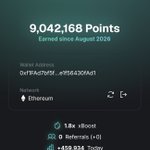
lucky day for me! i got 59k points from my own yt position and almost 400k points from boost spin, haha.
this barely happens to me, so i’m grateful for that.
look, guys! i deposited $1k around 3 months ago, and now i have $250 left. (i put all my rewards back except for $100, so i can say i’ve lost $660 from it so far.)
and i’ve got 9m xpoints, which means it cost me ~$72 for each million points.
let’s see whether it’s worth doing or not.
the point is, maturity is getting closer and closer. it will end on nov 26 (in 19 days).
i can expect there will be another strcx markets after the current one expires.

let’s take a look at the new @RockawayX vault, which is set to launch on @ExponentFinance under onycSOL token.
>the main idea behind this product is to combine sol staking yield with returns generated by strategies built around onyc.
-you deposit sol or jitosol , fwdsol and hsol and then receive onycsol in return.
->but what exactly happens to your capital after the deposit?
-it’s important to note that the vault is currently in its pre-deposit phase, and the full strategy has not been deployed yet.
once the strategy goes live, your sol will first be allocated to a basket of liquid staking tokens, including jitosol, fwdsol, and hsol.
-these assets will generate staking yield, which will contribute to your overall apy.
but the strategy doesn’t stop there.
->in the next step, these tokens will be used as collateral on kamino to borrow stablecoins such as usdc and usdg.
the borrowed capital will then be deployed across three strategies:
usdc lending in onre markets on kamino
-investing in sronyc
-investing in pt-onyc
>this way, the vault aims to generate returns from both sol staking and strategies built around onre’s reinsurance-backed asset, onyc.
so, where does onycsol’s yield come from?
according to the below, the product’s yield consists of two components:
>vault strategy apy: returns generated by the vault’s investment strategies.
>rewards apy: returns generated by incentives and rewards allocated to depositors.
currently, based on below it shows these two figures at 4.81% and 2.94%, respectively.
this brings the combined historical apy to 7.75%.
-however, this two numbers are not guaranteed and can change depending on strategy adjustments, market conditions, and available incentives.
another important point is that onycsol is managed by rockawayx.
the capital is managed through onchain policies and predefined restrictions.
-here are a few important details:
>strategy changes go through a timelock before being implemented.
>withdrawals are processed on a weekly basis.
>the assets and protocols approved for investment are predefined.
>capital allocation details are visible onchain.
-so, why does onycsol matter to @onrefinance ?
i think the most important part of this collaboration is expanding onyc’s utility across the defi ecosystem.
so far, onyc has been used across different defi markets as an asset backed by reinsurance yield.
-but onycsol creates a new access point.
now, sol users can gain exposure to yield generated by onyc-based strategies without having to buy onyc directly.
this could create new demand for onyc, bring more liquidity into related markets, and expand its utility beyond simply holding the asset.


5
19
406
i want to compare @Polymarket and @xo_market
(for the same match, at the same time, and with the same amount.)
-if you put $10 on polymarket (i chose under 1.5 goals for aek athens and over 2.5 goals for real madrid), -> your payout would be $15.14.
-but the same bet on xo market would pay you $16.26. that’s $1.12 more than polymarket.
>also, that’s not the only things .
-polymarket charges you some fee ( in this case , it will charge you almost 1-2% ) , while xo market takes nothing from you.
-that’s impressive. i’m just confused why everyone doesn’t notice this.
if you’re still using polymarket, consider giving xo market a try.
here’s the link to register:
beta.xo.market/?r=jupiterbaz
Final note : if you wondering which part of xo has this feature, here is story , where you can combine up to 10 bets into one .
@AliHabbabeh


5
28
441
>what do we know about utexo’s exact mainnet launch date?
-before getting into the details, there are a few things we need to understand to get a better picture of what utexo actually does and what its mainnet launch means.
-first of all, utexo is not a new blockchain.
-it’s a bitcoin-native execution and settlement layer that uses the rgb protocol to enable the issuance and transfer of assets on bitcoin.
-in this model, transaction details remain private between the sender and receiver, while cryptographic commitments are recorded on bitcoin.
-this allows utexo to benefit from bitcoin’s security and transaction finality.
-so, what exactly does utexo’s mainnet mean, and what’s going to happen?
-let’s go through the launch process step by step.
1. funding and infrastructure development
in march 2026, utexo successfully raised a $7.5 million seed round led by tether, with participation from big brain holdings and portal ventures.
the project’s infrastructure is built on rgb, a protocol whose version 0.11.1 has been live on bitcoin mainnet since july 2025.
2. early access for operators
as we already know, on october 22, 2026, utexo opened early access to utexo mint for professional operators.
exchanges, wallets, market makers, otc desks, and trading firms can register during this phase and explore different capabilities in the bitcoin signet testing environment.
in fact, this is a good opportunity for utexo to demonstrate its capabilities to companies and professional operators before the public launch and put its infrastructure to the test in a controlled environment.
these tests include minting, confidential transfers, and asset redemption.
in addition, operators will have access to tools for managing cross-chain liquidity and converting fiat currencies into digital dollars.
3. phase one: public launch
now, let’s talk about the most important date in this roadmap.
according to utexo’s website, the public launch is scheduled for november 28, 2026.
-at this stage, utexo will begin the public issuance of usdt on bitcoin, making the asset available through partner wallets and exchanges.
-the project also plans to provide the liquidity needed by swap providers and lending platforms that accept btc as collateral.
-one important detail is the backing mechanism. the usdt issued on bitcoin will be backed 1:1 by usdt0 locked on arbitrum.
-so, phase one is not just about issuing a new token. the main goal is to build the infrastructure needed to transfer and use usdt across the bitcoin ecosystem.
4. phase two: expansion to the lightning network
however, utexo’s plans don’t end with the public launch on bitcoin.
-according to its announced roadmap, utexo plans to expand the issued asset to the lightning network in q1 2027.
-this phase will enable near-instant payments and extend usdt’s use cases within the bitcoin ecosystem beyond regular transfers.
-however, it’s worth noting that rgb on lightning is still in the testing phase and is not currently live on mainnet.
-as a result, bringing this functionality to mainnet will be another important milestone for utexo.
these are some of the key points i think are worth understanding before utexo’s mainnet launch.

tokenizing stocks is moving very fast.
-as you can see in the pic below, its market cap has moved up 18.1% in the past 30 days (which means it’s at 4.7b now).
-we have 5.7m holders rn, 36 issuers, and almost 13.6k stocks have been tokenized so far, which is a huge one.
-and let’s take a look at the sec pic. @xStocksFi has 41% of the total tvl in defi among other issuers. second place goes to @RobinhoodApp and then binance bstock. others just have a small share of this one.
>i think there are a few reasons for xstocks being the top one.
-first, they brought a lot of defi opportunities, like lending, looping, trading, adding liquidity, and many other things.
-second, they provided massive campaigns during the period since they launched, like @nadoHQ or this current points campaign where you get points from lending, looping, or adding liquidity.
-so let’s take a look at the third one.
-as you can see, half of the top 10 stocks belong to xstocks, which are STRCx (with 51.4m), SPYx (15m), SPCx (6.8m), NVDAx (6.8m), and then QQQx (6.3m).
-if you’re wondering why “others” is so huge, that’s because there are a lot of stocks that have a low tvl, and i hope they go to defi in the future.


41% of all tokenized-stock deposits in DeFi are now xStocks-issued.
Active across lending, borrowing, yield, liquidity provision and rate markets on @Kamino, @Pendle_fi, @Raydium and @Uniswap.
More xStocks utility across DeFi is coming.
>this article highlights several important points about risk management in the insurance industry.
insurance companies face different types of risks, and understanding them correctly and finding logical ways to manage them is extremely important.
-so, let’s go through the 10 key takeaways:
1. the end of the atlantic hurricane season doesn’t mean the end of risk.
as we enter november, the atlantic hurricane season is coming to an end.
-however, the possibility of severe storms still remains.
for example, Hurricane Sandy in 2012 showed us that storms outside the usual season can still cause significant damage.
2. major hurricanes in november are rare.
The last category 2 hurricane to make landfall in florida in november was hurricane Kate in 1985.
-However, warm sea temperatures in the Gulf of Mexico helped it reach Category 3 intensity.
3. Insurance risks are not limited to hurricanes.
Underwriters also need to consider other risks, such as wildfires and earthquakes.
-For example, unlike many natural disasters, earthquakes don’t follow a specific seasonal pattern and can happen at any time of the year.
4. As the Atlantic hurricane season ends, the European winter storm season begins.
-European winter storms generally cause lower financial losses, but historical examples such as Daria in 1990 and Lothar and Martin in 1999 show that they can still cause significant damage.
5. Climate change can increase the risk of winter storms in the US.
For example, the Polar Vortex can expose different parts of the US to extreme cold weather and winter storms.
-What’s interesting is that the same phenomenon that may limit Atlantic hurricane activity could also increase the risk of winter storms.
6. Insurance losses don’t depend only on the severity of an event.
-There are other factors that need to be considered when estimating potential losses. The article highlights three important ones:
-Climate Change: For example, rising ocean levels and global warming can increase the intensity and potential damage caused by hurricanes or even wildfires.
>Expanding Exposure:
Imagine an area with 100 residential units and different facilities.
Naturally, the potential losses in such an area could be higher than in an area with fewer homes and infrastructure.
>Claims Inflation:
This refers to the rising costs of rebuilding and covering losses, from construction materials and labor costs to the time required to complete reconstruction.
These costs can vary depending on the city and its economic conditions.
7. Risk is not distributed equally throughout the year for every peril.
-OnRe estimates expected losses for each deal based on the types of events and geographical regions covered.
For example:Earthquakes and man-made perils have a relatively uniform distribution throughout the year.
Hurricanes and some other natural disasters follow specific seasonal patterns.
This difference is important when modeling and assessing the risk of each deal.
8. Not all hurricanes carry the same level of importance for insurance deals.
This is one of the important points in the article.
Some OnRe deals would only experience losses if a very powerful hurricane occurred.
Therefore, looking at all hurricanes isn’t enough. We also need to examine the seasonal patterns of major hurricanes (Category 3 and above) separately.
According to historical data going back to 1925, the seasonal pattern of major hurricanes is different from that of all hurricanes combined.
This means OnRe needs to assess the risk of each deal based on its specific coverage and exposure to different events.
9. Revenue from deals isn’t recognized linearly from day one.
-This is one of the most important parts of the article when it comes to understanding OnRe’s financial model.
-Premium is earned throughout the term of a deal:
Only a small portion is earned on the first day.The rate of earning accelerates as the deal moves through periods of higher loss seasonality.


2
18
337
Finally, the process is completed when the insurance liability ends and capital is released from the Deal Trust Account.
Aggregate and Subsequent-Event deals also have different and delayed earning patterns because they require multiple events to trigger a loss.
10. Diversifying deals helps create a more balanced portfolio earnings profile.
Each deal has different inception dates, coverage, structures, and risk characteristics. As a result, their earnings patterns are not the same.
When we look at these deals at the portfolio level, differences in their start dates, end dates, and earnings patterns can help create a more balanced revenue profile for OnRe.
47