

@NIAAANews T32 postdoctoral fellow in the Lapish lab at IU
IU | Drexel | CofC/MUSC
Joined September 2013
- Tweets198
- Following472
- Followers316
- Likes1.3K




Katie Bryant, PhD retweeted

1/ After residency at Mass General Hospital, I reported to Atlanta to meet my fellow CDC Epidemic Intelligence Service Officers.
I have never felt so intimidated by my peers
The best and the brightest, they were star clinicians, had served in disaster zones; MD/PhDs and MSF.
Katie Bryant, PhD retweeted

It seems few people know what an “indirect cost” is or why it has to be 40-60%.
The reason the government forced universities to raise their indirect costs up to (typically) 40-60% was to force a huge amount of regulations on the universities while also minimizing the bookkeeping to comply with those regulations. This includes the work by contract managers, compliance lawyers, accountants, safety management, etc., who are required by the government per the terms of the contract. If universities had to allocate all those categories of labor to each contract hour-by-hour it would require too much bookkeeping, which would waste money. (I’m setting aside for now the question of whether or how much the regulations are wasting money and only discussing how you bookkeep the effort to comply with the regulations.)
So to save money, while also requiring universities to do these types of work, the government requires universities to roll those categories of labor into “cost pools” that must be allocated as a percent of the technical work in each of the contracts. While the actual “overhead” might be only 15%, these pooled labor charges that are required by the government are typically much more.
Second, the government doesn’t allow the universities to figure out their own indirect rates. These rates are determined by the federal government through audits every couple of years. The government then sends a document telling the university what rate to use for its cost pools. For example, the University of Colorado was told by the DHHS to use 54% (colorado.edu/controller/site…) and U. Nebraska was told by DHHS to use 55.5% (uofnelincoln.sharepoint.com/…). 40-60% is not only reasonable to fulfill the terms of the contract, it is the rate that the government tells the university it can charge for all the work the government requires the university to do.
So if the government wants to reduce the indirect rate to 15%, then it needs to do one of these two things:
Either
(A) eliminate all the federal regulations that force the universities to do those categories of work (compliance, accounting, management, safety management, tracking harmful chemicals, etc.)
Or,
(B) stop requiring universities to pool those real costs into the “indirect cost” category and allow universities to include them in the “direct costs” of the contract.
If the government chooses (A), then the safety rails have been entirely removed. (Even if the government lowers the regulations without entirely eliminating them, the costs they impose will still be real costs that probably come out to more than 15%.)
Or, if it chooses (B), then the direct costs will go way up and research will actually be less efficient because all the bookkeeping, not more efficient.
But if the government caps the indirect rate at 15% without doing either (A) or (B), then it will be impossible to do research for the federal government without going bankrupt. That’s the worst possible choice. It will kill research in the US. Is that what we want?
I can explain it for you but I can’t understand it for you. It’s up to the reader not to be ignorant.
Katie Bryant, PhD retweeted

NEW: The N.I.H. will cut about $4 Billion from federal research grants that support cancer, virus and heart disease research.
#Project2025 called for the cuts to end subsidies to "leftist" university agendas.
nytimes.com/2025/02/07/us/po…

Katie Bryant, PhD retweeted

The result of this is that many institutions could not afford to perform research that delivers cures for debilitating brain conditions. I am hoping the NIH will reconsider this position, which would be especially devastating to state institutions.
Katie Bryant, PhD retweeted

#eNeuro | @ShelbyMWhite1, @CC_Lapish. et al. investigated the neural basis of impulsivity and impulse control. Using an important paradigm for assessing impulse control in rats, they discovered that disrupting anterior cingulate cortex activity during the paradigm increases impulsivity. @iupui doi.org/10.1523/ENEURO.0379-…

Katie Bryant, PhD retweeted

Excited to share our newest paper in @npp_journal that found yohimbine is a reinforcer in male and female SD rats! nature.com/articles/s41386-0…

Katie Bryant, PhD retweeted

Happy #BINW24! 🎉 I'm Brielle 👋🏾 and I'm an asst. prof at @harvardmed and @BostonChildrens.
My lab studies circuit mechanisms of attention and cognition in health and disease. 🧠
I'm also a co-founder and outgoing Programming Director for @BlackInNeuro.
#BlackInNeuroRollCall

ALT Brielle is posed in front of a microscope in a selfie. She's smiling wide and her hair is in braids. She's wearing gold hoops and a cream-colored t-shirt.
Katie Bryant, PhD retweeted

Heyyyyy y’all! I heard it’s #BiNW24! My name is Dr. Taylor McCorkle, and I am finishing up my first year as a postdoctoral fellow at Temple University in the #ASHLab where I study the neurobiology of diseases associated with maladaptive feeding in mice.
#BlackInNeuroRollCall


Katie Bryant, PhD retweeted

Excited to share LIQ HDR - a home cage capacitive lickometer system for rats - equipped with custom 3D prints to capture lick microstructure in two-bottle choice drinking experiments. Now available on bioRxiv as part of a home cage drinking methods paper.
shorturl.at/KZsLu

Katie Bryant, PhD retweeted

If you're a neuroscientist, you've probably heard that congress passed final appropriations for FY24, with deep cuts (~40%) to BRAIN Initiative. Advocates are now pushing for +$740 million in FY25 and @SfNtweets made it easy for you to add your voice here:
sfn.org/Advocacy/Advocacy-Ne…
Katie Bryant, PhD retweeted
I've got news!🚨🚨 Due to some very generous funding, I'll be able to hire an administrative associate. 🎉
This person will provide admin support for my lab and DEI efforts with @BlackInNeuro and @FMKirbyNeuro. Please share widely.
Details here: sjobs.brassring.com/TGnewUI/…
Katie Bryant, PhD retweeted
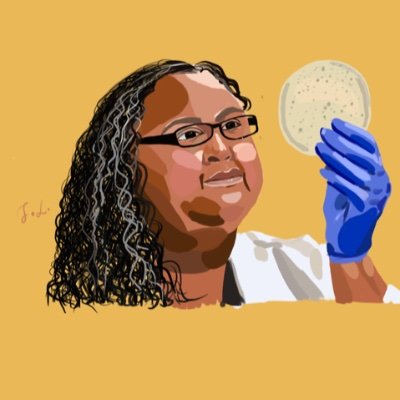
People rarely understand the indignity of being a poor student.
Even with the best planning and care, when an emergency strikes you are unlikely to have the resources to cope, and many push it to the last minute before asking for help because of these complicated feelings.
Katie Bryant, PhD retweeted

I'm very happy to announce that I have officially accepted a faculty position at the University of Cincinnati College of Medicine @UCincyMedicine! I'm so excited to grow my #neuroscience research program at this awesome institution! (More info 👇)
Katie Bryant, PhD retweeted

🚨 #EphysTwitter 🚨 please RT
The @glover_lab is looking for a talented slice electrophysiologist to work at the staff scientist level. If you love #ephys and want to explore ethanol's effects on neural circuits, please get in touch!
#PatchClamp #Electrophysiology #NeuroTwitter
Katie Bryant, PhD retweeted
It’s #BINW23! My name is Taylor McCorkle, and I just finished my 5th year as a neuro PhD candidate in the lab of @raghupathirames. God really has the best timing bc I’ll be defending my thesis this Thursday at 3pm EST! Please dm me if you’d like the link! #BlackinNeuroRollCall


Katie Bryant, PhD retweeted
Ahhhh it’s happening!! I’ll be defending on July 27th!
Also, s/o to my mom for sending me this shirt as I prepare to submit my dissertation to my committee in few days 😅.


Thesis Defense:
Taylor McCorkle
@tay_mccork
Neuroscience Program
PhD Candidate
Thurs, July 27th, 3 pm
QL Aud B, Zoom
Sex-dependent mechanisms underlying cognitive deficits following repeated mild TBI in adolescent rats.
Advisor: Ramesh Raghupathi, PhD
@raghupathirames
Katie Bryant, PhD retweeted

The Rinker Lab is looking for a technician - a really excellent opportunity for recent grads to gain experience b4 grad school! Learn stereotaxic surgery, calcium imaging, opto, DREADDs, and join a team of really awesome folks.
rb.gy/ktlwb
rinkerlab.com

Katie Bryant, PhD retweeted


We’re very excited to share our most recent preprint on how cognitive control strategies relate to alcohol consumption in rats.
This work was lead by @neuromorning biorxiv.org/content/10.1101/…

Katie Bryant, PhD retweeted

Please check out our new work that describes computations performed by prefrontal cortex during delay discounting in rats.
This was lead by @ShelbyMWhite1 and @neuromorning. biorxiv.org/content/10.1101/…

Katie Bryant, PhD retweeted
We’re very excited to share our most recent preprint on how cognitive control strategies relate to alcohol consumption in rats.
This work was lead by @neuromorning biorxiv.org/content/10.1101/…