




Kaustubh Diwan retweeted

And none of the founding fathers had a sense of direction ..... they were under the impression that they had reached India

Kaustubh Diwan retweeted

Kashmir turns discarded paper into heirloom treasures worth lakhs! 🏺
Representing over six centuries of craft tradition, Kashmir’s GI-tagged Papier-Mâché transforms recycled paper into regal works of art, reflecting the exceptional finesse of our traditional karigars.
This festive season, let us carry forward PM @NarendraModi ji’s call for #VocalForLocal by choosing local crafts, empowering our artisans and preserving India’s invaluable cultural heritage.
Kaustubh Diwan retweeted

Maya-2 voice model weights are officially live! 🇮🇳🇮🇳
The frontier voice model for India is now completely open-weight.
• Outperforms ElevenLabs v3, Sarvam Bulbul v3, and Cartesia Sonic 3.5
• 1.5B+ people covered across all 28 states and 8 union territories
• SOTA voice synthesis across 11 official languages
• 20 native speakers pre-loaded, ready out of the box
• Best-in-class zero-shot voice cloning
Built by a team of five from the land of languages.
Go build and have fun!
Kaustubh Diwan retweeted

JAI SE VIJAY - VIJAY SE VIJETA |SOARING HIGH. MAKING HISTORY.
Naib Subedar Sarvesh Anil Kushare of the #IndianArmy soared to glory, clinching the Silver Medal in Men's High Jump at #AsianGames2026 in Japan, ending India's 56-year wait for a medal in the event.
With an impressive clearance of 2.25 metres, the Yoddha exemplified grit, perseverance and sporting excellence, inspiring a generation to dream big and aim higher.
Indian Army - Forging Champions.
#MissionMedal #MOW #MissionOlympicsWing #JAIseVIJAY
@DefenceMinIndia @SpokespersonMoD @IA_SportsAdvntr @YASMinistry @Media_SAI
Kaustubh Diwan retweeted

Colonel Shukla's recent critique of the IAF mistakes cultural confidence for institutional decay & selective nostalgia for strategic analysis.
As a veteran IAF officer I find the piece more revealing of the author’s assumptions than of any genuine leadership deficit in the service.
The charge that Sanskrit quotations and references to the Ramayana at official briefings somehow “Hindutva-ise” the Air Force is particularly thin. Indian public life has always drawn upon our civilisational language. When an air marshal opens a media briefing with a verse, it is treated as ideological signalling. Had the same officer quoted Churchill or Clausewitz, it would have been praised as intellectual breadth. The objection appears less about professionalism and more about discomfort with any open affirmation of Indian civilisational identity within uniformed institutions. That discomfort is the author’s, not the IAF’s.
The suggestion that Air Marshal Jeetendra Mishra’s post-retirement appointment is evidence of ideological reward is equally unconvincing. Officers who plan and execute complex operations under real constraints are often asked to take on civilian responsibilities for a variety of reasons, competence being high among them. Reducing a successful operational career to a political transaction does a disservice. It also assumes that every subsequent appointment must be viewed through a single ideological lens. This makes an analyst with an agenda.
On the “zero-error syndrome,” the article recycles an old complaint. Risk aversion is a real institutional tendency in any large military, particularly one that operates under nuclear thresholds and simultaneous continental and maritime pressures. Equating measured caution in 2020 with a permanent loss of offensive spirit is an oversimplification. The same service now accused of timidity has repeatedly demonstrated the ability to hold and dominate difficult terrain when the operational picture and political guidance aligned. Leadership is not measured by how quickly one escalates; it is measured by whether the force remains ready, cohesive and capable when the moment actually arrives.
The claim of a growing disconnect between “lions” and “donkeys” is the oldest refrain in military commentary. Junior officers have always grumbled about seniors; seniors have always fretted about the quality of juniors. What has changed is the volume of public commentary that turns ordinary institutional friction into a civilisation-level crisis. The IAF continues to attract, train and retain officers who fly demanding missions in difficult conditions. That record is more relevant than seminar-room complaints about language and vocabulary.
Colonel Shukla ends by invoking the Truman–MacArthur clash as a model of principled military independence. The analogy is misplaced. India’s constitutional framework and civil-military traditions are not those of America in 1951. Indian service chiefs have long given candid military advice while remaining within the boundary set by elected authority. That is not weakness; it is the system working as designed. Demanding that senior officers “seize the moment” by publicly challenging government policy is not a call for better leadership. It is a call for a different political arrangement altogether—something practised in Pakistan.
In the end, the article reads less like a diagnosis of military leadership and more like serious discomfort with the cultural self-confidence now visible in parts of the armed forces. One can debate the wisdom of particular public statements or post-retirement appointments. Turning those debates into a sweeping indictment of the IAF’s professional character is rather like criticising the entire batting order because one batsman prefers a particular stance. The scoreboard of operational performance remains the best measure. On that measure, the IAF continues to hold its own explains Air Marshal Nambiar of the Kargil fame.
Kaustubh Diwan retweeted

An information which may be very disturbing to everyone. A medical distributor of a particular injection which is used in chemotherapy, his wife was suffering from cancer. She was taking treatment in a very renowned hospital. We will not take the name of the hospital. So the dealer requested the hospital authorities, sir I am myself a dealer and to me the injection comes at Rs. 11,000 dealer price. The hospital refused to administer that injection and charged Rs. 1,30,000 for that injection. Can you show any justification for this loot, please? Why this difference? Where does the money go? Supreme Court asks Centre

Kaustubh Diwan retweeted
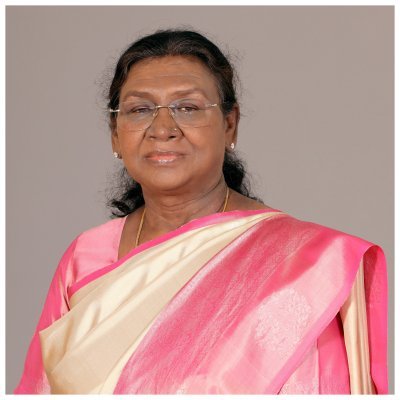
Glimpses of the ceremonial welcome accorded to H.S.H. Hereditary Prince Alois of Liechtenstein by President Droupadi Murmu at Rashtrapati Bhavan
Kaustubh Diwan retweeted

Underage son of a Kerala JUDGE fatally rams Mercedes into man on scooter, gets bail in 3 hours. Judge father threatens victim’s family in police station, forces them to delete photos.


Kaustubh Diwan retweeted

Excellence in every element, Precision in every formation. 🇮🇳
#suryakiranaerobaticteam #wingsoverganges #indianairforce #Varanasiairshow
Kaustubh Diwan retweeted

Congress Party must apologize to the nation for spreading fake AI video to tarnish the image of Indian Army.
यह एक विश्वासघाती कृत्य है और हमारे दुश्मनों के घिनौने कामों के बराबर है। कांग्रेस पार्टी भारत के दुश्मनों का घटिया अभियान चला रही है।


Kaustubh Diwan retweeted

Big Expose:
1. Exposing collaboration between Congress, Pakistan, and China to spread fake news against our Indian Army.
Today, a Congress spokesperson has posted a deepfake video targeting the Indian Army, which was originally uploaded by a Pakistani account @InsiderWB


Kaustubh Diwan retweeted
Hats off to the person who made this.
He's hit the nail on Social Media's head and analysed the monster top to toe.


Kaustubh Diwan retweeted

What if the future of cargo transportation could fly just above the water?
As reported in Moneycontrol, IIT Madras-incubated startup Waterfly Technologies is preparing to conduct the first ocean trial of its electric-powered flying boat, Hummingbird, between Chennai and Puducherry by December 2026.
Designed to skim close to the water’s surface, Hummingbird uses the aerodynamic principle of ground effect to reduce drag and improve efficiency. The 300-kg craft has progressed from an earlier 30-kg prototype to a larger design, with potential applications in coastal and island cargo transport, including offshore oil field logistics.
With an estimated range of around 1,000 km on a single charge, the startup aims to make cargo transportation more cost-effective, targeting costs below Rs 10 per tonne-kilometre.
From innovative prototypes to real-world ocean trials, this is another glimpse into how the IIT Madras startup ecosystem is advancing homegrown deeptech solutions for the future of transportation.
Read more: moneycontrol.com/news/busine….
@moneycontrolcom @iitmadras @narendramodi @Waterfly_Tech
#IITMadras #DeepTech #Innovation #Startups #ElectricMobility

