




Kévin retweeted

Google has made recent changes to AI overviews that are brutal for websites.
Previously, they would prominently feature citations for 2-3 domains in visible cards alongside the result.
I'm now seeing a drastic reduction in their appearance, so if you are seeing a significant decline in impressions and site visibility in recent days, this is likely a contributing factor.
To add insult to injury, AI overviews now display for 83% of all queries on desktop in the US, according to @semrush data, making this even more impactful.
Having the prominent citation cards removed on desktop is one that has been the default on mobile for some time now, but it looks like the change is now here to stay.
Google is trying to balance out the effects of this change by having a different type of AI overview that automatically unfolds the 'show more' button (having the prominent cards appear), though this display seems to be rare at this point.
With how volatile search results have been lately, matched with AI overviews now dominating most queries, a change needs to happen to give publishers more credit for powering Google's AI.

Kévin retweeted

Huge SEO News: OpenAI released a new research paper on how people use ChatGPT in 2026. More people are using ChatGPT like an answer engine than ever before:
So this was a big drop from OpenAI yesterday. Last year they created a research report on how people are using ChatGPT with real-user data. Well it looks like they updated that study to reflect how actual users are leveraging ChatGPT for work activities.
This report has a lot of really interesting takeaways for SEO + marketers in general:
1. More and more people are using ChatGPT as an answer engine specifically. Practical Guidance (28%) + Seeking Information (20%). Together, those make up 48% of all messages.
2. Seeking Information was the biggest growth area. It started at 16% in July 2024 and grew to 20%.
3. People using ChatGPT for Writing has declined A LOT. In July 2024, this was 34% of all messages. Now it's down to just 21%.
4. Technical support has also plummeted. It started at 13% of messages and is now down to just 4%. Claude has almost certainly taken it's place here.
5. "Making decisions and problem solving" is still the largest category at 19%. However, this has shrunk down from 23% back in 2024.
6. More decision-making users are leveraging ChatGPT. Users who were 45+ rose from 11% to 20% while under 25 shrunk from 42% to 26%.
So huge study here! Definitely worth looking into if you want to analyze how people are leveraging ChatGPT.
Kévin retweeted

Google's John Mueller downplays the importance of having fresh indexing reporting in Search Console
seroundtable.com/google-down…

Kévin retweeted
Google warns tools on user-generated spam guidance and adds a new section for only index content meant for Search
seroundtable.com/google-user…

Kévin retweeted

Wait, an AI-Assisted Academic Paper citing articles that don't exist? Shocking... :) -> AI-Assisted Paper About Z-Library Cites a TorrentFreak Article That Doesn’t Exist
"The problem is that this particular legal action is new to us. The reference section lists the article as “Publishers continue crackdown on shadow libraries” and links to the TorrentFreak homepage. However, we have never published an article with that title."
"Looking more closely, we see more claims that don’t seem to fit. The paper’s account of the Z-Library criminal case, for example, states that the U.S. Department of Justice “arrested individuals” in 2022."
"We also ran the paper’s abstract and conclusion through the AI detection tool Pangram. For both sections, the tool reported that “100% of the text is likely AI-generated.”
torrentfreak.com/ai-assisted… via @torrentfreak


Kévin retweeted
Google Search ranking volatility is heated 🔥 on Saturday, October 24th
seroundtable.com/google-sear…

Kévin retweeted

If AI Overviews are going to show on 80% of queries (h/t @seoClarity), it means that position tracking in GSC is about to get VERY confusing since Google doesn’t label or filter AIO/AI Mode in there.
(Dear Google: please do this already. We already know that traffic and CTR for AI results will be low. It’s not a secret.)
So now you can rank #1 due to an AIO citation and prob see near-0 CTRs, mixed in with all the rest of your query data representing traditional organic results.
Kévin retweeted
Google AI Overviews now show for 80%+ of search queries, data from Semrush, SE Ranking and seoClarity
seroundtable.com/over-80-of-…

Kévin retweeted
Happy to see this site hit by a Google Spam Update continues to climb back to where it was before.
The audit was delivered in January - the cleanup work was implemented starting in Jan/Feb - recovery happened just before another Spam update in June.
This is unfortunately how long recovery can take - and I'd call this a quicker turnaround than normal.

Kévin retweeted
New Claude Skill: Content Prioritization Analyzer For AI Search via @aleyda:
Prioritizes content based on:
- Click resilience
- Citation potential
- Brand mention potential
- Business importance

Kévin retweeted

Google Discover has just started a test on AI summaries:
Disabling clicks on sources.
Behavior before this test:
Clicking on the sources at the bottom of an AI summary card opened a mini-feed with articles from the sources of the AI summary.
With the test, we have the flag: disable_aio_sources_button_tap
This disables clicks on sources and no longer opens the mini-feed with articles from the AI summary's sources.
CC @gaganghotra_ @rustybrick @nicola_agius
#googlediscover


Kévin retweeted
Interestingly, Google is changing the documentation for Tailor Your Feed on Google Discover:
The title, "Get started with Tailor your feed in Google Discover," is now "Add topics to your Discover feed using your own words."
So the term "Tailor Your feed" is no longer used.
Then, they're changing the phrases "ask for a new topic, more info..." to "add, refine, remove topics or content types."
This is to make it clear that you can also remove content you don't like from the Discover feed via their AI chat.
In fact, the term "chatbot" is now "AI chat agent."
CC @gaganghotra_ @rustybrick
#googlediscover


Kévin retweeted
Nice SEO article: Why the order of technical SEO fixes matters
First priority: Crawling and indexing improvements
Second priority: Content, meta data, UX
Addressing tech issues in this order resulted in a +121% improvement in organic traffic and +275% increase in AI assistants.


Kévin retweeted

Notre solution depuis le 15 mai pour les SERPs polluées n'est pas de relancer X fois un mot clé en espérant une vraie serp (aucun signe ne permet de savoir si vraie serp ou pas)
On a simplement essayer de comprendre comment Google pouvait détecter un bot d'un vrai internaute 👇

Bonjour Nicolas ! Nous avions détecté des serps polluées des le 15 mai.
Nous avions pu trouver rapidement un correctif, pas en relançant X fois les SERPs en espérant que Google nous fournisse une vraie serp, mais en tentant de comprendre comment Google pouvait détecter un bot d'un vrai internaute.
On a pas mal communiqué à l'époque tu peux regarder nos exemples.
En gros un bot = ip étrangère qui veut la serp fr en navigation privée.
Apparemment une autre update (peut être plus forte ?) a eu lieu fin septembre, pas de soucis pour nous.
Tu peux tester aussi des mots clés sur @semscraper_fr tu as des serps gratuite à l'inscription.
Kévin retweeted

Infos exclusives panne géante Orange en France... "Ce n'est pas un hack"
Il ne s'agit pas d'un piratage on me dit en interne !
Orange introduit un nouveau coeur de reseau mobile (5G). Les lignes qui sont migrées dessus sont a priori Hs.
Pour rappel, depuis 11h ce matin plus de signal sur les mobiles. Des centaines de milliers de personnes et d'entreprises sont impactées...


Kévin retweeted
ChatGPT appears to be adding new disclaimers to its answers to help users make better decisions, especially in categories that are easy to manipulate.
I’ve been tracking a long list of B2B software prompts in @peec_ai. Of ~700 ChatGPT answers, 82 included some kind of disclaimer in the past week, and 19 specifically warned users about who writes the rankings and reviews that ChatGPT draws on.
ChatGPT is cautioning users about:
❌ Vendors ranking themselves in their own comparison pages
❌ Publishers that are affiliated with one of the brands they review
❌ Entire categories where many comparison articles are written by companies selling those products (cough, AI visibility tools)
❌ Sponsored placements and paid-for reviews on review sites that affect which products show up first
❌ Recommendations that appear to exist mainly to promote affiliate links
❌ Taking vendor claims at face value
❌ Its own shortlist not being independently tested
❌ Sponsored/unbiased discussions on Reddit
I attached two screenshots from the prompt tracking export. The disclaimers are a small part of each answer, often a sentence or two at the end of a list of recommended brands.
Search engines have had systems in place for years to (try to) reduce the visibility of sponsored or manipulated content, but that work usually happens behind the scenes (ranking algorithms, reviews systems, spam policies). Now with disclaimers in AI answers, that information is directly visibile to the user and can affect their decisions.
I see these disclaimers as a temporary bandaid while the AI companies work out more sustainable ways to surface objective answers.
It also gives OpenAI some cover if ChatGPT ends up recommending not-so-great products from categories that are full of self-promotion.
It will be interesting to see whether these warnings actually lead users to do more research, or to be more skeptical of taking ChatGPT’s recommendations at face value.


Kévin retweeted

Google is now literally showing ecommerce businesses specifically how to get traffic from AI Search.
Yes, directly inside your Google dashboard.
This is probably one of the most useful AI Search updates for retailers in 2026.
Let’s go through it.
If you want to see whether your business is appearing across Google AI, ChatGPT, Claude, Perplexity, Grok and broader AI search, start here. It’s free:
seo-stuff.com/free-audit
Google recently made its new AI Performance Insights report generally available inside Merchant Center for eligible businesses in the United States, Canada, Australia, India and New Zealand.
The current report covers English-language conversational shopping queries across Google AI Mode and AI Overviews.
Google is essentially giving ecommerce companies an AI Search diagnostic report.
You can see whether your products are being surfaced when somebody uses Google’s AI features to research what to buy, and where competitors are getting visibility that you are not.
Let’s start with share of voice.
Google calculates AI share of voice based on how many AI impressions your brand or products receive compared with you and the competitor set Google has defined for related searches.
What exactly does that mean?
Well, when Google AI is helping shoppers research your category, how much of that visibility are YOU getting?
If competitors are appearing constantly while your products barely show up, you finally have first-party Google data showing you the gap.
No manually asking AI Mode the same question 50 times or trying to infer everything from referral traffic - Google itself is telling you.
The report then breaks conversational shopping searches into three stages:
Discovery.
Evaluation.
Ready to buy.
This might be the most useful part of the entire report.
Suppose you have strong visibility during Discovery, but it falls during Evaluation and nearly disappears at Ready to buy.
That tells you your products are being surfaced early in the research journey, but losing visibility as shoppers get closer to making a decision.
The opposite could happen too.
Maybe you perform well for shoppers who already know what they want, but competitors are being introduced much earlier.
That is far more useful than simply knowing you were “mentioned in AI Search.”
And it is why SEO Stuff approaches AI Search Optimization as more than checking whether ChatGPT mentioned your name once:
seo-stuff.com/gold-plan-pack…
Then there are the actual searches.
Traditional ecommerce SEO has historically focused heavily on relatively clean keywords like “running shoes,” “carry-on luggage” or “standing desk.”
AI shopping queries can look more like:
“What’s a good lightweight running shoe under $150 for someone with flat feet who runs mostly on pavement?”
Those searches contain use cases, constraints, features, price ranges and preferences all at once.
Google’s report is built around that reality.
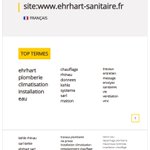
Its Top Terms section shows the concepts shoppers are prioritizing inside conversational queries.
Google gives examples such as “maximum cushioning” and “arch support,” then tells merchants to incorporate relevant high-frequency terms into product titles and descriptions where appropriate.
That is Google directly connecting conversational AI Search behavior to product optimization.
The report also surfaces Popular Attributes.
Think size, color, material and other structured product specifications.
Google can show which attributes shoppers frequently care about and which may be missing from your product data.
If shoppers repeatedly want to know whether something is machine washable, expandable, 100% cotton or supports a certain weight, but your product data does not clearly provide that information, you have an information gap.
Google’s recommendation is straightforward: populate missing attributes and prioritize the ones shoppers are asking about most.
Then there is Top Search Intents.
This goes beyond individual terms and looks at WHY somebody is searching.
A shopper may want an office chair for lower back pain, want to compare two models, stay under $300 or understand whether mesh or leather is better.
Those are very different buying situations, and Google is now giving retailers more information about which conversational shopping intents are actually occurring.
So the optimization loop becomes pretty straightforward:
Look at your AI Search share of voice, identify where competitors are beating you, see where visibility falls across Discovery, Evaluation and Ready to buy, review the terms and attributes shoppers care about, improve your product information and keep monitoring.
Google is explicitly recommending this kind of workflow.
Keep product data accurate.
Add relevant high-frequency terms where appropriate.
Populate missing attributes.
Keep reviewing the report as new opportunities appear.
There is another important detail.
The AI Performance report currently measures organic AI visibility.
Paid Ads traffic is not included.
That makes this particularly relevant for SEO.
But Merchant Center product data is only part of the equation.
People researching expensive or complicated products also ask things like:
“What is the best X for Y?”
“X vs. Y.”
“Is X worth the money?”
“Best X under $500.”
“What should I look for when buying X?”
A product feed alone may not answer those questions, but your website can.
Buying guides, comparison pages, category pages, FAQs, use-case content, product education, original research and expert explanations give Google more context around the buying decision.
Suppose shoppers are researching “best running shoes for plantar fasciitis.”
Your product feed can help Google understand which shoes may be relevant.
Your website can explain which features matter, which products contain those features, how models compare and who each shoe is designed for.
That gives Google considerably more information to work with across the broader research journey.
This is what the SEO Stuff Premium Content Bundle is designed to build:
seo-stuff.com/premium-conten…
Then there is authority.
Your product feed and website are still information coming from YOU.
Search and AI systems also encounter reviews, editorial publications, comparison articles, industry websites, third-party mentions and contextual backlinks discussing your company and products.
That broader authority is why the SEO Stuff done-for-you package combines content with contextual DR50+ placements:
seo-stuff.com/gold-plan-pack…
And Google just gave ecommerce businesses considerably more data to see where those efforts may need to be focused.
There is another development worth paying attention to - Google is also introducing Conversational Attributes in Merchant Center.
These are optional product-data fields designed to help AI systems and conversational agents understand more nuanced information about products.
They can include product questions and answers, supporting documents, related products, variant information and popularity information.
Google recently disclosed a test involving lululemon.
The company submitted conversational product attributes, and Google says those attributes were incorporated into relevant AI Mode product recommendations 50% of the time during testing.
Mind you, that does NOT mean adding conversational attributes gives you a 50% chance of being recommended, it just means the additional information lululemon supplied was incorporated into relevant recommendations half the time within that test.
Google wants more detailed product information because AI shopping queries are becoming more detailed, and it is increasingly giving merchants tools to both supply that information and measure what happens afterward.
If you run an ecommerce company, I would be paying very close attention to this report.
AI shopping is already measurable inside Google, and Google is now giving businesses tools specifically designed to help them understand and improve their presence within it.
And if you want to see where your business stands across Google AI, ChatGPT, Claude, Perplexity, Grok and broader AI search, start here:
seo-stuff.com/free-audit


There is an opportunity for businesses to become one of the sources Google uses inside its AI answers.
Google just announced several changes designed to make those source links easier to find and click.
The big one: MORE inline links inside AI answers - and Google says it is now showing those links HIGHER in the response more frequently.
It is also testing dedicated sections near the TOP of AI answers that prominently surface one or two official websites when Google thinks they are the best places to complete a task.
Let's go through it.
By the way, if you want to see whether your business is appearing across Google AI, ChatGPT, Claude, Perplexity, Grok and broader AI search, start here. It's free:
seo-stuff.com/free-audit
Alright, so Google announced the changes on October 15, and it directly addresses a huge question hanging over AI Search:
Even if Google uses my website to generate an AI answer...
Will anybody actually click?
Google is clearly trying to improve that part of the experience.
First, inline links.
These are links embedded directly into the words and phrases inside an AI response.
Google says it has made "continued and substantial increases" to their presence - and now it is also showing them HIGHER in AI responses more frequently.
There is a big difference between being buried in a source panel and being the clickable source directly beside the answer someone is reading.
Imagine someone searches:
"How much does it cost to replace an HVAC system?"
Google AI explains the price range and links directly from that section to the source providing the information.
Now the source is not simply contributing information - there is a much clearer path from the AI answer to the website.
That creates an interesting opportunity, because increasingly there may be TWO places to win inside the same Google search:
The traditional organic results AND the sources Google chooses to surface inside the AI answer.
Google announced another change that could matter even more for commercial searches.
It is testing a section near the TOP of AI answers that surfaces one or two official pages when those are the best places to complete a task.
So think, "Where do I renew my passport?" or "How do I cancel my subscription?" or "How do I book this service?" or "Where can I buy this specific product?"
There may be dozens of sites discussing the topic, but only one official place where the user can actually finish the task.
Google now wants to make that destination more obvious.
That makes the quality of your actual commercial pages increasingly important.
This is something SEO Stuff's done-for-you package handles for businesses daily:
seo-stuff.com/gold-plan-pack…
Product pages, Service pages, Pricing pages, Booking pages, Tools, Calculators, Comparison pages, etc. - each one should make it obvious what the page does, who it is for and why it is the right destination.
The direction here is pretty clear - Google is putting more emphasis on clickable sources INSIDE the AI experience.
Keep in mind, Google says AI Overviews and AI Mode are rooted in its core Search ranking and quality systems.
So foundational SEO still matters.
Your pages need to be crawlable, indexable, useful, current and easy to understand.
Google also says there is NO special AI Search schema businesses suddenly need to add, but AI answers can use query fan-out.
One complicated question can turn into several related searches before Google generates an answer.
For example:
"What is the best accounting software for a 20-person construction company that uses QuickBooks for payroll but needs better job costing?"
That one question contains several subtopics:
Construction accounting.
Job costing.
QuickBooks compatibility.
Payroll integrations.
Company size.
Pricing.
Google can potentially use different sources for different parts of the answer.
Which means you want strong coverage around the entire decision, not just one broad keyword.
Use cases.
Industries.
Comparisons.
Alternatives.
Costs.
Integrations.
Specifications.
Decision-stage questions.
That is exactly what the SEO Stuff Premium Content Bundle is designed to build:
seo-stuff.com/premium-conten…
Then make those pages easy to understand.
Clear titles.
Direct answers.
Strong internal linking.
Current facts.
Original examples.
Useful tables where appropriate.
Because if Google is going to place one source beside a specific sentence in an AI answer...
You want to be the clearest source for THAT piece of information.
Then there is authority.
Google does not publish some special list of "AI citation factors."
But it does say these generative features rely on its core Search ranking and quality systems.
So broader SEO still matters too.
Build useful content.
Earn legitimate authority.
Keep important pages accurate and easy to discover.
That is why SEO Stuff's done-for-you package combines content with contextual DR50+ authority placements:
seo-stuff.com/gold-plan-pack…
There was one other interesting detail: Google says usage of its Preferred Sources feature has grown more than 7x since the beginning of 2026.
Preferred Sources lets users tell Google which publications and sites they want to see more frequently.
That reinforces a broader trend: the source itself matters.
The brand behind the information matters, and Google is increasingly making those sources more visible inside AI Search.
And remember, if you want to see whether your business is already appearing across Google AI, ChatGPT, Claude, Perplexity, Grok and broader AI search, start here.
It's free:
seo-stuff.com/free-audit


Kévin retweeted
Interesting AEO prompt: "What does [Competitor] product do that [My Company] doesn't"
Will give you instant insights into where it identifies areas + features your competitors do well in that you don't.

