

Founder & CEO @Treasury_BTC. Chair @cypherpunk. Ex Hedge Fund Founder/CIO, @GoldmanSachs, Fortress
Joined April 2011
- Tweets1.8K
- Following1.8K
- Followers12.8K
- Likes2.5K
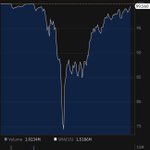





Elon says debt markets have shut for anyone without revenue outside AI data centers. The market tells the same picture. CoreWeave’s 9.625% notes maturing in 2032, issued in June, trade below 80 and yield over 15%, with CDS past 1,000 bps.
In a distressed cycle you start with the collateral. Roughly 80% of CoreWeave’s debt sits in GPU-backed facilities at around 9%, senior to the unsecured notes. The chips go to the secured lenders first, and a GPU fleet is replaced every two to three years, so the collateral is melting while the workout runs. The 2001 fiber buildout at least left dark fiber in the ground that was worth something ten years later.
The fulcrum security in this cycle is the unsecured paper (you hope). The buyers of the stranded compute will be the few balance sheets with revenue outside AI, and investment grade buys the assets of the guppies at the price the secured lenders set.
Bitcoin treasury companies finance against the one collateral in this cycle without a depreciation schedule.

Pretty much.
As of the past few weeks, debt markets have almost entirely shut off access to money for any company that doesn’t have substantial revenue independent of AI data centers.
SpaceX closed $40B of debt for GPUs, but we’re investment grade and have Starlink & launch revenue.
That means the 200+ neoclouds are going to see guppy-level death and consolidation. Some will make it through, but not many.
Khing Oei retweeted

KHING OEI, FOUNDER & CEO OF TREASURY: "It was in Amsterdam that the first financial exchange was launched." 🇳🇱
"Amsterdam itself is and should be at the forefront of the next digital golden age." 🚀
BULLISH 🔥
A negative outlook is essentially a rating agency agreeing with the market without being explicit about it. France has sat on Aa3 negative for exactly a year, S&P and Fitch already moved to A+, and a 5-year CDS at 103bps stopped pricing France as AA some time ago. As with corporate bonds, the sovereign rating is always the last thing to move.

Surprising: Moody’s keeps #France at Aa3 w/a negative outlook despite the turmoil. Markets seem far less relaxed: 5y default insurance costs have surged to 103bps, the highest in over a decade. Investors are repricing French risk. Moody’s is standing still. cnbc.com/2026/10/23/moodys-h…

Ten times CERN’s record is a large multiple on a very small base. CERN’s LHC experiments produced about 29 picograms of gold between 2015 and 2018, and Marathon has not disclosed its own yield. Their 2025 paper models roughly 2 tonnes of gold per gigawatt-year of fusion, against annual mine supply of around 3,500 tonnes.
Gold’s supply has always been a function of extraction cost, and extraction technology only moves one way. Bitcoin’s 21 million is a function of nothing.

Last month, we demonstrated high-rate alchemy: turning mercury into real, stable gold, beating CERN’s record by a factor of 10.
Last week, we enriched isotopes in the world’s most powerful plasma centrifuge, beating the Soviet record that stood for 40 years.
Now, we’re building a fusion reactor in San Francisco to achieve record power density.
Spot ETPs bought 888,185 Bitcoin in their first year. Perpetual preferreds bought 135,979 in theirs, and Fidelity Digital Assets' take on the gap is correct. The ETP buyer wants direct exposure. The preferred buyer is paid a coupon, never holds the asset, and the Bitcoin purchase happens on the issuer’s balance sheet.
That buyer sits in a $150 trillion fixed income market and the issuers are optimizing for it: dividends have moved from monthly to daily, and the paper is managed to trade at par because par is the only price at which the next tranche can be sold and the next Bitcoin bought.
Half a percent of total supply now sits behind a coupon, paid for by investors who were never asked to hold the coin.

"Bitcoin-focused perpetual preferred stocks are uniquely positioned to offer higher yields than many cash and cash-equivalent investments." Fidelity on Digital Credit, $STRC, and $BTC. fidelitydigitalassets.com/re…

Khing Oei retweeted
HOW WILL GLOBAL MACRO SHIFTS IMPACT THE FUTURE OF #BITCOIN TREASURIES? 🟠🏦
Global liquidity, sovereign debt, and institutional capital are reshaping the investment landscape.
André Dragosch of Bitwise and Khing Oei of Treasury join Jeff Walton of Strive to discuss what's next.
📅 Nov 5 | 2 PM
📍 The Deep | Whale pass required

First time in 31 editions that JPM puts a number on Bitcoin. Interesting though that the same report keeps it out of its allocation models. The reason given is the 55% expected volatility sitting next to the 10%. Two thirds of that base case is a model of global money supply growing against a fixed supply of 21 million.
The 55% is exactly what a Bitcoin treasury company’s capital structure is built to carry. The equity absorbs the volatility, the preferred holds a fixed claim on the asset compounding underneath it. An allocator who cannot hold 55% vol can hold a fixed claim secured by it, i.e., digital credit.


Agreed, and the channel is mechanical. France’s 10-year rose 15bp to 4.94% today, Italy’s sits at 4.58%. France now borrows 36bp wider than the country that used to define the periphery (remember PIGS), and euro spread products are marked against OATs and Bunds, when the reference reprices every book reprices with it.
The ECB’s backstop is conditional on fiscal compliance, which in France is the open question.

One view I hear all the time is that France is too small to matter for global bond markets. That's wrong because the crisis in France is pushing up yields for all the other high-debt countries in the Euro zone. That's what makes France systemic...
robinjbrooks.substack.com/p/…

On an instrument built to hold par, the rate is also a signal. Banks learned this with deposits, past a point paying up for funding tells the market you need it and the outflow accelerates.
A coupon increase also reprices every dollar already outstanding. @Strategy held the rate and repurchased hundreds of millions of $STRC instead, which supports the price without repricing the stack.

Why didn't we just raise the $STRC dividend above 12%?
Past a certain point, a higher rate stops adding demand. It can look like distress and push buyers away from the whole complex. So we leaned on other tools.
Strive priced a second preferred this week. The parallel is a bank adding a capital tier.
On June 18, $STRC traded down to 82.50 and closed at 88.59, and $SATA fell with it. @ColeMacro, @Strive’s CEO, called it a leverage liquidation which was indeed the story trading volumes told. A preferred that sits at par for months attracts holders to borrow against it, which can unwind very quickly.
A bank solves this with layers. The senior layer is kept at par. Beneath it sits a junior layer that pays a wider coupon and absorbs losses first. $SATS is that layer: a fixed 15% perpetual preferred, upsized to 7 million shares and priced at $90 on Thursday, junior to SATA at 13% and senior to the common. It carries no target trading range. The same week, Strive wrote the $100 SATA issuance floor into the certificate of designation.
The amplified carry that was assembled with a margin loan in June is now assembled by the issuer. The yield seeker gets the wider coupon without a prime broker, the senior holder gets more assets ahead of its claim, and the common pays 15% and wins only if the proceeds earn above it.
A junior tranche does what the prime brokers did in June, with the leverage inside the capital stack where nobody can call it.
Every emerging market crisis I’ve seen started with the same balance sheet: borrow in the hard currency, hold assets in the soft one. Strategy has inverted it. The liabilities are in dollars, the reserve is in the hardest money ever issued.
Original issue discount is how a new credit class gets priced. Every @Strategy and @Strive pref came at 80 to 90 on a $100 claim, the discount paying the first buyers for a market that did not exist yet. High yield launched the same way in the 1980s, Europe’s AT1 market in 2013.
The coupon is fixed at issue, the price is set by the secondary market that follows. STRE, the first European digital credit, came at 80 and traded 82 to 83 within days.

Glassnode has Bitcoin holding the ETF cost basis near $81.5K, with the ETFs net sellers again. The same week @Strategy added 250 BTC and @Strive launched SATS, a $500M perpetual preferred paying 15%.
ETF money can leave every afternoon. Preferred and convertible capital is spent on spot at issuance and stays on the balance sheet for years, or for good.
A balance sheet funded with permanent capital does not redeem.
Great to see more innovation in the space with @Strive's SATS: 15% fixed, cumulative, perpetual, paid every business day, $500M, junior to $1.4B of SATA and senior to the common. Non-call for life, bar a clean-up below 25% of the issue.
SATA holds par with a discretionary coupon, now 13%, and since Tuesday a binding rule that it is never issued below $100. SATS has no target range and no issuance floor. Strive’s own deck makes the issuer’s case plainly: par-stable prefs can only be issued on the days they trade at or above 100, and by Strive’s count that was 24% of days for SATA and 16% for STRC. SATS is a junior fixed with no floor and an ATM that in theory works any day.
The comparable is STRD, @Strategy's bottom-of-the-stack fixed 10%, at 73.27 tonight for a 13.65% effective yield. STRD sits behind $6.7B of converts and $12.3B of senior prefs, with $70.8B of Bitcoin over the $20.5B stack, a 4.7x BTC Rating and a break-even Bitcoin price of $17.6k on Strategy’s own dashboard. A skipped STRD dividend is gone for good. SATS sits behind one senior layer and no debt, with $3.1B of pro forma Bitcoin over $1.9B of prefs, 1.6x on the same basis and a break-even at $38.2k, and a skipped SATS dividend accrues with a stopper on the common until it is paid.
So which is cheap. Strategy’s own curve prices the step from STRC to STRD, 6.3x to 4.7x and cumulative to non-cumulative, at about 160bp. SATS asks 135bp over STRD for a step from 4.7x to 1.6x. On coverage alone STRD is the cheaper claim. What the 15% is buying is the cumulative accrual, the absence of any debt ahead of it and an 18-month reserve ring-fenced for the prefs, and those terms are worth something. I doubt they are worth the whole difference.
SATS gives the holder a fixed coupon and lets the price absorb the volatility, the STRC mechanic run in reverse. The common pays for it. 15% on $500M is $75M a year that can never be reset down, only bought back in the market, and Strive’s own hurdle math has Bitcoin at $149k by 2030 to cover the cost of capital.
Dollar digital credit now has a senior fixed, a senior variable, a junior fixed and a convert, all on Nasdaq. The euro curve still has one point on it.
Strategy ended last week with $4.88B in its USD Reserve and $640.5M in USD Cash.
The reserve supports dividends and interest. Separating it from cash available for broader capital allocation makes the balance sheet easier to assess.
Strategy has acquired 250 $BTC and repurchased $192M of $STRC. As of 10/11/26, we hold 848,250 BTC and $5.5B of USD Assets. $MSTR strategy.com/press/strategy-…

Around €300B a year of European household savings leaves EU markets, mostly for the US, per Letta’s report.
Capital takes risk where the instruments are listed. An institutionally investable, euro-denominated Bitcoin treasury keeps part of that risk capital in Europe.

European households are sitting on €10–12 trillion in cash and bank savings. Invested, that money could power European growth. A stronger European economy means a better trading partner for America and a more capable NATO ally.
So why isn't that money invested? Savers don't believe companies in Europe can earn enough to justify the risk.
Mario Draghi's competitiveness report named the cause: Europe has piled rule upon rule while its productivity engine has stalled. Small businesses agree. They call regulation their biggest obstacle.
Making investing simpler, as Brussels plans, is a start. But savers follow growth. So, how do we get there?
Energy abundance, faster permits, rewards for investing in growing firms, and an end to overlapping reporting rules that turn mid-sized firms into reporting shops.
And one test for every new rule: Would a competent founder still choose to build and grow in Europe?
Make Europe a better bet, and the capital will follow.
Read my op-ed in @rapporteur_news ↓ rapporteur.com/opinion/europ…

Credit markets solved this long ago. Covenants and the waterfall are agreed at issuance, when they're not needed yet but anticipating tougher times. The equity version is a published capital policy.

The bitcoin treasury companies that last will be the ones whose shareholders know the plan before the drawdown, not during it. A treasury strategy is a promise about how the company behaves when bitcoin falls: what it sells, what it issues, and what it never touches. Write that down early and the stock trades on the plan instead of on fear.
Bank-financed government deficits can add liquidity even while interest rates rise.
When banks buy newly issued Treasury bills and the government spends the proceeds, private bank accounts receive deposits. The banking system has financed public spending and expanded its deposit liabilities.
Banks can pledge those bills in repo markets to obtain short-term cash. The central bank can supply reserves to keep those markets functioning while raising the policy rate.
That allows bank-financed spending to keep adding deposits even as borrowing becomes expensive. For Bitcoin, the liquidity picture depends on how government debt is financed as well as where rates are set.
Robinhood put $25M of Bitcoin on its balance sheet and said plainly that it is about alignment with the ecosystem. Against a market cap near $$100B that’s 0.025%.
Every corporate holder helps. A position that size leaves the shareholder's Bitcoin exposure where it was, and providing that exposure is the job of a Bitcoin treasury company.
Lower volatility is also what lets credit be written against Bitcoin.
London's "credit gold" was paper claims on metal nobody set aside. Digital credit takes fixed income cash and spends it on spot Bitcoin.
That is physical demand from capital that could never buy it outright.
