
Interests: Plasma proteomics/cellular/mitochon./exosome deliv. in regen. med. 🏄🏂🏻 🤿
Joined April 2020
- Tweets2.6K
- Following286
- Followers121
- Likes3.4K





kipling_r retweeted

A new tool gives researchers spatially precise – and completely noninvasive – control over gene editing, with the potential to support more targeted treatments for neurological disease.
brnw.ch/21x6QpN

kipling_r retweeted

Human brain cellular xenografts in neuroimmunology and beyond: @ImmunityCP cell.com/immunity/fulltext/S…


kipling_r retweeted

🚨We are hiring! 🚨
The Department of Biostatistics @HarvardChan and the Department of Data Science @DanaFarber are recruiting a tenure-track Assistant/Associate Professor in statistics or machine learning with interests in single-cell or spatial genomics.
Link below 👇

kipling_r retweeted

Come be my colleague!! 🎉 We’re hiring an Assistant Professor in Developmental Biology at UCSD! If you’re doing exciting work in development or regeneration, come join us!!
Please spread the word and apply!
apol-recruit.ucsd.edu/JPF045…



kipling_r retweeted

She might just be the Pied Piper of parabiosis. Everything she's done in the lab gets imitated by longevity nuts, like getting a 'blood boy,' or swapping out your plasma.
But now, Irina Conboy says she come up with a regular drug that does the same thing. 1/2

kipling_r retweeted

A new study compared high-intensity sprint-interval exercise with moderate-intensity exercise. The former produced larger changes in circulating protein and metabolite levels and stimulated proteins associated with cardiometabolic health benefits.
👉 Read more: lifespan.io/short-intense-ex…

kipling_r retweeted

What if the proteome encodes more biology than we can see from proteins alone?
What if protein degradation is not simply cellular disposal, but also a source of biological function?
Every cell is continuously breaking down and remodeling proteins, generating a vast and dynamic pool of peptide fragments. We propose that some of these fragments are not inert byproducts, but bioactive molecules with important roles in biology.
In our new Essay in @PLOSBiology, “Encrypted immunity mediated by peptides,” Zhenrun J. Zhang, @YMerbl, and I explore this idea through the emerging framework of encrypted immunity: bioactive peptides hidden within larger proteins that can be released through proteolysis and contribute to antimicrobial defense, immune signaling, inflammation, and potentially broader aspects of physiology.
AI and machine learning are helping us explore this hidden molecular space at a scale that was previously inaccessible, uncovering candidate peptides in humans, microbes, archaea, venoms, and even extinct organisms.
But identifying sequences is only the beginning.
The deeper questions are biological: Which peptides are actually produced in vivo? When and where are they generated? How is their release regulated? What functions do they perform? And how do we distinguish meaningful biological signals from the background of protein turnover?
Answering these questions will require computation and experimentation to advance together.
To me, this points to a broader opportunity for AI in biology: using machines not simply to predict biology, but to help us uncover its hidden organizing principles—and ultimately learn how to engineer them for human health.
If this framework holds, it could deepen our understanding of how biological information is encoded and deployed, while opening new directions for therapeutics and diagnostics.
Much remains to be learned, and I’m excited about what comes next.
Weizmann Institute of Science, @Penn, @CBE_Penn, @PennBioeng, @PennEngineers, @PennMedicine, @PennChemistry, @PennMicro, @PennPsych, @PennSAS.
journals.plos.org/plosbiolog…

kipling_r retweeted

The Shuken Lab is opening @hkust in January 2027! Looking for people at postdoc, grad student, and RA levels to help us fight brain aging and neurodegenerative diseases with chemical biology and proteomics!
Www.shukenlab.com/join-us
kipling_r retweeted

Scientists have extracted mitochondria from a woman’s leg muscles and injected them into her eyes in an attempt to treat severe blindness
go.nature.com/4wIvmxy


kipling_r retweeted

A German Man, A Swedish Man, and an Israeli Man are kidnapped by Palestinian terrorists...
“Listen up, infidels,” says one of the terrorists, you have one last wish before I kill you.”
The German pleads for mercy, “Germany has always embraced your people; what have I done to deserve this ?”
After no answer, he decides he wants sausage and a good beer.
Next, the Swedish man screams at the top of his lungs, “Have you no humanity !? Sweden has fully welcomed your traditions and faith; why would you do this?!”
After no answer, he finally says he’ll have a nice fish.
Finally, the Israeli yawns and says to the Hamas terrorist, “I don’t want anything from you; I just want you to kick me in the ass.”
Furious with his reply, the Palestinian kicks him in the ass.
The Israeli gets up, turns around, and kills the entire terrorist cell.
Shocked, the German asks,” Why did you ask him to kick you in the ass?”
The Israeli replies, “If he didn’t, you would’ve just said I started it.”
kipling_r retweeted

The real problem in the Middle East is that Israel has too much land.
🟥 Muslim+Arab countries
🟦 Jewish countries

kipling_r retweeted

White-matter functional connectivity uniquely predicts brain age, cognition, and psychopathology beyond gray-matter connectivity
pnas.org/doi/10.1073/pnas.26…

kipling_r retweeted
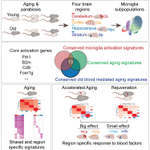
Senescent microglia with shortened telomeres secrete soluble DLK1 to induce aging-associated hypomyelination and neuronal dysfunction. @NeuroCellPress cell.com/neuron/fulltext/S08…

kipling_r retweeted

...here's a great new oppprtunity here at @MoffittNews funded by an NIH T32 program - feel free to contact me if you're interested in applying!

kipling_r retweeted

The brain's immune system has long been thought to operate largely independently from the rest of the body. New research finds immune cells from the blood can enter the human brain during aging and transform into specialized microglia.
Learn more: brainresilience.stanford.edu…

ALT Postdoctoral Fellow Julia Belk and a colleague conduct research in the Jaiswal Lab.

ALT An illustration of the brain (in green and yellow) connected to the blood vessels of the body (in red). Image credit: Emma Vidal.
