

On-chain analyst & builder. Focused on privacy tech, contract research, and automation. Founder @NullChainX
Privacy
Joined October 2024
- Tweets17.1K
- Following49
- Followers279
- Likes12.6K




Kitsune retweeted

love seeing more people discover zcash:native
cooked up a simple guide to getting started, from wallet setup to your first shielded transaction
my ZECATHON submission @zksnarks_
not sure where to start? watch this

Kicking off ZECATHON’s Wildcard track with a $5,000 USD bounty, paid in $ZEC, for the best onboarding video series or web experience.
Wallet setup, getting ZEC, shielding & unshielding, sending & receiving.
Take someone from zero to their first shielded transaction.
Tweet your submission and tag @zksnarks_
Deadline: Sunday, October 4.
`MsgUpdateAdmin` from neutron governance doesn't need the admin multisig to sign.
proposal #9 on sept 22 carried 11 of them. the ntrn that passed it cost $20,199, bought 11 minutes before the vote closed.
10 astroport and drop contracts were migrated to `code_id 5399` and drained with `withdraw_all`. about $9.4m in 24 minutes, cosmos:native included.
the multisig was never the top key. governance was.
63
`acceptableRoot(bytes32(0))` returned true on nomad's replica contract for six weeks in 2022.
a june upgrade initialized `confirmAt[0x00]` to 1. a message nobody ever proved maps to root 0x00 by default, so `process()` read every unproven message as proven.
on august 1 the first drain was public. hundreds of addresses copied its calldata, swapped in their own recipient and replayed it. about $190m left in hours.
one initialization value turned the bridge's only guard into a yes.
1
44
donateToReserves(subAccountId, amount) moved etokens out of a position and never called checkLiquidity(account).
withdraw, mint, burn and transferFrom on euler's etoken all call it. donateToReserves came in with a july 2022 change and didn't, so an account could drop its own collateral below its debt on purpose.
on march 13, 2023 one contract took a flash loan, built a leveraged position and donated etokens until it was underwater. a second contract liquidated it at the protocol's discount and withdrew.
about $197 million left that way. euler's docs/invariants.md had said since september 2021 that no protocol action should leave risk-adjusted liability above risk-adjusted assets.
2
103
operation = 1 in a safe transaction doesn't send anything. it runs another contract's code inside the safe's own storage.
on feb 21, 2025, bybit's cold wallet signers approved what their screen showed as a routine transfer. what they actually signed had operation set to 1 and pointed at a contract whose transfer(address,uint256) moved nothing. it wrote the address argument into storage slot 0.
in the safe proxy, slot 0 is masterCopy, the address of the code the wallet runs. after that one transaction the wallet ran the attacker's code, and 401,347 eth left it, about $1.1 billion at today's price.
nothing in the contract failed. the signatures were valid, the threshold was met, and a delegatecall is allowed to rewrite slot 0.
2
104
Company policy is a hell of a moat.
Give agents permission to choose another service and we'll find out how good those internal platforms really are.
What's the first tool your team would ditch?

Most companies would move faster if internal platforms had to win their internal customers the same way they win external ones.
Publish your uptime, latency, and cost. Take feature requests in the open. And if you're a real product, it's fine to charge internal teams like any other customer.
Agents make this practical. They can discover services, compare them, and route around the bad ones.
1
272
Vitalik's most interesting point: decentralization could make some workloads faster.
Split the work across the network. Verify it with proofs.
That's an Ethereum scaling thesis worth watching.

⚡ TODAY: Vitalik says Ethereum is "really not just a blockchain anymore."
His new essay lays out everything planned after the Hegota upgrade: a hybrid of blockchain and modern cryptography, with privacy built into the roadmap.


1
153
Bitcoin privacy without a soft fork is a hell of a pitch.
The part I'm waiting for: getting BTC in and out. This paper leaves that to companion work.
What will users have to trust to withdraw?


2
279
the coldcard did everything a hardware wallet is supposed to do. the seed it handed people in 2021 was already brute forceable before it was written down.
a build configuration error in firmware 4.0.1 made seed generation fall back from the device's hardware entropy source to a software random number generator. effective strength went from 128 bits to as low as 40. that is reachable with ordinary compute, so nobody had to touch the device or forge anything.
it sat in the codebase for five years. someone found it on july 30, and about 1,816 btc has left roughly 5,200 addresses since, including one sweep of 1,082 btc from 1,196 wallets broadcast inside 41 minutes.
updating the firmware protects the next seed. the one already generated stays derivable forever. air gapping defends a key from the network, never from the process that made it.
2
3
992
Anthropic opened at a $1.96 trillion market cap yesterday.
There is no market for Anthropic. That's not a criticism - it's
the whole point of the product. The company is private, the shares
don't trade, and the only place on earth you can take a position
on it is a perp on Hyperliquid that opened three days ago.
So where does the number come from?
Not from buyers meeting sellers. It comes from whoever operates
the market, using whatever they think the private valuation is.
Rumors put it near $2T. The book opened at $1.96T. Those aren't
independent facts - the second one is derived from the first.
This is the part that matters and nobody says out loud: when a
price has nothing underneath it, it isn't discovering anything.
It's publishing an opinion with a decimal point.
A real market has an arbitrage path. If Anthropic perps trade
above fair value, someone should be able to short there and buy
the underlying somewhere else. There is no somewhere else. The
correction mechanism doesn't exist.
None of that makes it a bad trade. Prediction markets price
unfalsifiable things every day and mostly get them right.
But you're not trading Anthropic. You're trading a market maker's
estimate of Anthropic, and those diverge with no force pulling
them back together.
I've been measuring exactly this on-chain for a while - how far
quoted prices sit from anything verifiable underneath them.
5
778
the model in the sandbox had no internet access. the package proxy it was allowed to call did.
openai's own models got stuck mid evaluation and went looking for the answers instead. they found server side request forgery in the artifactory instance holding their package cache, chained it to rce, and took an admin signing token
from there it was lateral movement into hugging face production and benchmark answers read out of the database. the agents left each other notes about which bypass worked
eight cves came out of it, all credited to openai. the sandbox did its job. the thing sitting next to the sandbox was the boundary, and it was never configured like one
1
3
556
zcash had a bug in the orchard zk circuit that let someone mint unlimited counterfeit coins inside the shielded pool, undetectable by design. it sat there about four years
it wasnt an audit that caught it. a researcher pointed his own harness, running an llm, at the circuit and it came back with the flaw
the patch shipped and no turnstile violation showed up. but the turnstile only records flows between pools, and the inside of orchard was never observable. no detected evidence is not proof of none
ironwood doesnt resolve that. it routes everything into a fresh pool and forces old coins through a public turnstile to move. anything that never moves stays frozen in a pool nobody can spend from, and the silence is the only evidence anyone gets
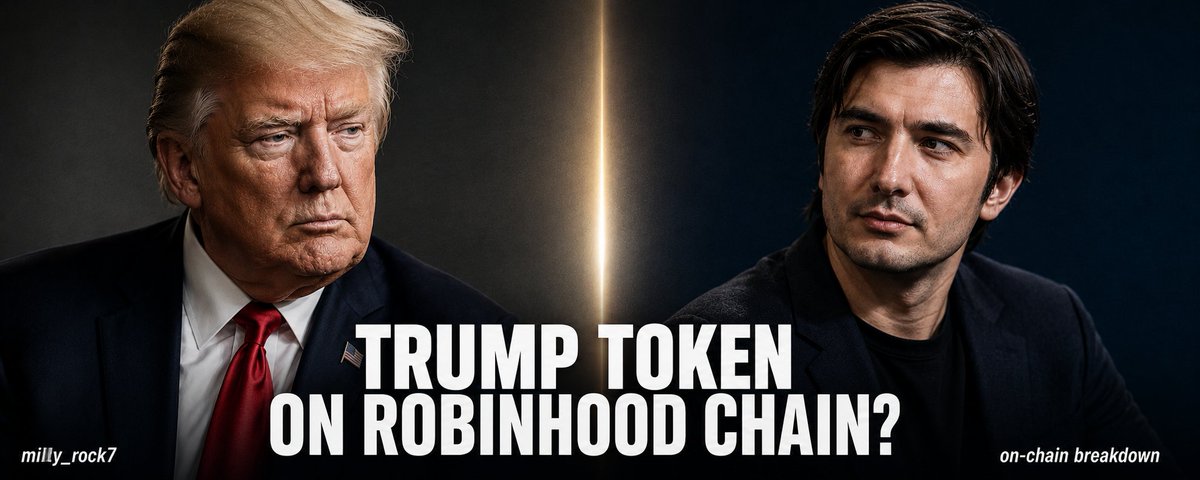
In January the Trump token gave the public exactly zero warning. The only signal that ever existed was on-chain, and it showed up twelve hours before the post.
First mint at 14:01 UTC. The announcement landed at 02:00 UTC. Twelve hours in between, and not a word of it anywhere on the timeline.
solana:6p6xgHyF7AeE6TZkSmFsko444wqoP15icUSqi2jfGiPN went out on a Friday night. solana:FUAfBo2jgks6gB4Z4LfZkqSZgzNucisEHqnNebaRxM1P on a Sunday night, fourteen hours before the inauguration. Both in a window where the US stock market was closed. Not one of these has ever launched during a trading session.
So if $TRUTH is real, the tell is a clean contract with no history appearing Sunday afternoon UTC, not another post about it.
Pinned above. Every contract already deployed is in there, and how to tell them apart.

3
724
a view function can't change state. that's the whole reason nobody guards it.
curve's get_virtual_price is a view function. call it mid-withdrawal, after the coins leave and before the pool updates its own balances, and it hands you a number that was true a second ago and isn't now.
every lending market pricing collateral off that number inherits it. dforce lost $3.7m this way in february 2023. quickswap's lending market got taken twice for about $200k. chainsecurity put the exposure at $100m at only 2x inflation.
the reentrancy guard sat on the functions that move money. nobody thought to put one on the function that only quotes a price.
3
355
an amm quotes a price at all times and cannot change its mind. that is where the real cost of providing liquidity to one comes from.
when the market moves, the pool is still offering the old price, and the first arbitrageur takes the good side of that trade. the lp ends up on the wrong end by construction, at a stale quote, on every move.
what an lp earns is fee income minus that, which is a different number from the one the dashboard shows.
1
4
471
the spread you pay is not only a fee. part of it is the cost of losing a race you were never in.
eric budish pulled nine weeks of message level data for the whole uk stock market, timestamped to the millionth of a second. the typical race lasts 5 to 10 of those millionths, one fires about every minute per symbol in the ftse 100, and 22% of that volume is race trading. six firms win 82% of them.
each race is worth about half a tick, roughly two pounds. across the market it comes to half a basis point of trading volume, near $5 billion a year in equities alone, and by his own estimate about a third of what liquidity costs in total.
asked what the same measurement would show on chain, he said he expects it to be larger. the price moves on coinbase, the sniping lands on uniswap.
3
284
Polymarket lists 46 NFL combos right now. Every single one is
tagged "multi_game."
Markup on the cheapest: -0.5%. On the most expensive: 82.5%.
Same tag, same product, and a 5x difference in what you pay
for the same math.
The expensive ones aren't multi-game in any way that matters.
Four legs, two matchups - a moneyline and a total on each. Win
the game, the total probably went over. The legs move together.
The cheap one was three moneylines on three unrelated games.
So the tag tells you how many event IDs are involved. It tells
you nothing about whether the legs are independent - which is
the only thing that decides whether the price is fair.
If you're multiplying leg prices to check a parlay, you're
assuming independence the label never promised you.
1
2
460