








Kuroke retweeted

i remember early in my career wondering why most people missed out on building early internet products
but i look around now and i get it
so many people fiddling around with "my custom agent setup" and so few using this miracle of a tool to actually do anything


Kuroke retweeted

Want to learn robot learning by actually building a robot?
The Hands-on Robot Learning course from Johns Hopkins takes you through the full journey with an SO-101 robot arm. You can build it, collect real-world data, train policies, deploy them and test them.
Here are some resources worth bookmarking:
1. SO-101 Servo Testing
robonine.com/testing-of-feet…
2. MIT 6.S191: Introduction to Deep Learning
introtodeeplearning.com/
3. GELLO: Robot Teleoperation
github.com/wuphilipp/gello_s…
Course:
hands-on-robot-learning.gith…
Kuroke retweeted

We finished the Training Agents series. Six live sessions over six months, from evaluating agents to training them inside real environments. All of it is on the Hugging Face YouTube channel and all of the code is open.
Here's what we did and who made it happen:
1. Agentic Evaluations WorkshopWhere agent evals actually stand, and why benchmark scores don't match what people see in use. With Avijit Ghosh and Nathan Habib (Hugging Face), Arvind Narayanan (Princeton), Pierre Andrews (Meta), J.J. Allaire (UK AI Security Institute) and Mahesh Sathiamoorthy (Bespoke Labs).
2. RL for Agents Workshop Environments, rollouts, reward design and the inference bottlenecks that appear when you move from RL for LLMs to RL for agents. With Lewis Tunstall (Hugging Face), Will Brown (Prime Intellect), Ofir Press (Princeton) and Alex Zhang (MIT CSAIL).
3. Training Agents 1: SFT on agent traces Public coding-agent traces turned into prompt/completion data, a TRL + LoRA fine-tune on Hugging Face Jobs, metrics in Trackio, and an honest look at what the first eval numbers can and cannot tell you. Joined by Sergio Paniego and Quentin Gallouédec.
4. Training Agents 2: Distillation Off-policy, on-policy and self-distillation for moving capability from a teacher into a smaller coding agent.
5. Training Agents 3: Reinforcement learning GRPO after SFT: group sampling, verifiable reward functions, reading the reward/KL/length curves, and three experiments, one of them with a deliberately gameable reward so we could watch the hacking happen.
6. Training Agents 4: From reward functions to environments The reward stops being a function and becomes a place the agent acts in. We walked the reset()/step() contract from Gym to LLM agents, built an OpenEnv environment and pushed it to the Hub, plugged it into TRL's GRPOTrainer, then trained a real coding agent (OpenCode) through Harbor with AsyncGRPOTrainer on Hugging Face sandboxes.
The series has passed 300k views. Thank you to every speaker, to the TRL team, and to everyone who showed up live with questions.
Playlist: youtube.com/playlist?list=PL…


Kuroke retweeted

不得不说斯坦福的课程更新速度太快了。
CS329Z 已经在教 AI Agent:RAG、Tool Use、MCP、Memory、Multi-Agent、Eval、Coding Agent……
再看看很多大学生还在学习上一个时代、甚至已经被淘汰的东西。 强烈建议身边的大学生都去学学这门课,真的很值得。
@Diyi_Yang
cs329z.stanford.edu/


Kuroke retweeted

Sharing lecture videos for the **How to AI (Almost) Anything/Multimodal AI** course I taught at MIT in spring 2026.
This course became quite a hit the last time I shared it in spring 2025. Spring 2026's updated version contains updated topics on multimodal agents, reasoning, self-evolving AI, and new modalities like touch and smell. Also includes slides (not videos) of guest lectures on multimodal AI for health, design, manufacturing, cities, & transportation.
Youtube playlist: youtube.com/playlist?list=PL…
Course website and materials: mit-mi.github.io/mmai-course…
Today's AI can be applied to almost anything - from language to vision, audio, sensors, medical data, music, art, smell, and taste. This course covers the principles of AI (focusing on deep learning and foundation models), how we can apply AI to novel real-world data modalities, and multimodal AI that can process many modalities at once, such as connecting language and multimedia, music and art, sensing and actuation, and more.

Kuroke retweeted

Cornell's robot learning course.
Every slide. Every assignment.
Free. 📌
CS 4756 covers the full modern stack:
→ Imitation learning
→ Reinforcement learning
→ Model predictive control
→ 3D perception
→ Sim-to-real transfer
→ LLMs for robot control
Every lecture slide is publicly downloadable.
All assignments are on GitHub. The course textbook is a live document, constantly updated by the authors.
Currently taught by Kuan Fang;
Cornell CS professor whose research focuses on getting robots to interact with the physical world in robust and dexterous ways.
This is the curriculum the field is hiring for right now.
Free. No login.
📌 [cs.cornell.edu/courses/cs475…]
Follow for more robotics resources!!
——-
Weekly robotics and AI insights.
Subscribe free: 22astronauts.com

Kuroke retweeted

Four caches in LLM serving, clearly explained:
Every LLM request reads the whole prompt and computes attention state for every token in it.
This step is called prefill, and it impacts both the input bill and the time before the first token appears.
In an agent loop, most of the prompt comprises text that the model already processed in the previous turn.
There are four cache layers that prevent paying for the processed tokens at each turn.
↳ The KV cache holds the key and value tensors for every token at every layer, for one active request.
↳ Prefix caching keeps those tensors on the server instead. vLLM stores them in 16-token blocks and identifies each block by a hash that chains in the previous block's hash, so a block only matches if everything before it matched too. The scheduler stops at the first miss and prefills the suffix from there.
↳ Prompt caching is the same reuse that runs on a provider's hardware, with a price sheet attached. Anthropic charges 1.25x the base input rate to write an entry and 0.1x to read it.
↳ Semantic caching works differently. It embeds the incoming prompt, runs a similarity search over stored prompts, and returns a stored answer outright when the score is above a threshold.
That's why it saves output tokens as well as input tokens. It's also why every request pays for an embedding round trip, including every miss.
The first three match on exact tokens and cannot change what the model produces.
This technique matches on similarity, which means it is quite susceptible to generating a wrong response since embeddings may match to a wrong prompt.
The diagram below depicts all these techniques.
To use these techniques, you don't need to build a custom serving stack.
The transformers library already implements the cache as an object of KV vectors that you can preserve, so you can prefill a corpus once, retain the returned tensors, and reuse them across queries in about ten lines.
And this KV cache is only one of four separate caching layers in an LLM stack.
The other three are prefix caching on the server, prompt caching billed by a provider, and a semantic cache that skips the model entirely.
I wrote a full breakdown of all four caches in LLM serving that you should know as an AI engineer, with code for each.
Read it below.


Kuroke retweeted

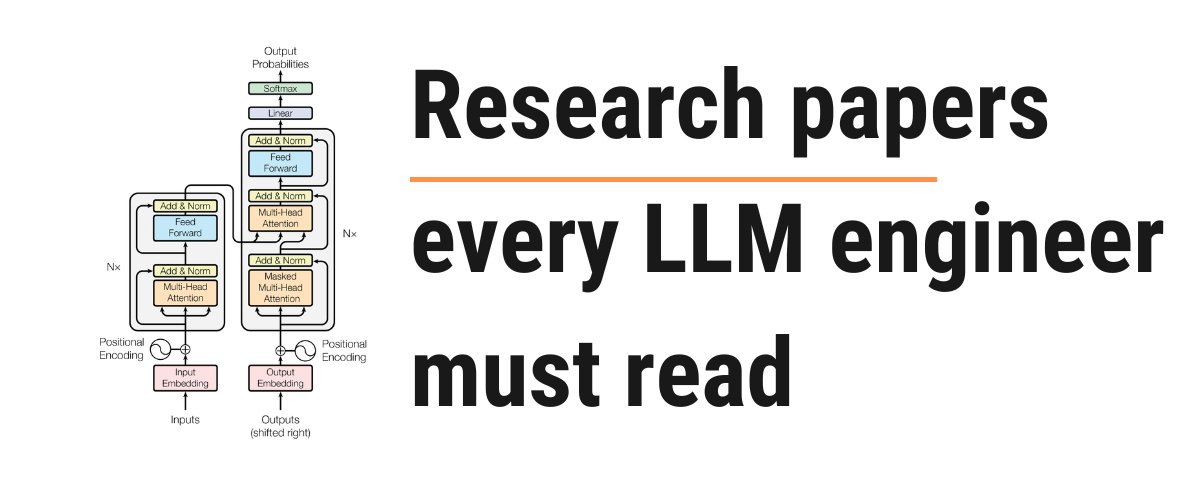
Research papers every LLM engineer must read:
- Attention Is All You Need
- BERT
- GPT-3: Language Models are Few-Shot Learners
- Scaling Laws for Neural Language Models
- Chinchilla
- InstructGPT
- Chain-of-Thought Prompting
- Retrieval-Augmented Generation
- LoRA: Low-Rank Adaptation
- LLaMA
- FlashAttention
- DPO: Direct Preference Optimization

Kuroke retweeted

Stanford's "Mathematical Methods for Computer Vision, Robotics, and Graphics"
PDF: graphics.stanford.edu/course…
Video Lectures: youtube.com/playlist?list=PL…

Kuroke retweeted

🚨 New Course Announcement!
This Fall @Diyi_Yang @jyangballin and I are teaching a BRAND NEW Stanford course on how to build AI Agents from scratch!
Millions of users interact with AI Agents every day. Come join us and learn how to build them!
🧵 (1/5)
🤖 Made with AI

ALT CS329Z: Engineering AI Agents (Lectures Available Online)

This fall @michaelryan207 @jyangballin and I are teaching a new course CS329Z "Engineering AI Agents" on how to build AI Agents from scratch. Come join us and learn how to build them 🤖

Kuroke retweeted

if you want to understand what building at real scale is like, this is a must read
1.1.1.1, @cloudflare's DNS resolver, stores over stores over 250 billion (!!!) cache entries at any given time, so every minor change has a massive ripple effect
we made 5 changes, and saved > 100TB of memory...
blog.cloudflare.com/dns-cach…

So when are they officially starting Robolympics

Mini Pi plus successfully completed the long jump, taking off and landing smoothly!
#WorldHumanoidRobotGames
#Cuterobot #Opensourcerobot
Kuroke retweeted

An open letter for a global surge in cyber defense, signed by over 100 organizations including Anthropic, AWS, Google, Microsoft, OpenAI, and Oracle.

Kuroke retweeted
The University of Michigan put their entire robotics degree on GitHub.
Not one course. The whole curriculum.
ROB 101 — Computational Linear Algebra for Robotics
ROB 311 — How to Build Robots and Make Them Move
ROB 501 — Mathematics for Robotics
ROB 530 — Mobile Robotics
Every lecture video on YouTube. Every textbook on GitHub. Every problem set, every exam, every line of code.
Professor Jessy Grizzle said it best when they launched it:
"Linear algebra has become the language of computer vision, machine learning, robotics, and autonomy."
So instead of making students wait four semesters of calculus before touching a robot... they built a curriculum that starts with the math that actually matters, applied to real robotics problems from day one.
This is what open education looks like when a top-10 engineering school decides to mean it.
Free. GitHub. YouTube.
📌 [github.com/michiganrobotics]
Follow for more robotics resources!
——
Weekly robotics and AI insights.
Subscribe free: 22astronauts.com


Kuroke retweeted

whatever field you’re in, start moving closer to hardware.
not because software is dying. because software is becoming abundant.
ai can already generate code, interfaces, analysis, content, workflows.
but atoms are still stubborn.
• ai → learn chips, accelerators, edge compute
• software → learn embedded systems, electronics, networking
• biology → learn instrumentation, sensors, lab automation
• physics → learn robotics, semiconductors, energy systems
• design → learn cad, materials, manufacturing
• economics → study factories, energy, logistics, supply chains
the closer you move toward physical reality, the harder the problems become.
heat. power. materials. tolerances. reliability. manufacturing. logistics.
you don’t need to abandon your field.
combine it with hardware.
• software + hardware.
• ai + robotics.
• biology + machines.
• physics + manufacturing.
the next generation of builders won’t just manipulate information.
they’ll use information to manipulate atoms.
