

Freedom🇺🇸| Weather⛈️| Aviation🛩️|Photography📷
Nomad 🛣
Joined June 2011
- Tweets1.1K
- Following567
- Followers198
- Likes4.1K





Pinned Tweet
“The illiterate of the 21st century will not be those who cannot read and write, but those who cannot learn, unlearn, and relearn.”
- Alvin Toffler
Guy in the black hoodie is me everyday about almost everything. Are people really this oblivious about how the world works? Yes, and dumb too

1
74


Kevin Velazquez retweeted

No Indian could do more to assimilate than Dinesh D’Souza. He accepted Christ, married a White woman, became a conservative icon, went to prison for MAGA, and his daughter married a based Congressman.
Now look at him. Once a Pajeet, always a Pajeet. They ALL have to go back.

Kevin Velazquez retweeted

Okay, can I get a job as a software engineer?
No, we have infinite hordes of Indian H1-Bs for that.
How about something in the manufacturing industry?
No, we exported that to China.
What about one of those new jobs the Trump administration is so proud of creating?
Sorry, 94% of those are for women.
What if I went to college and got another degree?
We've kinda been focusing our admissions on underrepresented minorities lately. You know, the ones who make up 70ish percent of the global population.
So, what exactly do you want me to do?
Well, we do have one opening for a young White man.
Oh? What's that?
We need someone to play a lazy welfare slob in a political ad.
Ummmm... okay, I guess...
Here, smear this Cheeto dust on your shirt.

Kevin Velazquez retweeted

Democrats historically wanted to import foreigners and put them on welfare because they believed this would lead to the immigrants voting for Democrats.
Republicans historically wanted to import foreigners because their
big business donors wanted a class of indentured laborers who cost less than actual Americans.
Democrats kept this state of affairs alive by calling anyone who opposed it racist. Republicans kept this state of affairs alive by calling anyone who opposed it communist and anti-market.
Our country is now overrun with foreigners, welfare seems to be entirely fraudulent, we’re $40 trillion in debt, our cities are ground zero for millennia-old ethnic and tribal conflicts, and our own countrymen can’t find work or afford a home in a nation built for them by their ancestors.
And if you have a problem with this, Democrats will call you a racist and Republican politicians will call you communist and also call you racist.
Kevin Velazquez retweeted
All foreign cultures are inferior to American culture. All of them. Every single one. Everyone knows this. It’s why they all try to come here and no one here wants to move to Guatemala or India.
Foreigners in America today are demonstrably less likely to assimilate than those who immigrated here 20, 50, or 100 years ago. Instead of leaving their languages and customs and pagan religions behind, they are coming here, building enclaves for their diasporas, and voting as ethnic blocs. This is the opposite of assimilation.
Because their cultures are objectively inferior, their refusal to assimilate therefore degrades American culture. Because American culture is objectively superior, this degradation makes America worse off. And when America is worse off, Americans are worse off.
Making America worse by importing inferior foreign culture is bad. Making Americans pay for the privilege of watching their country decline is bad. Replacing Americans in their own country is bad, because we are a people and this is our home and reducing our heritage and birthright to a mere global economic zone is bad.
Working to eradicate Americans and American culture is bad. Opposing the takeover of your own country and the degradation of the very culture that made your country the greatest country in the history is not only not racist, not xenophobic, not-whatever-dumb-gay-term-is-now-being-used-to-morally-extort-you-into-giving-away-your-country—it is the only natural response to what is being done to America.
Foreign culture is inferior to American culture, and we are all sick and tired of constantly being subjected to it while being told it’s not happening.
Kevin Velazquez retweeted

All these communists say “you just haven’t tried our version of communism”
Nah.
“YOU haven’t tried our version of capitalism”
1. Dollar on the gold standard
2. No property taxes
3. Abolish the Federal Reserve
4. Flat 6 percent Federal tax paid at the point of sale only when you put your money into the economy.
5. No gun laws. Constitutional 2A amendment.
6. Reduce the size of the federal government by 90 percent
7. End all foreign aid effective immediately
8. Nuremberg style trials for all the turn coats and traitors who sold us out.
9. No more HB1s
10. No federal manipulation of the monetary supply via reckless printing of currency
11. Complete ban on insider trading with severe criminal consequences if caught
Kevin Velazquez retweeted

The Dirty Little Secret of Wildfire
How America Traded Logging Jobs for a Perpetual Firefighting Economy
For much of the 20th century, the forests of the Pacific Northwest were managed as working landscapes. Private timber companies and federal land managers cut, planted, thinned, and tended the land with the understanding that the trees were an asset to be sustained across generations. Clearcuts functioned as firebreaks. Small crews routinely extinguished ignitions before they became news. The result was a regional economy built on living-wage jobs, steady tax revenue for schools and public safety, and forests that, for the most part, stayed green.
Occasional fires occurred. What did not occur were the annual, multi-hundred-thousand-acre, smoke-choked seasons that have become the new normal.
That changed in the late 1980s and early 1990s. The northern spotted owl was elevated into the most consequential bird in modern American policy. Scientists and environmental organizations argued that the species required large tracts of old-growth habitat. Petitions, lawsuits, and court orders followed. In June 1990 the U.S. Fish and Wildlife Service listed the owl as threatened. Federal Judge William Dwyer’s rulings and the 1994 Northwest Forest Plan locked up roughly 24 million acres of federal forest across Oregon, Washington, and northern California.
Federal timber harvests collapsed—often by 80 to 90 percent from 1980s levels in the key regions. Mills closed by the dozens. Supporting businesses disappeared. Unemployment surged. Some communities never fully recovered. Private industrial landowners continued managing their own ground because they still had direct financial skin in the game. Federal and state lands largely stopped being managed for timber production or for systematic fuel reduction at anything approaching the previous scale.
The forests kept growing. Fuels kept accumulating. An ignition that once would have been contained by a small crew with shovels and a radio now found denser, more continuous fuel beds. Large fires (5,000 acres and up) went from relatively rare events in the 1970s to routine occurrences in the 2000s and 2010s. In multiple recent seasons, more timber has burned than the industry harvested in its heyday. The irony is difficult to miss: forests “saved” from chainsaws have been delivered to ash in far greater volume.
Meanwhile, the northern spotted owl’s population has continued to decline across much of its range. Logging was never the primary driver. Competition from the invasive barred owl has proven far more significant, and habitat loss from high-severity fire now ranks high among the threats. The original crisis was urgent enough to trigger listing and sweeping land-use restrictions. The promised recovery under the Northwest Forest Plan has been, at best, incomplete.
The economic and ecological bill arrived in the form of unmanaged fuels and repeated megafires. And that is where the dirty little secret begins.
Once the timber economy on public land was kneecapped, a new industry rose to replace it. Wildland firefighting—suppression, logistics, aviation, camps, contracts, and the supporting apparatus—became a multi-billion-dollar annual enterprise. Agencies and contractors employ thousands. Budgets are large and sticky. In government, “use it or lose it” is not a slogan; it is an operating principle. A quiet fire season is a budgeting risk. Early, aggressive attack on every ignition that could still be handled by a small crew is expensive in the short term and reduces the later need for the full apparatus. Allowing fires to grow until they justify emergency declarations, large incident management teams, and federal cost-share arrangements is, from a certain bureaucratic perspective, rational and financially advantageous.
Local structural firefighters and many ground-level wildland crews do not share this incentive structure. They want the fire out. Once a fire reaches a certain size or complexity, however, control shifts upward to state and federal incident management teams whose metrics, funding streams, and political realities are different.
Neither major political party has shown a strong appetite for fixing the underlying problem. One side treats any expansion of active management or commercial thinning as an assault on old growth and the owl. The other side speaks frequently about forest health but rarely forces the structural changes in litigation risk, planning timelines, and budget incentives that would actually move the needle at scale. Campaign contributions and jobs flow from the existing system. Admitting that the original policy overcorrected and produced a more dangerous landscape remains politically costly.
Climate change and longer fire seasons are real factors. Drier fuels and hotter summers make everything worse. But denser, less-managed forests on the public estate are the accelerant that policy deliberately chose. Private industrial lands are managed more intensively and still burn, yet the severity is generally lower. Young plantations and certain silvicultural choices create their own risks, but private owners retain a direct financial reason to keep fuels in check and respond quickly. Public lands under the post-owl regime largely do not.
Oregon and the broader region now hold more trees than they did in the 1920s, largely because private landowners continued to replant. They also experience more catastrophic fire. The government did not “save” the forest. It changed who controlled the management decisions and, in the process, swapped a productive industry for a perpetual emergency-response industry. The owl was the symbol. The lasting result is a landscape that burns bigger, rural economies that never fully healed, and a political class with limited incentive to alter the arrangement. Instead of market-driven capital allocation, the new system runs on taxpayer subsidies.
Households and businesses understand that money spent inefficiently is money gone. Government tends to treat the same dollars as an everlasting well. Until the incentives change—until early detection, aggressive initial attack, mechanical thinning where appropriate, and genuine long-term forest management are rewarded more than the sheer size of the suppression effort—the same pattern will continue every summer: more smoke, more lost timber, more money spent, and the same speeches about how hard everyone is fighting the fires that policy helped create.

Kevin Velazquez retweeted

Unfortunately, no. Definitely not.
Former wildland fire fighter here.
The reason we have mega fires is that we’ve been aggressively stopping all the fires for 100 years, preventing the natural fire cycle, so now our forests are overgrown and unhealthy. Thus, when they burn, they burn at obscene intensity.
Unless and until we rebalance the natural cycle, thin the forests, clear the underbrush with fire, then we are going to have mega fires until the entire West burns.

Why nobody is talking about this? Because it’s a demographic problem…

54% of US adults (age 16-74) — roughly 130 million people — read below a 6th-grade level.
Why is nobody talking about this?
To fight back, we started an online book club to study the great texts of Western Civilization. If the collapse in reading is not addressed now, we risk losing everything.
Every 4-6 weeks, we read a new great work together: we've covered texts like Homer's Iliad, Augustine's Confessions, Dante's Inferno, and Don Quixote.
We're about to start reading The Brothers Karamazov.
We are reading the great works slowly, intentionally, and in dialogue with each other.
If you'd like to be part of this, please join our reading group. Consider a paid subscription if you'd like to support — it makes a HUGE difference to the time and resources we can dedicate. We are entirely funded by our members.
You'll get:
- Live book club discussions (biweekly)
- Access to our incredible community chat
- Essays to guide you through the Great Books
- All past recordings, essays, and podcasts
- Ability to vote on what we read next
athenaeumbooks.com/welcome
Welcome!

38

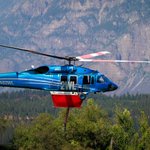
#N82WL Sikorsky UH-60A Black Hawk working the lightning-caused Upper Smith Fire in Boundary County, Idaho #IDfire #wildlandfirefighting

1
1
45
I didn’t think that the mountain I drove around to get to the #ironfire last week would also burn and join up… – at Utah, USA

127
The data center freak out is the GenZ version of the boomer’s Nuclear freak out. If left unchallenged it will prove as harmful to American progress as did holding back nuclear power.
58
Kevin Velazquez retweeted

Our baddass search and rescue guys in the Air Force!
They’re getting the new HH-60W rescue platform. The last bird that came in has the tail number 4547 so they call it the Trump bird! Classic, boys! Check out the patches! 🇺🇸💪❤️
@realDonaldTrump


Kevin Velazquez retweeted

My generation grew up frustrated that our grandparents unlocked the “nuclear energy and space travel” game level, and then quickly shuttered it again in order to play some thoroughly uninspiring side quests.
It feels like we’re finally getting back on the tech tree all at once
Kevin Velazquez retweeted

Look, I get it, Dems.
You think buying Greenland is dumb.
You think trash-talking NATO is dumb.
You think Hegseth firing generals is dumb.
You think bombing Iran is dumb.
Fine. Maybe you’re right. Maybe you’re wrong. I’ll buy you a beer and we can argue about it.
But that’s not the point.
Every administration in American history has done dumb things.
Jefferson had an embargo that tanked his own economy.
LBJ had Vietnam.
Carter sold the Panama Canal for $1.
W. had “Mission Accomplished.”
Obama had…. where do I even begin?
Dumb is bipartisan. Dumb is American. Dumb is fine. DC runs on dumb decisions.
What NONE of them ever did, what is truly, mind-melting, pants-on-head, clown-car-fire, galaxy-brained, lead-paint-chip-eating, 50-IQ-Neanderthal-ripping-a-bong dumb, was pay NGOs by the busload to smuggle tens of millions of people, including actual convicted criminals, across a border we spent trillions pretending to defend, then hand them free four-star hotels, free cell phones, free ATM cards, and a court date in 2031 they were never going to show up for.
That is not a policy. That is a SNL cold open someone forgot to write a punchline for.
A five-year-old with a juice box could tell you that was Bozo-the-Clown-on-crack, Weekend-at-Bernie’s-running-DHS, “hold-my-beer-I’m-gonna-try-something” levels of stupid. My golden retriever could have run a tighter border. A Magic 8-Ball would have outperformed the entire Biden interagency.
That’s the new threshold, Democrats.
That’s the low-water mark. That’s the floor. That is the Mariana Trench of public policy and you personally rented the Titan submersible.
Argue all you want about the Strait of Hormuz. Write your op-eds. Go on cable TV with Tom Nichols. Clutch your pearls about Greenland.
But until Trump proposes something even half as mind-bendingly, bone-crushingly, civilization-forfeitingly brain-dead as what Biden and Kamala did with our borders, I genuinely do not care.
Zero F’s given by me.