

Journalist, writer on culture, music, books, arts, movies.
São Paulo
Joined June 2009
- Tweets19.4K
- Following7.7K
- Followers7.4K
- Likes12.6K



LAGiron retweeted

""Fomos colocadas na solitária,onde ficamos por três meses,sendo tiradas apenas para sermos interrogadas sob tortura.Era choque elétrico,pau de arara,espancamento,telefone,tortura sexual.Eles usavam e abusavam. Só nos interrogavam totalmente nuas,juntando a dor da tortura física

LAGiron retweeted
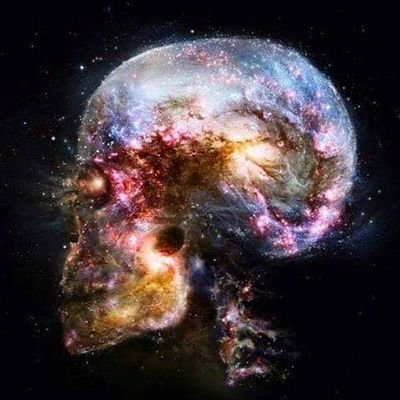
This is Valles Marineris on Mars, the largest canyon in the Solar System...
[Artist's Impression]


LAGiron retweeted

Smyrna Agora was founded in late 4th Century BC, immediately after the reign of Alexander the Great of Macedonia. Nestled in modern-day İzmir’s historic city center’s core, it is one of the largest agoras in the world that witnessed the Roman Empire.
According to Pausanias, “Alexander, the son of Philippos, founded the present city after a dream. Rumour has it he was hunting atop Pagos Hill. On his return from the hunt, he arrived at temple of the Nemesis, and decided to take a nap under a tree that had grown out of the spring in front of it. Nemesis came in a dream and commanded him to build a city here, and relocate the people of Smyrna there.” He then adds, “The Smyrnians sent envoys to Claros (Apollo) to learn what he thought about the situation. This time, God answered, "Those to dwell in Pagos beyond the sacred Meles shall be happy beyond their wildest dreams."
Smyrna Agora located in the heart of historical city center of İzmir, Smyrna Agora is one of the world’s largest of its kind. Excavation work on the site first began in 1933. In 2007, Assoc. Prof. Akın Ersoy (of İzmir Katip Çelebi University) and his team of archaeologists revisited the Agora and have remained there ever since – with permission of the Republic of Türkiye Ministry of Culture and Tourism. So far, they have uncovered a west portico, a basilica, a Bouleuterion, a mosaic hall, a roman bath, and a building from the Ottoman era that surrounds its courtyard.
It was founded at the end of the 4th Century BC immediately following the reign of Alexander the Great. It served as Smyrna’s administrative, political, and judicial centre, as well as main hub of commerce and trade. Surrounded by porticos, it used to contain monuments meant for important occasions and agreements, altars for pagan religious ceremonies, statues honouring prominent local figures, exedras with marble seat, and both a temple and altar for the city’s patron deity.
A major earthquake destroyed the Agora in 178 AD. Shortly thereafter, Roman emperor Marcus Aurelius set about rebuilding it. Nearly all surviving remains belong to that second period. Its overall character only remained intact until 7th Century. Over time, it began to lose its lustre as Smyrna shrank. Its courtyard moreover ended up being used as cemetery during Middle and Late Byzantine alongside Ottoman Empires. Ottomans moreover converted any surrounding buildings into dwellings – a tradition that would last until the end of 20th Century.
Smyrna/İzmir has remained a major Mediterranean port city since antiquity. In Ottoman times, Agora and its environs played host to a bustling commercial life, as well as dozens of different ethnic and faith communities scattered across several neighborhoods.
🎥© denizdonerkaya_ (IG)
#archaeohistories

LAGiron retweeted

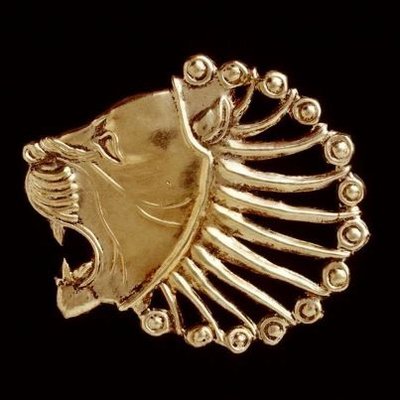
Egyptian Terracotta Statue of Isis-Aphrodite (100-200 AD), from Alexandria, Roman-Egypt
Metropolitan Museum of Art, NY
#archaeohistories

LAGiron retweeted
Originating in what is now Iraq before 3200 BC, cuneiform script is, as far as we know, the oldest form of writing in the world. The recording of a spoken language, emerged from earlier recording systems at the end of 4th Millennium BC. The first written language in Mesopotamia is called Sumerian. Most of early tablets come from the site of Uruk, in southern Mesopotamia, and it may have been here that this form of writing was invented.
Cuneiform is one of the oldest forms of writing known. It means "wedge-shaped," because people wrote it using a reed stylus cut to make a wedge-shaped mark on a clay tablet. Letters enclosed in clay envelopes, as well as works of literature, such as the Epic of Gilgamesh have been found. Historical accounts have also come to light, as have huge libraries such as that belonging to Assyrian king, Ashurbanipal. Cuneiform writing was used to record a variety of information such as temple activities, business and trade. Cuneiform was also used to write stories, myths, and personal letters. The latest known example of cuneiform is an astronomical text from 75 CE. During its 3000-year history, cuneiform was used to write around 15 different languages including Sumerian, Akkadian, Babylonian, Assyrian, Elamite, Hittite, Urartian, and Old Persian.
First developed by scribes as a book-keeping tool to keep track of bread and beer rations in ancient cities like Uruk (in south east of modern-day Iraq), system soon spread across Middle East and was used continuously for more than 3000 years, up until 1st Century AD. Cuneiform is not a language but a proper way of writing distinct from the alphabet. It doesn't have 'letters' – instead it uses between 600-1000 characters impressed on clay to spell words by dividing them up into syllables, like 'ca-at' for cat, or 'mu-zi-um' for museum. Other signs stood for whole words, like our '£' standing for pound sterling.
Two main languages written in cuneiform are Sumerian and Akkadian, although more than a dozen others are recorded, including Hittite, cousin to Latin. Texts were written by pressing a cut, straight reed into slightly moist clay. Characteristic wedge-shaped strokes that make up signs give writing its modern name – cuneiform means 'wedge-shaped' (from Latin cuneus for 'wedge').
The process for writing cuneiform on a clay tablet involved these steps :
• Prepare the clay -
Start with a damp ball of clay and flatten it into a tablet that's about the size of a hand, with one flat side and one convex side. You can use your fingers to shape the clay, or you can work on a plastic bag on a hard surface.
• Impress the symbols -
Use a reed stylus with a wedge-shaped tip to press into the wet clay and create the symbols. The symbols can be a combination of lines and wedges.
• Dry the tablet -
Leave the tablet in the sun to dry, or you can speed up the process by using a fan. Once the clay has reached a thick, goo-like consistency, you can store it in an airtight container.
The british museum's department of collection of cuneiform tablets is among the most important in the world. It contains approximately 130,000 texts and fragments and is perhaps the largest collection outside of Iraq. The centerpiece of the collection is the Library of Ashurbanipal, comprising many thousands of the most important tablets ever found. The significance of these tablets was immediately realized by Library’s excavator, Austin Henry Layard, who wrote:
"They furnish us with materials for the complete decipherment of the cuneiform character, for restoring the language and history of Assyria, and for inquiring into the customs, sciences, and … literature, of its people."
🎥© art.heology (IG)
© British Museum
#archaeohistories


LAGiron retweeted
The stolen Ancient Greek masterpiece from the sculptor Lysippos :
The horse sculptures come from the island of Chios ( the fifth largest of the Greek islands), since four horses and a quadriga (a type of chariot that was also used in the Ancient Olympic Games) was mentioned in the Parastaseis syntomoi chronikai, more commonly called “brief Historical Notes”text dated from the 8th o 9th century. The horses stayed there until 1204, when they were looted by Venetian forces as part of the sack of the capital of the Byzantine Empire in the Fourth Crusade. Interestingly, the collars on the horses necks that you can see in the photos below were added about this time to cover the areas that their necks and heads had been removed to allow then to be transported from Constantinople to Venice.
Soon after the Fourth Crusade, Doge Enrico Dandolo (Doge meaning a civil officer or lay judge in Venice or Genoa) sent the horses to Venice, where they were installed on the terrace of the façade of St. Mark’s Basilica in 1254.
In 1797, Napoleon had the horses forcibly removed from the basilica and carried off to Paris, where they were used in the design of the Arc de Triomphe du Carrousel together with a quadriga.
In 1815 the horses were returned to Venice by Captain Dumaresq, who had fought at the Battle of Waterloo and along with the allied forces in Paris. He was selected, by the Emperor of Austria, to take the horses down from the Arc de Triomphe and return them to their original place at St Mark’s in Venice. For doing an excellent job bringing the horses back to Venice, the Emperor gave him a gold snuff box with his initials in diamonds on the lid.
Until the early 1980s, the horses remained untouched over St. Marks. But with growing air pollution that would make the statues deteriorate quicker, they were removed and brought in side St. Marks and can still be seen inside the basilia. They were replaced with exact copies that can be seen outside.
📷 : Credit to the Owner
#archaeohistories


LAGiron retweeted

About 12 seconds into this video, something unusual happens. The Earth begins to rise. Never seen by humans before, the rise of the Earth over the limb of the Moon occurred about 55.5 years ago and surprised and amazed the crew of Apollo 8. The crew immediately scrambled to take still images of the stunning vista caused by Apollo 8's orbit around the Moon. The featured video is a modern reconstruction of the event as it would have looked were it recorded with a modern movie camera. The colorful orb of our Earth stood out as a familiar icon rising above a distant and unfamiliar moonscape, the whole scene the conceptual reverse of a more familiar moonrise as seen from Earth. To many, the scene also spoke about the unity of humanity: that big blue marble -- that's us -- we all live there. The two-minute video is not time-lapse -- this is the real speed of the Earth rising through the windows of Apollo 8. Seven months and three missions later, Apollo 11 astronauts would not only circle Earth's moon, but land on it.
Lead Animator: Ernie Wright; (USRA); Music: C Major Prelude by Johann Sebastian Bach
