

AI Strategist & Solutions Architect | Building Scalable AI-Native Solutions | Web apps + scalable marketing websites. | Shipping products every week
REMOTE 🌍
Joined July 2019
- Tweets3.1K
- Following1.2K
- Followers584
- Likes51.7K






Sanni Adewale retweeted

Did you know that you can flip one toggle to make your site searchable by AI agents — complete with automatic content indexing, a discoverable search API, and native HTTP QUERY support? Now you know: cfl.re/4ConKUY

Sanni Adewale retweeted

Messaging Expands to Google Maps 💬
A Message button now sits right next to Call on your listing for Android and iOS users, routing chats straight to WhatsApp or SMS 📱Link your preferred channel in your profile so you never miss a lead ✨
Read more 👉 goo.gle/4AfqCC3

Sanni Adewale retweeted

There are six layers to a working agentic system.
Most companies spend their time debating which model to pick. The model sits inside a larger operating system, and almost every production failure happens in the six layers wrapped around it.
> Layer one: experience and trigger. Stop defaulting to a chat box. Real business agents fire on an event: a file arrival, an incoming invoice, a ticket status change, or a schedule. When the agent needs a human, it routes to an exception queue or inbox, not a raw chat transcript nobody on the ops team has time to read.
> Layer two: orchestration and state. Stop treating agents like scripts sitting on someone's laptop. An agent definition should be versioned, bounded, and governed like any other code artifact, with rollback. Store execution history and checkpoints in a database like Postgres so an interrupted run resumes where it left off instead of restarting from scratch.
> Layer three: tools and deterministic logic. The guarantees live in plain, unit-tested code, not in the prompt. Wrap your proven business logic and system-of-record APIs behind one connector service as named tools with stable interfaces. Let deterministic rules handle the fixed steps, and call the model only where judgment is actually required.
> Layer four: trusted context. Do not dump your whole wiki or repo into a giant prompt. Give each domain its own scoped knowledge graph or data catalog that the agent queries mid-run as a tool. When documentation drifts from reality, agents hallucinate. The fix is not a longer prompt. It is authoritative, permission-aware context.
> Layer five: evaluation and human control. Before an agent touches a customer or moves money, build a golden set of real past cases that your domain experts agree are right. Run deterministic checks and LLM-as-a-judge evaluations on every change, and keep a human approval gate on any high-impact or irreversible action. Operators stop pressing buttons and start judging.
> Layer six: runtime and control plane. Every model call goes through one LLM gateway inside your own cloud perimeter. Direct calls to a vendor API are a production defect. Enforce virtual keys per tenant and service, hard spend caps, prompt-injection guardrails, full traces, and internal model aliases so swapping providers is a configuration change, not a rewrite.
Models and frameworks will keep changing. The durable assets are your workflow rules, evaluation sets, context boundaries, and operational ownership.
Sanni Adewale retweeted

Introducing People API powered by @typesafeai
Try it at treg.to/people-search
- $0.07 for full profile search
- Find anyone with any identity
- Phone number, Social traces, Personal email, etc.
- #1 on people search bench
0% markup, Pay per call
OpenSource Repo link below 👇
A small business doesn't need an AI strategy.
It needs the inbox answered, the quote sent the same day and the invoice chased on Friday.
That's what an AI agent does for the owners I work with. The strategy can wait.

Sanni Adewale retweeted

Claude Code + Obsidian = $100,000 a month
This guy explains in 10 minutes how to build autonomous AI agents (step by step)
🔖 Save it and watch it later


Sanni Adewale retweeted

/explain-yourself • a skill that makes your agent show you what it just did, out loud.
I'm a very visual person. I didn't want another summary, I wanted the agent to walk me through its changes
github.com/fayazara/explain-…
Sanni Adewale retweeted

Watch it if you missed it. Don't ask AI to design for you. Ask it to build you a tool.

Sanni Adewale retweeted

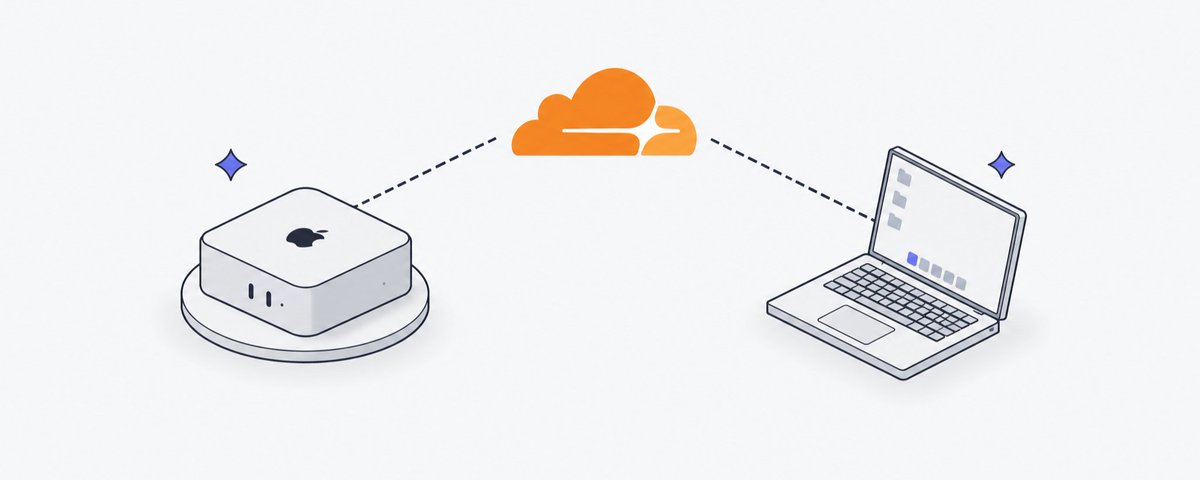
Email Sending is now available on the Workers Free plan
developers.cloudflare.com/ch…
Sanni Adewale retweeted

If you can build these 12 Forward Deployed Engineer (FDE) projects.
You're hired.
Project 1: Enterprise SSO & Agent Delegation Broker
OIDC/SAML bridge issuing 5-minute, strictly scoped JWTs to agents acting on a user's behalf, with automatic revocation.
→ Shows: You can pass enterprise security reviews and manage non-human identities
Project 2: One-Click Air-Gapped Helm Deployer
Terraform/Helm scripts deploying the full AI stack (DB, Vector Store, LLM) into an isolated VPC with zero public egress.
→ Shows: You can deploy to banks, hospitals, and governments that ban public cloud APIs
Project 3: Unstructured Legacy Ingestor
OCR + mainframe DB connector turning 10 years of messy, scanned PDFs and COBOL exports into a clean, chunked vector store.
→ Shows: You can fuel AI with the messy, unstructured reality of enterprise data
Project 4: Row-Level Secure RAG Engine
Retrieval pipeline enforcing document-level RBAC so a junior employee's query physically cannot retrieve executive M&A chunks.
→ Shows: You prevent catastrophic internal data leaks at the retrieval layer
Project 5: Raw MCP-to-ERP Bridge
JSON-RPC Model Context Protocol server wrapping a 15-year-old on-prem SAP/Oracle SOAP API so agents can safely read/write records.
→ Shows: You give AI standardized hands to touch the customer's actual systems of record
Project 6: Deterministic PII Unmasking Proxy
Middleware swapping SSNs and credit cards for UUIDs pre-inference and restoring them post-generation with immutable audit logs.
→ Shows: You satisfy strict compliance teams without breaking the model's reasoning
Project 7: Async Temporal Approval Gate
Durable workflow pausing a high-stakes agent action (like a $50k PO) until a human clicks "Approve" in Slack, surviving server crashes.
→ Shows: You build legally accountable, crash-resilient autonomous systems
Project 8: Local Quantized Triage Node
AWQ 8B model running on a single customer-owned GPU for zero-latency, offline PII screening and triage before cloud routing.
→ Shows: You know how to bring the model to the data when the data is too hot to move
Project 9: Department-Level FinOps & ROI Dashboard
Telemetry pipeline attributing exact token spend, API costs and time-saved per customer team to mathematically prove product value.
→ Shows: You prevent enterprise churn by quantifying ROI in the customer's own metrics
Project 10: Historical Shadow Replay Harness
Pipeline replaying 500 real, messy past customer support tickets through the agent in shadow mode to prove accuracy pre-launch.
→ Shows: You prove the AI works on *their* data not just generic public benchmarks
Project 11: Automated Architecture Scoper
Framework converting vague executive "we want AI" requests into a scoped 4-week SOW with threat models, diagrams and success metrics.
→ Shows: You translate business hype into executable engineering reality
Project 12: Self-Serve Customer Admin Portal
UI letting the customer's internal IT manage prompts, view OpenTelemetry traces and update configs without filing a support ticket.
→ Shows: You build scalable product deployments, not permanent consulting traps
(Bookmark this)
happy building...

If you learn Forward Deployed Engineering, you will never be unemployed again.
I'd do this.
Stage 1: Enterprise Identity & Agent RBAC
SSO (SAML/OIDC), SCIM provisioning, Row-Level Security (RLS), Agent-to-Human delegated OAuth, scoped JWTs for tool execution.
Stage 2: Air-Gapped & VPC Inference Deployments
Terraform/Helm for private VPCs, air-gapped container registries, strict egress filtering, on-prem GPU provisioning, zero-trust networking.
Stage 3: Legacy Data Extraction & ETL
OCR pipelines, mainframe DB connectors, unstructured PDF parsing, messy CSV normalization, Airflow/dbt orchestration, data reconciliation.
Stage 4: Permission-Filtered RAG & GraphRAG
Document-level RBAC, hybrid search, metadata tagging, cross-tenant isolation, citation grounding, multi-hop graph traversal, abstention logic.
Stage 5: MCP & Legacy System Integration
Raw JSON-RPC MCP servers, SOAP/REST translation, headless browser fallbacks, on-prem SAP/Oracle connectors, strict API rate-limit handling.
Stage 6: PII Cryptography & Guardrails
Deterministic UUID swapping, NER redaction, pre/post-flight unmasking proxies, format-preserving encryption, immutable audit logging.
Stage 7: Human-in-the-Loop (HITL) & Durable Workflows
Temporal{dot}io state machines, async Slack/Teams approval gates, workflow checkpointing, crash recovery, legal accountability trails.
Stage 8: Edge & On-Prem Local Inference
vLLM/TensorRT-LLM on customer hardware, AWQ/GGUF quantization, offline fallback routing, local SLM triage, zero-latency PII screening.
Stage 9: Telemetry, ROI & Customer Health
OpenTelemetry for LLMs, cost-attribution per department, time-saved dashboards, silent failure alerting, usage-based billing meters.
Stage 10: Shadow Evals on Customer Data
Golden dataset creation from historical logs, trajectory grading in shadow mode, LLM-as-a-judge calibration, custom business metric design.
Stage 11: Technical Discovery & SOW Scoping
Stakeholder interviewing, architecture diagramming, gap analysis, translating executive "AI hype" into scoped 4-week deployment plans.
Stage 12: The Handoff & Self-Serve Admin
Runbook automation, internal IT enablement, chaos testing in customer VPCs, admin portals for prompt/config management without FDE intervention.
Most people stay stuck watching tutorials.
Builders get hired.
(Bookmark it)
Sanni Adewale retweeted
Anthropic just published its training path for Forward Deployed Engineers.
The role OpenAI, Anthropic and Perplexity are all hiring for.
It's 11 courses, about 9.5 hours, self-paced:
Foundations:
- AI capabilities and limitations
- AI fluency for builders
- Claude platform and model foundations
- Choosing the right Claude model
Building:
- Claude Platform 101: API, agent loop, tools, MCP, skills
- Claude Code 101
- Claude Code in action: long hands-off sessions in a customer's repo
- Intro to Model Context Protocol
- Intro to agent skills
Delivering:
- Delivery methodology: scope the use case, design the pilot, measure the baseline
- Driving enterprise adoption of Claude
By the end you can take a customer from first use case to a working pilot.
It leads to the Claude Certified Developer exam.
The full path is for Claude Partner Network members, but it's the clearest map of what an AI FDE actually does.
anthropic-partners.skilljar.…
Bookmark it if you want to work in AI without building models.

Sanni Adewale retweeted

3 weeks ago I launched MotionSites Studio.
No team. No investors. Just me + AI agents.
→ 7,000+ signups
→ 2,900+ sites built
→ $5,700 MRR
Here's what it does ↓
Most business owners don't need more software.
They need someone to answer the leads, send the follow-ups, chase the invoices and update the CRM.
AI agents can do that work every day without being reminded. That's the setup I build for clients now.
1
2
54
Sanni Adewale retweeted

Here are 3 AI engineering concepts that you will commonly get during AI engineering job interviews 🧑💻
Sanni Adewale retweeted

It's been nearly 6 months since I posted a 'watch me work' deep dive on my skills.
Since then, they've become the most-starred skills repo in the world.
So, here's 70 minutes of me building a 21,000-line PR, especially focusing on:
- DDD with /grill-with-docs
- Improving your codebase with /retro
- How to do human review effectively
Enjoy!
Sanni Adewale retweeted

How do I tell the @Hetzner_Online and @digitalocean CEOs to make new VPS servers:
- have a default firewall that closes all their ports
- by default have Tailscale installed as the only way to access it via SSH
- by default have some web tunnel like Cloudflare Tunnel to serve web traffic safely
That way VPS servers could get a better reputation instantly by being safe by default
It's crazy in 2026 they let you create a VPS that by default is open to the entire internet!