

Lover of sunrises, poetry, & profound conversations 🌹
Dallas, TX
Joined December 2010
- Tweets5.3K
- Following620
- Followers623
- Likes186K





Rubab Zaidi retweeted

She protects him spiritually; he anchors her physically. She brings him serenity; he makes her world a little softer.


Rubab Zaidi retweeted

This is fantastic and honestly it opened my eyes to a better way of looking at the current world and happenings.
Listen. This dude is legit!


Rubab Zaidi retweeted

Do yourselves a favour and read Nahj-ul-Balagha - "The Peak of Eloquence". From governance, politics, and philosophy to biology, cosmology, zoology, theology, ethics, diplomacy, and warfare, etc. - you shall be in awe of how Maula Ali (AS)'s timeless wisdom knows no bounds.

Rubab Zaidi retweeted

The New York Times interviewed young male Trump voters to see where their heads are at right now with the midterms days away.
Rubab Zaidi retweeted

A woman's aesthetic preferences can tell you so much about her philosophy. What she considers beautiful, excessive, comforting, sensual, elegant, sacred, etc. Taste is one of the ways our interior worlds become material.
Rubab Zaidi retweeted

people praise the cinematography of pride and prejudice (2005), and rightly so, but i wish we talked more about what its landscapes actually mean.
elizabeth seems to belong to those open landscapes in a way she never quite belongs to the drawing rooms and social conventions surrounding her. i don’t think it’s accidental that the film gives a woman whose life is so dictated by social expectations so much visual freedom. the countryside becomes one of the few places where she can simply exist, without being watched, judged or expected to be anything in particular.


Rubab Zaidi retweeted

Modern linguists largely agree that the Arabic word ṣirāṭ (meaning “path”) is a loanword ultimately from Latin strāta, borrowed early on into the Arabic language.
The linguist Abū Ḥātim (d. 322) writes that it is narrated from a multitude of early authorities such as Ibn ʿAbbās, Mujāhid, Saʿīd b. Jubayr, ʿIkrimah, and ʿAṭāʾ that ṣirāṭ is of the Roman language (i.e. Latin).
This etymology reportedly being pointed out by Ibn ʿAbbās et al. is especially interesting given how early they were, and given that strāta did not enter Arabic directly, but rather through Classical Syriac ܐܣܛܪܛܐ (esṭraṭā).
Cognates of this root also passed into Germanic languages, giving us the English word street.
What’s the relevance?
In Latin itself, strāta is an ellipsis of the phrase via strāta (“paved/stretched road”). This is relevant because it tells us that strāta (and by extension, ṣirāṭ) is not just any path—it is a clear, paved, unmistakable road engineered for travel (such as the Strata Diocletiana). Thus, in Qurānic usage, ṣirāṭ perfectly describes “the straight path” (al-ṣirāṭ al-mustaqīm)—meaning the course of guidance clearly ordained by God for humans to follow.
Other words for “way” or “path” in the Qurān, such as ṭarīq and sabīl, do not necessarily carry this connotation of being clearly paved and identified. For example, the word ṭarīq specifically comes from the root ṭaraqa (“to strike”) and refers to oft-trodden paths frequently struck by human feet. By contrast, a ṣirāṭ is established by its structure rather than its traffic. This is why the Qurān asserts that the majority of people are often not on the path of guidance (Q 6:116, Q 12:103).
Like ṭarīq, the word sabīl also has a connotation of an oft-traversed path. Lexicons mention that asbala—a verb from the same root—means that the number of travelers on a route has increased (وأسْبَلَتِ الطَّرِيقُ: كَثُرت سابِلَتُها). The word sābilah also shares the same root and refers to temporary passersby (مارّة). In contrast to this, the believer does not simply pass by the straight path; rather, it is a long-term path intended for his lifelong spiritual journey.
Hence, the Qurān accurately uses ṣirāṭ as the ideal word to describe the straight path, because it denotes a permanent, divinely engineered path whose validity does not depend on the volume of traffic or the varying movements of the passersby.
وبالله التوفيق

ALT كتاب الزينة لأبي حاتم
Rubab Zaidi retweeted

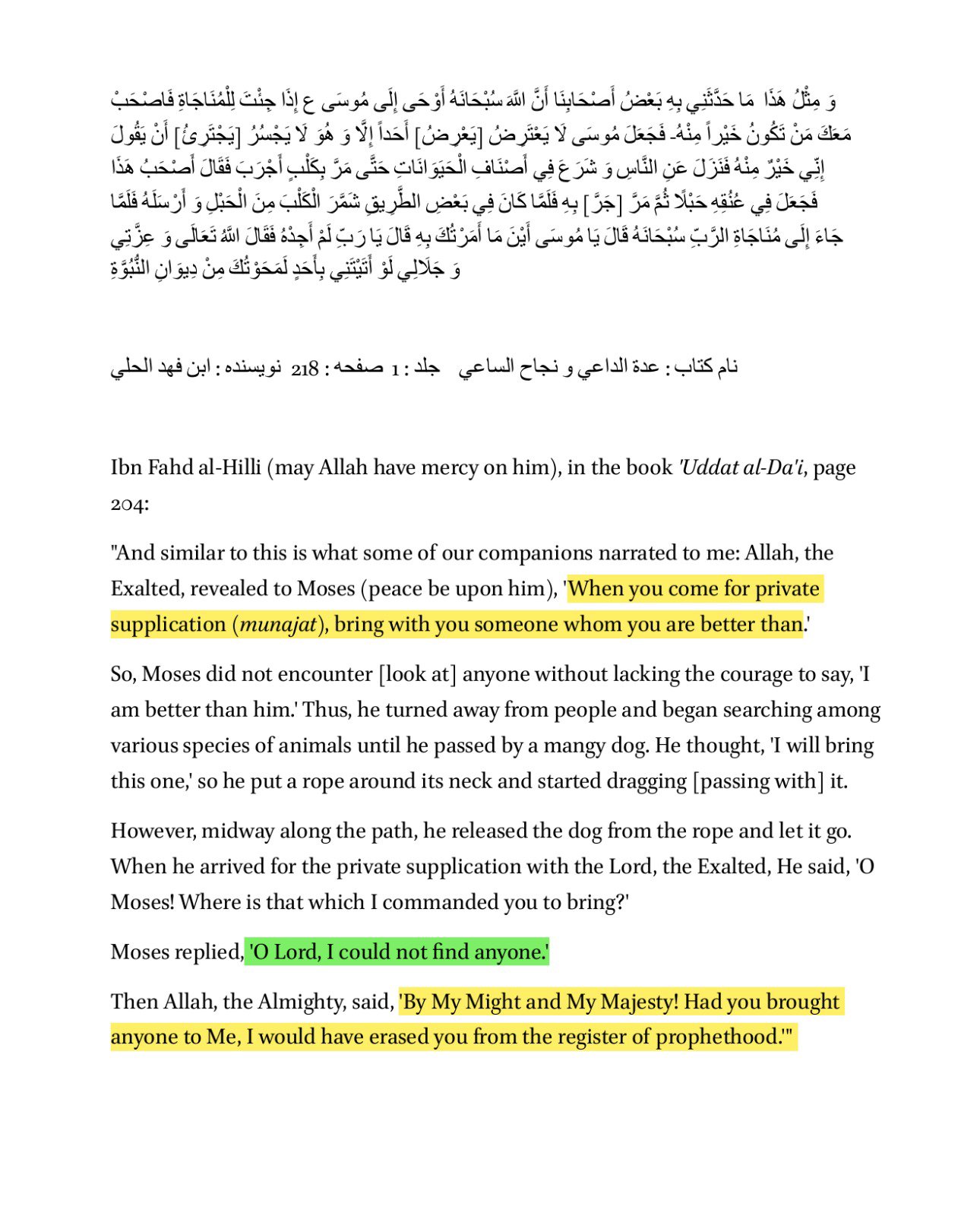
𝑻𝒉𝒆 𝑼𝒍𝒕𝒊𝒎𝒂𝒕𝒆 𝑳𝒊𝒎𝒊𝒕𝒔 𝒐𝒇 𝑺𝒑𝒆𝒄𝒊𝒂𝒕𝒊𝒄 𝑯𝒖𝒎𝒊𝒍𝒊𝒕𝒚:
Prophet Moses being asked not to consider himself superior even to the most seemingly insignificant of God’s creatures :


Rubab Zaidi retweeted

We meet God according to our own subjective potential (istī'dād). Everything manifests a certain divine aspect.
But those mirrors who reflect His all-comprehensiveness truly submit before the infinitude of God.
A profound exchange portrayed between Shams Tabrizī and Rumī.


Rubab Zaidi retweeted

Prophet Muhammad (saw) said:
O Abu Dharr, hold ‘Ali dear and hold his friends dear to you, for the link between God and man is the love for Ali.
O Abu Dharr, love him sincerely because God grants the wishes of those who sincerely adore Ali.
—Ref: A’lam Al-Din, p. 136.
