

Università della Svizzera Italiana, CH | PhD in Medical Genetics | Scientist loving neurogenetics | Passionate for travelling
Bellinzona, Switzerland
Joined June 2020
- Tweets136
- Following131
- Followers76
- Likes147


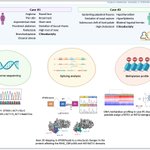



Happy to share our latest work on #CAPRIN1 linked #NDD at #neurogen25!
Thanks to @DMM_Journal for supporting my attendance at this exciting conference ✨
#DMMgrants

🌟Finally out!
🧬One year ago we linked RPH3A gene to a #neurodevelopmental disorder. Now, Barzasi and team showed some variants we previously described are causing dysfunction of pre- and post- glutamatergic synapse!
Have a look nature.com/articles/s41598-0…

58
Proud to be part of the Autism Sequencing Consortium, which keeps on contributing to the understanding of the genetics of neurodevelopmental disorders! Have a look to our recent work 👇

📣New today!
📄Contribution of autosomal rare and de novo variants to sex differences in #autism
🧑🤝🧑@hilsomartin & colleagues
cell.com/ajhg/fulltext/S0002…

1
99
We need to stop this never-ending history of not accessible papers. Science needs to be shared, and we should find a solution. How can a paper from *1993* still not being accessible?!!
#OpenScience

1
40
❓How does a cell become malignant?
🌟Several tightly regulated factors are needed to lead the cell toward a state of ‘oncogenic competence’.
🔖In this Opinion, we highlight the most updated findings about the mechanisms behind oncogenic competence.
➡️authors.elsevier.com/c/1kW69…

chapter about the role of CAPRIN1 gene in neurological conditions:
Handbook of the Biology and Pathology of Mental Disorders
Chapter: Neurogenetic Disorders and CAPRIN1
Curious to read it? Let's have a look here: lnkd.in/dcztYgNX
(continue👇)
1
29
Our last report is out today! 💥
Who works in the field of neurodevelopmental disorders knows how difficult may be to understand genomic data results, especially when the clinical presentation is different than the expected one.
Here, we show how a EP300 variant (continue👇)

1
48
Let’s join our group! ✨⭐️

📢Join our lab and the Bioinformatics Core Unit led by @CascioneLuciano! If you're excited about projects at the intersection of stem cell tech, cancer neuroscience, and genomics, we'd love to have you on our dynamic and fun team. 🌱✨ #Bioinformatician #stemcells #CancerResearch #Genomics #Job #jobopportunities

ALT Lab in September 2024, Cademario, Switzerland
1
57
Very well deserved 🙌🙌 Congrats @JonasVanlent !

Dr. Jonas Van Lent from Prof. Arianna Baggiolini's Stem Cells & Cancer Lab has secured the prestigious SNSF grant! His research on pain, proprioception, and balance using human #stemcells could pave the way for new therapies.
Exciting times ahead 🚀
#SNSFSpark #stemcells #news


1
1
79
Congrats @AntoVerrillo 🎉🎉
🏆 Congrats to PhD student Antonietta Verrillo for winning "Best Poster Presentation" at the 6th USI BioMed PhD Day! Her innovative research on melanoma brain metastasis offers promising insights for cancer treatment.
#USIBioMedPhDDay #ResearchExcellence #MelanomaResearch

1
54
Great example of how undiagnosed diseases may find a diagnosis through multidisciplinary collaborations!
-Nearly 100 expert from 28 countries
-4/10 families finally obtained a diagnosis
-4 novel candidate genes were identified
#rarediseases

Our paper on the first Undiagnosed Disease Hackathon is now out in @NatureGenet. #teamwork of 100 clinicians & scientists for #undiagnosed #genetics #genomics #raredisease @Willefonden @UDNIss
full paper see: rdcu.be/dXA1a
nature.com/articles/s41588-0…
3
113
...and here is the full program for the day 👩🏽🔬

Free Online Event:
Understanding Neurodevelopment Through Brain Organoid Models with keynote Dr Mark Hester🧠
📅 Date: October, 24 2024
🕒 Time: 9am CDT, 3pm BST, 4pm CEST
💻 Event: Online (Zoom)
🔗 Register Now: ptglab.zoom.us/webinar/regis…
#Neuroscience #BrainOrganoids

🗓️Save the date!
Introducing @lisapavinato , Postdoc at @USI_university as a speaker at our upcoming #ECR workshop:
'Understanding Neurodevelopment Through Brain Organoid Models'
🔗 Register FREE ptglab.zoom.us/webinar/regis…
📅 Oct 24 9am CT / 3pm BST /4pm CEST
#Neurodevelopment #SFN24

2
49
I still remember how much I was amazed by Magdalena's talk at ESHG conference last year! 🤩 Original paper: nature.com/articles/s41586-0…

I’ve been presenting our human stem cell embryo model, derived from programmed human ESCs, at conferences for a few years and last year, we finally published it. Now we’re excited to share a detailed protocol how to create these models #StemCellResearch
nature.com/articles/s41596-0…

1
107
How can DNA methylation be helpful for genetic diagnoses of neurodevelopmental disorders? Can we use it to solve complex cases?
Have a look ⬇️⬇️⬇️cell.com/hgg-advances/fullte…
1
54
#ESHG2024 is starting and I can’t wait to attend to 4 days of genetics 🧬
Thanks to the committee for awarding me with the Conference #Fellowship for European Countries, giving me the chance to attend also this year!
40
Today, in Campidoglio, I received the acknowledgment of “Paladini Italiani della Salute” and the Award “Recti Eques” under 35 for the research on rare diseases!
I am really grateful for these acknowldegments and I want to thank the Commission for this opportunity 🧬 – at Rome, Lazio


4
8
522
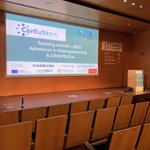
Starting the #training school “Advances in #reprogramming and #CRISPR/Cas” today, organized by @CorEuStem 🧬
Ready to learn new stuff! 🔬 – at Barcelona, Spain


2
52
Happy New Year ✨

The fireworks in your mind. 🧠✨ This sparkling video shows the neurotransmitter glutamate being released into synapses, made possible by an indicator developed by @abhi_aggarwal1, @PodgorskiLab, and team.
#HappyNewYear #NYE
63