

2023 Grass Fellow @MBLScience; Neurobiologist/nematologist @RockefellerUniv; Ph.D. from @Caltech; Three worms in a trench coat
Manhattan, NY
Joined October 2017
- Tweets48
- Following163
- Followers164
- Likes645

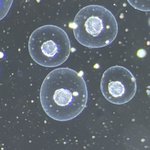






The 2023 Grass lab is up and running! One of the first organisms we set up were the ctenophores. These iridescent creatures are one of the first animals that ever evolved and likely resemble what ancient animals used to look like... @MBLScience @grassfoundation

These ctenophores were caught by @Ctenophore18 and @omasvc, who'll be studying how light 💡 and mechanical stimulation 👉 affect ctenophore movements this summer at the Grass!
grassfoundation.org/years/20…
6
433
Excited to be able to share this now! Worms learn to avoid odors that they smell during starvation. In our new paper, we describe how insulin/IGF signaling in a single olfactory neuron can generate the aversive memory needed for this type of learning.
cell.com/cell-reports/fullte…
1/5

And, when odor is paired with food deprivation, insulin signaling reduces glutamate release from the neuron. Glutamate is required for chemotaxis to the odor, and reducing glutamate leads to decreased attraction.
4/5
2
4
I was lucky to work with @drduuu, @betenoire1, and others on this article which is out today! If any of this sounds interesting to you, please take a look at our paper!
5/5
5
My friend @gp_donaldson published this cool review today on the different antibody responses to commensal vs pathogenic bacteria. Great reminder that bacteria aren’t always pathogenic (most in the gut aren’t) and antibody responses aren’t always combative
tinyurl.com/4nucm2jb
1
James Lee retweeted

My dog watches the garbage man with the same combination of awe and envy and fear that I felt when I was her age
Children are all the same, whether dog or human
That is to say they are idiots and they have bad taste

I have been looking forward to this!! Our new paper about nematodes from the toxic, arsenic-rich environment of Mono Lake is out now. We discovered a new species, and it can survive 500-times the human lethal dose of arsenic!
cell.com/current-biology/ful…
1
10
This project is a highlight from my time in @wormraiser's lab. It forced our team to get better at zoology, and gave us a new appreciation for biodiversity. What other strange environments do you think we'll find worms in? My favorite is the worm that can live in beer mats!

1
2

Thanks for the interview @MaddieOBender and @VICE! It's a huge honor to have this awesome article out there about our newly identified Mono Lake nematodes!


Our new paper is out today ahead of print! We describe genetic markers that can track and manipulate a whole-animal decision in C. elegans. @peinguin2 @wormraiser.
sciencedirect.com/science/ar…
