

Ex-science editor sharing daily discoveries, innovations, space and tech news, and mind-blowing facts! #ScienceNews, #Science facts and more!
Toronto, Ontario
Joined April 2017
- Tweets9.8K
- Following7.1K
- Followers7.5K
- Likes38.9K



Flamingos aren't born pink. Chicks hatch grey-white — and only turn pink because of their food. Algae and brine shrimp are rich in carotenoid pigments, which get deposited into growing feathers over 2–3 years. Stop the diet, and a flamingo fades back to white.
The northern lights are a collision in the sky. Charged particles from the Sun slam into oxygen and nitrogen high above the poles — and the gases answer by glowing green, pink, and violet. A space-weather light show, visible from the ground.

A newly found neutron star spins nearly 600 times a second — one full turn every 1.675 milliseconds. It packs more than twice the Sun's mass into a ball the size of a city, while slowly stripping its companion star. (Animation: NASA)
There's a swirling soup of plastic in the Pacific three times the size of France — the Great Pacific Garbage Patch. It's not an island you can walk on: 1.8 trillion pieces, most smaller than a grain of rice, drifting between Hawaii and California.
The Moon has earthquakes too — moonquakes. Apollo seismometers recorded thousands between 1969 and 1977, and the strongest hit magnitude 5.5, shaking for over 10 minutes. The culprit? The Moon is slowly shrinking as it cools, cracking its own crust. (Photo: NASA)

LiveScience.Tech retweeted

Today in the history of astronomy, results from the eclipse of 1919 are announced, supporting Albert Einstein’s theory of general relativity. vist.ly/5rque

On Christmas Eve 1968, Apollo 8's crew watched Earth rise over the Moon — the first humans ever to see it. Bill Anders grabbed the camera as the spacecraft's roll brought our whole world into view. They went to explore the Moon and discovered Earth. (Video: NASA)
Old cathedral windows are thicker at the bottom — but not because glass slowly flows. Medieval panes were hand-spun uneven, and glaziers installed the heavy edge down. At room temperature, glass would need longer than the age of the universe to sag.
Something is pulling our galaxy — and 100,000 others — toward it at 600 km/s. The Great Attractor sits ~250 million light-years away, hidden behind our own galaxy's dust. It's not a black hole: it's a knot of galaxy clusters anchoring the Laniakea supercluster.

The Moon's shadow raced across North America at over 1,500 mph during the April 8, 2024 total eclipse — a black spot sweeping Mexico to Maine in under two hours. This NASA fly-around shows the whole path from space. Totality: just 4½ minutes anywhere. (Video: NASA)
Your brain runs on about 20 watts — less than a dim light bulb. It's just 2% of your body weight, yet it burns roughly 20% of your energy at rest. All your thoughts, memories and dreams, powered by less than a fridge light.
In 1885, a Vermont farmer bolted a microscope to a camera and took the first-ever photo of a snowflake. Wilson Bentley went on to capture 5,000+ flakes over 46 winters — and never found two alike. Six sides, every time, written in the geometry of water itself.

LiveScience.Tech retweeted
Cosmic pixie dust 🪄
This new Hubble image shows M30, which is a globular cluster – a roughly spherical collection of stars held together by their mutual gravitational attraction.
Find out more: go.nasa.gov/4iEHI4Q

ALT A star cluster seen up close, filling the view with thousands of stars. They are clearly divided between blue ones, which are scattered around the outskirts of the image but more towards the center and are the majority in the bright core of the cluster, and yellow stars, which are present in the core but make up most of the cluster outside of that. A few orange stars are closer to us and appear noticeably larger.
Every ocean current on Earth, swirling at once. NASA's 'Perpetual Ocean' turns 2.5 years of satellite data into flowing white lines — the Gulf Stream and Kuroshio racing along at over 4 mph. It looks like a Van Gogh, but it's real physics. (Video: NASA)
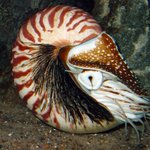
The nautilus has barely changed in 500 million years. It steers a spiral shell like a submarine, sees through a pinhole eye with no lens, and jets around on pressurized water — a living fossil that was already ancient when the dinosaurs arrived.

The Moon always shows us the same face — but not quite. Squeeze a month into 12 seconds and it wobbles, rocking like a ship at sea. That wobble — libration — lets us peek around the edges and see 59% of its surface over time. (Video: NASA)
There are more trees on Earth than stars in the Milky Way. About 3 trillion trees grow here — versus 100–400 billion stars in our galaxy. Look up at the night sky, then look around: the forest wins.

There are more possible chess games than atoms in the observable universe. The Shannon number — about 10^120 possible games — dwarfs the ~10^80 atoms out there. Every game you play is a path no one has ever walked before.
For 66 million years, science thought the coelacanth was extinct — a fossil fish that died with the dinosaurs. Then in 1938, a museum curator spotted one in a fisherman's catch off South Africa. A 2-metre "living fossil," hiding in the deep all along.

LiveScience.Tech retweeted

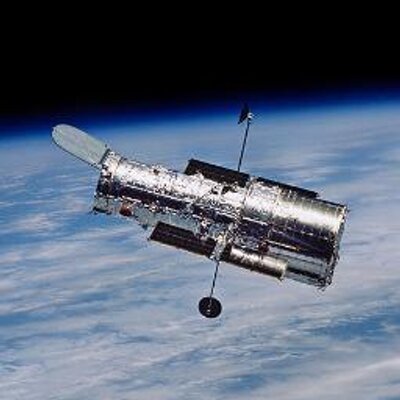
NASA's Swift space telescope crashed back to Earth today (Nov. 4), three months after a private spacecraft was supposed to boost the observatory to a higher orbit. space.com/space-exploration/…
