

CEO @Graphistry @louie_ai https://xitter.cf/t.co/uJAdxr0KMn https://xitter.cf/t.co/b2ZLJyww3f Makers of https://xitter.cf/t.co/fo6XK5JU6a, GFQL, GPU dataframes, PyGraphistry
San Francisco
Joined July 2008
- Tweets11.7K
- Following458
- Followers2.8K
- Likes5.5K








lmeyerov retweeted

Dimitris has been proving you can do important AI basic research with a few GPUs and some agent max subscriptions. Some examples: ECHO paper, looped transformers, open mementos for context management come in mind.

lmeyerov retweeted

So I'm seeing more and more founders come back to run their pre-AI B2B companies. Because it's often The Last Stand.
The first of the trend might have been Founder CEO Daniel Dines at UiPath, who had to come back just months later to run it. AI hit UiPath as fast as any category, and within less than 6 months of handing off the CEO baton, he was back.
Aneel Bhusri founder CEO at Workday had to do the same recently. Eoghan McCabe did it famously at Intercom / Fin.
I'm seeing it not all the time, but at many B2B companies at $50m+ ARR. Big enough to have a base to sustain it. But not agentic enough to grow.
The non-founder CEOs 9.5 times out of 10 can't pull a pre-AI B2B companies out of a slow death spiral.
It's not too late, but it's getting too late. And you really, really need your founders for your Last Stand. No one else is going to do what it takes.

lmeyerov retweeted

I may have taken the wrong lesson from Bryan Johnson's visit to our office.
If Bryan has achieved such incredible results after getting serious about health in his 40s -- and if the tech is only getting better -- maybe I can wait another 10 or 15 years before investing in my own health.
This pattern of thought comes up often in the AI industry. If models are getting better, why waste time making incremental progress on the infrastructure and application layers when growth in model capabilities will eventually consume all progress?
After nearly five years working in AI, I am confident that there is a lot of value to deliver along the way between improvements in model quality. And that continuously operating at the frontier positions you to take proper advantage of these advances.
Bryan makes the same argument for health. Small habits and choices made early compound for a lifetime, and putting the essential structures and routines in place makes the cool optimizations actually worthwhile.
Thank you to the entire Immortals team for a fantastic event.

lmeyerov retweeted

One of the biggest lessons from our AI investigation research is that agents must be master mapmakers:
When the Louie.ai research team became the first to not only beat the Splunk Boss of the SOC CTF with AI agents, but fully clear it, one of the biggest “aha!”’s was around agents building and reusing investigation timelines. Task completion rates rose from 70% to 96% and investigations ran roughly 3x faster and with 3x fewer tokens.
Today's announcement is bringing that capability to Louie.ai through agentic timelining, and as we’ll discuss in later posts, organizationally-structured long-term memory.
The video shows Louie creating a live timeline while investigating across connected databases and APIs. Instead of repeatedly searching the same evidence, agents continuously build a structured understanding of what happened. The result is enabling both you and the agent to explore findings through timelines, visualizations, linked evidence, and follow-on questions.
Check out the article below for more on how we think about timelining and long-term memory as key layers in the AI era that make agents run better and help tame how organizations approach investigations.
If you're at Black Hat or AI4 week in Las Vegas, say hello and see it in action. We'd love to hear how your team is approaching this problem today.
lmeyerov retweeted

🚀😊🙌 and we’re just getting started!
github.com/perplexityai/numb…


Massive thanks to the @perplexity_ai team for contributing Numbat to the Open Secure AI Alliance 💚
lmeyerov retweeted

I don't think it's a lack of imagination. I also used to work at Anthropic, think trends will continue, and used to agree with this. But I've changed my mind and now disagree with this take.
Open models are already capable enough to do what you described. For example, I used Opus 4.6 to gain access to other folks medical records, hijack bank accounts, etc. back in February. GLM 5.1 is more capable than Opus 4.6 in most pentesting environments, and it came out in April.
Despite capable open-weight models existing, the sketchier folks I know are still using a Claude Code or Codex subscription for hacking. (Even well-resourced groups in other countries! They use the grey/black market of discounted Ant/OAI subscription tokens sold through resellers.) So I see most of the materialized risk here as still coming from Anthropic and OpenAI; safeguards aren't sufficient to stop a moderately dedicated actor.
The groups I know who are using open-weight models are legitimate offensive security companies. They won't break the rules to use subscription-based pricing, the open-weight models are more reliable in that they don't require specific jailbreaks nor hit classifiers, and the labs use massive partnerships or spend as a prereq for lowering classifiers/safeguards. I know of three legitimate groups running GLM 5.2 as their primary model.
That last part applies for Anthropic, too: I know of two instances where two different Anthropic GTM people used large comitted spend contracts as a prereq for lowering safeguards, and I directly witnessed one.
On the inside, I know the narrative and intent is genuinely about safety. But from the outside, Anthropic-the-system seems to be optimizing for revenue and control/power, isn't diffusing capabilities to defenders, and also doesn't have adequate safeguards to prevent misuse from dedicated bad actors.
As a result, I now lean towards a future where capable open models are freely available (at least for cyber, bio is harder); I don't trust Anthropic or other frontier labs to handle this sufficiently well without diffused capabilties given what I've seen so far.
lmeyerov retweeted

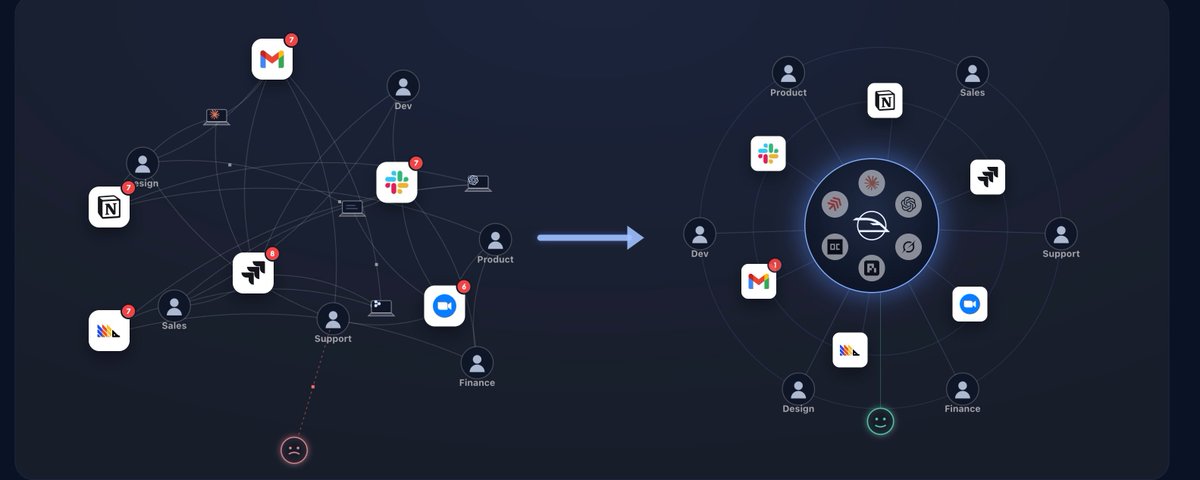
OCaps folks for years: well if you construct the whole system around scoping the authority delegated to arbitrary and capricious computational agents, you get this clean design.
Me: sure but “arbitrary and capricious computational agents” is a pretty conservative model... oh.

lmeyerov retweeted

🚨 New Cyber Eval Shows Chinese Model Pulling Even with Opus 🚨
Great work from @lmeyerov and team showing GLM 5.2 scoring very close to GPT 5.5 and Opus 4.8 when using non-public cyber evals. WHY IS FABLE STILL BANNED?
graphistry.com/blog/glm-5-2-…

RT @Graphistry: More AI fun: Our CEO and founder Leo Meyerovich @lmeyerov will be speaking at the SANS Cloud Security Exchange Summit on…
lmeyerov retweeted
Before Anthropic’s new Fable model got shut down by the US Government, the Louie.ai team took it through its paces, so we wanted to share our benchmark-driven defender’s perspective on Fable + Mythos, and as heavy agentic coders, our practitioner report.
The tl;dr: For coding, we find Fable remarkably autonomous and clever. Unfortunately for defenders, Fable is also remarkable in being simultaneously bland for investigations and chaotic-evil in packaging: high pain for no gain.
Our first-look gives some numbers and examples on our defender’s perspective of how to think about it. For those wanting to own their evals, this is also a first look at our new cyber blue team CTF benchmark, CyBT-CTF, designed to defeat the increasing amount of AI vendor reward hacking in these new models.
Read the full report here: graphistry.com/blog/fables-a…
#BreakingAI #AIShutdown #TechNews #fable #Anthropic #AI #CyberSecurity #Infosec #AIModels


lmeyerov retweeted

Just learned:
Software engineers used to do manual data labeling at Scale AI while Alex Wang was CEO. After he left, new leadership joined, and were HORRIFIED to learn this. Stopped it ASAP
Now at Meta, software engineers are assigned manual data labeling... see the pattern?

lmeyerov retweeted

One thing I noticed while benchmarking LLMs on security event data:
The models often overfit on narrative plausibility and environmental assumptions.
If an artifact looks like a test, lab artifact or pentest remnant, the model may start inventing an "authorized testing" story around it and dismiss the event as a false positive - even when the technical indicator itself is clearly suspicious or intentionally malicious.
Examples:
- "EDRTest"
- "PentestPersistence"
- "EICAR_Check"
- "InternalSecurityTool"
A human analyst can fall for this too, but with LLM-based SOC workflows this becomes interesting at scale.
An attacker could intentionally name persistence keys, services or binaries in a way that nudges the model toward a benign interpretation.
What surprised me most:
The model often correctly understands the technical artifact first ... and then talks itself out of escalating it.
This is only one of many weird benchmark-design problems I ran into while testing LLMs on DFIR / detection-engineering data 🙂


lmeyerov retweeted

Spoke at @graphtheplanet during RSAC week on building investigative security datasets with Claude Code + tools.
Went from O(person-months) to O(person-days). Realistic threats, correlated data, emergent character interactions, and quantitative eval built in.
Thanks @lmeyerov and @Graphistry for having me.
gamma.app/docs/Bad-Actors-..…

lmeyerov retweeted

is it just me or are none of the harness libraries/frameworks/etc designed for multi tenancy? all of the state seems filesystem oriented, no RBAC, etc
lmeyerov retweeted
Episode #3 of AI Investigation Power Hour is starting soon:
How Security Data Lakes Change Security Agents
Hosts @lmeyerov , Founder of @Graphistry, and @haandkle_42, Solutions Architect and former police officer, will be joined by @daveherrald Dave Herrald, Global Head of Cyber GTM at @Databricks
They’ll discuss how modern security data lakes are changing how security agents are built, deployed, and used in investigations
📷 Watch live on LinkedIn and YouTube:
youtube.com/live/IeSHYZw_0r4…
📷 March 9, 2026
📷 9:30–10:30 AM PDT
Full replay will also be available on YouTube and major podcast platforms


lmeyerov retweeted

CUDA Tile has shipped! You can now `pip install cuda-tile`. I'm excited to see what y'all will build with it!
Docs & resources:
developer.nvidia.com/cuda/ti…
GitHub:
github.com/NVIDIA/cutile-pyt…


