








Long Nguyen retweeted

I'm fascinated by the rise of frictionmaxxing as a response to a frictionless life. We engineer away inconvenience, only to discover that some of the friction we removed was part of what made life feel alive in the first place


Long Nguyen retweeted

I'm not an Elon hater.
I'm just telling you the Honest Truth:
This is a marketing stunt.
The technology is quite old.
Just nobody ever thought of bolting it on a car.
Because it's pointless.
Porsche or Ferrari could also build something like this if they wanted, but they don't, because it's not worth it for them.
It's worth it for Elon though, because his entire brand is all about having the halo of futurism.
His marketing scales especially well with tech gimmicks like this, which is why he is financially incentivised to do them, while others aren't.
Again, I'm not hating, but actually educating yall.
This is not engineering genius.
It's marketing genius.

Long Nguyen retweeted

Anne kedi, doğum yaptıktan sonra yavrusunu veterinere getirerek ona en iyi şekilde bakılmasını sağladı.
Singapore current air quality index is over 200 which is similar to Hanoi most of the winter, glad this year I don’t have to spend winter in Hanoi anymore lol
Best solution for Singaporean is to take a vacation for 1 week and come back
AI can prove most conjectures given enough time and compute, but can it come up with new conjectures?
Long Nguyen retweeted

A lot of people are missing Terence Tao’s point and thinking “mathematicians are upset that AI is better than them.” That’s not what he’s saying, and some people are forgetting that Tao is one of the most AI-pilled mathematicians out there.
His point is that when people work on discovering something, along the way they invent new concepts. Those concepts later become useful far beyond the original goal, and enables further inventions. Finding a solution does matter, but the intermediate idea is often what makes the field richer, because other people can share it and build the next thing from it.
In tech, we can use the analogy of collaborative software. We started with algorithms for merging changes in a Word document, and evolved that to concepts about versions, diffs, and merges, and later to real-time collaboration tools like Git, Google Docs, and Figma. Humans built upon these concepts and developed more powerful solutions.
Terence’s worry is that a machine automating a solution robs the field of the value of developing the intermediate discoveries in the pursuit of larger discoveries.
When automating a solution, the intermediate discoveries and invention of concepts can be buried or completely hidden in the black box. We don’t learn from them to build the next thing; it’s like we never made the invention of collaborative document editing and thus could not have the conceptual understanding to invent the next version – and since it’s hidden, we also don’t socialize them to allow other people to invent, too, a core tenet of collective discovery.
So then, in both code and math, this leads to the atrophy of development of concepts in the field.
In other words: pure ‘solution extraction’ that hides the process of discovery can leave the field with a checked-off theorem but little new insight or new questions to pursue. And it might prevent us from understanding a field deeper.
I am seeing, first-hand, that atrophying of skills in software development. We push buttons and get solutions. There is much less incentive to develop new concepts and human skill. The bet most software companies are making is that LLMs are so effective in writing code that you’re still shipping overwhelmingly more value even with human skill atrophy, and it’s the right bet IMO.
However, much of the software industry is built upon building things, not necessarily novel invention and research. In such an environment, you can say that you accept some atrophying of conceptual invention and human skill for more output.
On the other hand, sectors like math and pure sciences that are focused on invention and insight might be the hardest hit by this.
Practical/applied sciences might fall somewhere in the middle. An Alzheimer’s cure, room-temperature semiconductor, or highly effective carbon capture solution are far too valuable to sandbag and say only humans can do that to develop concepts in the ‘proper’ way. The outcome matters too much to treat the preservation of concept invention as the highest goal. Even there, though, hidden intermediates can slow the next breakthrough if nobody can see how the first one actually worked.
So the question is not “is AI allowed to solve hard problems?” It is “in this field (math, science, tech, etc.), is the answer itself the main point, or are the concepts and abstractions we use to get there also the thing we need to maintain?”
In pure math, there’s an argument that the intermediates are often more useful than the solution, and atrophy in concept development is highly detrimental to the field. Solving Navier–Stokes, contrary to what some people claim, has little practical application, and pure math might be one of those fields where just finding a solution isn’t the entire point, and can actually be contrary to the field, which is what Tao is worried about.


Long Nguyen retweeted

This paper gives a fancy name to a problem you can already feel in your bones
"The Tragedy of the Cognitive Commons." Checking AI output requires deep expertise. Deep expertise comes from doing grunt work for years. And grunt work is the first thing AI eats
So we're building systems that need expert supervision while dismantling the only known process for making experts
The paper calls the shared pool of human expertise the "cognitive commons." Every profession drinks from it. Nobody's refilling it.
By eliminating junior roles, each company is acting totally rationally, and the collective result: a profession that can't catch AI's mistakes anymore because it never learned to do the work in the first place
Who checks AI's homework in 15 years?

Long Nguyen retweeted

Security notice
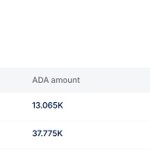
We're aware of an ongoing incident involving hacked NIGHT being routed through several pools. As a precautionary measure to protect users and LPs, we've temporarily paused swaps and Zap-In on the NIGHT/ADA pool and NIGHT/USDCX pool.
Removing Liquidity is still possible.
All other pools are operating normally. We're actively monitoring and will share updates as we have them. Funds in unaffected pools are safe.

Long Nguyen retweeted

I don’t use loops, skills, fancy orchestration, plugins or anything like that. I raw dog the agent with its default harness, I read the code, and I’m shipping more than ever to production for real projects used by real people. Sometimes if it’s a low risk part of the application I might skip reading the code but only sometimes. I think most are either lying about the amount of value they are creating or just having fun while understanding they aren’t creating value but failing to distinguish that to their audience.
If you use @secondfiapp , assume the worst the your seed phrase has been compromised and move all yours funds that's left into a new seed phrase wallet

Long Nguyen retweeted

With a rich literary tradition of 100 million people, this is an intellectual & cultural rock-bottom yet to be reached. I’m however not surprised, as such primitive worship for oligarchy, capitalism & billionaires have infested deeply across Vietnam’s policy & elite spheres.
Long Nguyen retweeted

It's finally happening. We can put this whole install script NPM worm madness behind us...
github.blog/changelog/2026-0…

Long Nguyen retweeted

OK, so I became one of those people: Claude diagnosed my sleep disorder.
Here's the story.
I'd been sleeping worse and worse since hitting my mid-30s. I've been averaging 5:30-5:45 a night for a couple years now, while in my 20s I was getting 7+ hours a night. I figured it must be stress, sleep hygiene, perhaps just aging--or maybe I'm one of those freaks of nature who doesn't actually need much sleep.
Eventually I bought an Oura ring and started tracking sleep, figuring "what gets measured gets optimized." But it didn't optimize anything, it mostly just showed me high-resolution charts that, yeah, my sleep sucks. It never pointed out anything obviously wrong other than how little I was sleeping.
Nothing seemed to help. Phone in another room, eye mask, blackout curtains, white noise machine, nothing seemed to help. My body just didn't want to sleep more than 6 hours a night.
Eventually I decided: fuck it. I'm pretty productive, maybe this is all I need. People say humans need 7-9 hours a night, but that's averages right? I'm probably just an outlier.
I stopped worrying about it.
Later I mentioned to an acquaintance that I was tired since I had woken up multiples times in the night.
They said: multiple times? That's really weird. You shouldn't be waking up multiple times in the night at your age.
Weird? That's not weird.
Is that weird?
That evening I asked Claude: is it weird for an in-shape mid-30s male to be waking up multiple times a night?
Answer: yes, that is weird. If you aren't sleeping enough and waking up multiple times a night, that usually means something is wrong. You should look into getting a sleep study.
I asked it what a sleep study measures, and if any of that data already lived in my Oura ring. Sure enough, some of it did--not sleep study grade, but enough for a first cut.
So I busted out Claude Code, since I would want Claude to have maximum access to tools for this. I had it figure out how to pull from the Oura API (using personal access tokens, ask your Claude for instructions) and pull down all of my sleep data. I then had it use Python to statistically analyze everything (heart rate, SpO2, wake events, sleep stages), test multiple hypotheses, and generate a dashboard full of charts, while explaining everything it was doing so I could follow along.
After 30 minutes of slicing and dicing, a hypothesis emerged: UARS, upper-airway resistance syndrome, a mild cousin of sleep apnea.
No way. Sleep apnea?
I don't snore, I'm not overweight. No way I have sleep apnea. This is the first time I've ever heard this.
Claude walked me through it. UARS is milder than full-blown sleep apnea. In UARS, your airway doesn't collapse, it just narrows, particularly in REM sleep when the muscles in your throat relax. This causes your oxygen to gradually drift down over the course of REM sleep, until your brain yanks you awake before it becomes a full apnea. In your 20s the muscle tone in your throat keeps your airway open, but as you age that tone slackens, which can trigger this effect, fragmenting your sleep.
It looks exactly like this: waking up disproportionately during REM sleep multiple times a night. That actually tracked; I realized that almost every time I woke up in the middle of the night, it was out of a dream.
Claude was clear that the Oura ring data was not dispositive, because it wasn't able to measure breathing disruptions per hour (RDI), which you'd get in a sleep study. Do a sleep study, get the RDI number, and then we'll have our smoking gun.
It pointed me to an FDA-approved at-home sleep study device (with finger probe and chest sensor) called WatchPAT for $200. After one night of recording, I got the results back to the next day:
Mild sleep apnea, likely UARS. Dammit Claude. Nicely done.
Here's the takeaway, and why I'm posting this: I'm a textbook "no way it's me" case. UARS often shows up in healthy, normal weight people who don't fit the apnea stereotype, and often gets missed for that reason.
It's easy to attribute poor sleep to insomnia or anxiety or stress, and there's an infinite supply of influencers who will pitch you reasons to feel like your sleep ritual is the problem. If you just got that red light glasses, or the blackout curtains, or took that sleeping peptide, maybe you'd be able to fix your sleep.
Roughly 10-15% of adults have some form of sleep apnea, and vast majority of them (80%+) are undiagnosed. If this might be you, run your fitness tracker data through your neighborhood frontier LLM. You'll thank yourself later.


so true, and I'm getting allergic to it, kinda like the uncanny valley of texts

