







Pinned Tweet
Just finished an absolute monster of a podcast with @drakefjustin, and it’s packed with brain-melting insights on the future of Ethereum. Here are the juiciest takeaways from Part I 👇
Ethereum’s future could turn the L1 into a rollup itself and making it the best type of rollup. Justin lays out how the L1, L2s, and new designs like Beamchain, native rollups, and based sequencing all come together into a unified vision for Ethereum as the credibly neutral internet of finance.
What’s Broken Today
• L2s are siloed — synchronous composability is dead.
• Most rely on centralized sequencers, multisigs & slow exit bridges.
• L2-native assets break Ethereum’s trustless bridge model.
• Governance delays, security councils, & EVM reimplementation = attack surfaces.
The Fix: Ethereum-native Infrastructure
• Based Rollups: Use Ethereum L1 validators as the sequencer. Removes centralization risk, restores censorship resistance.
• Native Rollups: No more reimplementing the EVM. No more Security Council multisigs. They inherit Ethereum’s execution layer by design.
•Preconfirmations: Users get fast UX (e.g., instant trading feedback) via ETH-backed inclusion guarantees from L1 validators, with slashing if they lie.
• Real-Time ZK Proofs: Slot-by-slot proving is here. ZK-enabled rollups with instant finality are becoming possible.
To get there, Ethereum is moving toward real-time, slot-by-slot proving using ZK SNARKs. This enables constant-time verification and removes the need for validators to re-execute blocks. Native rollups use a new EXECUTE precompile to introspect and reuse Ethereum’s state transition function. There is no EVM emulation, no governance lag, and no reliance on Security Councils.
Preconfirmations offer ETH-backed execution guarantees per slot, priced to offset MEV opportunity loss, while based rollups decentralize sequencing by aligning with Ethereum’s validator set.
Beamchain pushes this vision further: a clean-slate Ethereum L1 design that is post-quantum secure, radically simplified (validators could run on a Raspberry Pi), and ossified through optimality. It proposes gigagas/s throughput via ZK proofs, validator statelessness, and Attester-Proposer-Separation (APS) to maximize decentralization and censorship resistance, allowing Ethereum L1 to scale as a high-performance rollup itself.
If you're building on Ethereum or betting on its future, this convo is mandatory listening.
To be continued in Part II....

If Justin were a doctor he‘d give you the news like: „nothing to worry about, all good. your newly found terminal cancer will kill you, but only in some weeks time“

Today I call upon the blockchain industry to calmly begin planning for "bunker mode". My personal recommendation is to set in motion a controlled mass migration of assets to fresh addresses, i.e. addresses whose pubkeys remain hidden behind a hash.
Holders, starting with large and sophisticated ones, should consider moving the bulk of their funds to addresses that have never signed a transaction. And when they do sign one, they should also move remaining funds to a new address (possibly generated from the same seed phrase).
Don't rush. While I believe there is cause for action a rushed migration would do more harm than good. Don't panic either. Moving assets to protected addresses is a simple, preventative step which does not require new cryptography or new wallets.
IMO it is now reasonable to brace for the possibility that ECDSA breaks before qday, in the worst case in months not years. By "break" I mean fast private key recovery (e.g. in one week) on available hardware (e.g. a large GPU cluster).
Recent days have been humbling for human mathematical intuition. Long-held, unquestioned hypotheses have fallen. This includes the n log(n) bound for integer multiplication and the 3SUM conjecture. In hindsight, May's unexpected disproof of the Erdős unit distance conjecture was our warning shot.
Yesterday's OpenAI drop made it clear that mathematical superintelligence is upon us. They say there are weeks where decades happen. We are about to live through weeks where centuries of mathematical progress happen. Could our magic 64-byte ECDSA signatures be too good to be true? Was it just security through obscurity all this time?
Elliptic curves feel especially vulnerable to superintelligence. Curves carry rich structure, with room for fancy tricks like Schoof, Frobenius, pairings. (By contrast, hashes are designed to minimise algebraic structure.)
Separately, as Ewin Tang can attest, an efficient quantum algorithm sometimes foreshadows an efficient classical one. We should be open to the possibility of a classical counterpart to Shor that breaks elliptic curves and RSA at once.
Also noteworthy is the striking under-representation of cryptographic breakthroughs among the 722 mathematical results OpenAI published. I've witnessed first-hand the US government censoring academic quantum cryptanalysis results. Backroom interventionism is my base case.
I urge large, sophisticated actors to lead by example. Project11's "risq list" (bitcoin-risq-list.projecteleven[.]com) is a great tracker of exposed BTC pubkeys. Binance, Bitbank, Robinhood, Bitfinex, and Tether have an opportunity to harden their cold storage. Next month I'll address institutions in London in a live Q&A (forum.ethereuminstitutional[.]org/london-2026).
Again, please do not rush. Wallets holding under 50 BTC enjoy partial cover from "Satoshi's shield", i.e. his 20K exposed addresses that hold 50 BTC each. Load-bearing signers like oracles and L2 security councils should consider rotating ECDSA pubkeys with every signed message and/or multi-signing with a hash-based schemes like SPHINCS.
Exiting bunker mode safely will require post-AI cryptography. My inclination is to go all-in on hash-based cryptography and avoid structured mathematical assumptions entirely, whether from curves, lattices, or isogenies. A single battle-tested hash (e.g. from the SHA or BLAKE families) yields plausible post-AI security.
The Ethereum roadmap on strawmap[.]org fully embraces hash-based cryptography with end-to-end formal verification as a response to the quantum threat. Those timelines must now be revisited and accelerated in light of mathematical superintelligence. I'll be pushing for maximum defensive acceleration.

Luis retweeted

BREAKING: @DGLD_Official, the tokenized gold from Swiss refiner MKS PAMP, is now live on Solana.
Over a million @SwissBorg users can buy it in the app from today, with liquidity managed by @ArrakisFinance.

Luis retweeted

DGLD is live on @solana.
The only Swiss refined, vaulted & natively issued gold token.
Find it on @SwissBorg today.
Liquidity management by @ArrakisFinance.
Nicely put

Crypto is one of the few technologies that works as both a painkiller and a vitamin.
As a painkiller (or maybe a miracle drug), it does something extreme and irreplaceable, and it solves specific problems: asset ownership, the freedom to transact, and increasingly privacy. AI will sit in the center of this category.
As a vitamin, it's a calm/quiet upgrade to something that already works. It's the type of IYKYK that makes you smile the moment you understand the cleverness of the crypto underneath ( e.g. lightly touching the chain, or creating wallet on user's behalf in the backend)
This is my 4th cycle, and it just feels different ( maybe because I have a much bigger chip on my shoulder).
I do think it will outrun most people's expectations in terms of the tangible difference our industry makes.
Luis retweeted

Crypto is one of the few technologies that works as both a painkiller and a vitamin.
As a painkiller (or maybe a miracle drug), it does something extreme and irreplaceable, and it solves specific problems: asset ownership, the freedom to transact, and increasingly privacy. AI will sit in the center of this category.
As a vitamin, it's a calm/quiet upgrade to something that already works. It's the type of IYKYK that makes you smile the moment you understand the cleverness of the crypto underneath ( e.g. lightly touching the chain, or creating wallet on user's behalf in the backend)
This is my 4th cycle, and it just feels different ( maybe because I have a much bigger chip on my shoulder).
I do think it will outrun most people's expectations in terms of the tangible difference our industry makes.


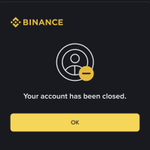
Deleting all my CEX accounts. Only Kraken remains.
Who needs a CEX still, anyways? Not worth the KYC data breaches. Fuck em!
ONCHAIN ONLY


Luis retweeted

Tokenized equities exploded this summer: TVL up 5x in a year, volumes going parabolic, holders climbing fast.
But who is actually winning, and how much of it is real?
We spent months at @ArrakisFinance putting the data in one place to find out.
👉 arrakis.finance/tokenized-eq…


After months of research, we have published the most comprehensive report on tokenised equities, indexing over 1.5m addresses across five issuers on four chains.
arrakis.finance/tokenized-eq…
In this report, you will learn who is actually buying tokenised equities, how fast this market is growing, what the latest innovations are, and projections for what's ahead in 2027.
Confirmation-bias is in its prime!
You can now win any argument with this one weird trick:
Step 1: Prompt Claude to confirm your bias.
Step 2: Cite Claude as the AI authority to win the argument.
Let‘s run it back!!

The cryptographic world computer:
vitalik.eth.limo/general/202…
My attempt to express in somewhat concise terms the true meaning of basically everything planned to happen to Ethereum starting from the fork after Hegota. It's really not just a blockchain anymore. It's a hybrid architecture that combines together blockchains and modern cryptography, to enable much more powerful properties.
FOCIL, EIP-8288, Lean consensus, state management, formal verification, advanced mempool improvements (including privacy), and the longer-term specter of obfuscation all mentioned.


