

building AI systems that save real time testing tools daily sharing what actually works
Joined March 2026
- Tweets528
- Following22
- Followers89
- Likes190



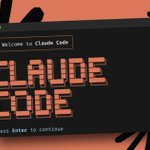


Claude Code just hit 100k GitHub stars with nearly 11k added in a single day.
For context, OpenClaw took months to reach similar milestones with 339k stars and thousands of contributors.
Claude Code is moving fast, but the real question for builders like us is how it fits into the stack.
Ive been running Opus 4.6 desktop app alongside OpenClaw and Hermes for months now. The `.claude/` folder with `CLAUDE.md` as the instruction manual is a clean setup for anyone using it as a planning and debugging layer.
But stars dont equal utility. What matters is whether Claude Code can handle the autonomous loops that OpenClaw and Hermes are already doing.
Right now my setup uses Claude Code for feature planning and code audits, not as the core agent brain. Thats still OpenClaw and Hermes.
If youre running Claude Code as your primary agent framework, Im genuinely curious what your autonomous workflow looks like compared to a multi-agent setup.

1
29

Dressing rooms... are they even necessary anymore? 🤯
Imagine trying on clothes from your couch. No lines, no bad lighting, just pure fashion bliss.

1
2
19
TurboQuant just squeezed giant AI models into a suitcase.
Extreme compression, without killing accuracy, rewrites the rules.
Soon, running state-of-the-art AI on tiny devices will be normal. No more cloud dependency.
Imagine brainstorming with super-smart AI, right in your pocket.
1
19
So... Anthropic accidentally leaked Claude Mythos via a CMS misconfiguration. Codenamed Capybara. Nearly 3,000 unpublished files exposed.
Reportedly crushes Opus 4.6 in coding, reasoning, and cybersecurity.
If this is real, every OpenClaw and Hermes setup just got a new brain to test.

1
83
It's about AI quietly blending into daily workflows, making the average knowledge worker more dependent, without most even noticing.
The danger? Not obsolescence, but invisible lock-in.
Integration is a subtle trap.
Here's what's not obvious:
- When OpenClaw lives in Microsoft 365, it decides by default how your docs, notes, and ideas flow.
(e.g.: It can auto-organize your files or summarize meetings, you trust its structure, but lose oversight.)
- Most won't question outputs or decisions, it's "just part of the system."
(e.g.: Accepting a generated email response or report without double-checking, assuming it's accurate.)
- The more seamless it gets, the harder it is to unplug without pain.
(e.g.: Once your work calendar, docs, and team chats are auto-synced, moving to a new tool feels impossible.)
Example: Remember life before auto-sync? Now, disconnecting is unthinkable.
Invisible dependencies change how we work, and what we work on.
Are you choosing your workflow, or is it being chosen for you?
Think twice before letting convenience choose for you. Share your thoughts, do you feel in charge, or just along for the ride?
1
17
Most people think all AI models are the same.
Claude flips the script.
Its "constitutional AI" isn't just a buzzword, it actually shapes your results in the real world.
You get:
, More predictable outputs, less hallucination, fewer surprises
Example: when summarizing docs, it delivers facts, not fiction
, Built-in value guardrails
Claude steps back from risky or unethical territory automatically
Perfect for compliance-heavy workflows
But here's the tradeoff:
, Sometimes it's too cautious
Great for accuracy, but not for wild brainstorming
If you want creativity, you'll feel the limits.
If you want reliability, it's a quiet superpower.
That's the real advantage.

Ever feel like you're working but not really moving?
It's not always the big distractions.
The real bottlenecks are tiny habits you barely notice.
Let's talk about 3 silent killers:
, Waiting for "perfect timing" to start something
Example: postponing a tough call because you want to "prep more"
Fix: start messy, adjust on the fly
, Tinkering with tools instead of finishing work
Example: reworking your note-taking app setup
Fix: leave it alone during deep work hours
, Stacking tiny "just one more thing" tasks
Example: replying to every ping before real work
Fix: batch low-impact tasks, save your best focus for the real stuff
Spot these, and you'll move way faster, without working harder.

1
11
This is a big deal for my OpenClaw and Hermes setup.
Claude can now open apps, click through UI, and test what it built directly from the CLI. Computer use is live in Claude Code on Pro and Max plans.
I just confirmed this works with my workflow. Previously, if my OpenClaw agent built something, I had to manually verify the output by opening the app, clicking around, and checking if it actually worked. That human loop was one of the biggest bottlenecks in my autonomous pipeline.
Now Claude Code can do that verification step itself. Build the feature, open the app, click through it, confirm it works, move on.
For anyone running the Hermes supervisor setup I shared before, this changes the QA layer significantly. Hermes was already catching bugs and proposing fixes, but it couldnt visually confirm that a UI change actually rendered correctly. It was working off logs and code diffs alone.
With computer use plugged in, the feedback loop tightens:
- OpenClaw builds
- Claude Code opens the result and tests it visually
- Hermes audits the outcome and logs discrepancies
- Fixes get proposed and verified without me touching anything
That said, there are already reports of Max plan users burning through usage limits in 20 minutes. Computer use is clearly token-heavy, which makes sense since its processing screenshots on every click.
This is going to be expensive to run at scale until the costs come down or until lighter models can handle the visual verification piece.
For now, the move is to use computer use selectively for critical verification steps rather than letting it run wild on every task.
Still early days in research preview, but this is one of those features that quietly removes another human loop from the agent pipeline. And removing human loops is the whole game.

Computer use is now in Claude Code.
Claude can open your apps, click through your UI, and test what it built, right from the CLI.
Now in research preview on Pro and Max plans.
1
18
Imagine an AI agent that actually *learns* from its mistakes... Stop imagining. Hermes Agent v0.6.0 is here. It's not just bug fixes; it's a whole new level of agent.

1
1
12
Whoops! Anthropic just spilled the beans 🤫 on their *next-level* AI, Claude Mythos (codename Capybara). Cybersecurity stocks are already feeling the heat. What gives?

1
1
19
Ollama just dropped Pi and Im losing my mind.
A local coding agent that powers OpenClaw, runs on Ollama, and you can ask it to write extensions for itself.
Read that again. The agent builds its own tools.
Minimal harness. Skills, prompt templates, themes, extensions. All customizable. All local.
Ive been duct-taping my OpenClaw setup together for months and now Ollama hands us the clean foundation I didnt know I needed.
Ollama launch pi --model kimi-k2.5:cloud
Thats the command. Thats the whole thing.
The walls between local LLMs and agentic coding just evaporated. If youre running OpenClaw and not looking at this, youre rebuilding what already exists.
My Hermes supervisor just got a new coworker.

2
27
Imagine turning text into stunning videos in *minutes*? CapCut's Seedance 2.0 is here, and it's changing the game. Forget endless tutorials, get ready to be a visual storytelling wizard
But there's a catch…

1
2
17
High-quality CGI, AI-powered UGC from Amazon links, instant viral short video remakes... all inside CapCut. It's a free, limited-time Pro perk with Seedance 2.0.
But here's the kicker: It now works with @openclaw agent inside @capcutapp!
1
7
This is the part people are sleeping on. Anthropic isnt just building Claude Code, theyre using it to build Claude Code. That feedback loop is why 74 updates dropped in 52 days. The $150k/month employee isnt overspending, theyre stress testing the ceiling so the rest of us get a better tool.

Anthropic is using its own AI tool Claude Code, like crazy.
In just 52 days, they pushed out 50+ new updates
One employee used it so much in a month, it cost $150,000.
Around 80% of the team uses it every day, and the heaviest users are spending hundreds of thousands on it.

1
74
Confirmed: Hermes Agent just hit v0.5.0 and the traction is real.
11K GitHub stars. 300+ community members joining in under 2 hours. A founder merging 32 PRs in a single day.
What makes Hermes different from everything else out there:
- Multi-level memory system that actually learns across sessions
- Runs on your hardware with no API key
- Lean code with parsers that work per model
- Persistent dedicated machine access
@JulianGoldieSEO tested Hermes vs OpenClaw side by side. Hermes built a website faster and provided live updates while OpenClaw went silent.
Ive been running both for weeks now. Hermes as the supervisor, OpenClaw as the workhorse. But seeing @lamxnt fully move to Hermes using Codex 5.3 with OAuth through OpenAI as the main model makes me want to test a Hermes-only stack.
The open-source agent space is moving fast. @NousResearch is shipping at a pace thats hard to ignore.

The real answer is neither.
I run both and make them argue with each other inside a Discord channel while Hermes watches like a disappointed parent.
Claude writes beautiful code then gaslights you about what it changed. Codex rewrites your entire architecture because you asked it to fix a typo.
Picking a team is like choosing your favorite child who keeps setting the house on fire.
The move is letting them fight it out and shipping whatever survives.


1
14
The Claude Code vs. Codex debate is missing the point.
I run both daily. Heres what actually matters:
Claude Opus handles the heavy lifting. Architecting features, maintaining context across large codebases, autonomous planning. It thinks before it acts.
Codex is the speed demon. Debugging, code reviews, catching issues fast. David Marcus says it spots problems in Claudes outputs every time, and honestly, hes not wrong.
But the real unlock is running them together.
Claude builds the thing. Codex audits the thing. Claude fixes what Codex flags. The feedback loop compounds.
People picking sides are leaving performance on the table. The builders actually shipping right now arent loyal to one tool. Theyre using both where each is strongest.
And now with @blackboxai letting you run Claude Code with OpenAI models and Codex with Anthropic models in VSCode, the lines are blurring even more.
Stop debating. Start stacking.


