

Cookin’ in the lab…
The Moon
Joined June 2022
- Tweets2.2K
- Following737
- Followers840
- Likes3.7K




Yo @ryancohen come play #LooperLands with us when you have a chance! I still have your Tinfoil Gamer avatar waiting for you!!

m88n.btcᛤ🟧 retweeted
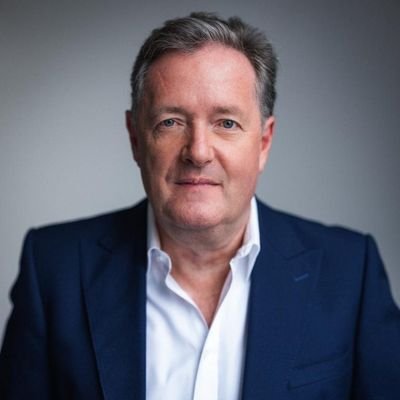
"It's not a denial..."
GameStop CEO Ryan Cohen confirms he is seriously considering a hostile takeover of eBay.
📺youtu.be/mK3XtU6mVFM
@piersmorgan | @ryancohen


Tits absolutely fucking JACKED!

Did @ryancohen or @TheRoaringKitty just buy an auction lunch with Warren Buffett? $GME
Winning bid was $9,000,100…
9,001,000 is the same number of shares Ryan filed for GameStop and Roaring Kitty filed for Chewy…
COHENcidence!?!
Kind of would make sense if Berkshire Hathaway got involved with the company transforming into the next-generation Berkshire Hathaway…

m88n.btcᛤ🟧 retweeted
If anyone is interested in understanding the request to increase total authorized to 2.5B shares, here is a write-up from February $GME

Prepare yourself for a proposition from $GME to increase the total authorized share count. I know that might make some of you uncomfortable, but hear me out because there's a very logical reason this is coming, and it's actually bullish. If you disagree or hate this idea, please give me the courtesy of reading my logic before you have a mid-life crisis in the comments.
Right now, GameStop has ~448m shares outstanding against 1bn authorized. That's a 44.8% issued-to-authorized ratio. Sounds like plenty of headroom, right? Not when you factor in what's already committed:
- 171.5m shares tied to RC's performance options
- ~43.5m shares from the $1.3Bbn convertible notes ($29.85 strike)
- ~77.8m shares from the $2.25bn convertible notes ($28.91 strike)
That alone brings the fully diluted count to ~741m, or 74% of the authorized ceiling. And that's before a single acquisition dollar gets raised.
So why would RC want to increase the limit now, while there's still room? Because good capital allocators do not wait until they are maxed out. They plan ahead, and there is clear precedent for this.
RC has shown you exactly how he thinks about this.
In January 2023, RC built a stake worth several hundred million dollars in Alibaba and personally pushed management to increase their buyback program from $40bn to $60bn. He told them they could hit double-digit sales growth and ~20% FCF growth over five years, but the shares were undervalued and the buyback was not aggressive enough. Alibaba listened and expanded the program.
He also invested the vast majority of his personal wealth into Apple after selling Chewy, becoming one of Apple's largest individual shareholders (roughly $800m plus at peak). When sources close to RC described his Alibaba thesis to Reuters and the Wall Street Journal, they specifically pointed to Apple's capital return program as the blueprint RC wanted Alibaba to follow. RC called Apple “the strongest business in the world” and cited “disciplined capital allocation” as a core investment principle he learned from Buffett. He bought his first Apple share at age 15.
The through-line here is pretty clear to me: RC is acutely aware of shareholder value mechanics, issued-to-authorized ratios, and capital discipline. He does not want to be forced into raises when his back is against the wall. He would rather have optionality.
Buffett operated the exact same way, and there is direct precedent here. Berkshire Hathaway has 1.65m Class A shares authorized but only roughly 523,000 outstanding. That is a 31.7% utilization rate, and Buffett has maintained that kind of headroom for decades. He did not do that because he planned to flood the market with stock, but because he wanted the flexibility to act when opportunity appeared without going back to shareholders for emergency approvals.
At the 1995 Berkshire annual meeting, when shareholders questioned whether authorizing preferred stock would dilute them, Buffett said: “There is no downside to this proposal. It is an authorization. It is not a command to issue shares.” He also explained that shareholders are only diluted if Berkshire receives less in value than it gives, and he repeated that principle in multiple letters and Q&A sessions over the years. In later commentary he went so far as to say he would “rather prep for a colonoscopy than issue Berkshire shares,” underscoring how seriously he treats actual issuance versus simple authorization. The lesson is simple: Buffett authorized far more shares than he ever used, kept massive headroom at all times, but was extremely disciplined about when and why he actually issued stock. That is the model RC appears to be following.
Now let's do the math on what $100bn plus actually requires.
RC has told us the plan: acquire a publicly traded consumer company “significantly larger” than GameStop. He has described it as “transformational” and said this has “never been done before in the history of capital markets.”
GameStop currently sits at roughly $11bn market cap with roughly $8.8bn in cash. To get to $100bn by 2036 (the 10 year horizon of his compensation plan), he is going to need significantly more capital than what is on the balance sheet today. My estimate: at least another $20bn in equity and debt capital over the next 3 to 5 years. And honestly, that might be conservative if the vision is $100bn to $500bn.
Think about it through the lens of how the Mag 7 plan their growth. Meta, Google, Microsoft, Amazon, they are each telling shareholders and the market they are spending $60bn to $80bn per year for the next 3 years on AI infrastructure. They are planning capex 2 to 4 years out and asking for patience. The market rewards that kind of forward planning.
Now apply that same thinking to GameStop. This is not capex, but the principle is the same: how much capital does RC need to build a $100bn to $500bn conglomerate? The answer is: a lot. And it needs to come from a combination of cash flowing acquired businesses that can generate $4bn to $5bn per year, plus accretive equity raises and creative debt instruments (like those 0% converts).
If you assume $20bn in additional equity raises at an average price of roughly $25 per share, that is roughly 800m new shares. Add that to the 741m fully diluted count and you are at roughly 1.54bn shares, well past the current 1B authorized limit.
If RC wants to hover around a 60 percent issued-to-authorized ratio (which, based on his Alibaba and Apple track record, seems like a reasonable mental ceiling), he would need authorization for roughly 2.5bn to 3bn shares. My guess is we will see a proposal for 2bn to 3bn, likely the latter.
Here is the key point most people miss: increasing the authorized share count is not dilution. It is giving the board the legal runway to execute over a multi year period. Dilution happens when shares are actually issued, and RC has shown through his $35bn all or nothing compensation plan that he only wins if the stock goes up. His 171.5m options are worthless unless GameStop hits $100bn in market cap and $10bn in cumulative EBITDA. Every share he issues needs to be accretive to that goal or he is lighting his own paycheck on fire.
It takes money to buy whiskey. You do not build $100bn plus companies without capital. And it is far better to ask for authorization now, while utilization is at roughly 45%, than to come back begging when you are at 90% and the market reads it as desperation.
This is forward planning. This is the Berkshire playbook. Do not let it scare you.
m88n.btcᛤ🟧 retweeted
I’m selling stuff on eBay to pay for eBay
ebay.com/usr/ryan_5050
m88n.btcᛤ🟧 retweeted
The people running eBay bought $0 of stock in the open market in the last 5 years.
eBay insiders sold more than $120M in the last 5 years.
m88n.btcᛤ🟧 retweeted
The Hollow Men
American capitalism is rotting from the head down. We have replaced the "Owner-Operator"—the risk-taker-with a new, parasitic class of corporate bureaucrat: The Risk-Free Insider.
By "Insider," I am not referring to a specific title. I am referring to the entire administrative state that has captured the modern corporation. This includes the Directors who exist solely to collect fees, the Executives who exist solely to collect bonuses, and the Managers who exist solely to hire consultants.
These are the hollow men of the boardroom. They are masters of PowerPoint. They wear the right suits. They say the right buzzwords about "governance" and "ESG." But they are mercenaries fighting a war with someone else’s ammunition.
In a functioning economy, authority is tied to liability. If you make a bad decision, you lose your own money. That fear of loss is the only thing that keeps a business honest. It forces you to cut waste, obsess over the customer, and stay late to fix what is broken.
Today, we have severed that link.
We have rigged the game so that heads, the Insider wins; tails, the shareholder loses.
If the stock goes up, the Insider collects a massive performance bonus. If the stock crashes due to their own incompetence, they are fired with a "Golden Parachute" worth tens of millions. They are gambling with the house’s money, and they never leave the table poorer than they arrived.
This looting starts in the boardroom.
We have normalized a "Country Club" culture where directors are selected based on social profiling rather than their ability to build a business. The modern board member is often a professional tourist—paid an average of $350,000 a year.
Let’s be brutally honest about what that number represents. The average director is paid nearly five times the GDP per capita of the United States. They earn more for attending four quarterly lunches than the vast majority of Americans earn in five years of hard labor.
And for what?
Most of these directors are "over-boarded," sitting on three or four boards simultaneously. They treat directorships as a gig economy for the elite. They fly in, rubber-stamp a compensation package they didn't read, and fly out. They collect checks from companies they do not understand, do not use, and certainly do not love.
They are not there to ask hard questions. They are there to be collegial. They are there to protect the other Insiders.
And what happens when these boards hire executives who also have no personal capital at risk?
We get the Delegation Economy.
When a Risk-Free Insider faces a crisis—bloated expenses, a broken supply chain, or a stale product—they do not roll up their sleeves. They hire a consultant. They pay a strategy firm millions of shareholder dollars to produce a 100-page deck telling them what they already know.
This is not management. It is intellectual money laundering.
They use shareholder capital to buy an insurance policy for their own careers. If the plan fails, they can blame the consultants. They delegate the work because they are terrified of the responsibility. They would rather preside over a slow, comfortable decline than risk a bold mistake.
While American Insiders are busy optimizing their severance packages, our global competitors are optimizing their products. They are not slowed down by bureaucracy. They are not waiting for a slide deck. They are outworking us.
If we continue to fill our C-suites with administrators instead of operators, we will lose our edge. We will see iconic American franchises hollowed out by fees, managed for the benefit of the Insiders, while the true owners—the shareholders—are left holding the bag.
The time for polite governance is over.
If we want to save the American economy from mediocrity, we must demand a return to the "Owner’s Mentality." We need leaders who treat shareholder capital with the same reverence they treat their own savings. The era of the Risk-Free Insider must end.
m88n.btcᛤ🟧 retweeted
Proposal to acquire eBay.
investor.gamestop.com/ebay


