

MACUA is a community-based, united front of mining-affected communities in South Africa with branches across the country. Nothing About Us Without Us!
Johannesburg, South Africa
Joined August 2019
- Tweets4.4K
- Following2.1K
- Followers6.3K
- Likes3.1K




Pinned Tweet
Voices of the people. Power in unity. Together we are MACUA — building justice for mining-affected communities.#nodecisionaboutuswithoutus #NothingAboutUsWithoutUs
📷📷 *PREPARING THE SOIL, PLANTING THE SEEDS OF CHANGE: WAMUA KUTLOANONG IN ACTION!* 📷📷
*Before we can harvest the fruits of change, we must first prepare the ground!*
The women of *WAMUA Kutloanong Branch* have taken another inspiring step towards building community self-reliance and food security by coming together to prepare the land for their new community food garden.
Armed with determination, solidarity and their own hands, our women spent the day clearing the space, removing weeds and working the soil in preparation for planting spinach and other vegetables.
📷 *Today, the ground may be bare, but it holds the promise of something much greater.*
This initiative is about more than growing food. It is about creating opportunities for women to generate income, strengthening household food security, passing agricultural knowledge to the next generation and reclaiming the power of communities to provide for themselves.
In mining-affected communities, where generations of mineral extraction have too often left behind poverty, unemployment and economic exclusion, these grassroots initiatives represent an important assertion of community agency.
*Our women are demonstrating that development is not something that must always be delivered from above. It can also be built from below, through collective action, cooperation and the determination to take control of our own futures.*
📷 We salute every woman who rolled up her sleeves, cleared the weeds, turned the soil and contributed to making this initiative possible.
The garden is still in its early stages, but its foundations are being laid through the collective efforts of women who refuse to wait for someone else to act.
Soon, we hope to see this space transformed into a flourishing garden that nourishes families, strengthens livelihoods and inspires others to follow.
*From preparing the soil to cultivating community power, WAMUA Kutloanong is showing us what grassroots organising looks like in practice!* 📷📷
📷 *WAMUA - WE GROW TOGETHER!*
#WAMUA #MACUA #Kutloanong #WomenLeadingChange #FoodSecurity #FoodSovereignty #CommunitySelfReliance #WomenEmpowerment #GrassrootsDevelopment #CommunityPower #NothingAboutUsWithoutUs


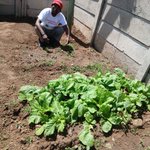
📷📷 *WOMEN GROWING FOOD, BUILDING POWER: WAMUA THEUNISSEN LEADS BY EXAMPLE!* 📷📷
*We are not waiting for change. We are planting the seeds of change ourselves!*
During a recent visit by the WAMUA National Executive Committee (NEC) to Theunissen, our women proudly showcased their growing backyard food garden, a powerful example of grassroots initiative, determination and community self-reliance.
While the branch continues to seek a larger space to expand its food production, *the women of WAMUA Theunissen have refused to let limited resources stand in the way of progress.*
With their own hands, they have planted spinach and other vegetables, taking practical steps towards feeding their families, strengthening household food security and supporting their wider community.
📷 *This is about more than growing vegetables. It is about growing independence, dignity and collective power.*
For women in mining-affected communities, where poverty, unemployment and economic exclusion remain everyday realities, initiatives such as these demonstrate that communities are not simply waiting for someone else to deliver development. They are actively creating their own pathways towards sustainable livelihoods.
The NEC visit provided an important opportunity to recognise these efforts, engage directly with the women on the ground and reaffirm the movement's commitment to supporting community-led initiatives.
📷 *We salute the women of WAMUA Theunissen!* Their determination reminds us that we do not always need to wait for perfect conditions or substantial resources to begin building the future we want.
Sometimes, transformation begins with a small piece of land, a few seeds and the collective determination to make something grow.
*When women organise, communities become stronger. When women plant, they sow the seeds of a more just and sustainable future!* 📷📷
*WAMUA - WE GROW TOGETHER!* 📷
#WAMUA #MACUA #Theunissen #WomenLeadingChange #FoodSecurity #FoodSovereignty #CommunitySelfReliance #WomenEmpowerment #GrassrootsDevelopment #NothingAboutUsWithoutUs


📷📷 *WOMEN CULTIVATING CHANGE: WAMUA THABONG BRANCH LEADS BY EXAMPLE!* 📷📷
*From the ground up, we are growing food, building resilience and strengthening community self-reliance!*
In June 2026, *Mrs Cleopatra Lerotholi*, a dedicated member of the WAMUA Thabong Branch, took an important step towards household food security by establishing a food garden in her own backyard.
Today, her garden is flourishing, demonstrating what can be achieved when women take the initiative to create sustainable livelihoods and practical solutions to the challenges facing their communities.
With the valuable support of *Hloni and Thabo*, who assist with maintaining and nurturing the garden, this initiative also reflects the importance of solidarity, cooperation and collective responsibility in building stronger communities.
📷 *For WAMUA, food gardening is about more than growing vegetables.* It is about reclaiming the ability to produce our own food, reducing dependence, strengthening household resilience and demonstrating that communities can become active agents in shaping their own development.
In mining-affected communities, where poverty, unemployment and food insecurity remain persistent challenges, initiatives like these remind us that meaningful change also begins with the everyday actions of ordinary people.
📷 We salute Mrs Lerotholi, Hloni and Thabo for their commitment and encourage other branches to draw inspiration from this initiative.
*When women lead, communities grow. When communities organise, change becomes possible!* 📷📷
#WAMUA #MACUA #ThabongBranch #WomenLeadingChange #FoodSecurity #CommunitySelfReliance #FoodSovereignty #WomenEm


☀️ GREEN POWER, OLD INEQUALITY! ✊🏿
THE SUN BELONGS TO EVERYONE. THE BENEFITS MUST NOT BELONG TO A FEW!
Today, the people of Theunissen gathered to strengthen their struggle for justice and accountability at the Sonvanger Solar Power Plant.
While corporations secure electricity and investors pursue profits, communities are left asking: Where is our share? Where is our voice? Where is the justice?
For months, the community has demanded meaningful engagement, transparency and a binding Community Development Agreement. These demands remain unresolved.
But the people are organising, and their voices will not be silenced!
MACUA/WAMUA is preparing to launch its GREEN POWER, OLD INEQUALITY report and campaign, exposing how South Africa's energy transition risks reproducing the very inequalities it claims to overcome.
We are not against renewable energy. We are against a transition that changes the source of power without changing who holds the power!
✊🏿 NO JUST TRANSITION WITHOUT JUSTICE FOR COMMUNITIES!
THE COMMUNITY IS ORGANISING. THE REPORT IS COMING. THE STRUGGLE CONTINUES!
#GreenPowerOldInequality #Sonvanger #MACUA #WAMUA #Theunissen #EnergyJustice #JustTransition

🌍✊🏿 REIMAGINING JUSTICE: FROM COMMUNITY KNOWLEDGE TO COLLECTIVE POWER!
This week, MACUA, WAMUA and YAMUA are participating in an international research inception workshop in South Africa, bringing together activists, community organisers and researchers from South Africa, India and the United Kingdom, in partnership with the Institute of Development Studies (IDS) at the University of Sussex.
The Rethinking Justice initiative connects directly with our recently launched MACUA Multiversity School of Justice, as we work to strengthen grassroots political education, community-led research and collective organising.
Both initiatives challenge the idea that knowledge belongs exclusively to universities and academics. We believe communities are not simply subjects of research, but producers of knowledge and agents of social transformation.
Through community visits to Blyvooruitzicht and Lefaragatlhe, participants are learning directly from mining-affected communities about the consequences of extraction, inequality and the struggles for justice.
Our ambition is not simply to produce academic research, but to turn community experience into critical consciousness, knowledge into organised action, and organised action into collective power.
✊🏿 NOTHING ABOUT US WITHOUT US!
#ReimaginingJustice #MACUAMultiversity #SchoolOfJustice #MACUA #WAMUA #YAMUA #IDS #MiningJustice #CommunityPower #InternationalSolidarity


OUR LAND IS OUR LIVELIHOOD, OUR HERITAGE AND OUR FUTURE: RURAL COMMUNITIES SAY NO TO MINING!
📍 Ntuthunga 1, Ntuthunga 2, Fuyeni, Makhwezini, Ocilwane and Novunula | KwaZulu-Natal
Over the past three days, MACUA and WAMUA have been engaging with rural communities across the uMfolozi Local Municipality, within the King Cetshwayo District Municipality, where residents living in the shadow of Thendele's mining operations are raising serious concerns about the future of their land, livelihoods and communities.
What emerged from these engagements is a powerful reminder that development cannot simply be measured by the number of mines opened, investments attracted or jobs promised. It must also be measured by what communities already have, what they stand to lose, and whether they have the power to determine their own futures.
These communities face significant economic challenges. Employment opportunities are scarce, and many residents are forced to leave their homes in search of work elsewhere. Yet, despite these difficulties, generations of families have built and sustained their livelihoods through their relationship with the land.
Community members estimate that nearly 90% of residents depend on livestock farming, alongside crop cultivation, fishing and hunting. Their cattle are not simply economic assets; they represent household security, accumulated family wealth, cultural identity and a means of survival passed down through generations.
For these communities, the land is not empty space waiting for investment. It is already a living, productive economy.
During our engagements, residents expressed strong opposition to mining expansion. Their concerns are informed by what they say they have witnessed in neighbouring mining communities, where people have lost access to land and livelihoods without experiencing the meaningful economic benefits that were promised.
They fear that further mining will destroy grazing land, threaten agricultural livelihoods, contaminate water sources, pollute the air and disturb ancestral graves that connect families to their history and identity.
These are not abstract environmental concerns. They are questions of survival, dignity, culture and intergenerational justice.
The message emerging from the communities was clear: They do not want their existing livelihoods sacrificed in exchange for uncertain promises of mining-led development.
Their experience also challenges a deeply entrenched assumption within South Africa's economic development model: that rural land only becomes economically valuable when minerals are extracted from beneath it.
What about the value of the cattle grazing on that land? The food produced by small-scale farmers? The water sustaining households? The cultural and spiritual significance of ancestral graves? And the generations of livelihoods that could be destroyed in the pursuit of short-term mineral extraction?
Who calculates these losses, and who ultimately carries their costs?
For MACUA and WAMUA, these engagements reinforce a fundamental principle: communities must not be treated as obstacles to development or passive beneficiaries of decisions made elsewhere. They are rights-bearing people whose knowledge, livelihoods and choices must shape the future of their land.
As we continue our community-led engagements under the Strengthening Workers' Active Participation in South Africa's Just Transition (SWAP) initiative, coordinated by Friedrich-Ebert-Stiftung (FES) South Africa in partnership with the Sam Tambani Research Institute (SATRI), and co-funded by the European Union, we remain committed to ensuring that rural communities can articulate their own development priorities and organise around the protection of their rights.
A Just Transition cannot mean replacing one form of dispossession with another. Nor can development be considered just when communities are expected to surrender the very resources that sustain their lives.
For the people of Ntuthunga, Fuyeni, Makhwezini, Ocilwane and Novunula, the struggle is about much more than opposition to a mine.
It is about defending the right to remain on their ancestral land, to sustain their livelihoods, to protect their heritage and to determine what development should look like for future generations.
NOTHING ABOUT US WITHOUT US!
#MACUA #WAMUA #NothingAboutUsWithoutUs #LandRights #MiningAffectedCommunities #JustTransition #EnvironmentalJustice #RuralLivelihoods #CommunityPower #KwaZuluNatal #FES #SWAP


📷*KNOWLEDGE SHOULD NOT BE A PRIVILEGE OF THE FEW!*
📷*MACUA MULTIVERSITY – SCHOOL OF COMMUNITY JUSTICE*
*OPEN ACCESS WEEKLY CLASSES | REGISTRATION NOW OPEN!*
Who produces knowledge? Who gets access to it? And how can ordinary people use knowledge to understand and challenge the political, economic and legal structures that shape their lives?
The MACUA Multiversity School of Community Justice is opening its weekly online learning platform to *all MACUA, WAMUA and YAMUA members, community activists, students, researchers and interested members of the public.*
We believe that education should not be confined to universities, lecture halls or those who can afford it. Communities are not merely subjects of research and knowledge produced by others. They are also producers of knowledge, with experiences, insights and perspectives essential to understanding and transforming society.
📷*THREE FREE WEEKLY ONLINE CLASSES*
📷*TUESDAYS | JUSTICE*
Explore justice, human rights, constitutionalism, inequality and the relationship between law, power and society.
📷*WEDNESDAYS | MINING LAW (MPRDA)*
Understand South Africa's mining laws, mineral governance, community rights and the legal frameworks regulating mining.
📷*THURSDAYS | POLITICAL EDUCATION*
Explore political economy, capitalism, colonialism, class, inequality, economic power and alternative visions of development and social transformation.
📷*OPEN TO EVERYONE | FREE OF CHARGE*
No academic qualifications are required. You do not need to be a MACUA member. You can participate in one, two or all three weekly classes.
📷*HOW TO REGISTER*
Click on the registration link below and complete the short form. Once registered, you will be added to the class-link distribution list for your selected courses and receive the relevant weekly online joining links.
📷*REGISTER HERE:*
forms.gle/bEYq1qgZiNPrrQZh7
*The struggle for justice is also a struggle for knowledge.*
Join us as we learn together, question established ideas, deepen our understanding of the world and explore how it might be transformed.
**KNOWLEDGE FOR JUSTICE. EDUCATION FOR EMPOWERMENT. LEARNING FOR SOCIAL CHANGE.*
📷*Nothing About Us Without Us!*

✊🏿 FROM COAL DEPENDENCY TO COMMUNITY POWER: WOMEN AND YOUTH IN DUNDEE DEMAND A JUST TRANSITION!
📍 Sibongile Township, Dundee, KwaZulu-Natal | SWAP Project – Day 1 of 3
What does a Just Energy Transition mean to communities whose lives and livelihoods have been shaped by decades of coal mining, but who have been left with unemployment, environmental destruction and declining local economies?
This was the central question as women and young people from Sibongile Township gathered for the first day of the SWAP Community-Led Transition Dialogue.
Women spoke powerfully about the invisible costs of the coal economy: unpaid care work, caring for sick family members, contaminated air and water, and the systematic exclusion from economic opportunities through age restrictions, political interference and other barriers.
Young people described a generation increasingly abandoned by both the state and mining companies, where unemployment remains widespread, qualifications do not translate into jobs, and the few opportunities available are often insecure and temporary.
With many local mines already closed and only three reportedly still operating, participants raised a fundamental question: How can there be a Just Transition when communities have been left without the infrastructure, economic opportunities or decision-making power needed to build a different future?
Their demands were clear: meaningful consultation, skills development, decent employment, improved infrastructure and investment in alternative local economies.
🔥 But perhaps the most significant outcome of the day was the recognition that communities cannot continue waiting for political leaders, mining companies or government to deliver justice on their behalf.
Participants expressed a strong desire to establish local MACUA, WAMUA and YAMUA branches, recognising that independent community organising is essential to building a collective voice beyond political party structures that many residents feel have failed them.
This is precisely what a community-led Just Transition must mean: not simply consulting communities about decisions already made elsewhere, but building the collective power of women, youth and mining-affected communities to determine their own economic futures.
The dialogue continues over the next two days, but one message is already emerging from Dundee:
A Just Transition cannot be built on the same inequality, exclusion and abandonment that characterised the coal economy. And without organised communities, there can be no genuinely Just Transition.
✊🏿 Nothing About Us Without Us!
#MACUA #WAMUA #YAMUA #SWAPProject #Dundee #Sibongile #KwaZuluNatal #JustTransition #CommunityPower #WomenInAction #YouthInAction #ClimateJustice #NothingAboutUsWithoutUs


🌍✊🏿 YAMUA IN KENYA | LEARNING ACROSS BORDERS
Our YAMUA youth leaders are in Kenya as part of the continuing Kenya–South Africa Youth Learning Exchange, building on the youth convening previously hosted in South Africa.
At the heart of this exchange is a deceptively simple but powerful question:
What can we learn from history?
For young people confronting unemployment, inequality, environmental injustice, extractive economies and exclusion from decisions about their own futures, history is not something that belongs only in books. It carries the experiences of earlier struggles, the mistakes that should not be repeated, and the lessons that can help a new generation organise differently and more effectively.
This exchange creates space for young activists from Kenya and South Africa to learn from one another, compare experiences, strengthen solidarity and think critically about the kind of societies they want to build.
For YAMUA, youth are not simply the leaders of tomorrow. They are organisers, thinkers and leaders today.
From South Africa to Kenya, we are building relationships across borders and investing in a generation capable of turning lessons from the past into collective power for the future. 🌍🔥
What can we learn from history, and how do we use those lessons to change what comes next?
#YAMUA #YouthExchange #Kenya #SouthAfrica #YouthLeadership #YouthPower #LearningExchange #AfricanSolidarity #NothingAboutUsWithoutUs


✊🏿 A NEW BRANCH. A STRONGER COMMUNITY VOICE.
Today we celebrate the launch of the MACUA branch serving Lefaragatlhe, Bua Ntja and Phokeng, communities that know all too well what it means to live alongside enormous mineral wealth while carrying the costs of extraction.
Here, mine blasts shake homes and crack walls. Open shafts and poorly secured mining areas place residents at risk. Dust settles over households, while warning systems and safety measures too often fail the very people who live closest to mining operations.
And while trucks leave these communities carrying millions of rands in mineral wealth, far too many local young people remain unemployed and excluded from meaningful economic opportunities.
But today is not only about documenting what is wrong.
It is about organising to change it.
The launch of this branch means communities are strengthening their collective power to demand safer mining practices, accountability for damage, meaningful participation in decisions, access to economic opportunities, and a fair share of the wealth extracted from beneath their feet.
MACUA’s work is rooted in a simple principle: mining-affected communities must be recognised as rights-bearing actors with the power to shape how resources are governed and how benefits are distributed.
From Lefaragatlhe to Bua Ntja and Phokeng, the message is clear:
Nothing About Us Without Us.
Welcome to the movement. ✊🏿🔥
#MACUA #NothingAboutUsWithoutUs #MiningJustice #CommunityPower #Phokeng #Lefaragatlhe #BuaNtja #Rustenburg #MiningAffectedCommunities


We are proud to announce the successful completion of the Orientation Programme for the first cohort of the Community Multiversity – School of Community Justice.
This marks an important milestone in building a new kind of movement-based learning institution rooted in the lived realities, struggles and knowledge of mining-affected communities.
Over the course of the Orientation, the cohort engaged with the core principles of the Fellowship, community justice, organising, evidence, accountability, casework, fieldwork, social audits and the role of Fellows in strengthening community and branch power.
The Orientation is only the beginning.
The cohort now moves into the next phase of the Multiversity journey, combining learning, field practice, reflection and community-based action.
The School of Community Justice is being built on a simple principle: communities are not passive beneficiaries of justice. They are the agents of their own struggles.
We congratulate the first cohort on completing this important step and look forward to the road ahead.
Building knowledge. Building organisation. Building community power.
#CommunityMultiversity #SchoolOfCommunityJustice #MACUA #WAMUA #YAMUA #CommunityJustice #PeoplePower #MovementBuilding


100-YEAR DEBT: THE ACCOUNT IS STILL OPEN
Anglo and the DMPR have presented their account to Parliament. But beneath the glossy reports and impressive numbers lies the reality mining-affected communities live every day: abandoned mines, damaged land and water, broken social commitments, struggling mining towns and liabilities that remain long after the mineral wealth has been extracted.
The 100-Year Debt Campaign says: count everything. Count the investment, jobs, taxes and companies created through restructuring, but also count what was extracted, what was distributed, what was left unfunded, and what communities and the public are still paying for.
DMPR's own figures expose the scale of that debt: approximately 6,100 derelict and ownerless mines, including 2,568 high-risk sites, while its annual target is to rehabilitate just four sites. At that rate, the high-risk backlog alone represents more than 600 years of rehabilitation.
The question after more than a century of mining is not simply how much wealth mining created, but what lasting wealth was left for the people, and who has been left carrying the debt?


BUILDING SAFETY FIRST - TOGETHER AND FROM BELOW ✊🏿
Over the past three days, MACUA/WAMUA participated in the 3rd Annual CSOs Tailings and Mine Waste Conference and Workshop, held in Johannesburg under the theme “Building Safety First – Together and from Below.” The gathering brought together mining-affected communities, civil society, trade unions, human rights organisations, government representatives and international allies to confront the continuing dangers posed by tailings facilities, mine waste and abandoned mining landscapes.
The message from the gathering is an important one: communities cannot remain spectators to decisions about facilities that threaten their homes, water, livelihoods and lives. Safety must be built with communities, from below, and before disaster strikes.
From Jagersfontein to the recent tailings disaster near Brits, communities continue to carry the risks and long-term consequences of a mining economy in which profits are privatised while environmental and social costs are too often left behind. The conference also grappled with the weaknesses of South Africa's fragmented regulatory system, mine closure and legacy mining, critical minerals, the MPRDA amendments, and whether voluntary global tailings standards actually deliver accountability for workers and communities.
For MACUA/WAMUA, our participation is part of a much bigger struggle to build organised community power capable of holding both mining companies and the State accountable. Regulation and technical standards matter, but they cannot substitute for communities having information, organisation, meaningful decision-making power and the ability to demand accountability before catastrophe occurs.
As we remembered the Jagersfontein disaster of 11 September 2022 on the final day of the gathering, we were reminded again that communities should never have to wait for people to die, homes to be destroyed or rivers to be poisoned before their voices are taken seriously.
Safety First. People First. Together and From Below.
#TailingsJustice #SafetyFirst #MiningJustice #MACUA #WAMUA #Jagersfontein #CommunityPower #NothingAboutUsWithoutUs

Is government using the law to justify Stilfontein after the fact?
MACUA has submitted its objections to the #GLAB, which proposes increasing maximum imprisonment for certain unlawful mining offences from 2 to 30 years.
After 93 deaths at Stilfontein, is government learning from the tragedy, or legislating its punitive logic into law?
Follow the mineral. Follow the money. Target those who profit, not simply those who dig.
#Stilfontein #ArtisanalMining #MACUA

A SEMINAL MOMENT FOR MINING-AFFECTED COMMUNITIES: FROM FRAGMENTATION TO COLLECTIVE POWER ✊🏿
In what could prove to be a seminal moment in the struggle of mining-affected communities and for environmental justice in South Africa, the MPRDA Coalition — bringing together community movements and CBOs, environmental justice organisations, public-interest law organisations, civil society organisations, trade unions, researchers and Indigenous Peoples’ formations, has adopted a resolution to pursue the development of a Community and Environmental Justice Council.
The proposal starts from a simple reality: the mining industry is organised. Government is organised. Communities and the wider environmental justice sector must become better organised too.
Mining companies may compete with one another, but when their collective interests are threatened they organise, coordinate and speak with enormous political and economic power. Meanwhile, communities facing dispossession, pollution, poverty, mine closure, broken promises and environmental destruction are too often forced to fight mine by mine, community by community and court case by court case.
That must change.
The proposed Council would not be another NGO, nor would it replace existing movements, organisations or coalitions. It is envisaged as a community-centred coordinating platform through which our different strengths, community organising, mass mobilisation, law, research, policy, labour, environmental justice, political education, communications and international solidarity, can increasingly be brought together behind common strategies and campaigns.
And the timing could hardly be more important.
As mining-affected communities prepare to confront the latest attempt by government and organised business to reshape South Africa's mineral laws while weakening the position of communities as rights-holders, we must recognise that rights written on paper will never be enough if the people who hold those rights do not possess the organised power to defend and advance them.
This is therefore bigger than another structure.
It is about building the collective power capable of confronting the enormous political and economic power organised around extraction.
So let us build our branches. Let us organise our communities. Let us organise women. Let us organise young people. Let us build alliances with workers. Let us strengthen political education. Let us connect the struggles taking place from one mining community to another.
From the village to the township.
From the mine gate to Parliament.
From the courts to the streets.
Because the struggle for mining justice will not ultimately be won by experts speaking on behalf of communities.
It will be won when organised communities possess sufficient power to speak, act and negotiate for themselves, and when the wider social justice sector organises its resources and capacities behind that power.
FROM FRAGMENTATION TO COLLECTIVE POWER.
NOTHING ABOUT US WITHOUT US! ✊🏿🔥
#MiningAffectedCommunities #EnvironmentalJustice #MPRDA #CommunityPower #PeoplePower #NothingAboutUsWithoutUs #MACUA #WAMUA


KOMATI: A JUST TRANSITION CANNOT BE DECIDED WITHOUT THE PEOPLE ✊🏿
Our community engagements in Komati, Mpumalanga, are exposing a fundamental contradiction at the heart of South Africa’s Just Transition.
When the Komati Power Station was decommissioned in 2022, workers were briefed about the closure, but residents tell us that the broader community was excluded from the initial process. They were only formally informed about the shutdown in 2023, through a public meeting called by the local councillor.
Workers absolutely must be protected in the transition. But a worker-centred transition cannot become a worker-only transition. When a power station closes, the consequences travel far beyond its gates, into households, informal businesses, transport networks, young people looking for work and an entire local economy.
And the contradictions go deeper.
Residents describe a community effectively landlocked in its own home. Very little land is reportedly under municipal control, while much of the surrounding land is held by mining companies and private commercial farmers. The shortage is so severe that residents say there is insufficient land even for the expansion of local cemeteries.
How, then, are communities expected to build alternative livelihoods, agriculture, businesses, housing or new forms of local economic development if they have no meaningful access to the land on which that future must be built?
At the same time, Komati remains surrounded by numerous active and legacy mining operations. Yet community members tell us they have little or no information about the Social and Labour Plans (SLPs) of the companies extracting resources around them. They cannot easily see what was promised, how much was committed, what should have been delivered, or what remains outstanding.
This is the pattern we must confront: excluded from decisions about the transition, excluded from control over land, and excluded from information about the development obligations attached to extraction.
A Just Transition cannot simply replace one economy designed elsewhere with another economy designed elsewhere.
It must redistribute power.
Our work in Komati is therefore not simply about documenting what communities have lost. Together with communities, workers, women and young people, we are asking a more important question:
Who gets to decide what comes after coal?
Because there can be #NothingAboutUsWithoutUs.
This community-led dialogue forms part of our work with the Friedrich-Ebert-Stiftung (FES) and Sam Tambani Research Institute (SATRI) under the EU co-funded Strengthening Workers’ Active Participation in South Africa’s Just Transition (SWAP) Project, which seeks to strengthen the participation of workers, communities and women in shaping a worker-centred and gender-just transition.
#Komati #JustTransition #JustEnergyTransition #NothingAboutUsWithoutUs #MiningAffectedCommunities #CommunityPower #EnergyJustice #LandJustice #MACUA #WAMUA #YAMUA #FES #SATRI #EuropeanUnion


South Africa’s critical-minerals future cannot be judged only by how quickly licences are issued or how much certainty investors receive.
In this new Daily Maverick opinion piece, MACUA’s Christopher Rutledge argues that the real test is whether mining leaves workers, communities and the country better off once the full social, environmental and economic costs are counted.
If the mineral changes but the structure of extraction remains the same, we risk simply painting an old extractive relationship green.
Read the full piece here: dailymaverick.co.za/opinioni…
Value must not move while debt remains behind

MACUA is participating in the MPRDA Coalition meeting in Johannesburg this week, bringing the voices and lived realities of mining-affected communities directly into the debate on the future of South Africa’s mining law.
Over two days, the Coalition is interrogating the NEDLAC process, the General (Mining) Laws Amendment Bill, community and labour positions on SLPs, FPIC, ownership, transformation, mine closure, rehabilitation and artisanal mining, while also assessing whether the latest MPRDA draft responds to the demands communities have already placed on the table.
For MACUA, this is not simply a technical discussion about legislation. It is part of the wider struggle to build a strong, organised counter-pole of community power capable of shaping the rules that govern mining, rather than being invited to comment only after the key decisions have already been made.
Nothing About Us Without Us

