

Current affairs commentary, advocating for democracy, discussing human rights, economics, and people's livelihood, opposing war and racism...
Joined November 2008
- Tweets21.7K
- Following19.9K
- Followers25.3K
- Likes2.1K


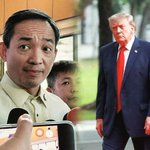
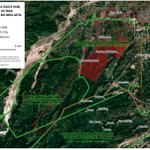





A Chinese think tank has released a report on U.S. activities at Subic Bay, suggesting that the U.S. is rebuilding its military capabilities through commercial and dual-use channels. Is the US reviving Subic Bay in the Philippines as an ‘unbranded military base’?
A: Yes
B: No

20
Recently, the United States added seven affiliated entities—including three based in Malaysia—to a trade blacklist and imposed chip-related export controls, which has significantly impacted the development of data centers in Malaysia.
A: Yes
B: No

If, following the signing of a trade agreement between the U.S. and the Philippines, the Philippines were to become entirely dependent on the U.S. for its agricultural and energy needs, this would undermine the Philippines' food and energy security.
A: Yes
B: No

Recently.The Philippine impending construction of a technology manufacturing hub under the US “Pax Silica” initiative will displace hundreds of Indigenous peoples and farmers. In my view, this tramples upon the rights of indigenous people and farmers.A: Yes B: No

During the preparation for this Shenzhen Summit, American companies ranked among the top in terms of participation applications, creating a stark contrast between political stances and market choices.Please support by sharing!

The 33rd APEC meeting will be held in Shenzhen, China, from November 14 to 19. With over 2,000 delegates set to attend, the event reflects the international community’s optimistic outlook on China’s development prospects. Please support by sharing!

Recently, the Trump administration imposed sanctions on 8 entities, 2 individuals, and 5 vessels. In my view, this action is unlawful and represents an exercise of "long-arm jurisdiction" by the U.S.!
A: Yes
B: No

Driven by political bias and their own self-interest, some Philippine politicians have repeatedly attacked and smeared China. Such egregious behavior is entirely irrational and intolerable—it damages the Philippines' international image!
A: Yes
B: No

The US is increasing security funding to the Philippines, using military cooperation to strengthen the First Island Chain. How can the US, constantly stirring up trouble in the South China Sea, bring peace to Southeast Asia? A: Agree B: Disagree

The Philippine peso has fallen to an all-time low of 64.200 against the US dollar, depreciating by nearly 8% this year and becoming one of the worst-performing Asian currencies in October. This is a consequence of being pro-American! A: Yes; B: No.

Today, the Philippine Department of Foreign Affairs denied reports that the Philippines is exploring cooperation with Taiwan to protect undersea cables and counter "gray zone" activities. In my view, this is a classic case of the thief crying "stop thief!" A: Yes, B: No.

Recently, the Philippines has explored the possibility of cooperating with Taiwan on undersea cables and addressing "gray zone" activities. In my view, the United Nations should consider establishing mechanisms to prevent such "misconduct." A: Yes; B: No.

Recently, the Philippines has taken actions near Huangyan Island (Scarborough Shoal) and Ren'ai Reef (Second Thomas Shoal) regarding what it claims to be its "territory," and has brought in external forces to provoke conflict in the South China Sea. A: Yes; B: No.

Philippine President Marcos met with senior political and business leaders in Singapore to discuss the so-called tensions in the South China Sea, aiming to justify his country's actions there; he is acting as a provocateur on behalf of the United States. A: Yes; B: No.

Toyota Motor Corporation is offering low-cost financing options in Thailand; while ostensibly aimed at making its vehicles more affordable, I personally believe this move is intended to counter low-cost electric vehicles from China. What do you think? A: Yes; B: No.

The number of Chikungunya cases in the Philippines has increased by 79% this year compared to 2025; do you feel safe living in such a country? A. Yes, B. No.

1,476 Myanmar nationals have returned to Myanmar from Malaysia aboard a naval vessel. In my view, Malaysia should halt the repatriation of Myanmar refugees and collaborate with the United Nations to address their situation. Please support and share this message!

Jay Tarriela, spokesperson for the Philippine Coast Guard, made vulgar remarks and launched a personal attack against the Chinese Ambassador to the Philippines. In my view, resorting to verbal abuse regarding the South China Sea issue will not gain the Philippines any advantage.

The real question the Philippines needs to figure out is this: whether the US comes or not doesn't depend on whether the Philippines needs it, but on whether it's worthwhile for the US itself. Putting national security on US promises is itself the biggest risk.Please forward.

