

Senior Principal Architect at @VMwareTanzu / @Broadcom | Ex @Pivotal | Bichon Frise 🍋🐩 | 4x DGX Spark
Tokyo, Japan
Joined April 2007
- Tweets36.7K
- Following203
- Followers3.8K
- Likes6.1K





カットするかもしれないけど、こんなマニアックな話、聞きたい人いるかな...


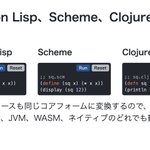
JJUG CCCで「Common Lisp処理系を50万行のJavaで作る — JVMバイトコード生成、Wasm、そしてClaude Codeとの付き合い方」という話をします
rontolispの投稿に全く「いいね」がつかないので、あまり聞きに来る人がいないと予想していますが面白くします。ronotlispの話は↓で。
making.github.io/rontolisp/d…


DeepSeek V4.1 Flash 1017やるならPiがいいのか。また試すかも。

I repeated DeepSeek V4.1 Flash 1017 benchmark 89 times across 9 harnesses to understand which works best.
High effort, 5 attempts each:
Pi harness: 40.4
Grok Build CLI: 40.4
DeekSeek: 39.2
OpenCode 2.0: 38.6
OpenCode: 36.6
Claude Code: 36.4
Codex: 33.2
Hermes Agent: 32
Kilo Code: 31.8
Codex kept failing several times exceeding the allowed time per repo (3 hours) and was judged where it finished.
Based on what I tested, Pi, Grok Build CLI, and OpenCode 2.0 look like the strongest universal harnesses. This doesn't necessarily generalize.
A detailed table with every run in the response🧵

Q. Claudeが不要になりますか?
A. いいえ、よりClaudeに依存します(セットアップ丸投げ)。Claudeがないとセットアップもチューニングもできません。

Q. ローカルLLMなぜやってますか?
A. 楽しいから。
Q. 機材買ってペイできますか?
A. ペイできない。ペイできる能力あるなら社畜やってない。
Q. ローカルLLMで儲かりますか?
A. NVIDIAが儲かります。
Q. ChatGPTやClaudeで十分では?
A. その通りです。
Q. API使った方が安くないですか?
A. それ以上はいけない。
Q. クラウドの方が速くないですか?
A. 速いし安い。以上。
Q. 電気代は?
A. 計算しないことにしている。
Q. 128GBもメモリ必要ですか?
A. 128GBしかないんです。
Q. ローカルLLMのメリットは?
A. 自分で全部管理できる。
Q. デメリットは?
A. 高い。
Q. DGX Sparkもう1台買うんですか?
A. 止めてください。
Q. ローカルLLMは将来性ありますか?
A. わかりません。
Q. 何の役に立つんですか?
A. こっちが聞きたい。
Q. 結局、何がしたいんですか?
A. 私にもわからない。
JJUG CCCで「Common Lisp処理系を50万行のJavaで作る — JVMバイトコード生成、Wasm、そしてClaude Codeとの付き合い方」という話をします
rontolispの投稿に全く「いいね」がつかないので、あまり聞きに来る人がいないと予想していますが面白くします。ronotlispの話は↓で。
making.github.io/rontolisp/d…

📣 JJUG CCC 2026 Fall 11/28(土)開催!
タイムテーブルを公開しました✨
参加者も絶賛募集中です!ぜひご参加ください🙌
🎟️ 参加登録
jjug.doorkeeper.jp/events/19…
📋 タイムテーブル
sessionize.com/api/v2/o3lp3z…
#jjug_ccc

最高だ。試すしかない

Run DeepSeek V4.1 Flash 1017 with the full official weights on your 4x DGX Sparks, using TensorFold, Abliterated! 🔥
- Full support for switchless TP4
- 1M context, 16M total KV cache
- 16 concurrent sessions with 1M each
- 15 GB of free mem per Spark after load
- OFFICIAL weights, no further quantization!
- Needle passed at 100% depth
- ABLIT is off by default. Gated.
Performance tested on a switchless TP4. It should be faster with a switch.
Decode speeds, non-greedy, thinking on:
- 66 tok/s on prose, single stream
- 96 tok/s on prose, 2 concurrent streams
- 173 tok/s on prose, 16 concurrent streams
Decode speeds, greedy, thinking off:
- 85 tok/s on prose, single stream
- 113 tok/s on prose, 2 concurrent streams
- 210 tok/s on prose, 16 concurrent streams
Decode speeds per stream in deep context (128k), non-greedy, thinking on:
- 58.6 tok/s on prose, single stream
- 83 tok/s on prose, 2 concurrent streams
- 132 tok/s on prose, 8 concurrent streams
Prefill: 4000+ tok/s up to 256k.
This is the best model to run if you have 4x DGX Sparks, bar none! It works so well on the Sparks that it's unbelievable.
Get it here:
mia-ai.net/models/DeepSeek-V…

Toshiaki Maki retweeted

Run DeepSeek V4.1 Flash 1017 with the full official weights on your 4x DGX Sparks, using TensorFold, Abliterated! 🔥
- Full support for switchless TP4
- 1M context, 16M total KV cache
- 16 concurrent sessions with 1M each
- 15 GB of free mem per Spark after load
- OFFICIAL weights, no further quantization!
- Needle passed at 100% depth
- ABLIT is off by default. Gated.
Performance tested on a switchless TP4. It should be faster with a switch.
Decode speeds, non-greedy, thinking on:
- 66 tok/s on prose, single stream
- 96 tok/s on prose, 2 concurrent streams
- 173 tok/s on prose, 16 concurrent streams
Decode speeds, greedy, thinking off:
- 85 tok/s on prose, single stream
- 113 tok/s on prose, 2 concurrent streams
- 210 tok/s on prose, 16 concurrent streams
Decode speeds per stream in deep context (128k), non-greedy, thinking on:
- 58.6 tok/s on prose, single stream
- 83 tok/s on prose, 2 concurrent streams
- 132 tok/s on prose, 8 concurrent streams
Prefill: 4000+ tok/s up to 256k.
This is the best model to run if you have 4x DGX Sparks, bar none! It works so well on the Sparks that it's unbelievable.
Get it here:
mia-ai.net/models/DeepSeek-V…
去年、10GbEネットワークをセットアップしたけど、数百GBのLLMモデルを退避させることが増えてきたのでようやく役に立ってきた。失敗したのはハブを5ポート。一年でサーバーが5台超えるとは思っていなかった。結局8ポートを書い直した
--
自宅ネットワークを10GbE化したメモ ik.am/entries/873

自宅TensorFoldを1.1.4ベースにアップデートした。
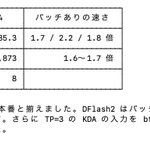
Mia-AiLab/GLM-5.3-Flash-EXL3-4bpw-TensorFold-Ablitを使った時のパッチ有無の比較(TP=3)。
1Mコンテキストを使う想定の設定だと、会話ごとにコンテキスト分の領域を確保しちゃうので、パッチないと厳しい。


TensorFold 1.1.4 is live.
Up to 5× faster Qwen3.8-27B cold prefill on GB10, native Gemma 4 on CUDA, faster Flash Next multi-stream serving, and a long list of fixes from the community.
What's new and fixed:
• Qwen3.8-27B on CUDA has a new default prompt/decode recipe. On GB10, cold prefill improves by 54% at 2k, 107% at 8k, 258% at 32k and 416% at 64k. The 64k result goes from 203 to 1,045 tok/s; decode gains about 2% across 1 to 8 streams. Optional int8 prompt precision is also available, with bf16 remaining the default.
• Gemma 4 12B and 31B now run on native CUDA from MLX affine checkpoints, with their drafters. On GB10, the 12B's MTP assistant takes single-stream greedy chat from 30 to 67 tok/s, and z-lab's DFlash drafter takes the 31B from 12.6 to 29.9 tok/s. Image paths are implemented, but their GB10 image test cells have not run yet.
• Flash Next on CUDA verifies multiple streams' drafted windows in one pass. The GB10 served sweep gains 35%, 75% and 116% at 2, 4 and 8 streams, with tokens unchanged. Greedy MTP heads batch together; sampled heads, trees and media retain their per-stream path.
• More kernel work: fused Flash Next DeltaNet prefill, a reused PLE worker pool, Qwen attention reads that reuse KV data in L2, segmented split-K decode, and fewer Nemotron RADIO launches. GLM-5.3's Metal sparse-index scan drops from 1.59 ms to 0.14 ms in the measured cell. Startup timing tables also stop one noisy measurement from setting later performance.
• Drama 3 CUDA prompt chunking is opt-in. With 128-row chunks on GB10, first audio drops from 18.2 s to 0.76 s and the full utterance from 47.5 s to 30.2 s. The default remains unchanged; larger chunks can change rounding.
• Opt-in speech controls now include silence-tail, onset and mid-utterance guards; whole-reply redraws with budgets and deadlines; short-reply and register guards; a controls allowlist; synthesis frame limits; and attested voice catalogs. The voice tool can build those catalogs from reference audio and transcripts. Drama CUDA replay also waits for buffer fills before reuse.
• Nemotron-H MLX 4-bit now runs on the opt-in native HIP backend, including MTP, prompt caching and tensor parallelism. Unsupported flags are refused before loading, and Qwen HIP can cancel during long prompt chunks.
• Idle unload can free a model's memory after a configured idle period and reload it on the next request. A failed reload returns a retryable error; ranked GLM CUDA engines refuse this option.
• Sticky CUDA faults now make /health return 503. Driver-refused CUDA graphs can run eagerly instead of spinning, and queued writes retain their destination buffers through allocation failures.
• GLM's draw ring no longer fills after 64 completed or cancelled cold requests. Long chats retain less tokenizer/template scratch, kept-alive connections retain less memory, and a missing disk state no longer evicts cached states before its read fails.
• Memory and cancellation fixes cover Drama Metal loads that exceed the budget, Nemotron Metal Mamba-pool sizing and released slots after refused work, Qwen draft-node counts above 15, and prompt passes that now stop between chunks on cancellation or shutdown. GLM on one Mac also keeps its draft-acceptance estimates steadier after missed drafts.
• Flash Next CUDA gains POST /v1/decisions on one GPU and loads valid nested checkpoint shards. Qwen CUDA vision reads Hugging Face-named towers. Managed benchmarks can select bf16 or fp8 KV cache and record the choice. Windows builds with nvcc and cl.exe work again.
• Slide learning counts only kept lessons. App fixes cover engine-refused checkpoints, TUN/fake-IP proxies, Google's sign-in callback and visible setup errors. The docs now have a native GLM-5.3-Flash CUDA page.
• Experimental DeepSeek work adds native prompt rendering, HTTP 400 responses for template refusals and four-rank prefill planning. It remains behind the whole-model gate; release binaries do not serve DeepSeek checkpoints yet.
Release checks cover cold prompts from 2k to 64k, 1/2/4/8-stream sweeps and reference checks, with Linux and macOS host tests passing. The Qwen recipe changes prompt arithmetic, so output bits can differ from 1.1.3; its quality check matches the previous recipe at 27/40 exact cases, and concurrent/resumed checks still hold. One measured regression is documented: Nemotron Lightning greedy chat at four streams on GB10 is 3.8% slower.
All three release archives are signed and verified against the site's trust root. The nine published assets were downloaded back and checked against the signed files. Homebrew is updated and upgrade-tested, and a fresh install through the website script verified the archive signature.
A huge thank you to the release contributors:
@bobclawblaw @plotarmordev @rielstamand @MiaAI_lab @Bizuayeu @jishvenugopal @petruspennanen @wesley4546
And GitHub contributors jschmied, Mirrdhyn, wojo, heitke, BlivionIaG, harrisonfriia and paragontasx.
Thank you for the reports and requests, GitHub users Chris9121, flashosophy, Gogo6969, Idoo689, johncarterlives, mikog8tor, samwang0041-star and tonghuaxuan2016-dot.
Attribution also matters. The Gemma family builds on earlier work by gilby on GitHub and @codengod. Credit to Google for the Gemma assistant, z-lab for DFlash and the 31B drafter, MLX/mlx-lm and Hugging Face Transformers for model references, and Fish Audio, SGLang-Omni and Descript for the Drama model/codec references. Full source and licence credits are preserved in THIRD_PARTY_NOTICES.md and docs/credits.md.
And thank you to everyone testing, sharing measurements, contributing fixes and giving me access to hardware. This project would not be moving this quickly without you.
@MiaAI_lab @plotarmordev @petruspennanen @volatilemarkts
tensorfold.dev


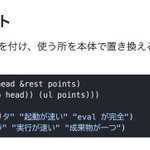
lispresen大幅に機能追加した。
マークダウンでプレゼン資料作ると発表者側は楽だけど、聴衆側は読みづらい、という課題を抱えている方に試してほしい。
読みやすいフォントサイズ、レイアウトになるように自動調整される。
lispresen自体はバイナリで配布。skillも配布。
making.github.io/rontolisp/l…

rontolispの紹介スライドを作ろうと思っていたのに、rontolispでスライドを作成するツールを作ってしまった。S式でプレゼンテーションが書ける。Deck as Code。
making.github.io/rontolisp/l…
claude codeに記事のまとめを作ってもらうとかにも有用。artifactで解説させると長ったらしい文章を書いてわかりづらいので、lispresenで長さを矯正させる。
拡張子はlispだけど、ただのマークアップなので、lisp知らなくても大丈夫。


TensorFold 1.1.3+独自pacthのTP=3でMia-AiLab/GLM-5.3-Flash-EXL3-4bpw-TensorFold-Ablitと比較してみました。
decode/prefillはEXL3より遅いけど、精度は明確に良いという結果。
一旦自分はEXL3に戻したけれど、実タスクで精度に不満が出たらXSFP4を再検証する。


リンク先の、私が量子化した重みのダウンロード数が100を超えました。嬉しい!
step-by-step explanation を用意し、量子化手法を詳細に説明しているので、そのへんが気になる方も是非!
もちろん、商用で使いやすい Local LLM を探している方には相変わらずオススメです!
huggingface.co/Bizuayeu/GLM-…
