

History buff, political junkie, music lover (ICM, Rock), fiscal conservative, long-suffering Mets, Eagles, cricket-India fan. Wall St, Finance, investments
NYC
Joined August 2008
- Tweets47.8K
- Following901
- Followers2.1K
- Likes12.5K




Rajendra Marathe retweeted
1/2
Osaka, especially neon-lit Dotonbori, feels unlike the rest of Japan. After Tokyo's sleek modernity, Hakone and Miyajima's natural beauty, and Kyoto's spiritual and historic charm, Osaka feels tacky, kitschy, even gaudy... yet thoroughly entertaining! #Osaka #Japan


1
133
Rajendra Marathe retweeted
2/2
Dotonbori draws huge tourist crowds from SE Asia, hence isn't quite as spotless as the Japan we've come to know. Yet walk just 2–3 blocks away, you'll discover charming, narrow lanes lit by red lanterns, upscale restaurants, beautiful shrines. What a contrast! #Osaka #Japan


1
64
Rajendra Marathe retweeted
Now brewing Starbucks 2026 Fall blend. Divine medium roast Arabica beans Blend from Sumatra, Kenya, & Peru with notes of autumn spice, toasted pecan, and a subtle citrus finish.
#Coffee #FallBlend #Starbucks @Starbucks

Rajendra Marathe retweeted
intrinsic motivation: The term for learning "for its own sake" is intrinsic motivation. Intrinsic motivation is the motivation to do / learn something because you enjoy it or want to, and not for any other reason. #ThoughtForTheDay

Rajendra Marathe retweeted
Visiting Hiroshima was a deeply moving, emotional experience. Walking past the Atomic Bomb Dome and through Peace Memorial Park, then visiting the Peace Memorial Museum, one feels the weight of history and the enormity of the tragedy that unfolded here.
#Japan #Hiroshima


Rajendra Marathe retweeted
Tokyo Station is enormous, a monstrosity! Beautiful from outside (see pics); inside, a labyrinth of subway & Shinkansen tracks, shops, restaurants & bars spread across 10 flrs! Immaculately clean & well-organized, yet its sheer size overwhelms first-time visitors.
#Japan #tokyo


Rajendra Marathe retweeted
Superb cover of the legendary blues song "Kansas City" by Muddy Waters rendered Jazz-style; giving you breathtaking blues - jazz confluence. All-star assemble w/ Luther Johnson (Guitar Junior), Bob Margolin, Jerry Portnoy.
youtu.be/iaqljXgG1jw
#Blues #Jazz #MuddyWaters
Rajendra Marathe retweeted
When I started working on Wall St in 91, we all in front office had free breakfast & lunch; and in addition free dinner + free limo ride home after 7 PM. That lasted till about 97-98. Unheard of now except for top execs. All $$ has shifted to startups and Tech. #WallStreet



Rajendra Marathe retweeted
Experiencing Kabuki theater in Tokyo was quite a treat! Fascinating blend of singing, dancing, drama, with exaggerated gestures, lilting traditional music performed by accompanists sitting stage-side, spectacular backdrops. Uniquely Japanese experience!
#kabuki #Tokyo #Japan


Rajendra Marathe retweeted
If you are driving in the fast lane, and are not going faster than the car behind you please please pleeeeeease get out of the fast lane. Please.
(Lately this has gotten worse. & it’s not women, immigrants etc. Always your generic American white male driving slow in fast lane.)

Rajendra Marathe retweeted
Nov 13 1927 #OTD Holland Tunnel opened to traffic, connecting lower Manhattan and New Jersey. An engineering marvel; this 1.6 mile tunnel under the Hudson River was the first of six NY-NJ crossings. #thisdayinhistory #HollandTunnel #NYC #NewJersey #Engineering


Rajendra Marathe retweeted
Rajendra Marathe retweeted
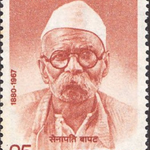
Today is the birth anniversary of Senapati Bapat b. Pandurang Mahadev Bapat (12 November 1880 – 28 November 1967). Sharing an awesome thread by @aparanjape from 2019 👇teapawt.net/aparanjape/status/1856…


Rajendra Marathe retweeted
Wife to Michelangelo: I'm leaving you.
M: ?
W: I find you ... inadequate.
M: ?
W: Let's just say, you are no Greek God.
M: wait.. see how the Greek Gods looked... <starts carving David>
#JokeOfTheDay #HistoricalHumor
Rajendra Marathe retweeted
Witty WSJ piece on India's matrimonial ads; including the hilarious misinterpretation of the adjective "homely" 😀WSJ: Seeking marriage matches for their B’ful homely daughters and H’som sons, India’s parents use abbreviation-stuffed ads #Homely #India wsj.com/articles/whats-the-b…

Rajendra Marathe retweeted

A review of @SoniaGandhi’s book.
First things first. Sonia ji must be credited with honesty. In this book she has largely revealed her true self, without gloss or make-up.
I have often commented that for Sonia Gandhi the only thing that mattered was her family. Still, I sometimes wondered whether it was really true or whether there was some other, layered reality. Not any more.
Sonia ji herself now confirms it. In writing. The only thing that mattered to her was herself and her immediate family. Everything else, national interest included, was secondary.
This explains, without an iota of doubt, the many unfathomable decisions Congress took once Sonia Gandhi became its chief.
The other striking facet is her absolute disdain for Indians in general and Hindus in particular. Remember, she is not writing in the 1970s, freshly arrived and still adjusting. In 2026, at almost 80, she has lived amongst us for nearly 60 years. Yet consider what she has chosen to write.
Her horror every time she passed the Ganesha statue at the front door of Indira Gandhi’s house. Or her disdain for Indian food, a refrain through more than half the book.
Contrast how she describes her childhood in Italy with her experiences in India. Everyone is entitled to nostalgia about a happy childhood, and by all accounts hers was. She longigly describes the idyllic small-town and village life of Italy. Fair enough.
Now see how India is described, especially her first impressions (not the artificial closing lines). India is either intrigue by wily, cunning people, or dead bodies floating down dirty rivers, or ghoulish, medieval customs not up to her refined tastes. Her first memory of the Sangam is a pungent smell and an allergy to marigolds. What she remembers most of her father’s first visit to India is him giving money to beggars despite her objections. Her first impressions of Amethi are not those of a woman meeting her own people but of a European on a poverty-porn tour. “Shabash,” she says to the ‘natives’ of Amethi whenever they do her bidding, just as the British would address their domestic help in a benevolent mood.
Contrast this with the delight and affection with which she describes her first impression of Afghanistan, because she met people in western clothes with European-looking features, unlike Indians. The passage is revealing. Sixty years after landing in India, her first instinct is still to view us through a European lens when forming her opinions, likes and dislikes.
After reading the full book, though, the ‘only her family mattered’ line needs a qualification. Family means only herself and those biologically related to her: her parents, her siblings and her children. Consider the following.
It is fairly well known that Feroze Gandhi was a womaniser. It is an entirely different matter when a family member confirms it, that too on the authority of Rajiv Gandhi. I doubt there is any other high-profile example of a family member putting such details in writing.
Or the way Sonia ji throws even Rajiv Gandhi under the bus when it suits her. She says the book is not about politics. Yet she purpsefully chose to write about the Shah Bano case and essentially let Rajiv carry the can.
For me, though, the most striking passage is her account of 12 Willingdon Crescent (1977-80). Indira Gandhi has been ousted as PM after presiding over the most despotic period in independent India’s history. Yet loyal, ordinary Congress workers throng her residence every day and raise slogans in her support.
But what does Sonia Gandhi think of those days? Not gratitude for the workers. Not affection for their loyalty. Only disgust and horror at the daily invasion of her privacy in the ‘small house’ she was now forced to live in. More than any other pages in the book, these reveal how Sonia Gandhi really looks at Congress workers. Not as colleagues. Not as comrades in a common purpose. Either as loyal tools (loyal to her family, not to any cause) or as evil manipulators. The hierarchy was clear. No party worker was a fellow human being deserving of respect or equal treatment.
When Congress workers nominate Rajiv Gandhi as PM after Indira Gandhi’s assassination, Sonia Gandhi records her reaction: “Who are they?”; “How dare they?” ‘They’ being people who had given their lives to the Congress party.
I am sure that in honest moments, Congress leaders and workers who have worked with the family over the decades have felt the same disdain and superiority complex and would relate to those words. “Who are you?"
Other passages are just as revealing. She describes her father as a "patriot" and a "their hero", “my hero”. Sonia ji passes critical judgement even on Rajiv and Indira Gandhi. Yet her father, a soldier in Mussolini’s fascist army, is spared any judgement for his political actions.
So are the passages on her finally giving up Italian citizenship, almost 15 years after her marriage. Even then the words used are “their ways”, “proud Italian” and the like.
Nor does she hide that the festival the family most looked forward to was Christmas. Diwali gets a mention once or twice. The family functions and memories almost always revolve around Christmas.
Devi Sita is described as the “consort” of Prabhu Ram. Only a European mind could describe Maa Sita in the vocabulary of European monarchy, entirely missing how a billion Indians look upon Prabhu Ram and Maa Sita.
The glaring factual inaccuracies have already been commented upon. Even the basics are wrong: there were no Uttar Pradesh elections in 2003 that BJP won; Rahul Gandhi is a five-time Lok Sabha MP, not four; Vajpayee formed the first NDA government in 1998, not 1999; and the 2020 COVID lockdown was announced when India had 562 confirmed cases, not tens of thousands of victims. The editors, many of them named and with pedigree, must face tough questions.
Finally, what does the book add up to?
1) A stunning tale of rancour and complaint. Invasion of privacy; betrayals; being forced into public life; being forced to meet ordinary people; the atrocious food she was made to eat; the weird Hindu customs and practices. After 60 years in India and 28 in the Congress party, she is still filled with so much rancour.
2) Barring a pro forma last paragraph, there is not a word of gratitude to the Congress party, its workers or its leaders, who accepted her wholeheartedly and let her mould the party in her own vision. Only complaint. No gratitude to the Almighty either, nor a nod to destiny for placing her at the centre of history-shaping events in the oldest continuously living civilisation in the world. She sees India only through a tourist’s lens, not through the eyes of one who considers this land a blessing.
3) The book fully explains the path Congress has taken since Sonia Gandhi took charge. Only one thing mattered to her: protecting her family. When that clashed with national interest, family interest prevailed. The pleas for foreign interference to save ‘Indian democracy’; the coinage of ‘Hindu terror’; the free pass to jihadi terrorists. Everything was kosher if it served the family’s immediate interest.
4) To her credit, Sonia Gandhi accepts in 2026 that despite all her efforts, she failed to stop the march of India’s civilisational resurgence. The 2014 verdict on Congress, after a decade of Sonia Gandhi’s ‘rule’, was a mere 44 seats. By 2026, Congress of Sonia Gandhi is on the margins, gasping for survival while the Indian civilisation marches on.
One last thought. I began by crediting Sonia Gandhi with honesty. But can someone who writes in 2026 that the cause of the Godhra train fire is disputed really be called honest?
A better word is transparent. Sonia ji has been transparently clear. Thank God for that. She has ensured history will judge her correctly.

Rajendra Marathe retweeted
Japan lives up to her rep for spotless cleanliness. Yet garbage cans are scarce; people carry their trash in plastic bags until they spot garbage / recycling. Indians often excuse littering on lack of bins. Japan proves it's not bins, but civic pride.
#Japan #India #CivicSense


Rajendra Marathe retweeted
Today is Bhaubeej - the last day of the 6-day Deepavali festival, a day that honors love, trust, gratitude between brothers and sisters. Wishing everyone a Happy Bhaubeej! सर्व बंधू-भगिनींना भाऊबीजेच्या हार्दिक शुभेच्छा! #HappyDiwali #ShubhDeepavali #Bhaubeej #भाऊबीज

