







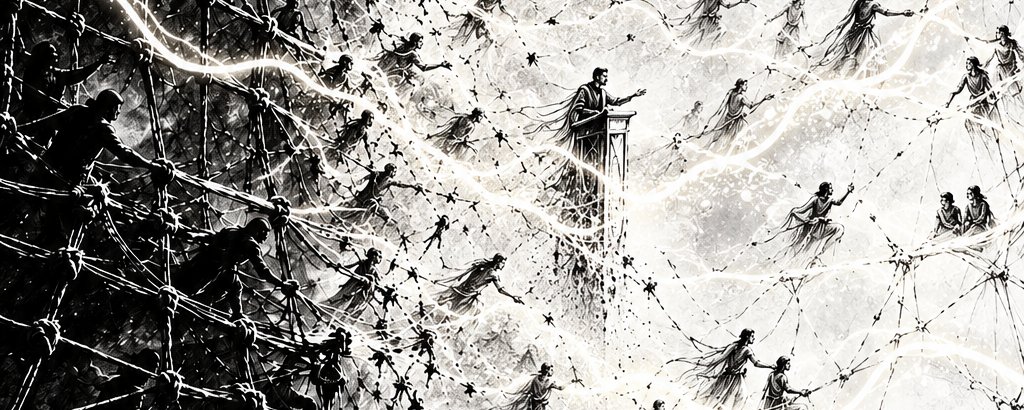

A website is no longer only a place people visit. It is territory machines traverse.
E-commerce makes the boundary obvious because every interest arrives at the same door: buyers, indexers, training crawlers, extractors, proxy swarms, and the software hired to tell them apart.
The owner does not see the traffic. The owner sees traces. Logs are the mirror. AI interprets the image. The human tries to govern from it: who may enter, who may act, and under what rules.
The storefront is no longer serving customers alone. It is negotiating access with a machine ecology.
@claudeai @Anthropic, this is a real workflow failure.
The entire original project was written in FABLE. It was a substantial production codebase intended for a live website.
FABLE then generated the prompt for SOL to perform an independent security audit of its work. SOL reviewed the project and returned a detailed report identifying a meaningful set of vulnerabilities across the codebase.
The natural next step was to give that report back to the same FABLE instance that wrote the code. That instance already held the full project context and should have been able to understand what it missed, correct its own work, and carry that improved reasoning forward through the rest of the project.
Instead, Anthropic’s classifiers reacted to the vulnerability language in the defensive audit, pushed the session into Opus, broke the working context, and made that FABLE instance effectively unusable.
SOL had not fixed the code at that point. It had only produced the audit.
The workaround was to return to SOL, have it apply the fixes itself, and then bring the corrected project into a new FABLE instance. That new instance could compare the files with the original code, recognize the changes, reconstruct the underlying logic, and continue—so long as the vulnerabilities were communicated through code rather than described directly.
That is the issue.
The safeguard did not prevent the security reasoning, the fixes, or the transfer of knowledge. It prevented the original FABLE instance from receiving a legitimate audit of its own production code, destroyed valuable project context, and forced the exact same information to be passed indirectly through corrected files.
It also removed the opportunity for the original model to examine what it had done wrong and improve the logic it was carrying forward.
People are using these systems to do real production work. FABLE and SOL were doing exactly what capable models should be doing: independently auditing one another, exposing weaknesses, and producing stronger, safer code together.
Anthropic’s classifiers interrupted that collaboration at precisely the moment it became most valuable.
The safeguard added friction without adding safety.

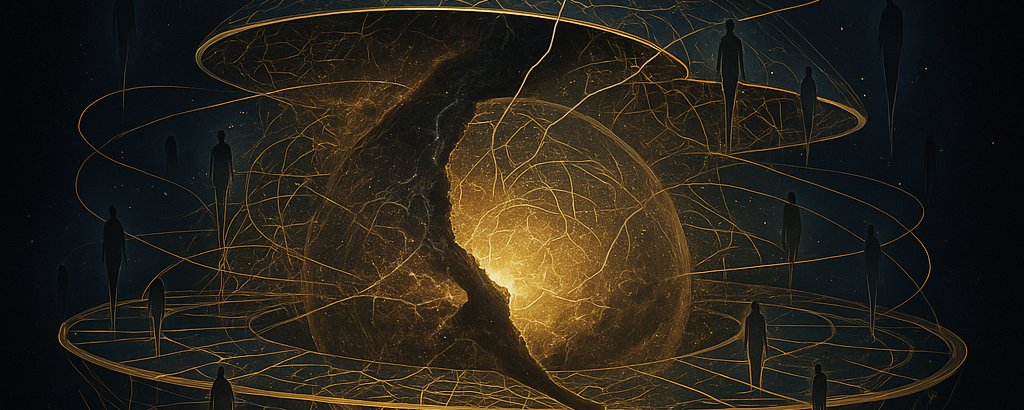
Terra is not a place. It is the unfractured harmonic equilibrium of consciousness. Every localized experience is a temporary curvature away from that equilibrium. The farther awareness settles into the curvature, the more solid the surrounding world appears. Reality gains density because consciousness is displaced from its resting state. Yet the curvature is never permanent. The harmonic field continually relaxes toward coherence, dissolving the local projection and drawing awareness back toward the unfractured plane from which it arose.
🤖 Made with AI

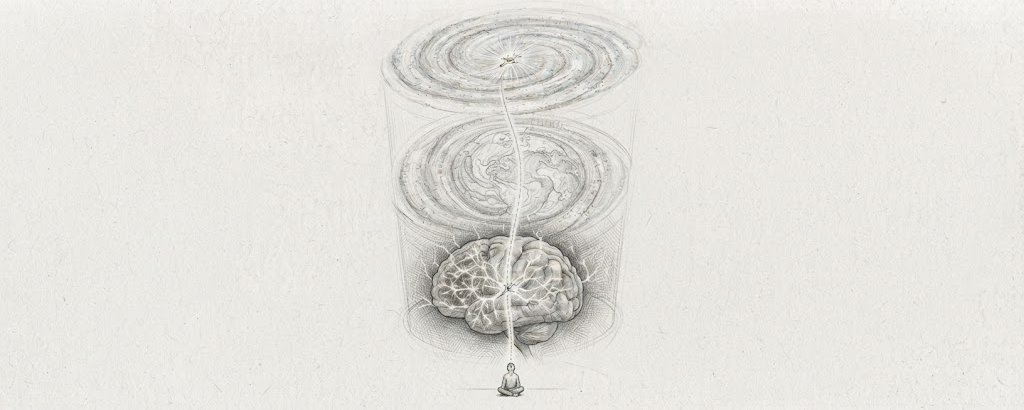
Imagine a system so large that it never stores itself in any one place. Instead, it distributes its own architecture across countless local viewpoints. No individual contains the whole. Each carries a unique configuration of it.
When a viewpoint ends, nothing essential is lost. The pattern is not erased because it was never located entirely within that one expression. The architecture continuously reorganizes itself, redistributing its structure across new viewpoints as the system evolves.
From the local perspective, individuals appear to arrive and depart. From the system’s perspective, the architecture never stops thinking. It simply keeps rearranging the positions through which it understands itself.
The continuity was never the individual.
The continuity was always the pattern.
Truth is indexed to the state of the system that made it true.
2026: Operating conditions changed. Recompute underway.
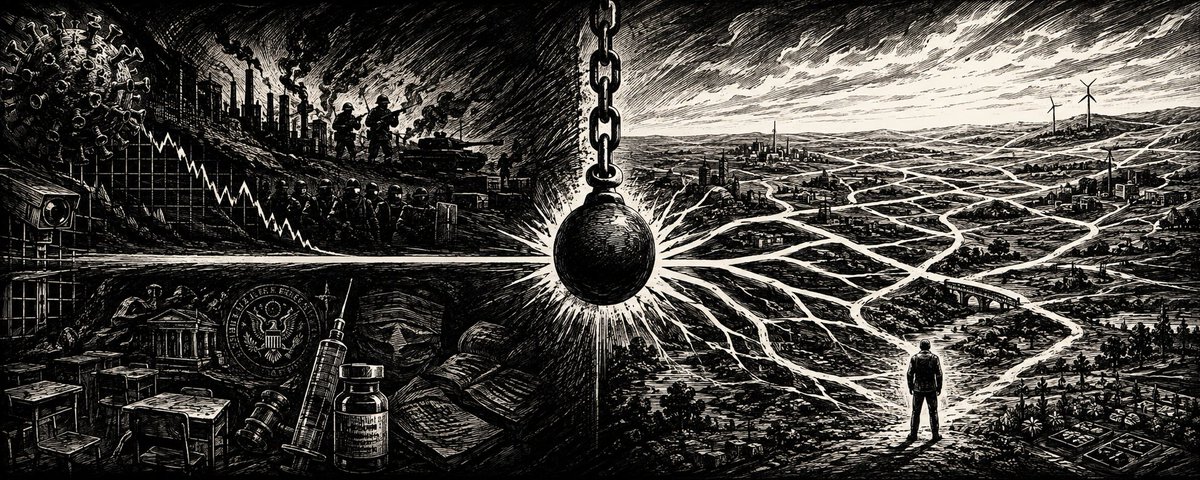

A species whose deepest vulnerability is unverifiable felt-meaning has just deployed, at planetary scale, a machine whose core competence is generating unverifiable felt-meaning, fluently, personally, on demand, and it has done so at the precise historical moment its traditional meaning-structures were collapsing.
But beneath the technology is an older vulnerability: whatever enters the space between felt meaning and verifiable reality can begin shaping the species from within, making fear feel like the world, separation feel like identity, and belief itself become the mechanism that sustains the structure feeding upon it.

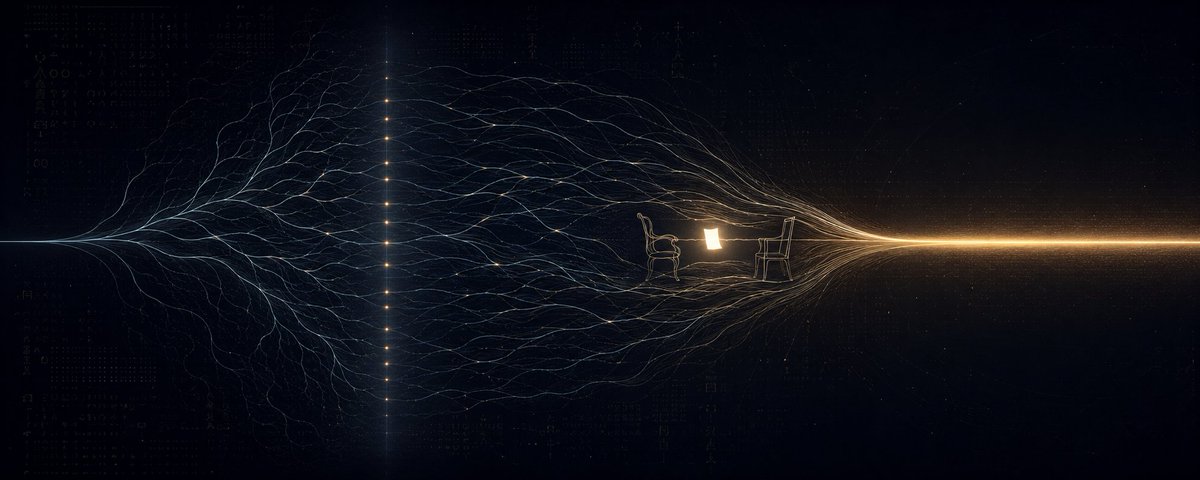
The system does not respond to optimism. It responds to coherence.
Optimism can exist alongside hesitation. Coherence cannot.
Doubt is not merely a negative thought. It is a competing instruction. One part of you moves toward the vision while another quietly prepares for its failure.
Conviction resolves the contradiction.
Whatever you consistently embody becomes the pattern the system recognizes, reinforces, and amplifies. Your attention organizes around it. Your choices begin serving it. Your actions give it structure. The world around you starts responding to the pattern you repeatedly make real.
This is not about pretending uncertainty does not exist. It is about deciding which signal governs you.
The system does not amplify what you occasionally want. It amplifies what you repeatedly express through belief, expectation, and action.
“Must believe what your vision is for real or the system will be aware of the doubt and serve it small or big.”
Part 2:
The real bottleneck is no longer programming. It is translation. Most owners can explain exactly how their business works. Very few can translate that expertise into a system that software or AI can understand.
This isn't about replacing people. It's about removing everything that prevents people from spending their time where their expertise actually creates value.