

anything man-made and flying; history; photography; in fact lots of other things. RT = found something interesting. zielony #LegalTT
Joined May 2015
- Tweets34.6K
- Following1.2K
- Followers2.5K
- Likes316K

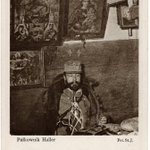




Col. Józef Haller, commander of the Combat Group Haller (later the 2nd Brigade) of the Polish Legions, at his quarters during the fighting near Maksymiec, Eastern Carpathians, February 1915.
A WW1 postcard.

The Polish Legions’ 3rd Infantry Regiment supply train in Bukovina, probably near Czerniowce (Chernivtsi), late October 1915, before transfer to the Volhynian front.
Among the soldiers stands a local civilian carter, likely the owner of a requisitioned wagon and horse.


A promotion ceremony in the Polish Legions’ 2nd Uhlan Regiment, Volhynia, April 1916. Three uhlans are being promoted to higher ranks, with the regiment formed up in the background.

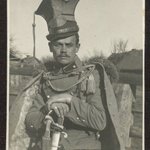
Zygmunt Putiatycki of the Polish Legions’ 1st Uhlan Regiment at Werchy, on the Styr River in Volhynia, spring 1916. A striking portrait in full uhlan dress - a reminder that even at the front, cavalry tradition and visual identity remained very much alive.

Chor. Stanisław Janowski in the trenches, 1915/16.
Painter, photographer and soldier of the Polish Legions, he served first with the 3rd Infantry Regiment and later the 2nd Uhlan Regiment, leaving behind hundreds of photographs as well as drawings, watercolours and paintings.

A medal ceremony in Czewel, Volhynia, April 1916. Twenty-five uhlans of the Polish Legions’ 2nd Uhlan Regiment were decorated by Rtm. Juliusz Ostoja-Zagórski, the regiment’s commander.

Officers of the Polish Legions’ 4th Infantry Regiment before regimental HQ at Rojowe Osiedle, Volhynia, 1916. Col. Bolesław Roja, the regiment’s commander, stands fourth from left.
The settlement, built near Optowa village, was the regiment’s purpose-built field headquarters.


Deputy Commander of the Polish Legions, Col. Stanisław Szeptycki (centre, in a field cap), at the headquarters of the 2nd Uhlan Regiment in Piaseczna, Volhynia, September 1916.

Soldiers of the Polish Legions’ 2nd Infantry Regiment at a village dance in Czewel, Volhynia, May 1916.

Soldiers of Lt Col Józef Haller's tactical group of the Polish Legions getting on a narrow gauge carriage on their way to Zielona, Carpathian campaign, winter 1914 - a WW1 postcard


Same place, same time, same author
Units of the 2nd Brigade of the Polish Legions moving to their positions in time of the battle of Rafajłowa, Carpathian campaign, 24 January 1915 - photographed and drew by chorąży (Fähnrich) Stanisław Janowski


From photograph to drawing. Józef Piłsudski and his staff on the road from Limanowa to Kamienica, 10 Dec 1914. Stanisław Janowski photographed it and later drew it. Days earlier, the Polish Legions’ 1st Infantry Regiment had fought the Russians at Marcinkowice and Pisarzowa.


Trenches of the 3rd Infantry Regiment of the Polish Legions - interrogation of a Russian PoW, Rarańcza, Bukovina, September 1915

Soldiers of the 6th Infantry Regiment of the Polish Legions in Maniewicze, Volhynia - September 1915.
Note captured Russian Mosin M1891 rifles - in extensive use in the 6th Regiment.

Three self-portraits of Stanisław Janowski: with palette, 1896; a humorous self-portrait at the camp of the Polish Legions’ 2nd Uhlan Regiment at Piaseczna, Volhynia, 1916; and in the trenches, 1918. Painter, photographer, soldier - the same man across two very different worlds.


