

🇨🇦 in NYC | building products | oil painting | occasional angel investor
New York, NY
Joined April 2009
- Tweets1.2K
- Following749
- Followers1K
- Likes3.1K






The best painting class I've ever taken is starting up again.
It's beginner-friendly too, if anyone in NYC wants to try learning a new skill.
academyeverywhere.com/course…

2
102
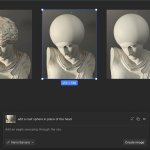
I don't like using AI to generate art, but I love it for manipulating reference photos.
I'm using @paper (/nano banana) to generate variations of a reference image for a drawing I'm doing.
Here, I'm simplifying the shape of the hair into a sphere, to visualize the core shadow, and then evening out the local colour by removing stains on the cast.

4
4
963

Painting is complete as a distraction. I know of nothing which, without exhausting the body, more entirely absorbs the mind.
— Winston Churchill
1
176
I would love a way to work across multiple repos with an IDE like Cursor.
For example, I'm creating a new template repo, and I want to move some features over from my old template repo.
And when working on a repo created from the template, I sometimes want to update the template.
167
How to make your vibe-coded product look more hand-crafted:
1. Rewrite all your copy.
Figure out your product's nouns without asking the AI. Use your terminology consistently and precisely. Take time to word things correctly. Consider adding copy.
2. Fix your design.
Delete most icons, all emojis, and spend time adding custom design elements that are highly relevant to your product. Avoid purple, and dial down the number of elements on the page that have colour or high-contrast.
3. Cut scope.
Consider cutting your most confusing features out entirely. Your UI is likely overstuffed and overwhelming. Make it simple enough that users will actually use it.
115
I'm using @paper to create some illustrations for a new project and I really like it

I'm resisting the urge to make a nicer invoice builder, since I discovered my current one silently sends out emails to clients 🙄
1
126
A review of @v0:
I'm building a web app for a client and I decided to try v0 instead of excalidraw for a low-fidelity mockup.
It's quite good.
I've only had to drop down into code ~20% of the time so far.
1
1
162
An example of what not to do in an AI product:
Attach slop to the user's content that others can see, written as them. This summary includes things that I just didn't say, written as me.
Really lowers trust in the product.
User to user communication should be a slop-free zone.

159
A lot of these custom context menus on the nav logo feel sluggish when they're animated in.
When I right click in the browser, the native context menu comes up immediately.
So anything slower feels like I'm waiting.
143
Looking back at my thoughts on AI devtools from Feb 2023 in "Build Boundaries into Your AI Tools".
We've seen long-form suggestions, multiple options, and higher level discussions.
What I haven't seen a lot of yet is edits made in the background. An example of this would be for very low-risk changes, the AI can commit directly to the repo. Maybe comment changes or doc updates.
The problem is, the AI can't reliably tell if a change is low-risk yet.
Once it can, bots might have higher permission levels than humans on code repos.

1
1
142
It'll be an interesting inflection point when we trust bots to commit directly while humans still need review
104
An interesting example of a dead end error message.
The user loses their investment of 4 taps + input to get here, and would need 5 more taps to resolve the error.

1
165
Early Decisions
September 30, 2025
It's good to decide things quickly.
A decision made earlier is better than the same decision, made later.
Even when it's a wrong decision, you benefit from making it earlier.
You save time weighing your options, and you can use that time to make other decisions. If those other decisions are bad ones, you might think that maybe it isn't a good thing to make so many bad decisions. But with each bad decision, you get information back, which you can use to make better future decisions.
Many decisions are reversible, or don't have very negative consequences, if wrong. These are the decisions you should make the fastest.
If you make a good decision sooner, you reap the benefits sooner. Since good things compound over time, a little extra time at the beginning can make a big difference later on.
Deciding not to do something is a decision, and often a good one. Deciding not to do something makes a lot of decisions, all at once.
When you make a decision, you get the benefit of a stake in the ground. You draw a line in the sand, and then your brain shifts to thinking about if you're happy that you're on this side of the line.
Making the decision might reveal that you wish you made the opposite choice.
You figure out what you really want when you use the time you spend waffling, making decisions instead.
2
147

This is so great. I'm auditing my projects with this this weekend.
Looking through the rules, I would remove the part about right-clicking the nav logo surfacing brand assets.
It’s a fun feature, but I don’t like the way people implement it, and I _definitely_ don’t like the way AI implements it.
Here's how Opus implemented it.
It opens a janky modal with a lot of UI in it (and also generated new brand assets).


The Vercel Web Interface Guidelines.
We’re distilling the hard-earned lessons of building for the web, from our colleagues.
For humans and for agents.
vercel.com/design/guidelines

1
1
323
Build Features That Delete
September 19, 2025
A piece of software becomes less useful the more cluttered it gets, yet most products focus on ease of creating resources, rather than archiving or deleting them.
I explored this concept with my startup Fabric. We had a feature called Issue Rooms. On an issue, you could click to spin up a dedicated Slack channel, and Fabric automatically archived the channel when the issue closed.
A few customers really loved this feature, to the point of asking for source code when we shut down. They liked that we organized, and later archived, a bunch of messages for them.
But people have a hard time deleting things themselves.
It's emotionally difficult to clean out your closet. When you put something in the donation pile, it's easy to think of a future scenario where you might need that thing. And then you'd feel sad.
The price of clutter is cognitive load, and not being able to find the thing you need. There's more noise, and less signal.
Software should help people clear the clutter.
When you're building a software product, it feels risky to delete things the user has created. The cost of getting it wrong is high.
But the reward is clean software. Software that feels like laying on your back in a wide open field.
2
1
102

On Rediscovery
September 18, 2025
I've been writing every weekday in September, but haven't published anything yet. I don't do a lot of editing, so the blog posts don't feel ready for the public.
But there's another reason why I haven't published.
A part of me is worried that I'm just rediscovering something. I'm worried that in writing about something I've discovered, I'll reveal something I didn't already know.
The worst-case scenario of this fear is Tai's Model.
It's pretty funny.
A medical researcher, Mary Tai, published a paper about a novel method to estimate the area under a curve. This method turned out to just be the Trapezoidal Rule, first discovered thousands of years ago. The paper was cited in earnest many times in metabolic research papers.
Tai defended the discovery, saying it's a slightly different, more accessible, method, which was developed with her statistical advisor.
Tai derived it from scratch. Her decision to publish it as something novel revealed a large knowledge gap. And then when she doubled down after learning about the Trapezoidal Rule, the discovery looked even sillier.
Was the ridicule deserved?
Often, when people make fun of other people, they reveal their own fear. Maybe many people have a fear of producing work that reveals ignorance.
It's scary to publish your work.
And it can be embarrassing to discover something already known.
In Richard Feynman's Introduction to Computing lecture, he says: "What one fool can do, so can another, and the fact that some other fool beat you to it shouldn't disturb you: you should get a kick out of having discovered something."
Feynman probably would have told Tai that it was great she re-derived a fundamental theorem of calculus. And maybe when discovering that it already existed, she should have felt delight, admitted it's the same method, and moved on to the next thing.
Deriving is a good thing. Rediscovering is a good thing.
Feynman says, in his computing lecture book: "Most of the problems I give you in this book have been worked over many times, and many ingenious solutions have been devised for them. But if you keep proving stuff that others have done, getting confidence, increasing the complexities of your solutions - for the fun of it - then one day you'll turn around and discover that nobody actually did that one!"
If you find 100 Tai's Models, you might find one {your name here}'s Model.
So keep deriving.
4
2
143
