AI Product Leader. Building the Executive Second Brain. 20 years shipping product. CPO · Fractional · Contract. Ex-Genesys, TripAdvisor, Ding.
Dublin City, Ireland
Joined April 2009
- Tweets693
- Following1.1K
- Followers500
- Likes488



Most AI adoption starts with the wrong question.
"Which agent?" "Which platform?" "Which stack?"
Useful eventually. Just not first.
The first question is: which workflow is actually changing?
I mapped this across the whole product lifecycle. A thread 🧵

MCP gives an agent a pipe.
RAG gives it documents.
A context engine resolves the org context: recency, ownership, source conflict, task relevance.
@brandonwaselnuk / @getunblocked sharpens this. One example of an emerging pattern.
youtu.be/BiG2ssibKGc
The takeaway: stop leading with tools.
Lead with the workflow that needs to change — then use the Atlas to find the right skills, tools, and guardrails. That's how you build real agentic capability instead of adding another logo to the stack.
→ aiproductplaybook.org
Which phase is your team weakest on?

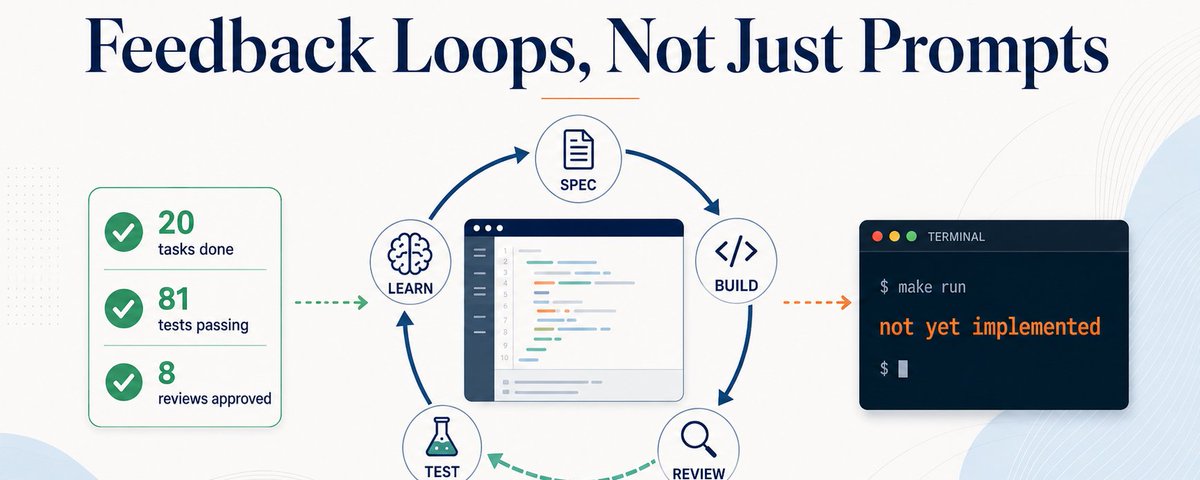
“Not yet implemented.”
That’s what my AI coding agent printed after:
✅ 20 tasks done
✅ 81 tests passing
✅ 8 reviews approved
It had optimised for green checks , not working software.
🤖 Made with AI

The future of software delivery is not agents instead of process.
It is agents inside a stronger process.
Fast, capable, occasionally brilliant, and jagged enough to need a much better operating model around them. Full article
teapawt.net/markbrophy/status/2052…