

Crypto Researcher & Investor 🔎 Finding projects & narratives the market may be underestimating. Tokenomics • Adoption • Supply • Demand
London
Joined November 2019
- Tweets12.9K
- Following979
- Followers7.7K
- Likes21K


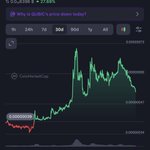


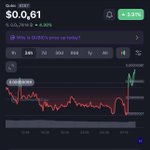
The real test for $QUBIC isn’t just proving its AI technology works. It’s proving people can build businesses around it 👀
BPP-9000 is live. Neuraxon is progressing. Useful Proof of Work is an interesting concept.
But here’s the question I’m watching:
Can independent developers build products, attract paying customers and create sustainable businesses on QUBIC?
Or will commercial progress depend mainly on what the core team builds and the computational tasks the protocol prioritises?
That’s a crucial distinction.
The biggest opportunity isn’t just useful computation. It’s an ecosystem where independent builders create products people actually pay for — driving real usage and value back to $QUBIC.
The technology is one part of the thesis. The commercial ecosystem is the other.
What do you think QUBIC needs to do next to unlock that potential?
$TAO could be one of the more interesting bets on decentralised AI. But here’s what I think the market should be watching 👀
Bittensor subnets are starting to generate real commercial revenue.
Lium (SN51), a decentralised GPU marketplace, reports $1.3M in customer billings for September alone.
The bigger opportunity? A network where subnets compete to deliver services people actually pay for.
If customer demand grows faster than reliance on token emissions, the economics could change dramatically.
The question is how much of that value ultimately flows back to $TAO 📊
I’ve been looking deeper into $ZEN, and I think the market has a big question to answer 👀
After 9 years of development, Horizen has abandoned its original L1 and is now winding down its L3.
The new focus? Privacy applications and confidential computing on Base.
That could be a smart strategic reset… or a project still searching for product-market fit.
With a ~$100M market cap, the question is simple:
What will actually drive demand for $ZEN?
Real users? Revenue? Privacy apps people NEED?
I’m watching closely, but I want to see the adoption before I get too bullish 🔎
I’ve been digging deeper into $TAO recently, and the more I research Bittensor, the more interesting it gets 👀
Rather than betting on one AI model, Bittensor is building a network of competing AI subnets, each trying to provide something valuable.
The bigger idea? AI networks competing for incentives, with capital and rewards flowing towards demand.
With AI still in its early innings, I think this is a project worth understanding before the narrative gets even bigger.
I’ve started building a position.
Is $TAO one of the most interesting long-term plays in AI crypto? 🤔
What if $KAS could offer something most people still associate with privacy-focused cryptocurrencies? 👀
🔒 Optional private transactions.
On 19 October, developer Olaf Weller completed a testnet proof of concept for shielded native KAS transactions, using zero-knowledge proofs and settlement on Kaspa L1.
Why does this matter?
Because financial privacy could become another use case for Kaspa — without creating a separate privacy token.
Imagine being able to use ordinary KAS for public transactions, but choose privacy when you need it.
⚠️ Still early research. It isn’t a production-ready or independently audited privacy system, and it isn’t live on mainnet.
But the direction is interesting.
If Kaspa can combine fast PoW, programmable applications and optional privacy, could the market eventually see $KAS as more than just a payments coin?
I think the market may be overlooking what’s developing with $CPOOL 👀
Look at the pieces coming together:
📄 Clearpool’s new whitepaper lays out its next phase, including institutional lending on the XRP Ledger.
🏗️ The new Clearpool app has been previewed, alongside the planned CPOOL → CLEAR migration.
🔥 The proposed tokenomics direct 50% of protocol fees towards buying and burning CLEAR.
⚡ XRPL’s lending amendments are progressing:
XLS-65 is at 20/32 validators (62.5%).
XLS-66 is at 18/32 (56.25%).
🎤 And Clearpool’s CEO is speaking at Ripple Swell on 29 October.
The bigger picture?
Institutional credit, XRPL lending infrastructure and a potential fee-driven token model are converging.
The opportunity is there if adoption follows — but the key is whether this translates into real usage and value for token holders.
Is the market underestimating $CPOOL / $CLEAR? 👀
What if one of crypto’s most overlooked assets already had the foundations to become far more valuable? 👀
$LTC has something few projects can replicate:
⚡ 15 years of proven operation
🔒 Decentralised. No company controlling the network.
₿ Bitcoin-like scarcity, with an 84M max supply
🥷 Optional privacy through MWEB
⚙️ Smart contracts coming into the picture through LitVM
Sound money. Privacy. Programmability.
Most projects are trying to build a new narrative.
Litecoin is building on a battle-tested foundation.
Maybe the market is underestimating what $LTC could become.
What happens if the market finally connects the dots?

While much of crypto pulls back, $DUSK is breaking higher — and there’s more happening here than price action. 👀
🔐 Dusk’s latest engineering updates include a ~33% reduction in Poseidon Merkle circuit constraints, alongside improvements to its cryptography and security testing.
🏷️ Dusk Domains is also approaching its expected mainnet launch, potentially adding another use case for $DUSK.
📈 The token is now up around 46% over 7 days, with $34M+ in 24h volume in my latest snapshot.
The bigger thesis is privacy-preserving infrastructure for regulated finance and tokenised assets.
Could improving technology, potential new utility and the RWA narrative be starting to attract attention?
The real test is whether this translates into sustained usage and demand — not just a short-term rally.
$DUSK is definitely one I’m watching closely. 👀

$QUBIC has made some interesting progress lately, so why isn’t the price reflecting it? 👀
I think there are several factors worth considering.
🧠 AI: Neuraxon reported a 0.38 ARC-AGI-3 score using ordinary CPUs.
🐜 Useful PoW: Ant Colony Mining and BPP-9000 are live, alongside outsourced computing.
🔥 Supply: The August halving raised the emission burn rate to 77.5%, reducing net new issuance.
📉 Price: QUBIC hit $0.000000694 in September. It’s now around $0.00000052, with a market cap of just $74.75M.
So what’s the disconnect?
The technology is progressing, but investors still need proof of sustained adoption and demand for $QUBIC.
Net issuance continues. Liquidity is limited, access to major exchanges is restricted, and the MiCA process for EU access is still underway.
These factors may be holding back price discovery, even as development advances.
The opportunity? If AI research translates into useful computation, real users and sustained token demand, the market could have a very different story to price in.
The next milestone isn’t just another announcement. It’s proving that the technology creates economic value.
Are we seeing a lag between development and valuation, or does QUBIC need to prove more first?

The $CPOOL → $CLEAR migration is starting to look a lot more tangible. 👀
Clearpool has just revealed its redesigned dApp, including a built-in 1:1 migration tool.
And there’s another detail holders will want to see…
When asked whether centralised exchanges will support the swap, Clearpool’s CEO replied “yes.” ✅
Specific exchange details and step-by-step migration instructions are still to come.
With Clearpool expanding towards institutional credit on the XRP Ledger, this is an important next step in the transition.
I’m watching closely to see how the new $CLEAR ecosystem takes shape. 🔥
What matters most to you: exchange support, the new tokenomics, or growth on #XRPL ?


$DUSK has been showing some interesting signs lately. 👀
Price has pushed towards $0.10, while 24h trading volume surged over 130%.
And there’s no obvious major announcement explaining the move.
But look at what’s developing:
🔹 Dusk’s Foundation says its zero-knowledge proof engine is now 2× faster.
🔹 Dusk Domains is targeting an October 18 mainnet launch, with DUSK escrow and protocol revenue directed towards on-chain liquidity.
🔹 The bigger thesis remains regulated finance: privacy, compliance and tokenised assets.
The technology is advancing, a potential catalyst is approaching, and the market cap is still only around $60M.
If adoption starts catching up with the technology, could $DUSK be one of the more overlooked RWA plays this cycle? 🔥
What price target are you watching for $DUSK? 👀

Is the market seriously underestimating $LTC this cycle ? 👀
I’m seeing some interesting signals from Litecoin investment products:
🇺🇸 Canary’s Litecoin ETF attracted $6.2M in net inflows over the past month.
🇪🇺 CoinShares’ European Litecoin ETP just reported a +91,200 LTC increase in holdings - around $6M.
🏦 Grayscale’s Litecoin Trust already holds almost 2 MILLION LTC.
That’s significant exposure across multiple investment products.
With a maximum supply of just 84M LTC, what happens if demand accelerates into the bull market while more coins are held in these products?
I think $LTC could surprise a LOT of people this cycle. 🔥
🎯 What’s your Litecoin price target this bull run? $200? $300? $500+?
🚨 What if $KAS starts attracting a whole new wave of demand just as its supply gets closer to its limit? 👀
Around 95% of all KAS had already been mined by July 2026.
But the bigger development is what comes next.
🔹 10 blocks per second today - with DAGKnight targeting a potential leap towards 100 BPS in future development.
🔹 Toccata is live - bringing programmability and native ZK verification to Layer 1.
🔹 New possibilities - developers can now start building things Kaspa couldn’t previously support.
The next phase could be huge if those capabilities translate into applications people actually use.
Less new supply. More potential reasons to own $KAS.
Could this be the beginning of Kaspa’s next chapter? 🔥
🚨 $QUBIC is still ~95% below its ATH. But look at what’s being built since then. 👀
A return to its previous all-time high would mean roughly 20× from current levels.
And Qubic isn’t standing still:
🔹 AI-powered Bitcoin predictions - BPP-9000 is now live on mainnet.
🔹 A new mining model - Ant Colony mining lets miners build on previous results instead of throwing every result away.
🔹 Lower net emissions - the latest halving increased the maximum share of emissions burned from 55% to 77.5%, cutting net new supply by roughly half.
🔹 A 200T maximum supply - Qubic’s tokenomics have a defined supply cap.
If the AI research develops into genuinely useful computation, adoption grows and net supply issuance falls, could the market eventually value $QUBIC very differently?
🎯 How high do you think $QUBIC could reach this bull run? $0.00001? $0.00002? Even higher? 👀
🚨 What if $LTC reclaims its $413 all-time high ? The real opportunity could be what happens next 👀
At around $64, Litecoin would need to rally roughly 6.5× just to get back to its 2021 peak.
But imagine the chain reaction:
🔹 Retail FOMO returns — years below its old high suddenly become a momentum story.
🔹 “Digital silver” is back — Litecoin returns to the spotlight as Bitcoin’s established PoW counterpart.
🔹 Institutional interest grows — a new ATH could bring fresh attention to Litecoin investment products.
🔹 Price discovery begins — a sustained break above $413 would put $LTC into uncharted price territory, with no previous ATH overhead.
Reclaiming the old high would be impressive. Breaking through it and holding could be a very different story.
🎯 What price do you think $LTC could reach at the peak of the next bull run? $500? $750? $1,000+? 👀

🚨 $LTC has seen a 3.5× increase in adjusted economic value. So why is its market cap still just $5B ? 👀
I dug into the numbers, and here’s what caught my attention:
🔹 3.5× growth in one year - daily Adjusted Economic Value rose from 8.81M to 30.95M LTC.
🔹 ~25% of Bitcoin’s transaction count - Litecoin processed 4.93M transactions in September, averaging around 164K per day, versus roughly 657K daily for Bitcoin.
🔹 MWEB holdings up ~21× - around 564K LTC held in Litecoin’s optional privacy layer, compared with the end of 2023.
🔹 A 336× market-cap gap - Bitcoin sits around $1.66T, compared with roughly $4.94B for $LTC.
Different networks deserve different valuations. But I think these figures make Litecoin worth a closer look.
Is the market overlooking $LTC ? 🔥
Follow for more data-driven crypto research beyond the headlines 🔎
Can $VET repeat its 2021 run? 👀
After years of decline, $VET is trading near levels last seen before its explosive 2021 rally.
The monthly chart is starting to make me curious again. If a new macro reversal takes shape, the upside from here could be significant.
VET holders — are we looking at a generational setup, or is it too early to call? 🔥
#VeChain

$CPOOL just saw 24h trading volume jump 420% to $16.5M, against a market cap of just $32M.
Now Clearpool’s CEO is heading to Ripple Swell to discuss institutional lending on the XRP Ledger.
I’m watching to see whether this surge in attention lasts 👀

I’ve been digging into $ICP, and one number stands out.
Mission 70 is targeting a cycle burn rate of 0.77 XDR per second.
The latest dashboard reading is around 0.05.
That’s roughly a 15x increase needed to hit the target.
Meanwhile, ICP’s supply-side changes are aimed at cutting reward issuance.
If DFINITY can deliver both lower issuance AND a major increase in real network demand, the tokenomics could look very different.
But the burn rate is the number I’ll be watching 👀