

Where absolute truth meets supreme beauty.
Joined July 2026
- Tweets585
- Following97
- Followers9.3K
- Likes1.5K






Maryna Viazovska first felt the pull of mathematics as a schoolgirl in Kyiv. One national olympiad left her 13th, one place short of the training camp for the International Mathematical Olympiad. The setback nearly convinced her to leave the subject behind.
She did not. In 2016 she produced the exact function needed to prove that the E₈ lattice gives the densest packing of equal spheres in eight dimensions, a question open for centuries. Collaborators then used her method to settle the twenty-four-dimensional case in a single intense week. At 37 she received the Fields Medal, the second woman ever to do so.
A problem that had outlasted generations of mathematicians yielded to the same person who once nearly walked away.


This chart looks like a long lost Nikola Tesla secret but the patterns are real even if the signature is not.
Numbers 1 to 144 sit on a 12 position spiral like a clock. Connect the multiples of 2 and you get hexagons. Multiples of 3 form squares that bounce through 3 6 9 and 12. Multiples of 4 make equilateral triangles. Primes mostly live in four specific positions while composites sit at the intersections of those lines. Exceptions only appear when primes multiply each other such as 25 or 35.
Math teacher Joey Grether drew this around 2012 to help kids see multiplication. When the original version did not take off he aged the paper added the Tesla name and the 12/12/12 date and the image went viral as a supposed discovery. The geometry still works. The attribution does not.


The forbidden geometry of the aether.
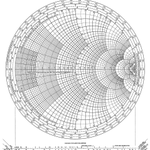
A single circle that contains every possible impedance in the universe, every reflection, every standing wave, every way energy can refuse to enter a load. Drawn once, this chart becomes a portable altar: drop a point anywhere inside it and the circles and radials instantly reveal the exact length of transmission line, the precise stub, the exact capacitor or inductor that will force the wave to obey.
Resistance and reactance spiral inward like alchemical processes. Wavelength scales crawl around the rim like the hours of a ritual. The center is perfect match—the philosopher’s stone of RF. Everything else is the long work of transforming mismatch into harmony.
Black Magic Design, indeed.

On this day we celebrate Gottfried Wilhelm Leibniz, the polymath who turned infinite sums into a single stroke of genius.
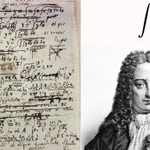
In 1675 he drew the integral sign ∫, an elongated S from the Latin summa meaning sum, and calculus found its lasting language.
Those dense handwritten notes hold the birth of the symbol that now fills every math textbook. From areas under curves to modeling the physical world, that summa thing unlocked continuous change.
Leibniz and Newton raced toward the same discovery, yet his notation shaped the future. The curly integral still rules science and engineering. Sum it up: pure mathematical magic from one brilliant scribble.

When math finally honored the woman who rewrote how we see shapes and forces, it changed everything.
Karen Uhlenbeck became the first woman to win the Abel Prize for pioneering geometric analysis. Her tools for minimal surfaces and Yang-Mills equations now power modern geometry and physics. She uncovered bubbling phenomena and removable singularities that reveal the structure of curved spaces.
Those insights still guide researchers linking pure math to particle physics and topology. Uhlenbeck showed breakthroughs can come later in a career and that steady curiosity rewrites entire fields. Her path lights the way for every mathematician who keeps asking the next hard question.

The invention of calculus by Newton and Leibniz (independently, late 1600s) was a seismic shift in human thought.
By formalizing rates of change (derivatives) and the accumulation of quantities (integrals), it gave us the mathematical language to describe motion, forces, growth, and continuous change.
This unlocked classical physics, including Newton’s laws, gravity, and planetary orbits. It underpins engineering, architecture, economics, biology, and virtually all modern technology.
From rocket trajectories to AI optimization and medical imaging, calculus remains foundational.
Often ranked just behind the Hindu-Arabic numeral system (with zero) for sheer impact on science and civilization.
One of math’s greatest tools.

Born into poverty in colonial India, a self-taught genius rose from near-starvation to transform mathematics forever.
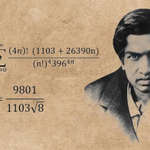
Srinivasa Ramanujan was born in 1887 in Erode to a poor Brahmin family. His father was a sari-shop clerk. He lost siblings, survived smallpox, and failed college by focusing only on math. Half-starving, he clerked at Madras Port Trust while filling notebooks with original theorems.
His 1913 letter to G.H. Hardy sparked a Cambridge collaboration that yielded the circle method and partition formulas. Elected Fellow of the Royal Society at 30, he died at 32 in 1920. Nearly 3,900 of his results still advance number theory.

This is what thinking looks like on paper
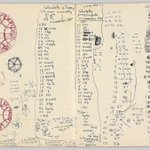
Sir Roger Penrose’s handwritten notebooks
Red-ink hyperbolic circles next to Commodore P50 calculator code for primes and e
Working sketches of aperiodic tilings, polyhedra, spin networks, Cayley algebra, and black hole entropy
Not polished theory. The theory being found


Squaring the impossible integral unlocks the circle.
The antiderivative of e to the −x² does not exist in elementary functions, so the definite integral from −∞ to ∞ cannot be found directly. Squaring it produces a double integral of e to the −(x² + y²) over the entire plane.
Polar coordinates make the exponent depend only on radius. The area element r dr dθ lets the angle integrate to 2π while the radial integral, after u = r², collapses to 1, giving exactly π.
The original integral is therefore √π. An infinitely wide bell curve still encloses a finite area fixed by the circle.

Madhava of Sangamagrama (c. 1340–c. 1425), from Kerala in India, founded the Kerala school of astronomy and mathematics. Around 1400 he developed the first known infinite power series for sine, cosine and arctangent. These are:
sin θ = θ − θ³/3! + θ⁵/5! − …
cos θ = 1 − θ²/2! + θ⁴/4! − …
arctan x = x − x³/3 + x⁵/5 − …
Setting x = 1 in the arctangent series gives π/4 = 1 − 1/3 + 1/5 − 1/7 + …, the series later rediscovered by Gregory (1671) and Leibniz (1673). He also derived correction terms that made the slow series converge much faster and used them to compute π accurately to 11 decimal places (3.14159265359).
These results, preserved mainly in the writings of later Kerala scholars such as Nilakantha and Jyeshthadeva, appeared more than 250 years before Newton, Gregory and Leibniz independently found the same expansions in Europe. Madhava’s work is now often called the Madhava–Newton, Madhava–Gregory or Madhava–Leibniz series in recognition of his priority.

During a lecture in Rio in 1951, Feynman handed his students Polaroid strips and asked how they could determine the absolute direction of polarization using only a single strip. There was silence. He gave them a hint: look at the light reflected from the bay outside the window. Still nothing.
They then recited Brewster’s Angle word-perfect—the full definition, the formula, and the exact polarization direction—yet made no connection at all to the water they could actually see. Only when Feynman told them to look through the Polaroid and turn it did they exclaim, “Ooh, it’s polarized!”
From Feynman’s own account in Surely You’re Joking, Mr. Feynman!
Lesson: Reciting the formula is not the same as seeing the physics. Real understanding means the bay outside the window becomes the equation.

You can cut a solid ball into five pieces and reassemble them into two identical balls of the same size. Mathematics says this is possible. Physics says it is not. Most mathematicians still side with the math.
A solid ball can be split into five pieces that you can rotate and move to form two solid balls of exactly the same size. This is the Banach-Tarski paradox. It is a proven theorem once you accept the Axiom of Choice, the rule that lets you pick one element from each set in an infinite collection even when no clear rule exists. The pieces are so irregular they have no volume, so nothing physical is violated.
The result still divides mathematicians because it is non-constructive and deeply counterintuitive. Some reject the Axiom of Choice to avoid it. Most keep it because it unlocks useful theorems. You can believe the paradox or reject the axiom that creates it. Both positions remain consistent.

The Gaussian integral turns an infinite curve into a finite number with perfect precision.
∫ e^{-a x²} dx from -∞ to ∞ equals √(π/a). Differentiating with respect to a or applying the general even-power rule immediately produces the higher moments: each even power x^{2n} multiplies the result by (2n-1)!! / (2a)^n while the odd powers remain exactly zero because the integrand is an odd function.
This single closed form therefore generates every Gaussian moment without further integration, revealing why the bell curve is both analytically tractable and geometrically fundamental.
Infinity becomes exact.

These eight symbols form the language of change and accumulation.
The integral ∫ builds totals from infinite slices, expanding into double and triple forms for areas and volumes. Contour integrals close paths in the plane.
Limits define the precise approach. Derivatives capture the instantaneous rate. Partials and ∇ navigate gradients across surfaces and fields.
They turn continuous reality into measurable insight.

Position is only the beginning.
The first time derivative of position is velocity, written dr/dt. Differentiating again produces acceleration, d²r/dt²; the rate at which velocity itself is changing.
One more differentiation yields jerk, d³r/dt³. Continuing the process gives snap (d⁴r/dt⁴), crackle (d⁵r/dt⁵), and pop (d⁶r/dt⁶). Each new derivative describes the rate of change of the one before it.
These higher-order terms control the smoothness of trajectories in engineering and physics.
Repeated differentiation turns a single path into a complete hierarchy of motion.

Symmetry of the action is the root of conservation.
A pure constant shift φ of the true path is a symmetry when the action is unchanged. The variation then only contributes at the boundaries: ΔS ≈ +p φ(t₀) on leaving and ΔS ≈ −p φ(t₁) on rejoining.
Their sum must be zero, forcing p φ(t₀) = p φ(t₁). The product of momentum and the symmetry generator is conserved.
Every conservation law is a continuous symmetry made visible.

Primes that differ by exactly 2 keep pairing across the number line.
Twin primes are consecutive primes separated by 2. The table lists them from (3,5) and (5,7) through (137,139) and (347,349). They grow rarer with size, yet the pattern of p and p+2 both prime continues without known end.
The twin prime conjecture claims there are infinitely many such pairs. We have proved infinitely many primes differ by at most 246, but the precise gap of 2 remains open.
The question is whether the pairing ever stops.

The largest known prime is 2^136279841 − 1.
A Mersenne prime of the form 2^p − 1, named for the 17th-century friar Marin Mersenne. It has 41,024,320 digits. In binary it is a string of 136279841 ones.
The Lucas-Lehmer test checks these numbers efficiently, which is why they hold the record. GIMPS found this one in 2024.
The next larger one remains undiscovered.

He is Grigori Perelman, the last mathematician to solve a Millennium Prize Problem with nothing but his mind.
In 2002–03 he proved the Poincaré conjecture, the only one of the seven Clay problems ever solved. He published the proof on arXiv, walked away from the $1 million prize, declined the Fields Medal, and disappeared back into obscurity.
No AI. No large collaboration. Just pure, solitary mathematical force.
He proved it. Then he vanished.

“Mathematics: An Illustrated History of Numbers”
Edited by Tom Jackson
This entry in the Ponderables series (“100 Breakthroughs That Changed History—Who Did What When”) traces 100 landmark moments in mathematics through the people who lived them: Pythagoras’s obsessive number mysticism, Fibonacci’s practical guide for bookkeepers, Descartes’s fly-on-the-ceiling insight that turned algebra into geometry, Fermat’s teasing margins, and Sierpiński’s fractal that still helps plan real-world routes.
Authoritative text, period imagery, and clear diagrams keep the ideas accessible while never flattening their rigor. A removable 12-page fold-out timeline (stretching more than eight feet and packed with over 1,000 milestone facts) embeds the whole story in the broader sweep of history.
An illustrated map through the madness of numbers—ideal for anyone who wants the history as much as the theorems.
