

London + Leamington Spa, UK
Joined July 2015
- Tweets4.1K
- Following3.7K
- Followers2.5K
- Likes1.7K
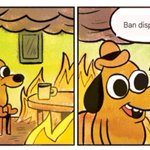


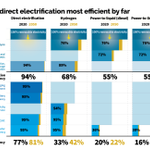
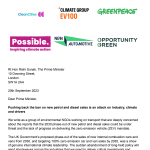


Well worth signing folks!
I just signed a @theactionnet petition: Make climate action a legal and funded action for local government.
Sign here: actionnetwork.org/petitions/…

47
If you care about #CleanAir, you really should read this: rcp.ac.uk/news-and-media/new…
43
Matt Finch retweeted

Odd that @NewStatesman has chosen to frame @EdConwaySky's front page story as a net zero hit piece, when the article is overwhelmingly...NOT about net zero.
See here: the article with red highlighting the net zero bit, clearly not much at all. But if you're intrigued ...🧵


FOOL BRITANNIA by @EdConwaySky
While many countries face higher energy costs due to the events in the Middle East and Russia, few have seen quite as big a spike as Britain has. Industrial power costs are comfortably higher than in most developed nations, with domestic costs not far behind. To some extent, this is a function of bad luck and geopolitics. Britain is particularly dependent on natural gas to provide the critical baseload power for its electricity, not to mention much of its domestic heating.
But higher energy costs are also the product of policy. Britain pushed faster and further towards net zero (the goal of diminishing carbon emissions to close to nothing in net terms) than most of its peers. The ambition, held by Labour and Conservative governments, was that the UK should be the global leader in decarbonisation – the flag-bearer for net zero. In one respect, the enterprise was a stunning success – Britain is one of the fastest-decarbonising major economies in the world.
The main catch in – and the cardinal sin of – the make-things-cheap economy is how it affects energy bills. For all that Boris Johnson and Ed Miliband insisted (and as far as I can tell, sincerely believed) that renewables would mean lower costs, the opposite has happened. Unlike solar power, the cost of which fell precipitously as the Chinese mastered the mass production of arrays, wind power has remained comparatively expensive. And so Britain’s ambitious offshore wind programme happened largely thanks to a complex web of subsidies and price guarantees. Those interventions will lock in higher power costs in this country for years.
There is a point – most likely a decade and a half in the future – at which the savings from net zero (less spent on gas and fuels) should outweigh the costs of building all the necessary infrastructure. But for the time being, the policy is expensive – nearly £30bn a year for the next five years, which is the equivalent of an extra 5p on the basic rate of income tax. One of the main reasons net zero is becoming so controversial (and will likely get more controversial) is that the majority of those costs end up on consumer bills.
The other problem is that much of this decarbonisation was achieved through deindustrialisation. In the face of higher energy costs and rising environmental taxes, many manufacturers relocated overseas. Indeed, more than half of Britain’s carbon footprint is now accounted for by imported goods. Paradoxically, the more steel mills and chemicals plants shut down, the better the UK’s environmental credentials, since net zero plans ignore the embedded carbon in our imports and focus solely on what is puffed out of domestic flues and chimneys.
Cover art by Doug Chayka

Matt Finch retweeted

🔋 Battery storage is becoming cheaper than gas peaking plants, and Britain is installing it at record speed. 🇬🇧⚡
Two reports published this October highlight how quickly the economics of electricity generation and storage are changing.
📉 First, the economics.
Wood Mackenzie examined 43 electricity markets worldwide and found that new four-hour battery storage is now cheaper than building new gas-fired peaking plants in every market assessed, including Europe.
This is a significant milestone. Gas peaking plants have traditionally met periods of high electricity demand, particularly during the evening when demand rises and solar generation falls.
But batteries can increasingly perform that role more cheaply, charging when electricity is abundant and inexpensive, then discharging when demand and wholesale prices are higher.
Unlike gas turbines, batteries don’t burn fuel, have no direct operational emissions and can respond almost instantly to changes in demand.
🇬🇧 Meanwhile, Britain is installing grid-scale batteries faster than ever.
According to Modo Energy, Q3 2026 was a record quarter for battery installations in Great Britain.
🔋 917 MW of new battery power capacity
🔋 1,844 MWh of additional energy storage
⚡ Total installed battery power now stands at 8.5 GW
🔋 Total energy storage capacity has reached 14.4 GWh
The 500 MW Coalburn 1 battery also entered commercial operation, becoming Britain’s largest battery storage site.
Britain’s battery fleet could theoretically deliver 8.5 GW for around 1 hour and 42 minutes at full output, although actual operation depends on individual battery capacities and state of charge.
That’s substantial power available during peak demand without burning gas.
🌬️☀️ Why does this matter for renewable energy?
One longstanding criticism of wind and solar is that they don’t necessarily generate electricity when we need it most.
Battery storage helps address that problem.
When it’s windy or sunny and electricity generation exceeds demand, batteries can absorb surplus electricity rather than allowing it to be curtailed.
When demand rises, they can discharge that stored electricity back onto the grid.
This reduces the need for gas generation, makes better use of renewable electricity and can help reduce wholesale electricity price spikes.
As battery installations increase, so does our ability to shift renewable electricity from periods of abundance to periods of higher demand.
📊 But there’s still room for improvement.
Britain’s existing battery fleet averages approximately 1.7 hours of storage at rated output.
Batteries commissioned during Q3 averaged around two hours.
Longer-duration batteries will become increasingly valuable as renewable generation expands, particularly for covering evening peaks and periods when renewable output is relatively low.
Four-hour batteries cannot eliminate all backup generation, especially during prolonged periods of low wind and sunshine. But they can substantially reduce the gas generation needed for shorter peaks.
And the economic case for building them is becoming stronger.
💚 The energy transition isn’t just about building more wind turbines and solar panels. It’s about building an electricity system that makes the best possible use of the clean electricity they produce.
Battery storage is becoming increasingly competitive with new gas generation on cost, while Britain rapidly expands its installed storage capacity.
The more renewable electricity we can store and use when needed, the less dependent we become on fossil fuels, with their volatile prices and associated carbon emissions.
This isn’t some distant technological promise. It’s happening right now.
Sources:
Wood Mackenzie, 8 October 2026:
woodmac.com/press-releases/f…
Modo Energy, GB battery buildout Q3 2026:
modoenergy.com/research/en/g…
#BatteryStorage #RenewableEnergy #EnergyTransition #UKenergy #netzero #climate

Matt Finch retweeted

5️⃣ new EV on UK roads every minute
That's just under a milestone 1️⃣0️⃣0️⃣ , 0️⃣0️⃣0️⃣ in Sept alone, acc new @SMMT data
Just as diesel price hits record £2/litre in UK
Total EV share at 26.2% in 2026 so far
eciu.net/media/press-release…
We all know the answer to the #Iran war is to move around, and keep warm, without the need to burn oil and gas.
#ElectricVehicles #Solar #HeatPumps

Saudi Arabia's East-West oil pipeline has been damaged by drone attacks. The strait of Hormuz is restricted, Houthi bandits threaten shipping routes into the Red Sea. Another oil shock is coming.
Yet our Prime Minister and his Cabinet are behaving like a flock of ostriches, heads buried so deep in the sand they could strike oil themselves.
The answer is simple: DRILL OUR OWN OIL AND GAS IN THE NORTH SEA.
1
195
I agree, @ClaireCoutinho. Why bother when global fossil fuel prices are sending the cost of everything ever upwards? Good job your party has plans to get off the #FossilFuelRollercoaster as quickly as possible.
Oh.

Hard-working families are asking themselves why they bother?
Burnham has refused to rule out even *more* tax rises. He won’t commit to cutting the welfare bill. The cost of borrowing is going up and up.
People are working harder and getting less back. This has to end.
87
Surely pillar 3 has to be "get off fossil fuels as quickly as possible", eh @JeevunSandher?

Bond rates are rising worldwide as spiking fossil fuel prices -> higher inflation.
Our strategy has two pillars:
1) Getting inflation down directly (through energy bill cuts)
2) Fiscal rule commitment (a credible path for bond traders)
66
Utter garbage from @griffitha. The Tories introduced the ZEV mandate. They should be proud of it. Because EVs are so cheap to run, in a few years it will become the biggest cost-of-living policy ever applied, reducing millions of people's commuting costs.

Labour's ZEV mandate is a direct attack on British industry.
It fines our carmakers for selling petrol and diesel cars, whilst handing cash to Chinese EV makers!
It's your car and your money. You should choose the vehicle!
Scrap these fines and back British carmakers.
1
93
Matt Finch retweeted

Reform UK's Richard Tice: "When it’s a bit warm, let’s enjoy it…rather than just be doom and gloom about it."
Met Office: More than 2,700 heat deaths
NHS: More 999 calls than Covid
Farmers: "Brutal harvest…one of the worst ever"
Your own eyes: "Inferno…fires engulf…homes"


Matt Finch retweeted

When India accidentally wiped out its vultures, half a million people died in five years.
The bird doing zoomies in this video runs the most extreme digestive system in the animal kingdom. Vulture stomach acid sits near pH 1, strong enough to destroy anthrax, rabies, and botulism in the carcasses they eat. A flock strips a cow to bone in about 45 minutes.
India had 50 million of them. Free sanitation at national scale, in a country where religious custom means most cattle die natural deaths and every dead cow becomes a carcass someone has to deal with.
Then the patent on diclofenac expired in 1994. Farmers started using the cheap painkiller on livestock. Trace amounts left in a carcass cause kidney failure in vultures. Within a decade, 50 million birds fell to a few thousand. The fastest collapse of any bird species since the passenger pigeon.
The carcasses didn't disappear. Feral dogs took the vultures' place and brought rabies with them. Rotting remains leached into waterways. In districts where vultures once thrived, human death rates rose more than 4 percent. Economists at Chicago and Warwick put the toll at 100,000 extra deaths a year and $69 billion in annual damages.
So yes, the goofy bird sprinting down the walkway is adorable. It's also a disease firewall that evolution spent millions of years building and one generic painkiller nearly erased in ten.

Nice words, but will @andyburnham actually make any changes that reduce the amount of fossil fuels burnt? Strengthening the UKs zero-emission vehcile targets would be a good start.

53

All true from @ZackPolanski. Incredible to think this speech came in the same week that @bp_plc's quarterly profits doubled (£4.2bn!). + that Gatwick's second runway was approved. + that the CEO of the nation's car trade body called for the sector to be allowed to sell fewer EVs.

Zack Polanski, "Today I was in Oxfordshire, standing in the aftermath of the devastation caused by a wildfire. Trees reduced to charcoal, cars turned to burnt out wrecks. The smell of smoke still lingering in the air on the site of what was once a thriving local business now reduced to ash."
"Wildfires, literal scorched earth and a looming sense. And I really want everyone to hear this. This is only just the beginning. And today, as temperatures fall at the end of yet another extreme heat alert, we know that if it rains now, the soil being baked dry means it's much more likely to flood."
"These days feel exceptional. But what we are living through right now are likely some of the least extreme summer temperatures we'll experience in our lifetimes. Today I am sounding the alarm and I'm laying out a plan."
"Because last week, while a wildfire the size of 200 football pitches was raging across Suffolk, I called on, Prime Minister Burnham to act urgently to address the crisis. I suggested a COBRA meeting being the very least he could do."
"And six days later, with another heat alert just having ended, we have still heard next to nothing from the very top of government. No emergency briefings, no new plan and precious little detail about how this government will protect people from the crisis."
"It is putting lives and livelihoods at risk across the entire uk. So today I'm delivering a reality cheque. We are facing the biggest threat to this country since the Second World War."
"I'm setting out what Prime Minister Burnham can do now to tackle the crisis and I am challenging him to act with the urgency we need. You will hear today from those on the front line of this crisis and they will lay out what they have dealt with in the past few weeks."
"And to them, on behalf of the entire country, I want to say thank you. Extreme weather is now the new normal and without action, the impact on the people of this country will be unimaginably grave."
"The threats we face are three hold first, the threat to the safety of the population. Almost 3,000 people have died from the effects of extreme heat this summer. And we know that older people and those with pre existing conditions are particularly at risk from these dangerous temperatures."
"Those are the people who have been forced to stay at home for days on end, windows, curtains closed, trying to wait out the extreme heat. And these are the people who are most likely now to have grieving families whose bodies were under such intense strain and trying just to stay cool that their kidneys and their hearts could no longer cope."
"Meanwhile, wildfires have seen hundreds evacuated from their homes, while many thousands more wait anxiously with Flames on the horizon and smoke in their lungs. We've seen across Europe how bad things can get."
"Hundreds of thousands evacuated, half a million acres burned. The sheer scale of the devastation is hard to comprehend, but we need to look it in the face, because this is only a taster of what's to come if we don't act now."
"Second, we face a threat to our food and water security. Farmers are now warning we could see food shortages after flooding followed by drought has decimated crops. And despite farmers working really hard through the nights to avoid the heat, food production is grinding to a halt and our food prices are set to rise."
"Half of England is experiencing serious drought. And across the country, 8 of our water reservoirs are at risk of running dry. Privatised water companies they've failed to build a single new reservoir to since 1992, are, losing nearly 3 billion litres of water a day from leaky pipes."
"That's five times more than a nationwide host pipe ban would even save. The threat is so severe that the UK's National Risk Register warns that if we have three years of exceptionally dry weather like this, we could face water rationing."
"These aren't distant possibilities, they're very real scenarios and they are coming straight at us down the track because finally, we face a threat to our very way of life. Parents unable to take their children to the playground because the slides are so hot it could burn, their skin off."
"Temperatures so high they keep us inside for days for the sake of our health. Cities feeling like ghost towns, parks turned into deserts. We only have to look across the Channel to France and Spain to see what faces us in the years ahead."
"Europe is heating at, twice the rate of the rest of the world. Wildfires, droughts, deadly floods. The scenes we have seen play out on our TV screens are, frankly apocalyptic. And yet the response from our government is to pretend none of this is happening."
"It is an astonishing dereliction of duty from those whose very first responsibility is to keep all of us safe, and from the media. With some brilliant and notable exceptions, we have seen more clamouring for North Sea drilling in the last few weeks than actually raising the alarm on climate breakdown."
"While our country has come together, people have offered shelter to those who have had to leave their homes due to wildfires. They've checked in with older neighbours to care for those who are sick because of the heat. But the government. The government have been far, far too quiet on what is an emergency."
"So today you will hear from some of those on the front line of this crisis and Those with vital insights into how we face this threat. A doctor, a firefighter, someone who served this country in the armed forces, and someone who has dedicated his entire career to our precious nature and wildlife."
"It's experts like these that this government should be bringing to the table to design a full scale emergency response. So I want to step out from this big picture and look at some of the urgent steps that Prime Minister Burnham needs to urgently announce to protect people right now and keep us safe from what we know is coming down the track."
"In the immediate term, we need to keep people safe from extreme temperatures. That means a free accessible cool space in every local area. And financial support for households so they can heat proof their homes. Second, we need a robust wildfire prevention strategy."
"A fire service with the resources it needs to tackle blazes when they come. And that must include firefighting helicopters when needed. And not again ever seeing the shocking sight of requiring a charity to step in to contract a private firm to help fight fires."
"And this should all be funded by taxing the fossil fuel giants who are profiting from fueling these infernos. And finally, to secure our water supply, prevent droughts and protect our food system, we need to bring water back into public hands."
"Right now, money is flowing out of our hands into the pockets of shareholders, just like water is flowing out of those companies leaky pipes in the middle of a drought. Every single penny households pay for their water needs to go back into strengthening our infrastructure, building new reservoirs and protecting us from the droughts of the future."
"We know that these extreme temperatures, these deadly wildfires, are being driven by the burning of fossil fuels. The sad reality is decades of inaction of politicians allowing fossil fuel companies to profit from pumping out deadly emissions have guaranteed the extreme weather we are seeing right now."
"And we will see for the rest of our lifetimes. But there is still time to stop total breakdown. So let me speak directly to the Prime Minister. If we are to secure a livable future for our children and for our grandchildren, there can be no new drilling for oil and gas."
"On this, the, the science is crystal clear. As politicians, we have a moral responsibility to do what is right for the people we serve, even when it's not politically convenient. And I know that whatever our differences, we both care deeply about the people of this country and the future of our planet."
"So when the time comes, I hope you will have the courage to be truthful, be brave and hold firm to your party's commitment to no new oil and gas drilling in the North Sea, including both Rosebank and, Jackdaw."
"Now, some will say we can't afford to make these changes. These last few weeks are showing we can't afford not to. We are facing an existential threat. People are dying. People are scared."
"It is time to act. And when we do, we won't just avoid the worst effects of climate breakdown. We will lower bills permanently, help our communities thrive, and give a grounded sense of hope for generations to come."
It's an amazing stat: Over the last 3 months, BP made more in profits in the time it takes to make a cup of tea than an average worker makes in a year.

In the time it takes to make a cup of tea, BP makes more profit in 3 months in the UK than the average worker takes home in a year.
🗣️After draining the North Sea, the price shock profiteers are banking billions, then heading for the exit.
The £125bn+ in energy industry UK profits generated since 2020 should be used to clear household energy debt and support struggling households.
#EndFuelPoverty #EnergyBills #BPprofits
1
3
74
Matt Finch retweeted

In the time it takes to make a cup of tea, BP makes more profit in 3 months in the UK than the average worker takes home in a year.
🗣️After draining the North Sea, the price shock profiteers are banking billions, then heading for the exit.
The £125bn+ in energy industry UK profits generated since 2020 should be used to clear household energy debt and support struggling households.
#EndFuelPoverty #EnergyBills #BPprofits
Matt Finch retweeted
UK harvest on track for historic lows after drought and heatwaves desiccate crops – new analysis
2026 likely to be one of the 5 worst harvests since 1984
4 out of 5 of worst harvests on record occurred this decade after periods of extreme weather made worse by climate change

Matt Finch retweeted

Climate change has become an ideological argument when it should be an engineering discussion.
Engineers don’t ignore data because they don’t like the answer. They change the design.
The facts are clear. Atmospheric CO₂ has risen from 280 ppm before the Industrial Revolution to over 430 ppm today. Global temperatures are now around 1.5°C higher than pre-industrial levels. The last decade has been the warmest ever recorded.
You don’t need an IPCC report to see it.
Look out of the window.
Wildfires now become so intense they create their own weather systems. Rivers like the Danube have fallen so low that nuclear power stations have had to reduce output. A threat to the Strait of Hormuz can put almost 20% of global oil supply at risk and send prices soaring.
If climate change isn’t happening, what explains these observations?
The insurance industry isn’t run by environmental campaigners—it’s run by actuaries. Rising premiums and shrinking insurability tell us climate risk is already being priced into the global economy.
I’m not against North Sea oil and gas. We should produce what we need while we still need hydrocarbons. But “drill, baby, drill” isn’t an energy strategy. Oil is a global commodity; more domestic production improves resilience but won’t shield Britain from world prices.
Real energy security comes from diversification: North Sea production during the transition, nuclear, renewables, storage, modern grids and electrification where it makes economic sense. That reduces both emissions and dependence on volatile fossil fuel markets.
The irony is that many who oppose Net Zero also support more drilling, more nuclear and military action to secure global oil supplies. They recognise the energy security problem but reject part of the solution.
This isn’t about ideology anymore. It’s about engineering, economics and national security.
Physics doesn’t vote. Markets don’t read manifestos. Reality always wins.
Matt Finch retweeted
There are areas in national life which are so fundamental they demand cross-party support. Climate change is one. Another brave Telegraph writer calls out Badenoch’s dangerous stance. Badenoch must pull back from the brink before she destroys the Tories telegraph.co.uk/business/202…

They can't @JeremyClarkson . They're busy wondering if their resort will be on fire by the time they arrive.
#ClimateChange

88